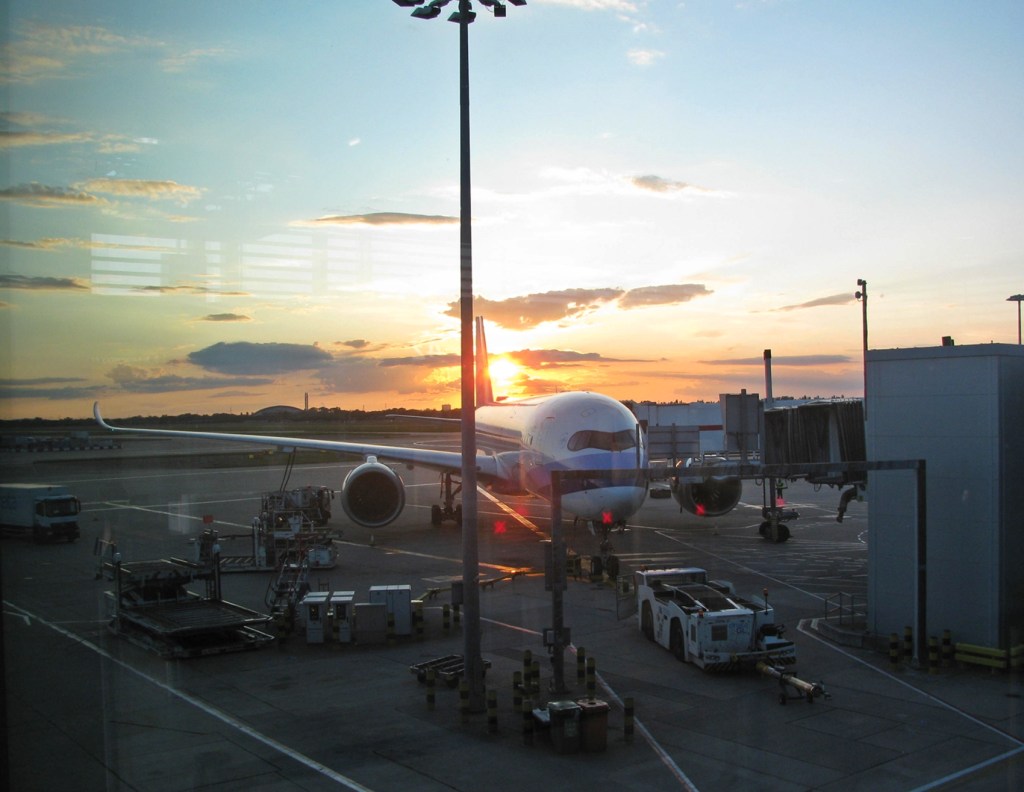
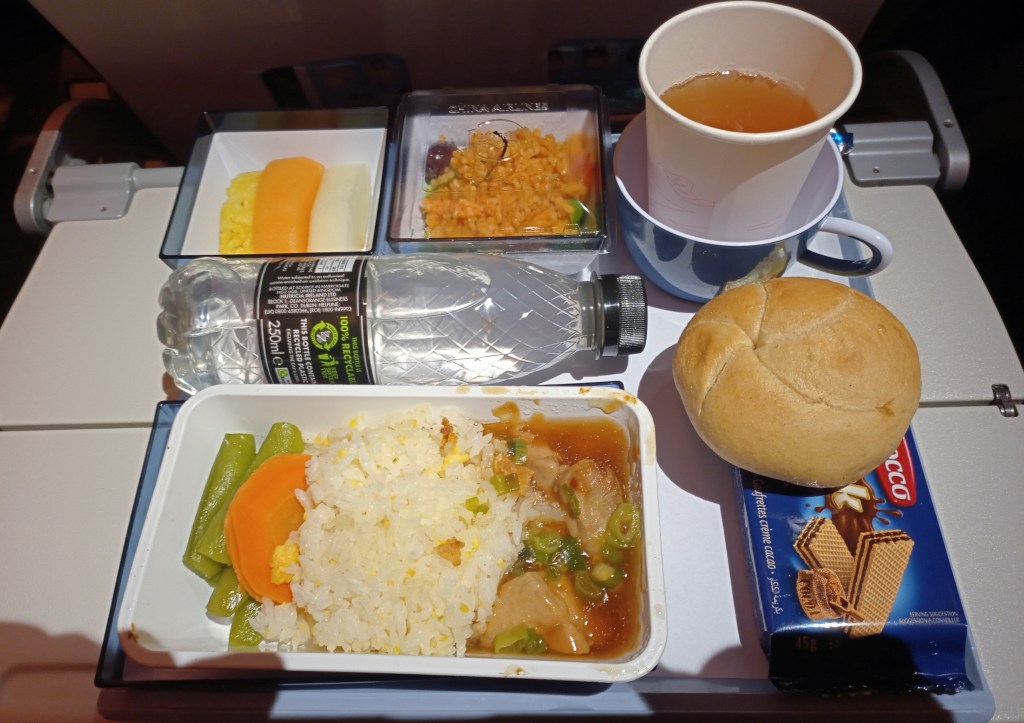
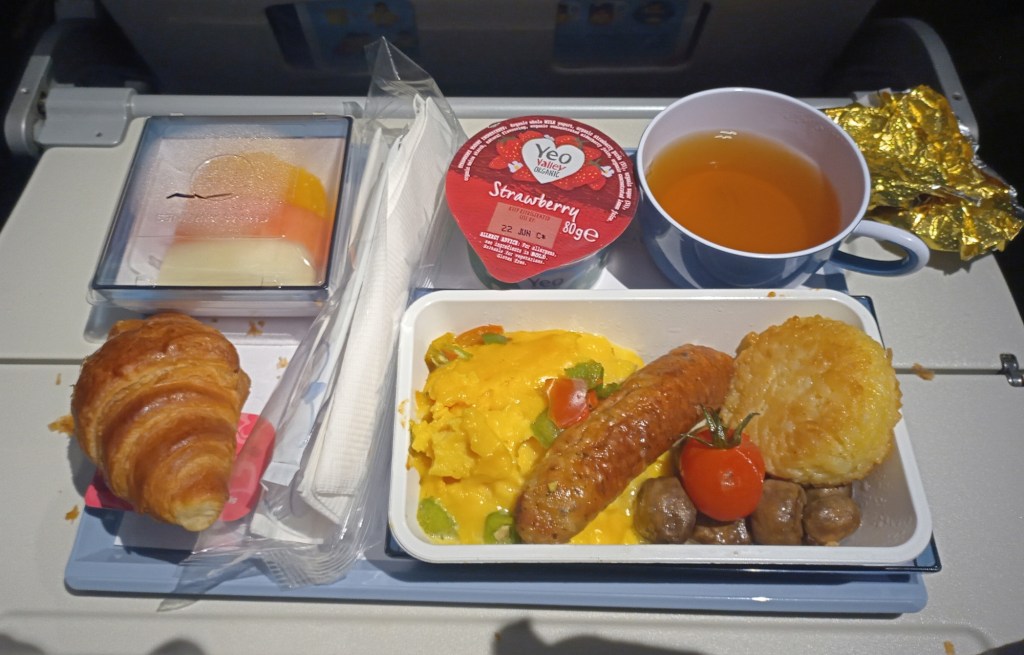
The next day, we packed up and returned to London by train (as did many Taylor Swift fans). We stayed in Hounslow overnight before leaving Heathrow the next evening on a China Airlines plane. Our route of Heathrow-Taipei-Sydney-Auckland was the reverse of our journey to the UK six weeks earlier.
Our plane at Heathrow
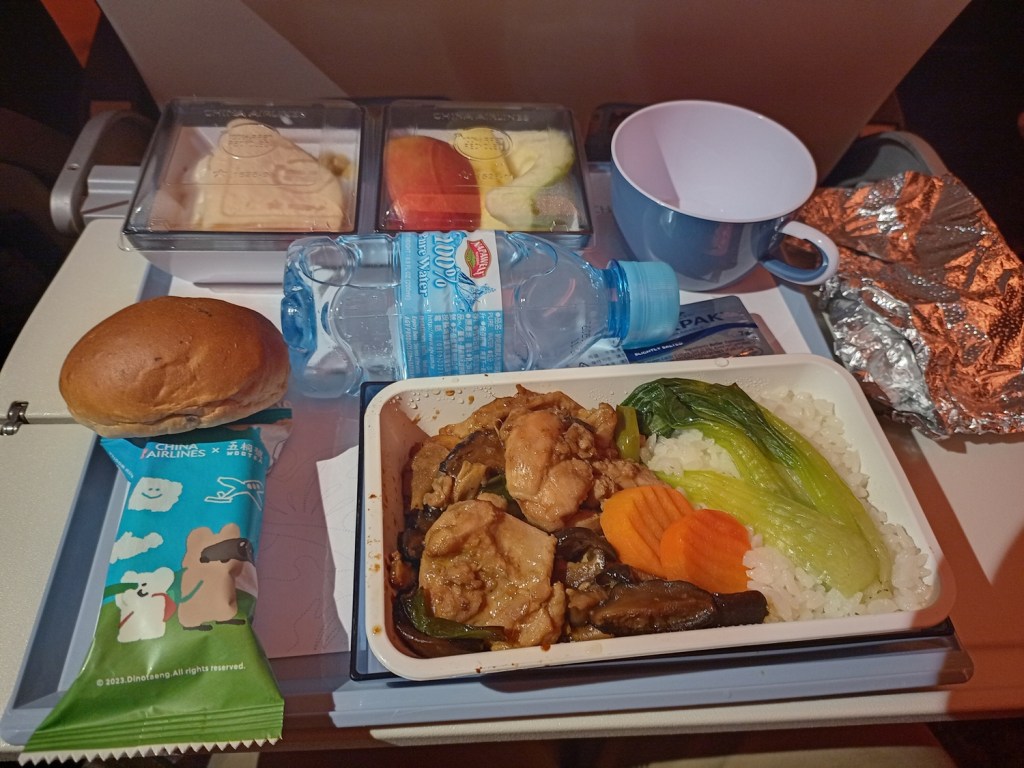
China Airlines dinner…
Breakfast
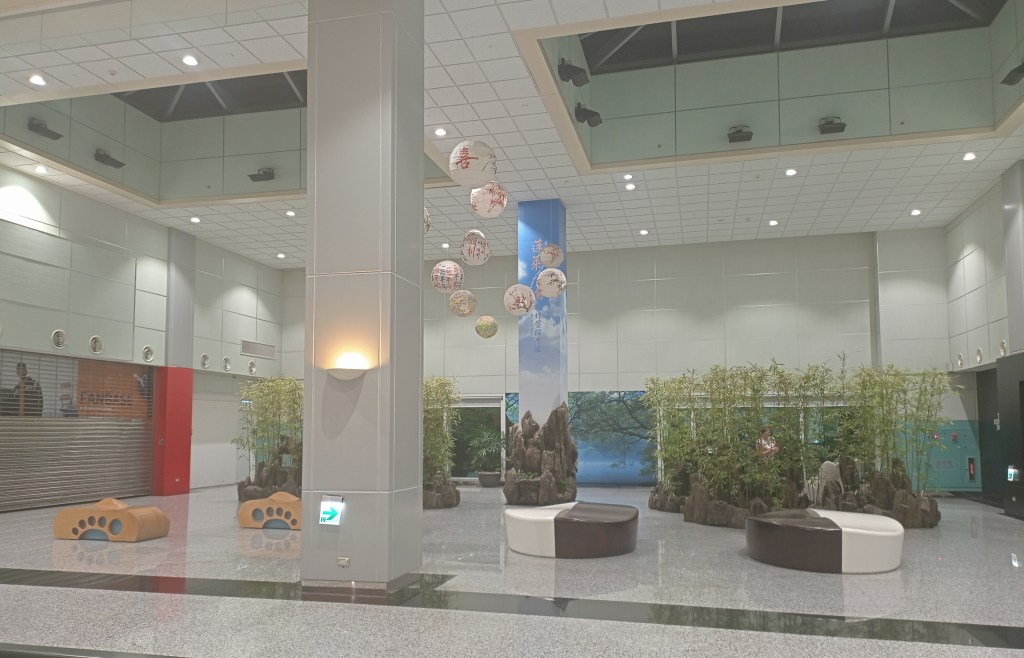
Familiar faces at Taipei (Taoyuan)?
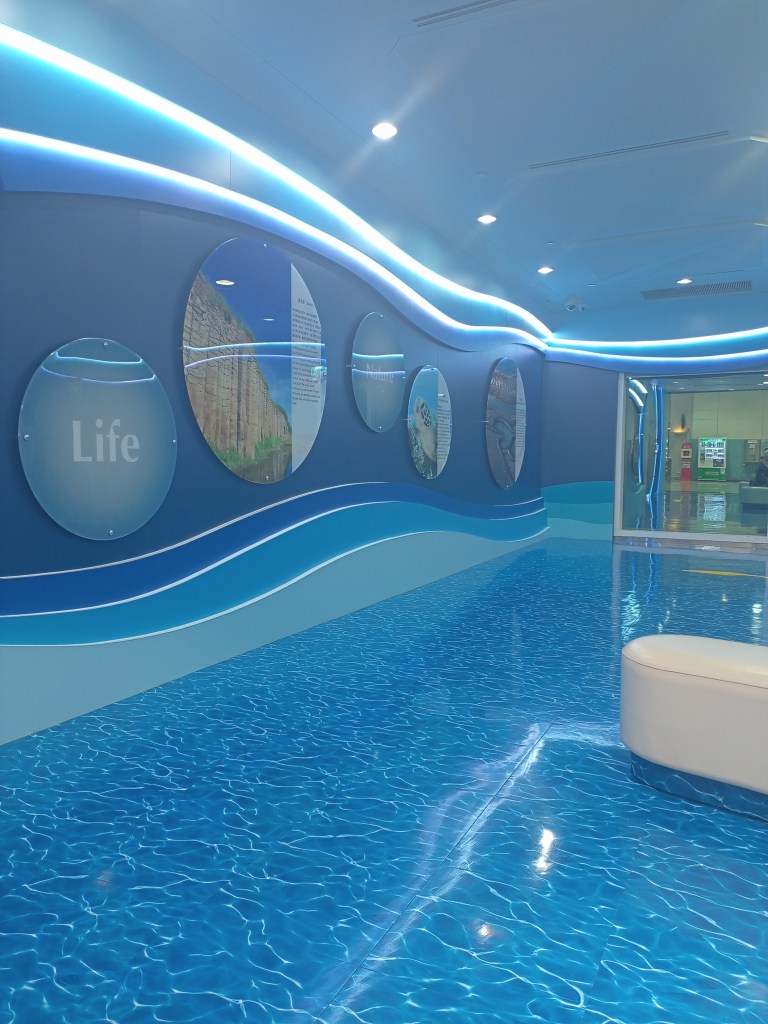
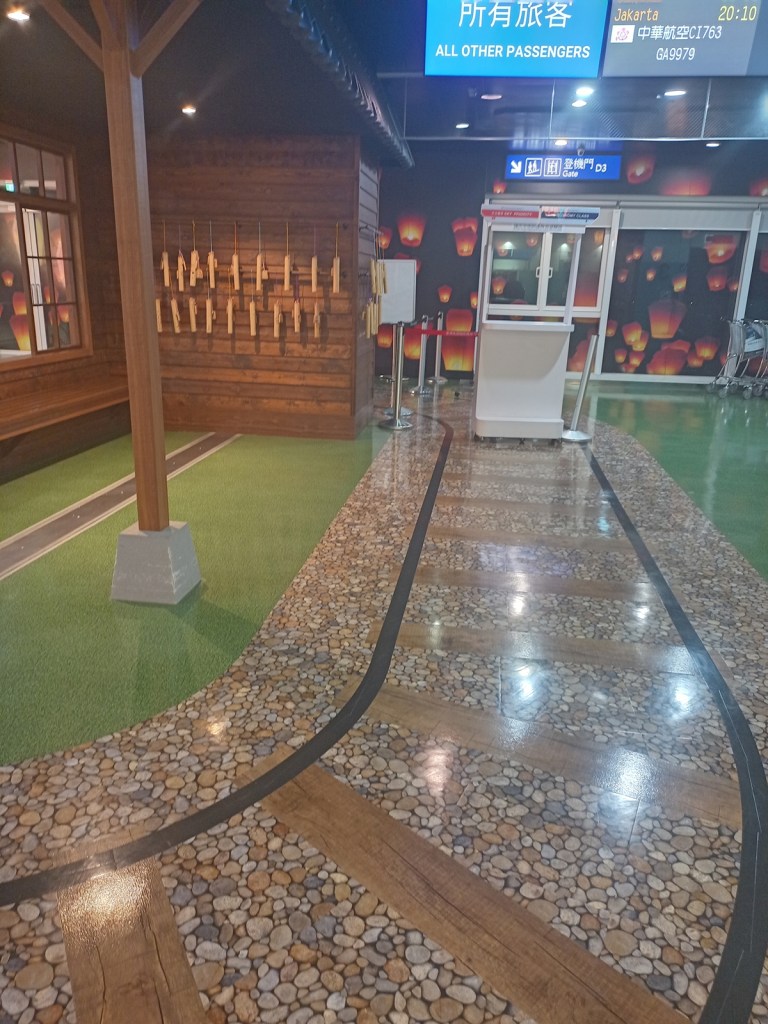
The airport has themed lounge / waiting areas reflecting some of Taiwan’s attractions and features
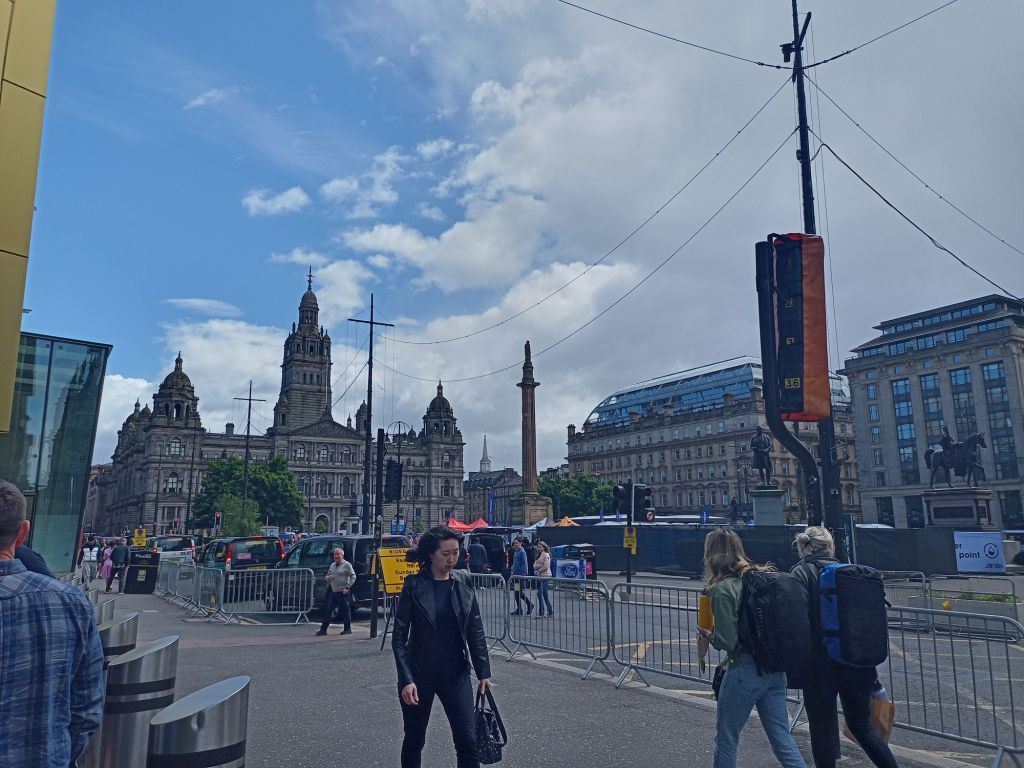
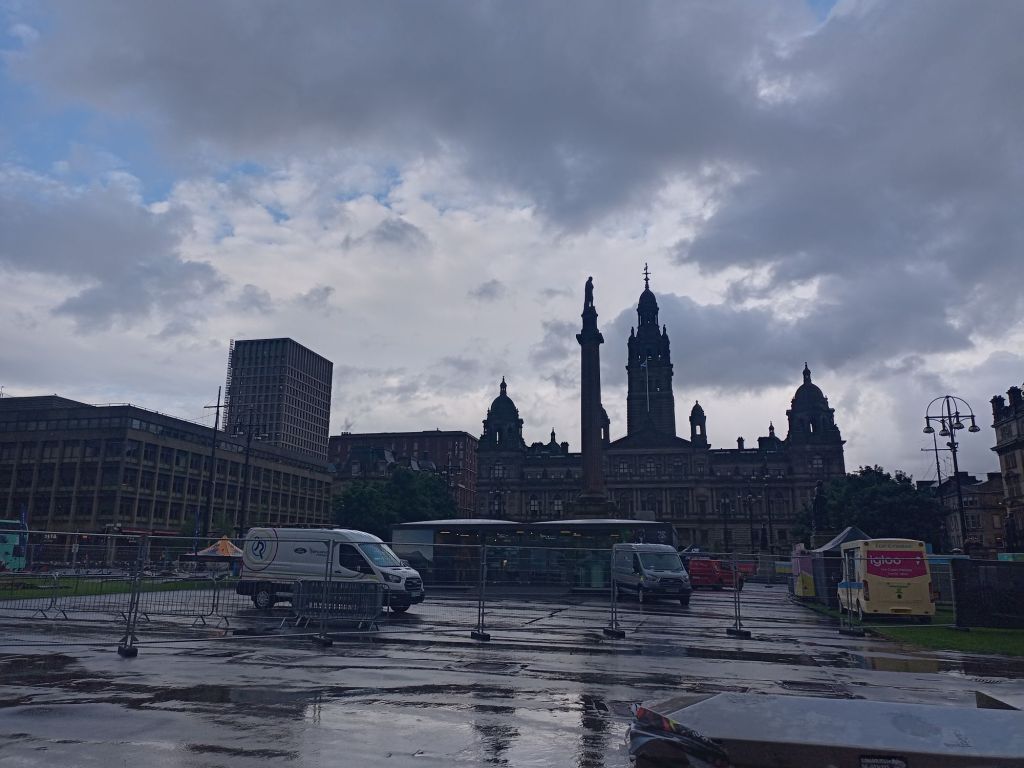
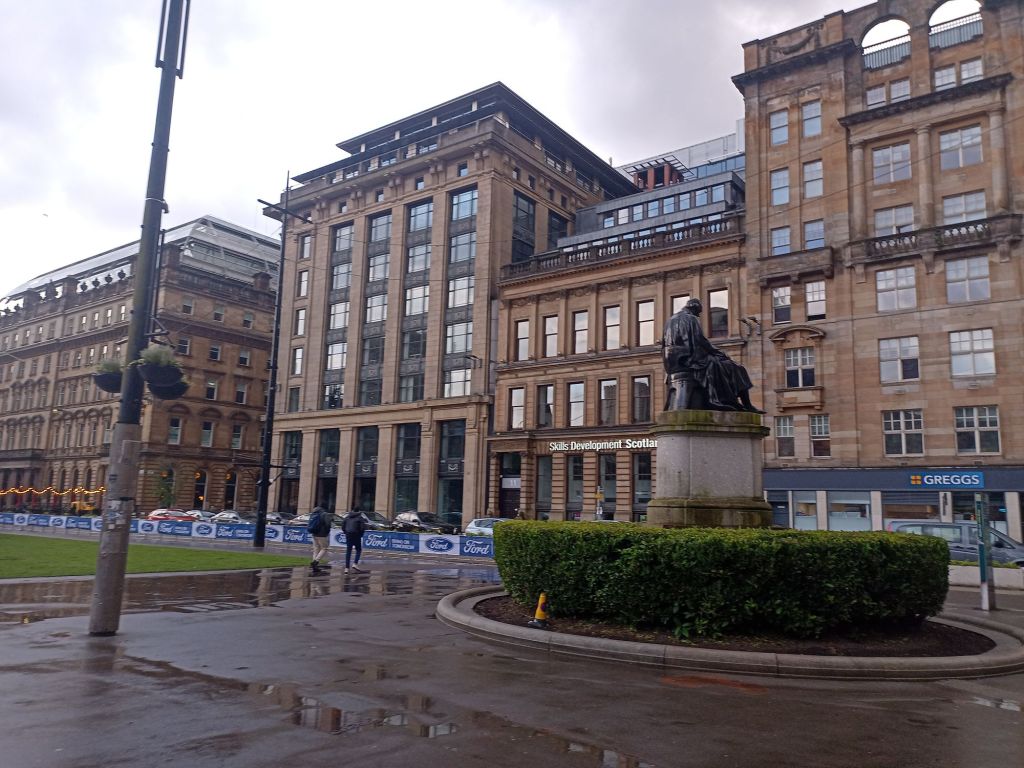
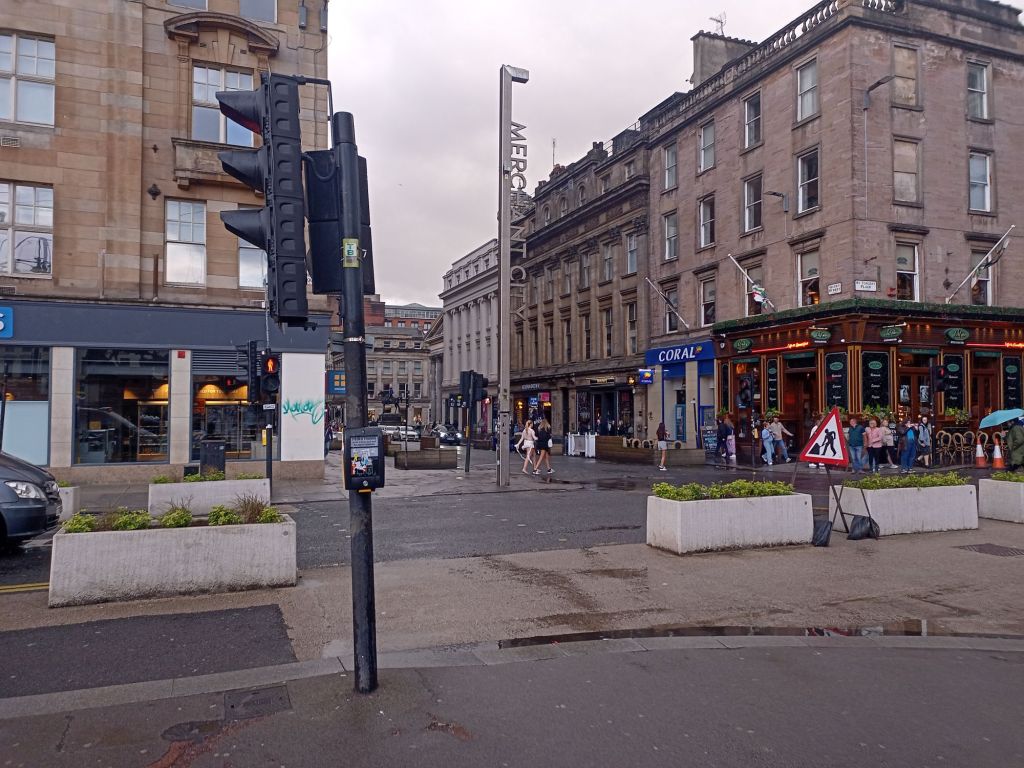
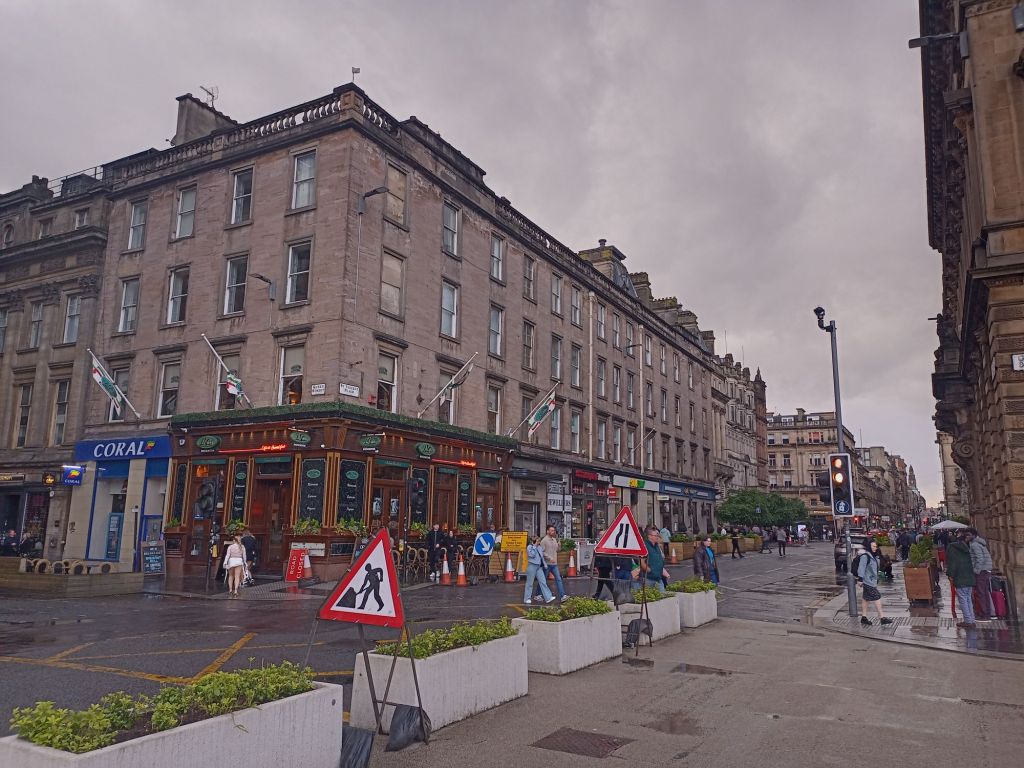
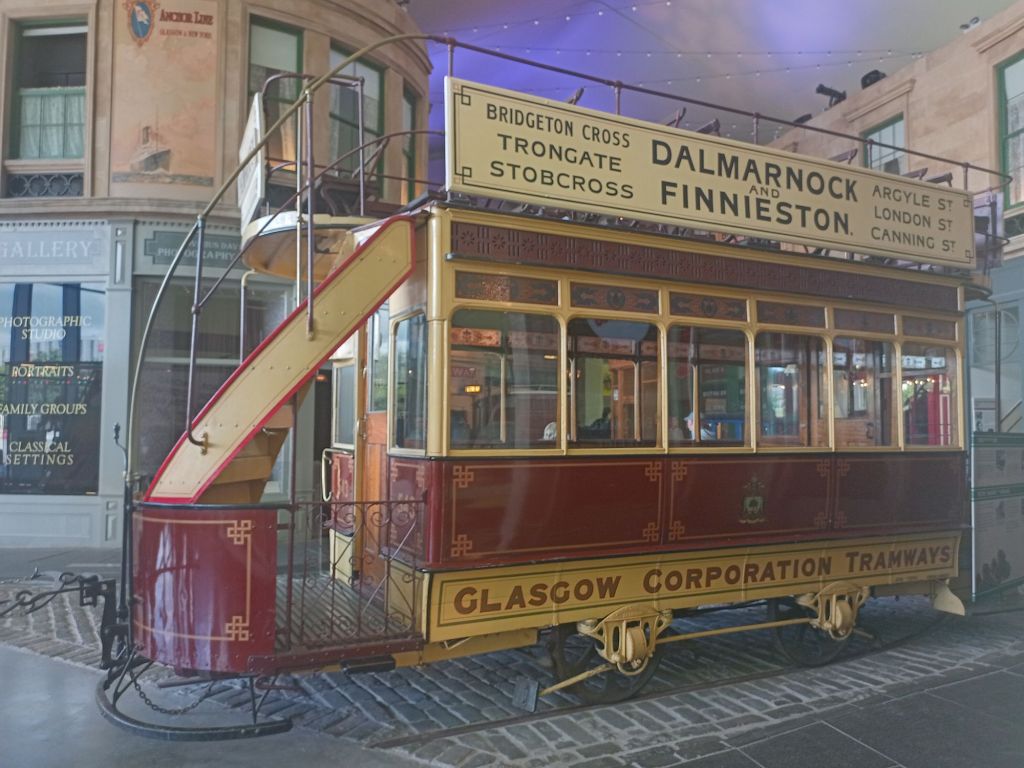
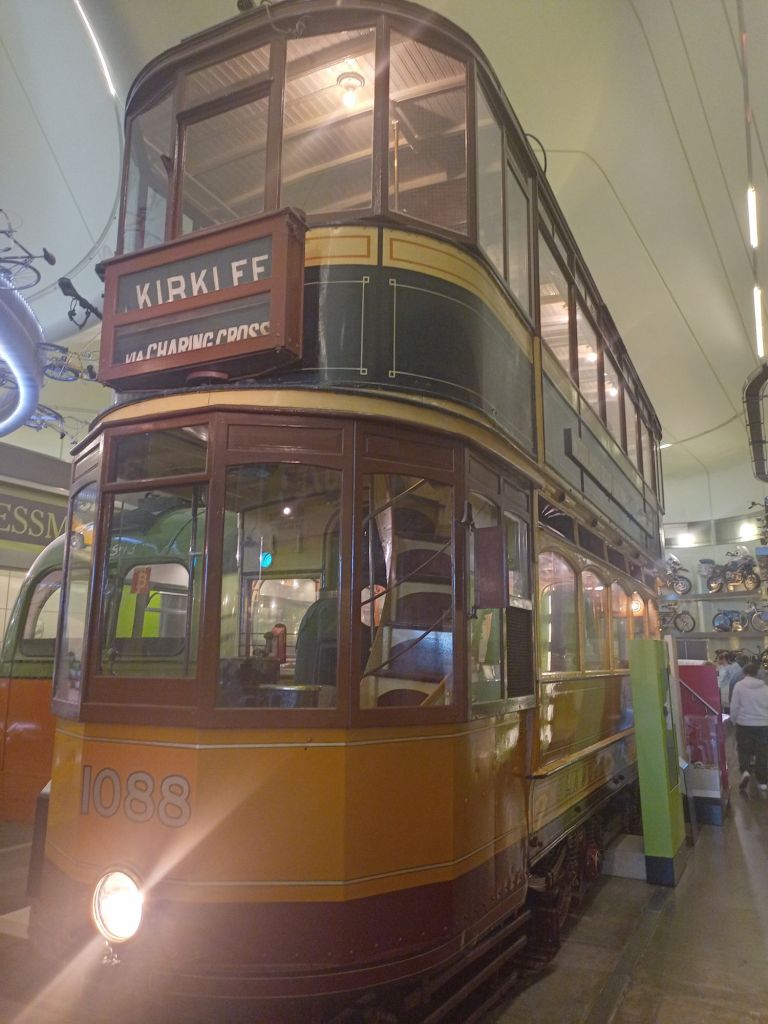
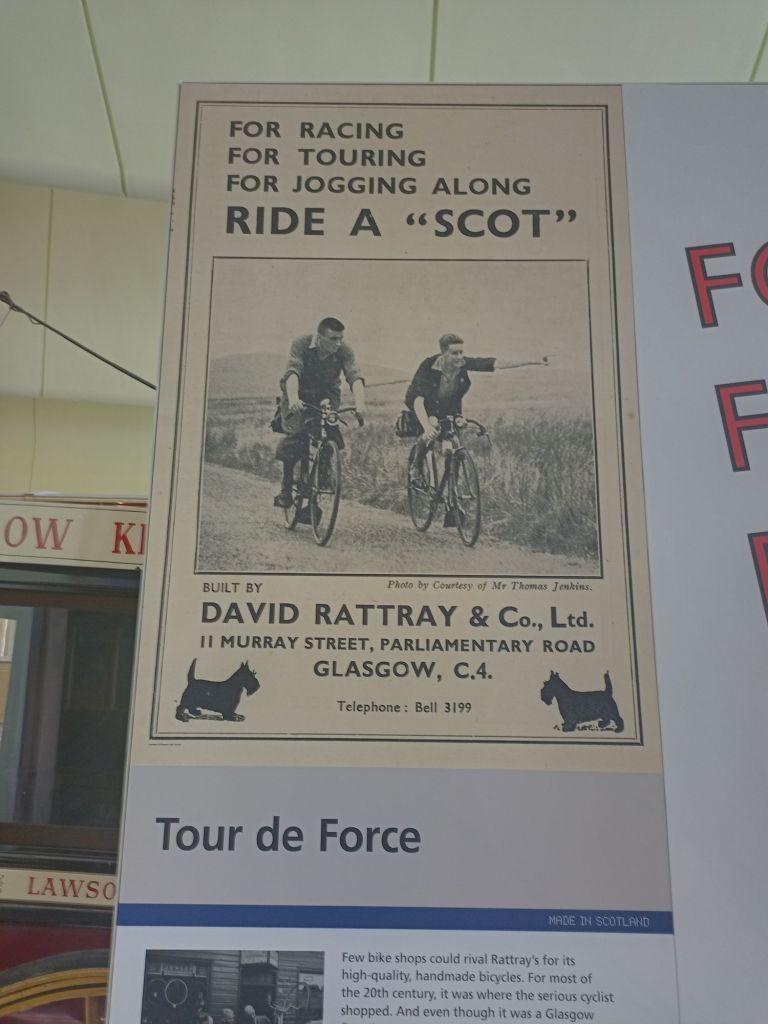
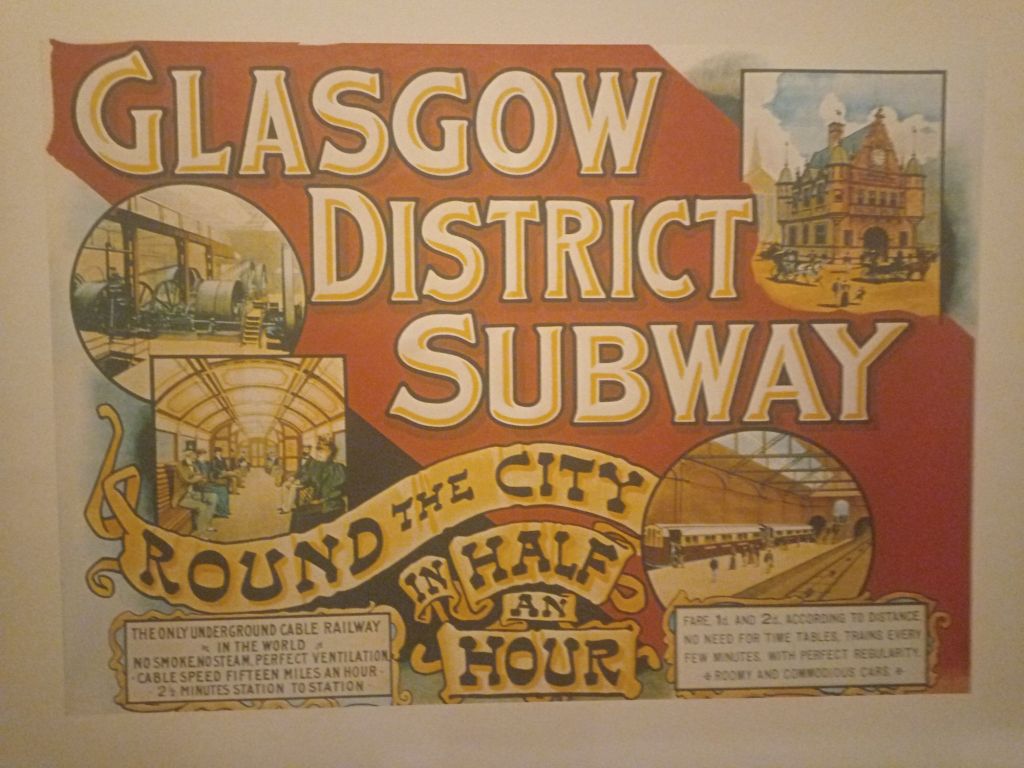
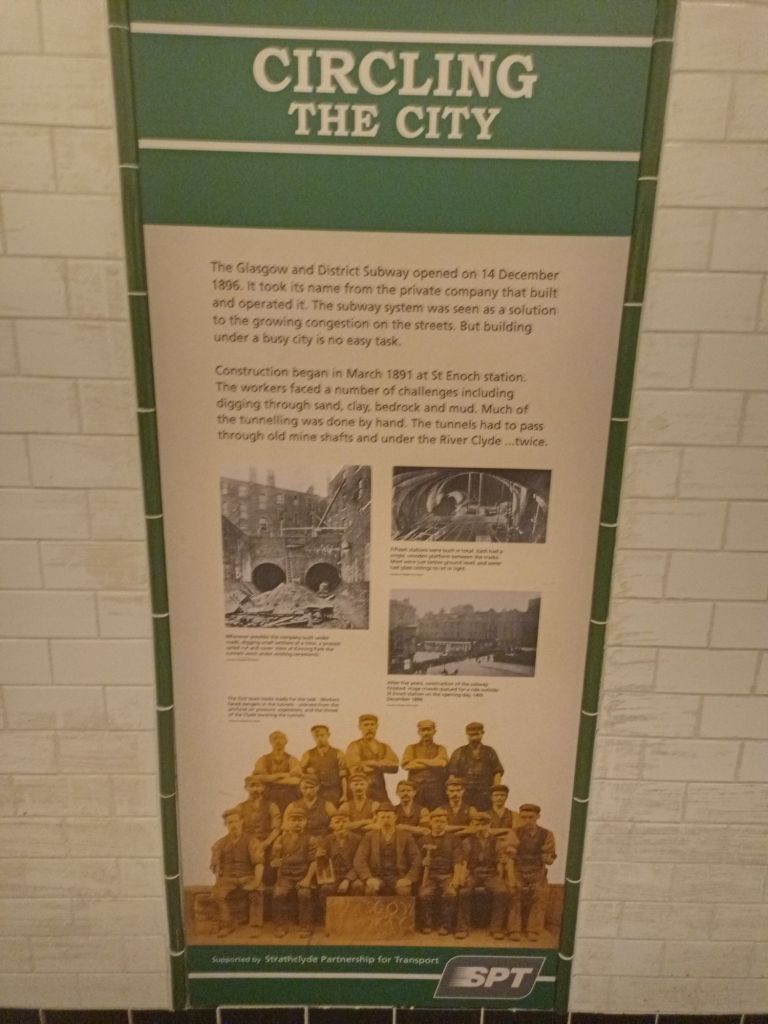
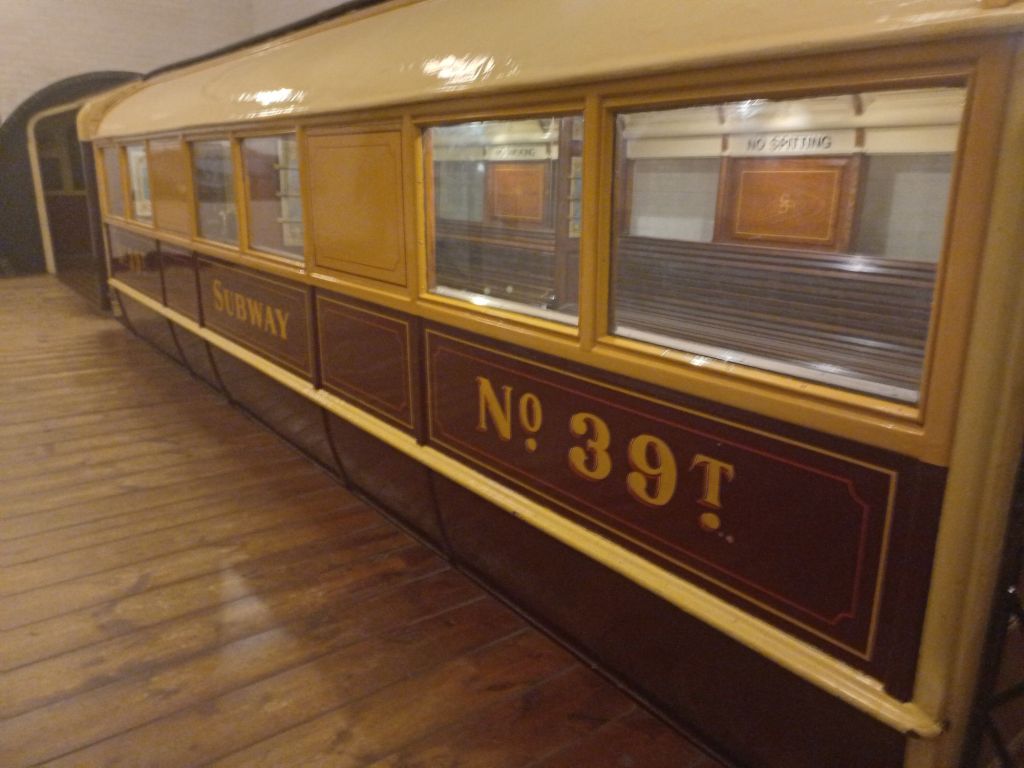
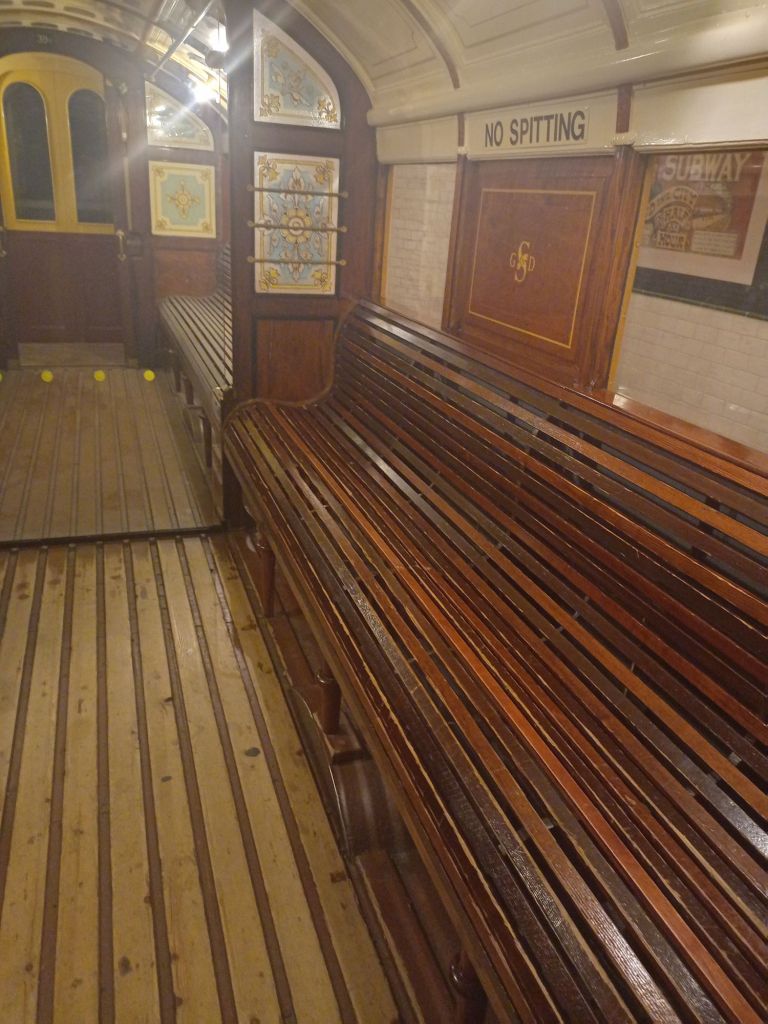
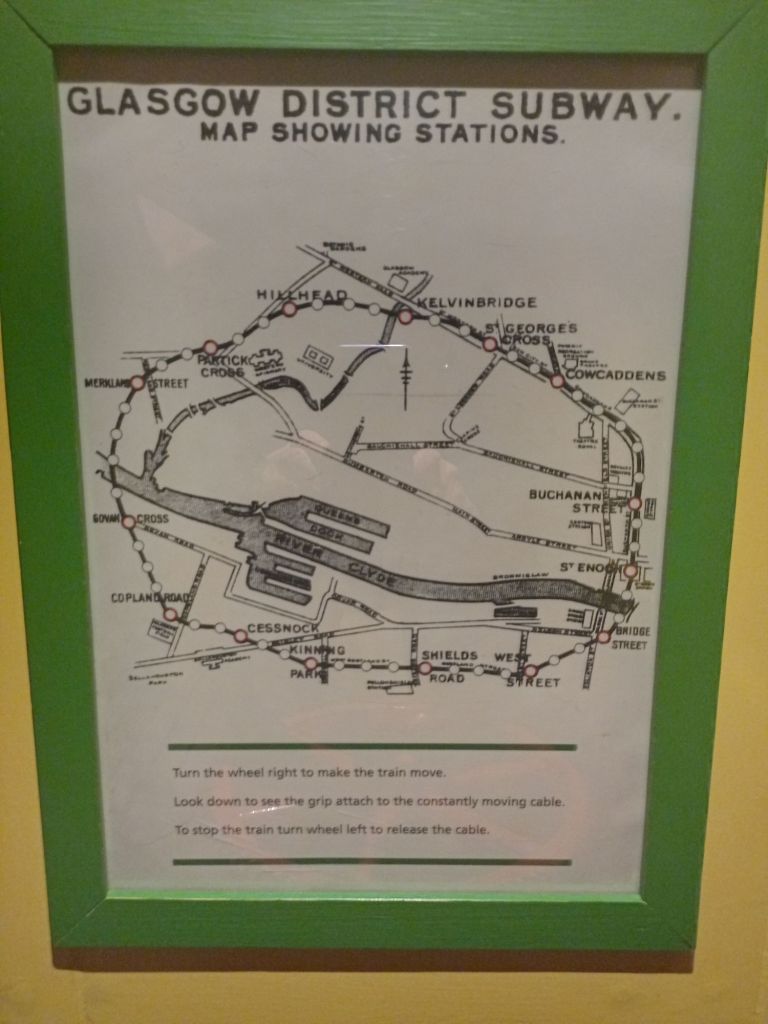
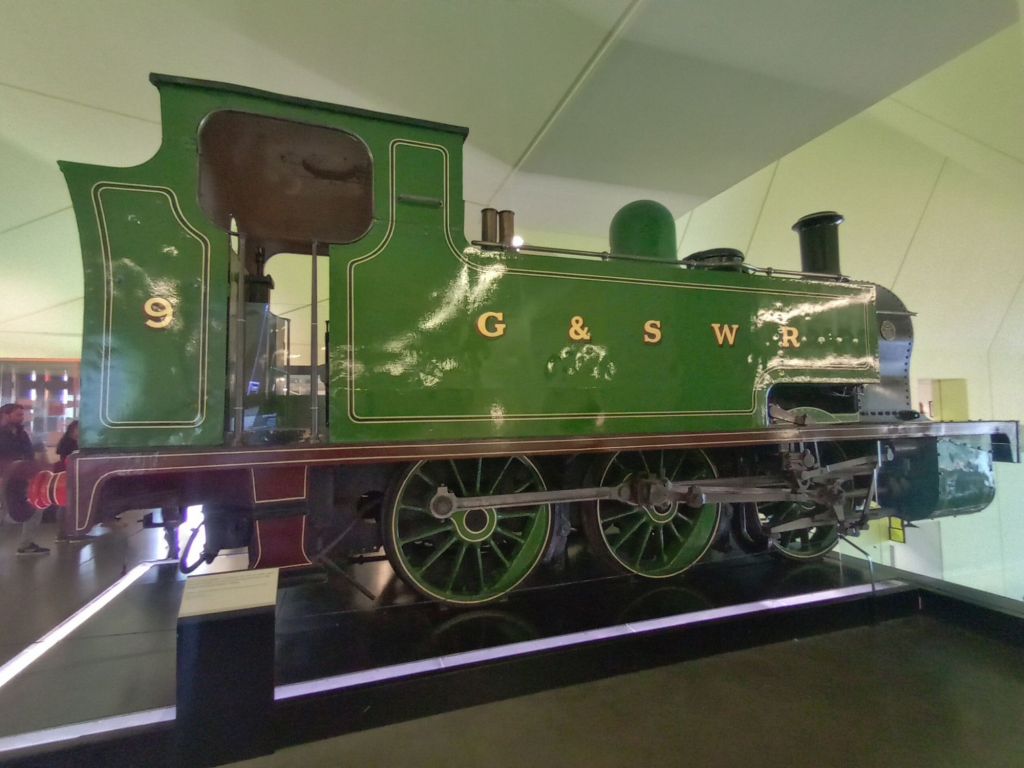
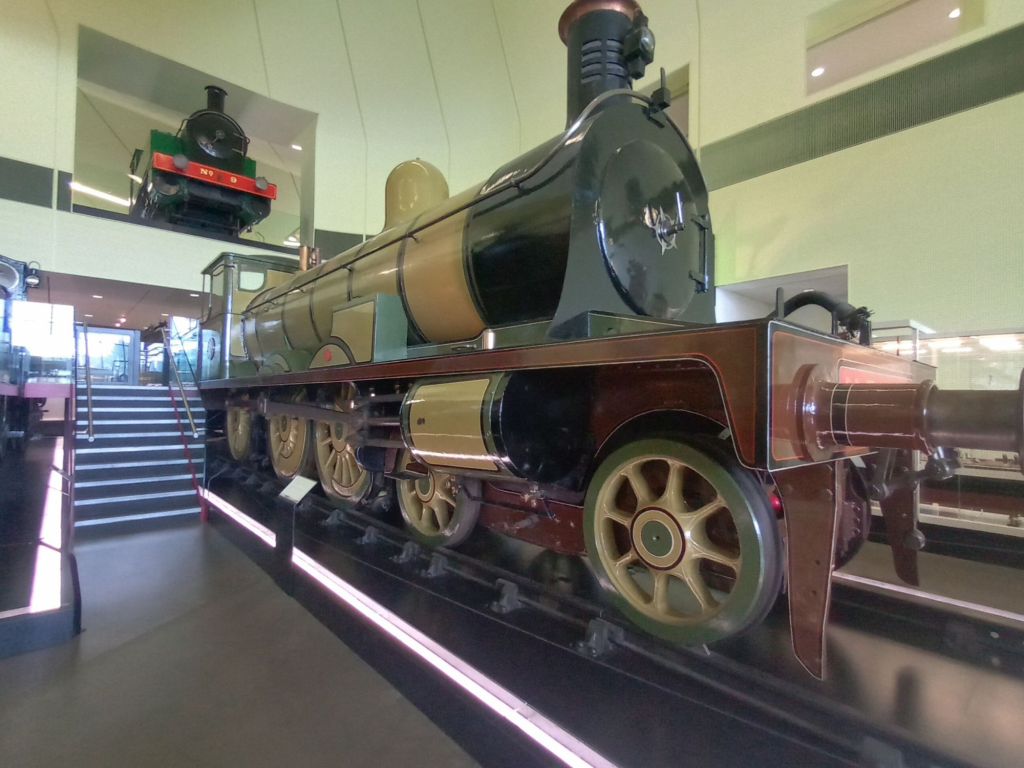
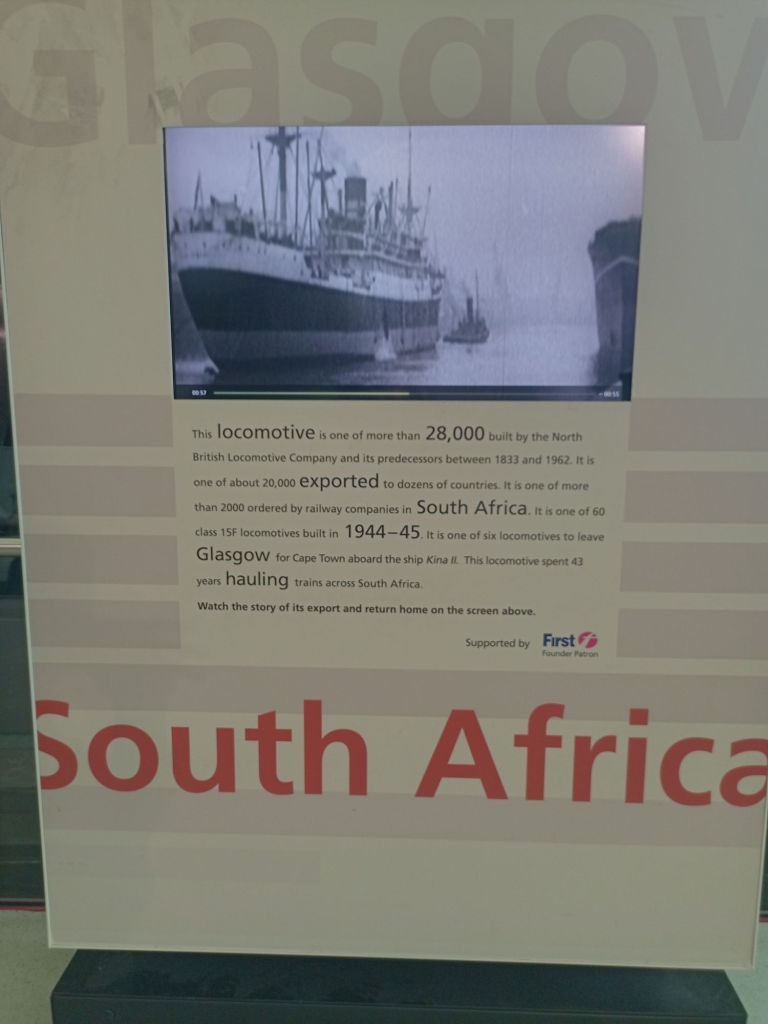
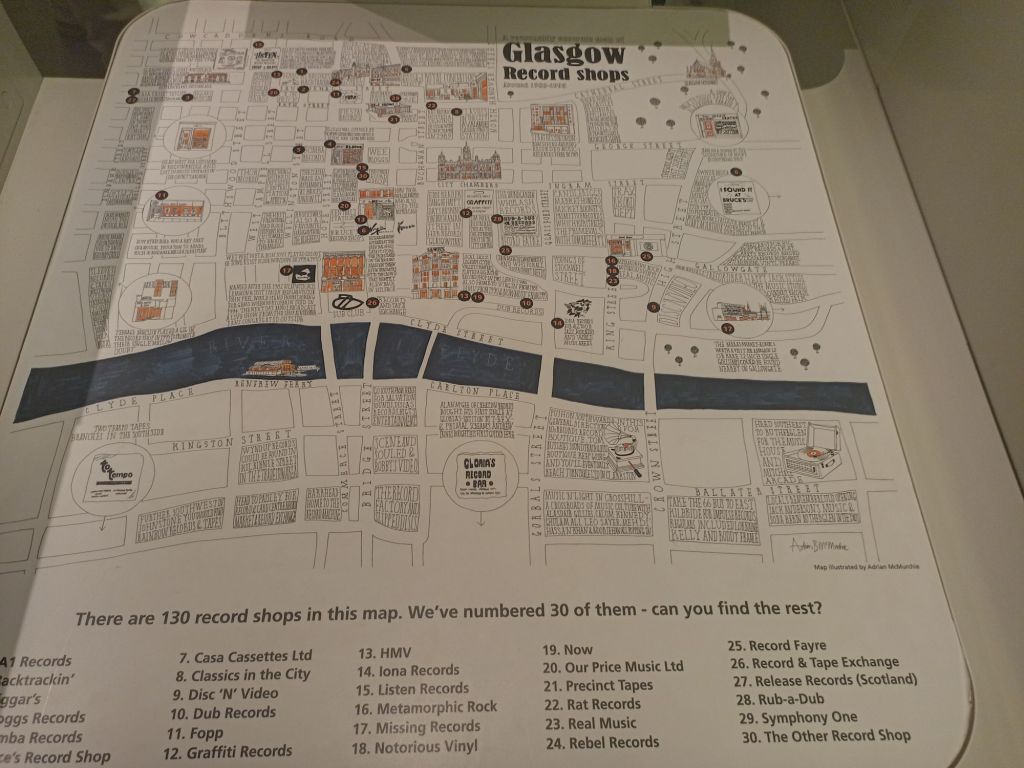
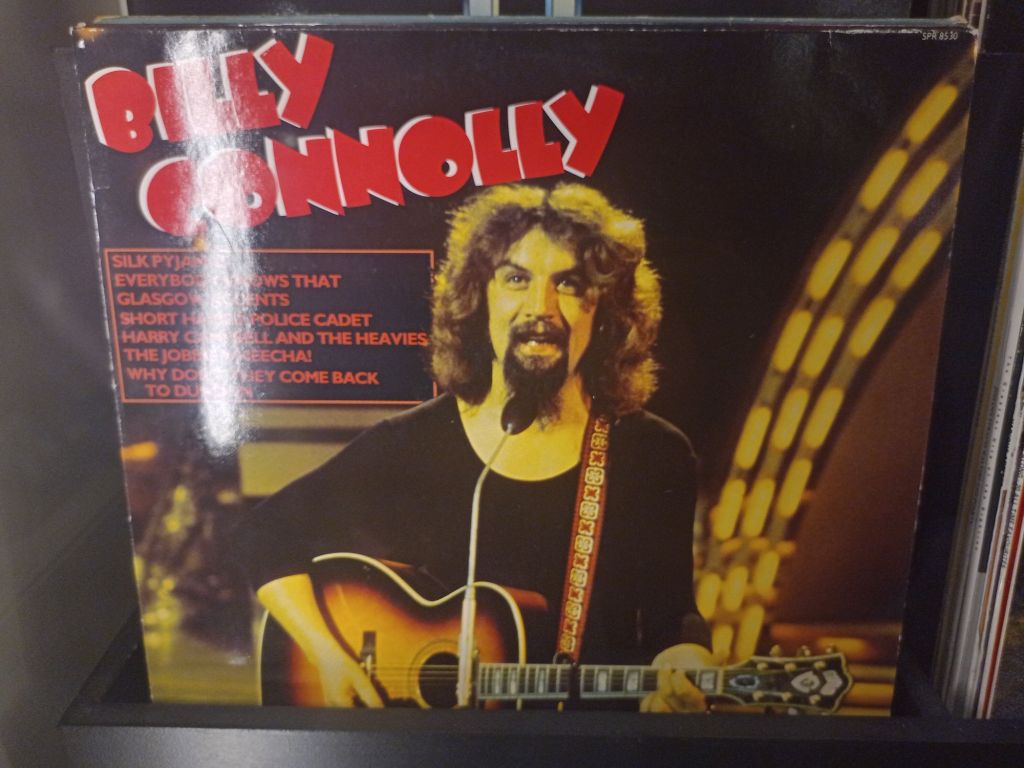
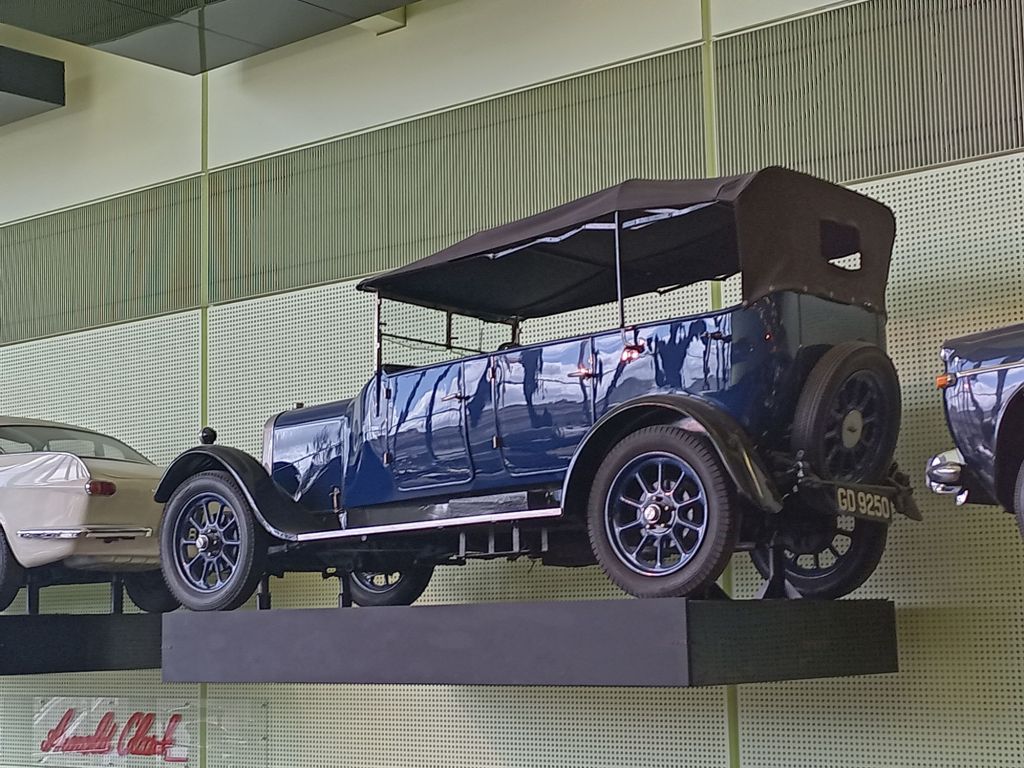
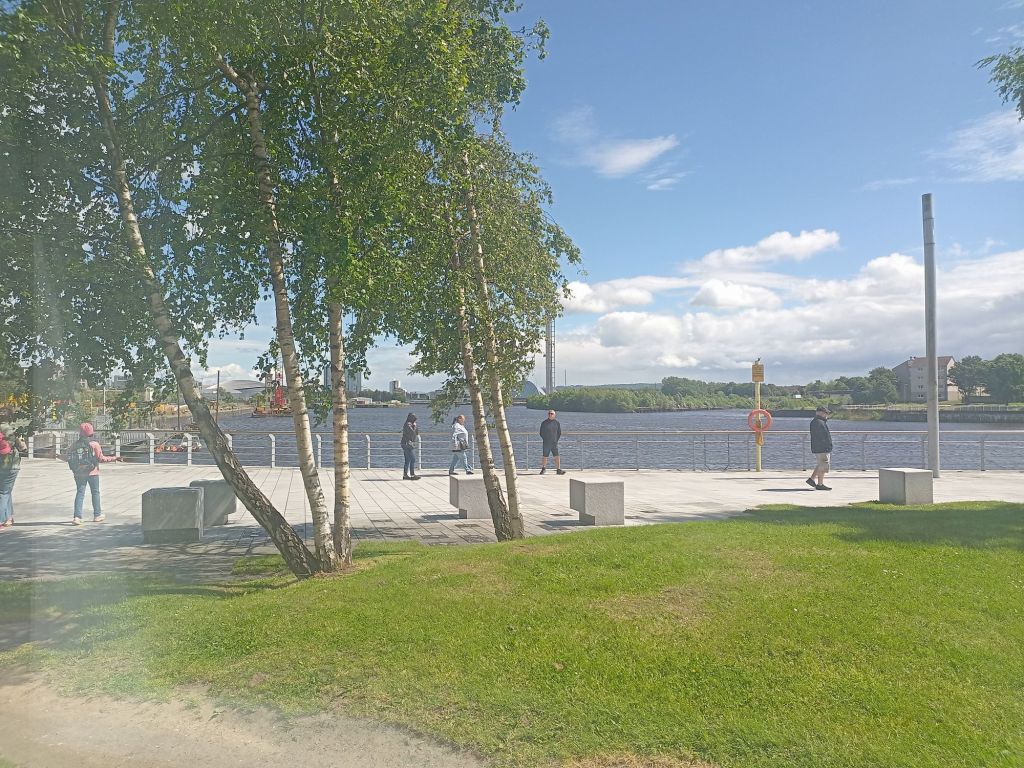
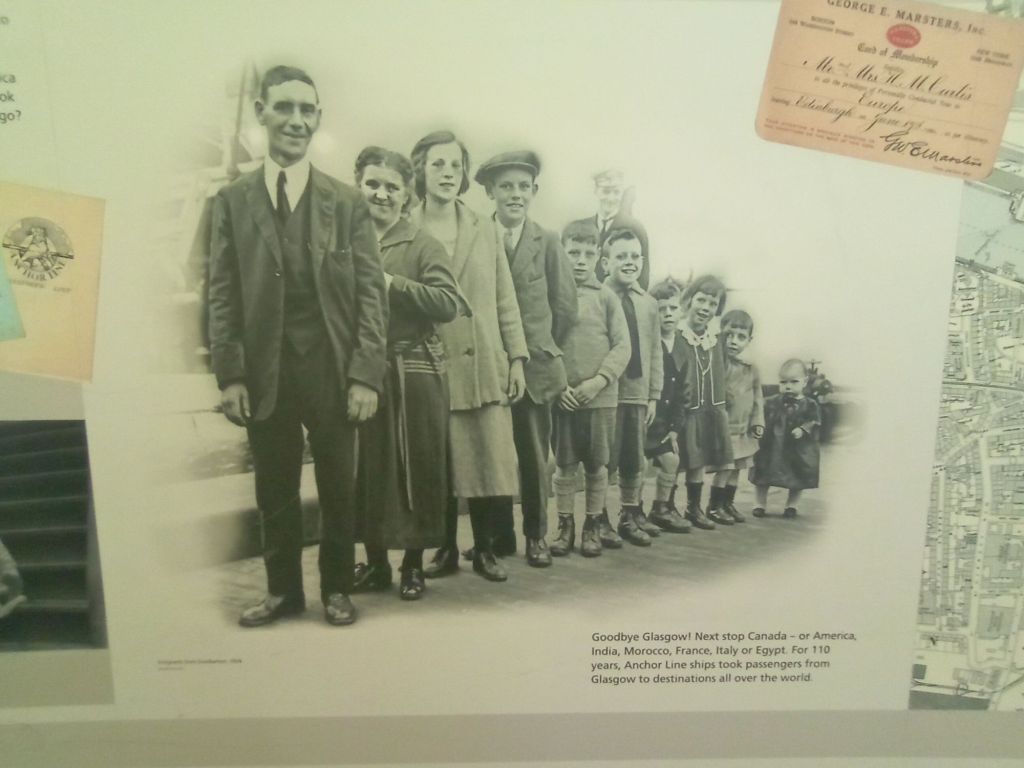
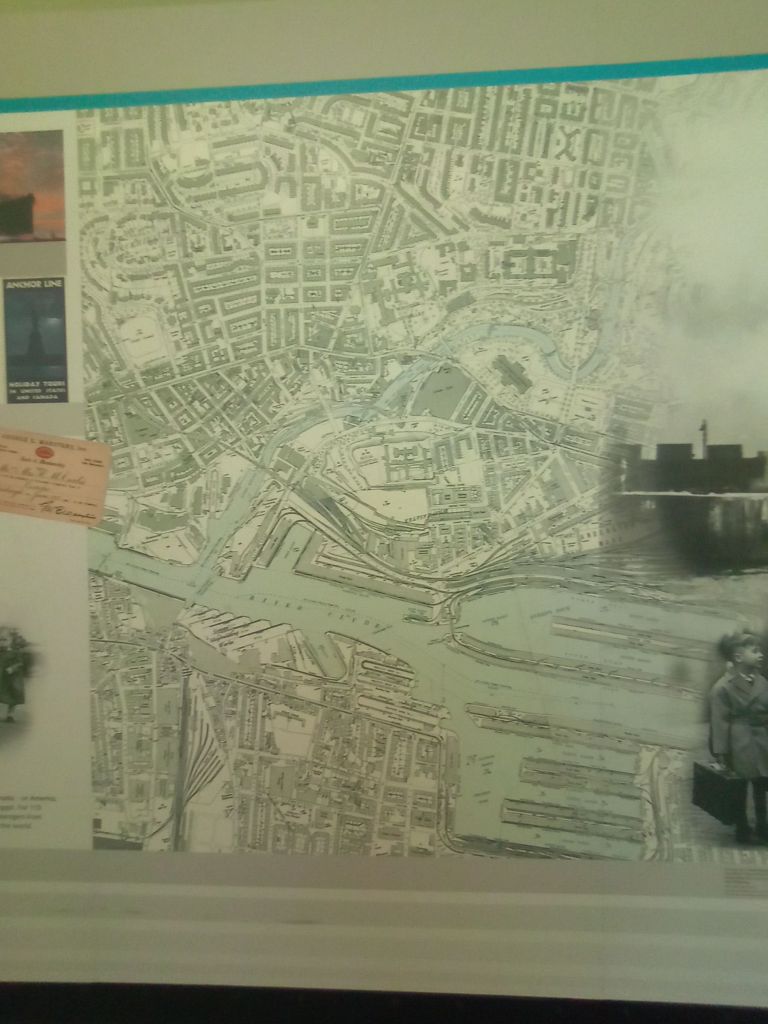
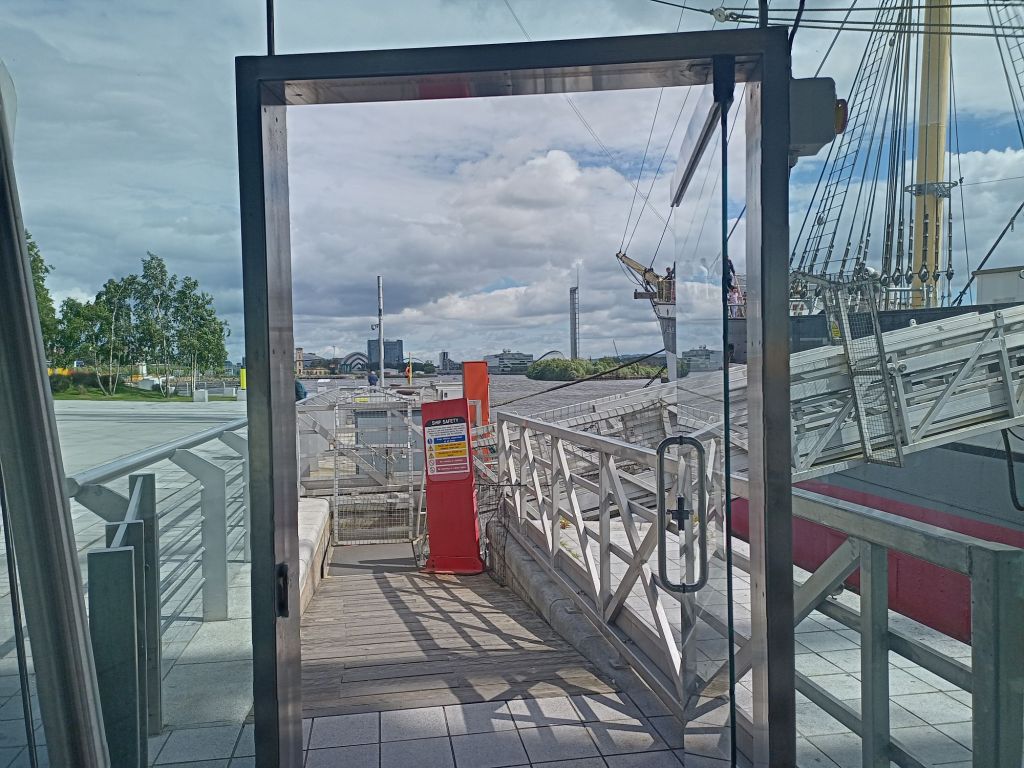
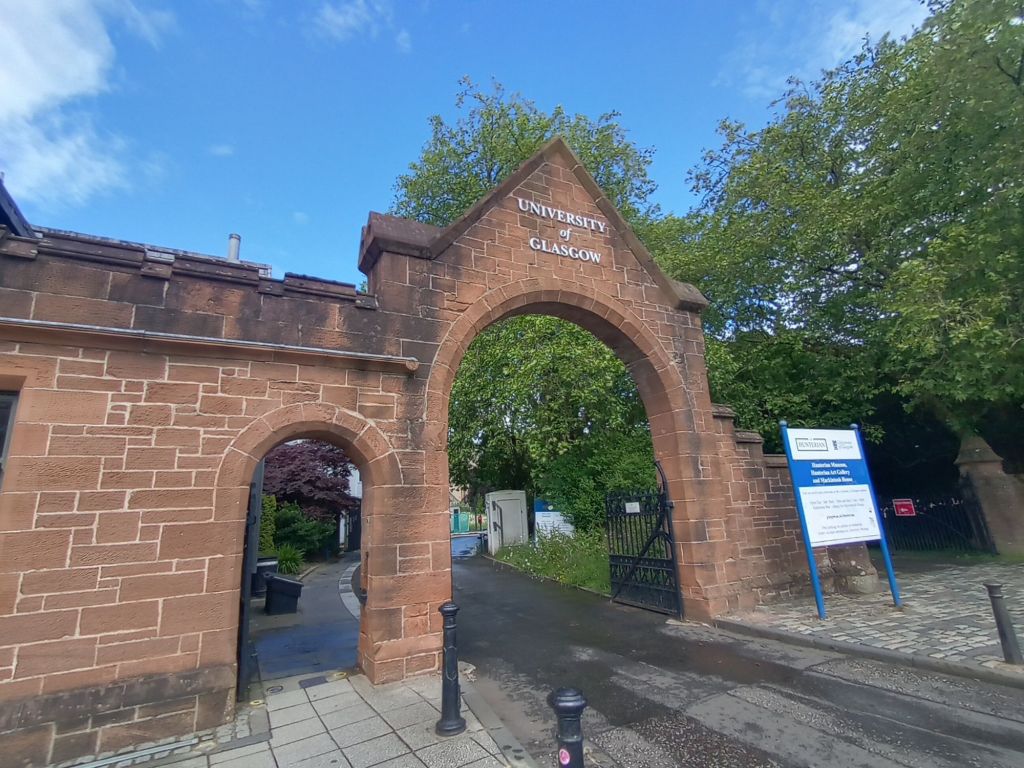
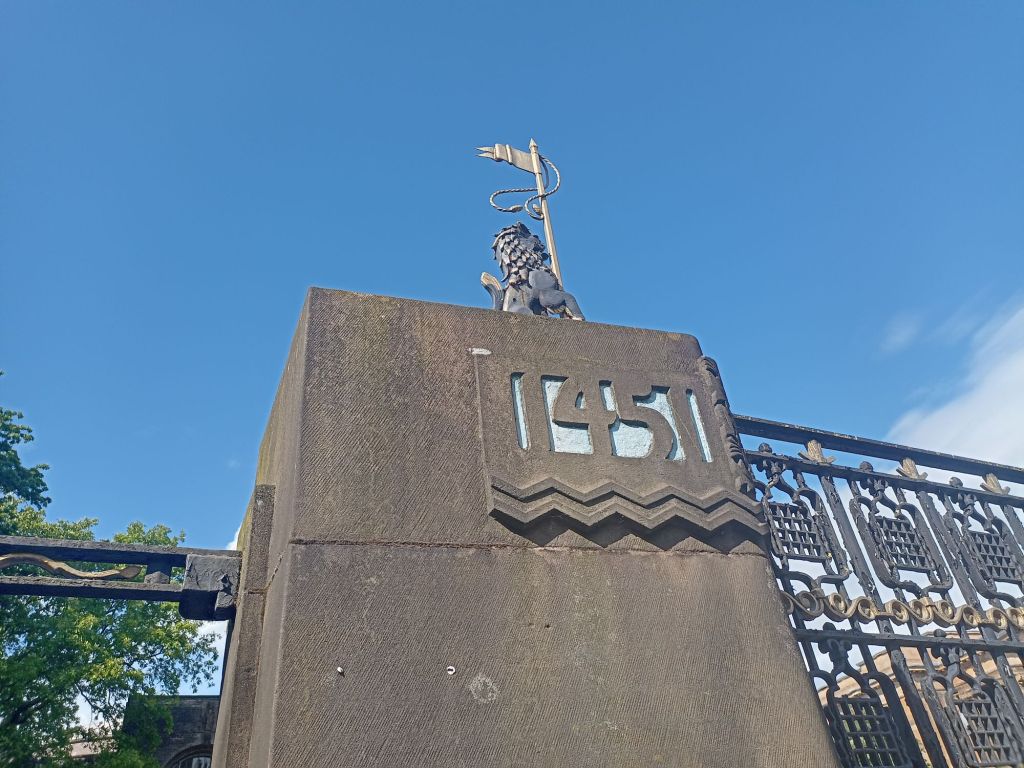
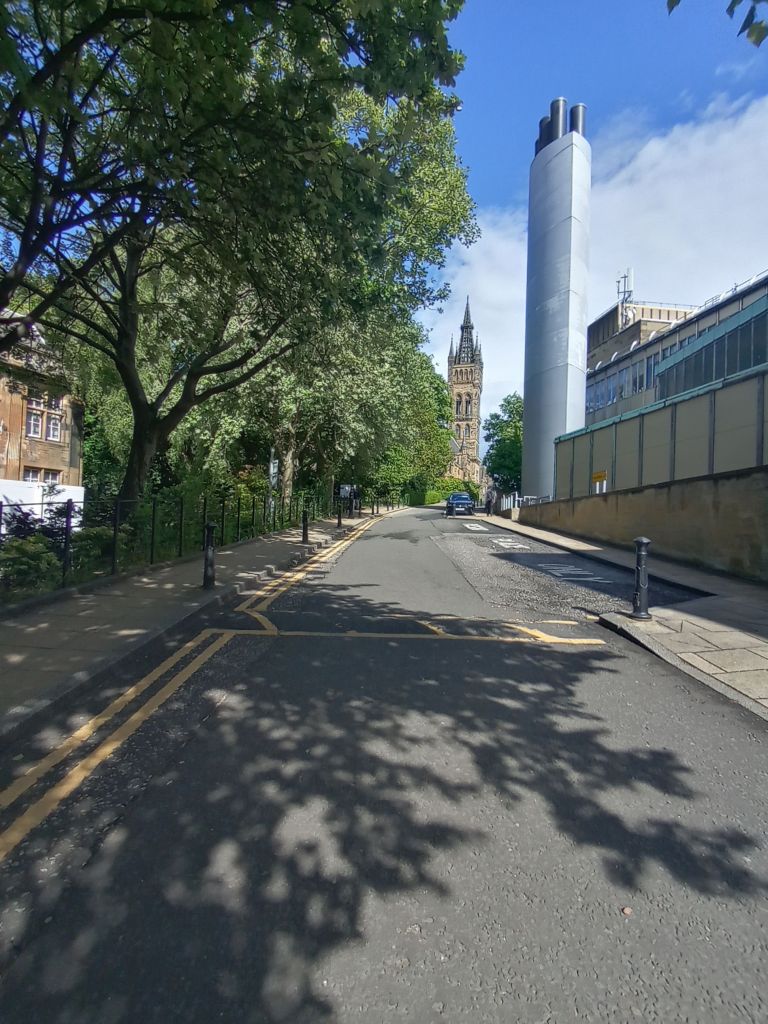
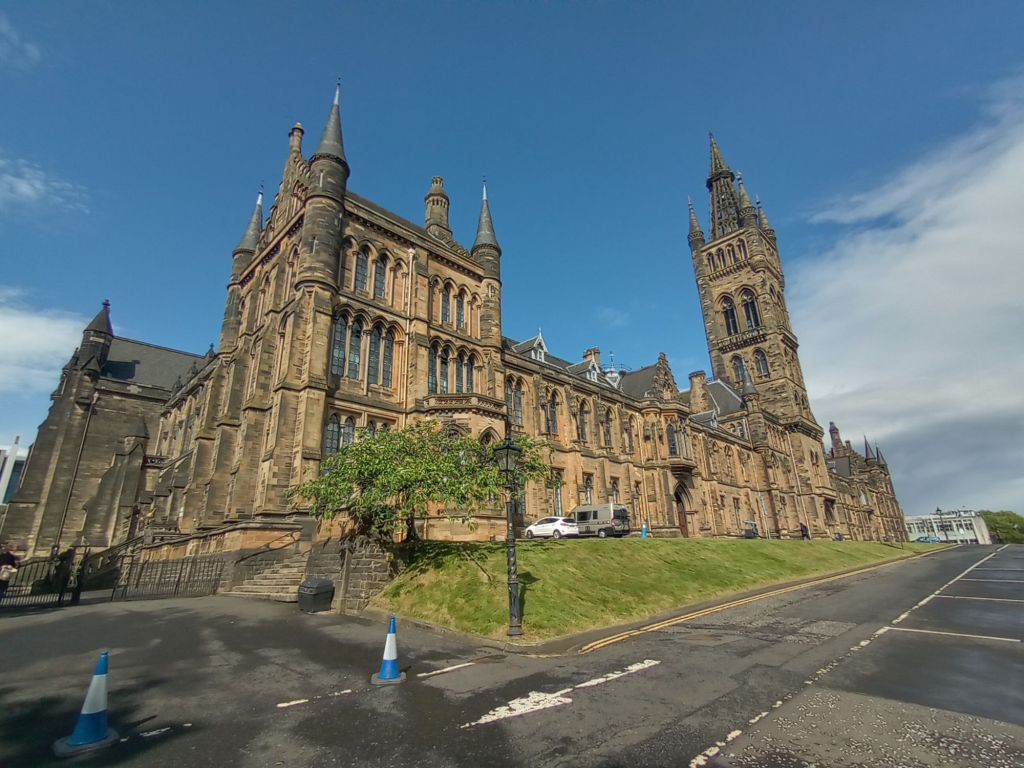
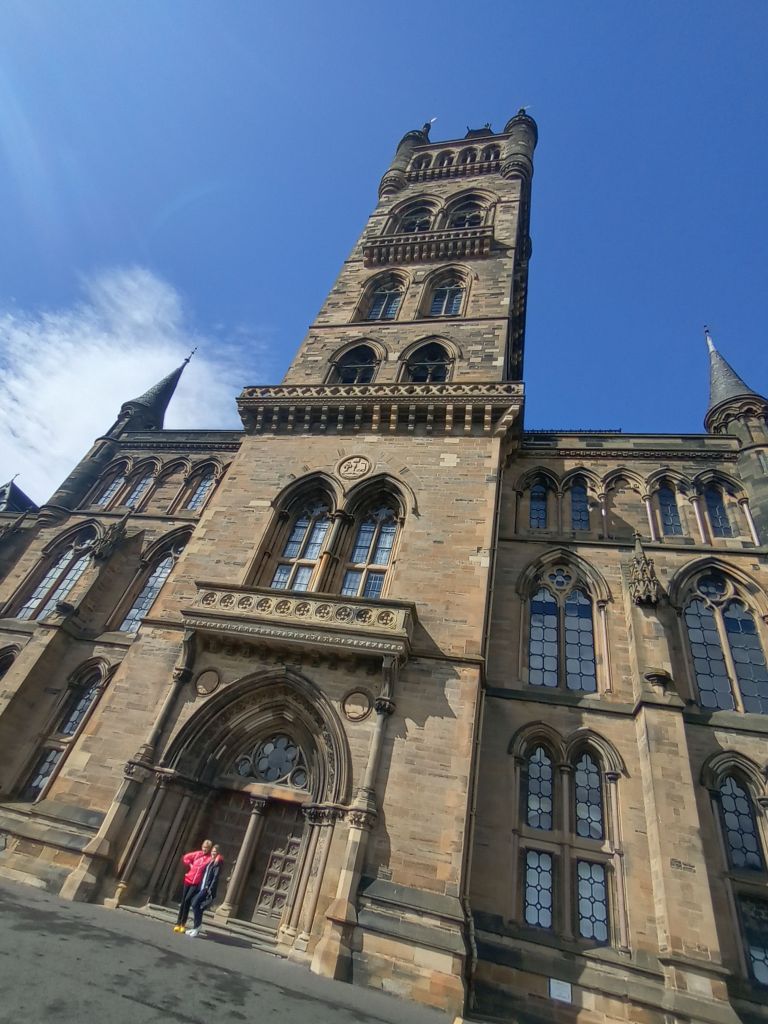
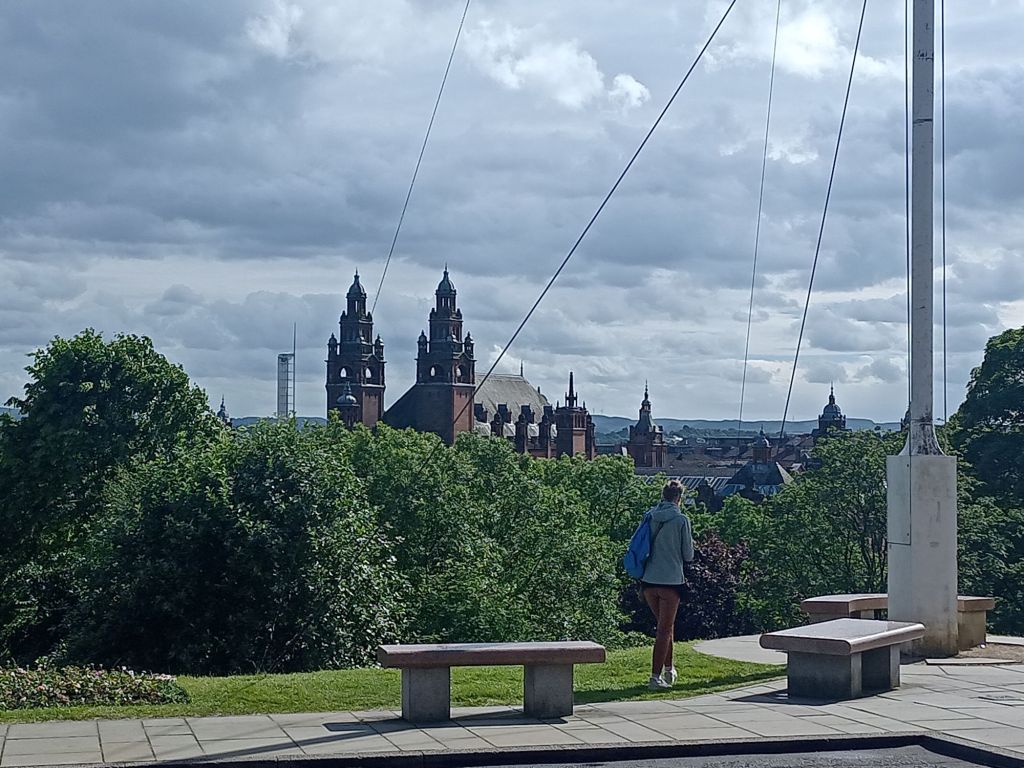
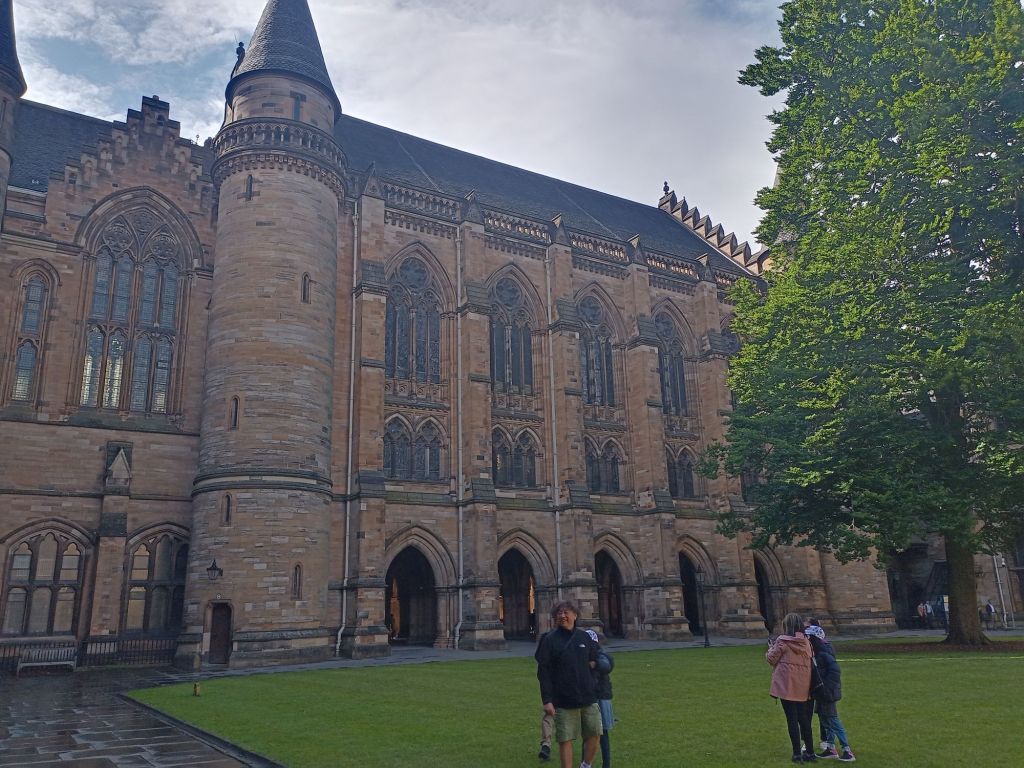
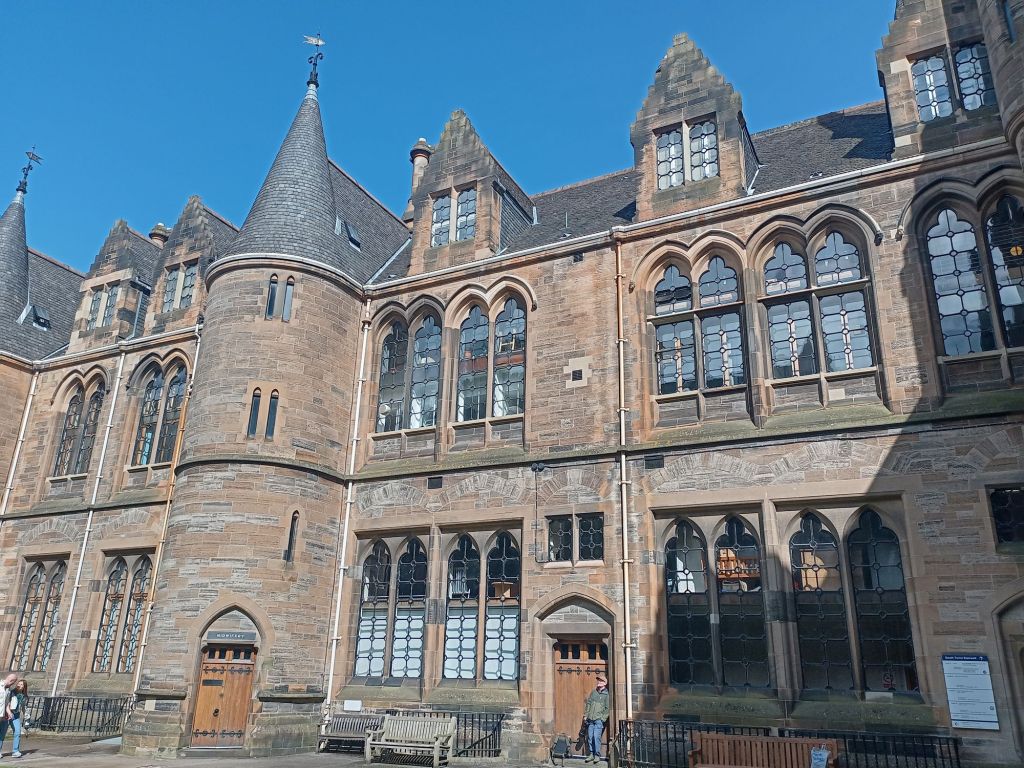
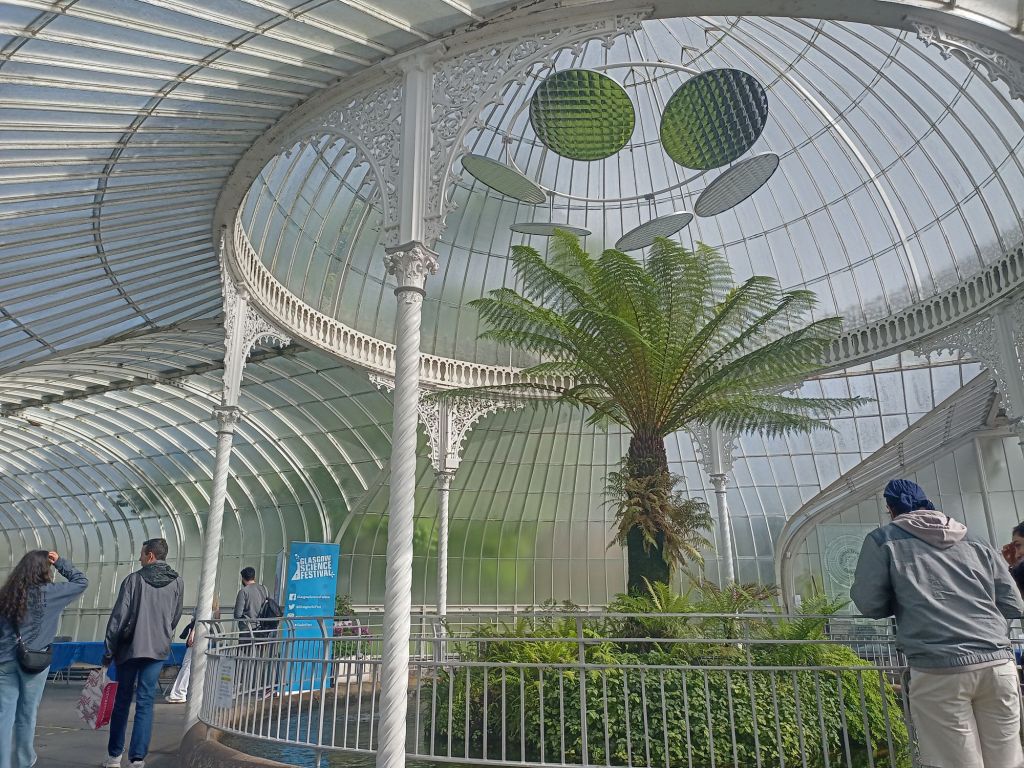
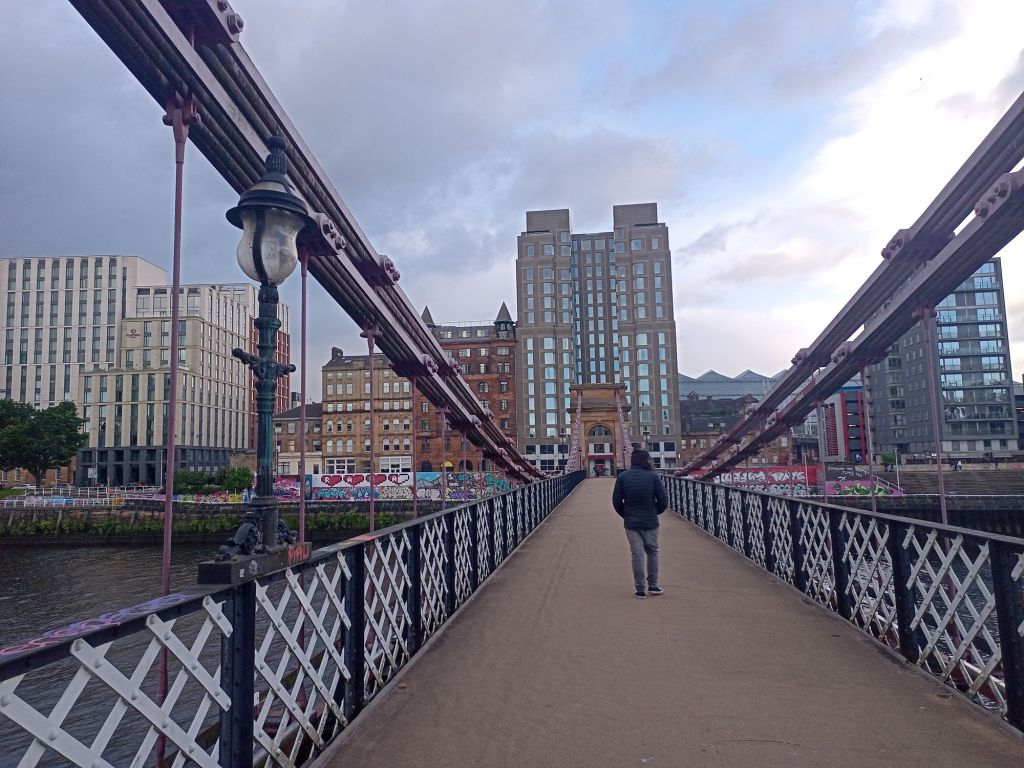
It’s our final full day in Edinburgh before heading back to London. Around noon, Ian and E take the bus to Waverley Station and board one of the regular fast trains to Glasgow. They spend the rest of the day exploring Scotland’s other major city on foot and via the underground. Highlights include the Riverside Museum, the Clyde River, Glasgow University and the Glasgow Botanic Garden.
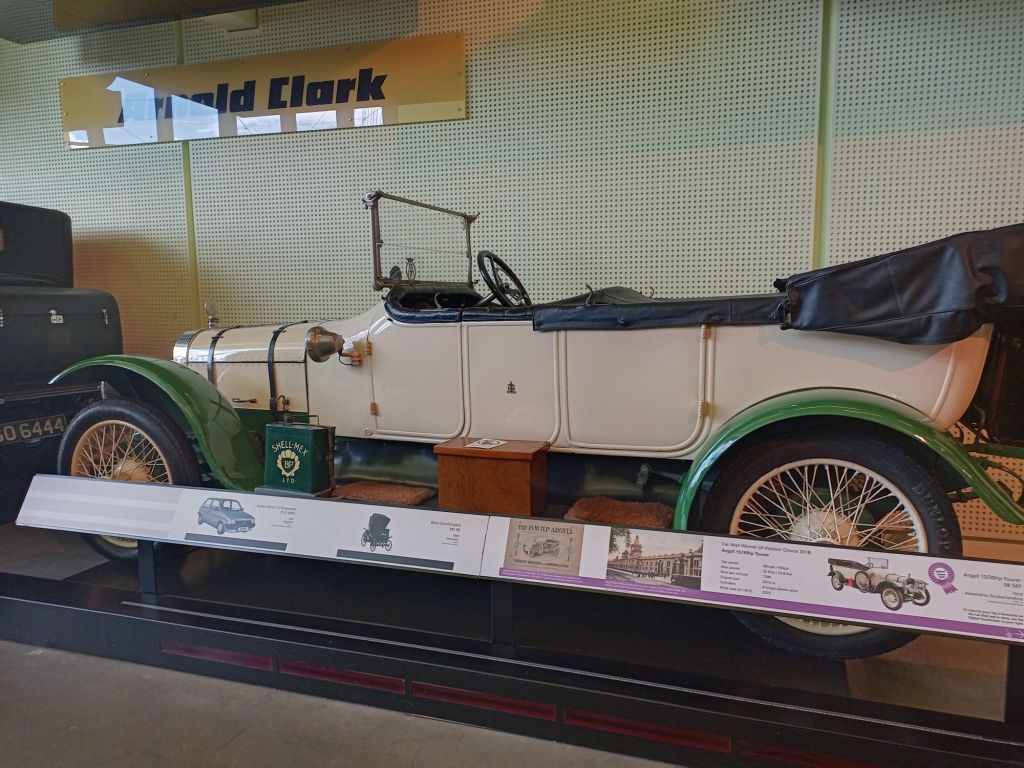
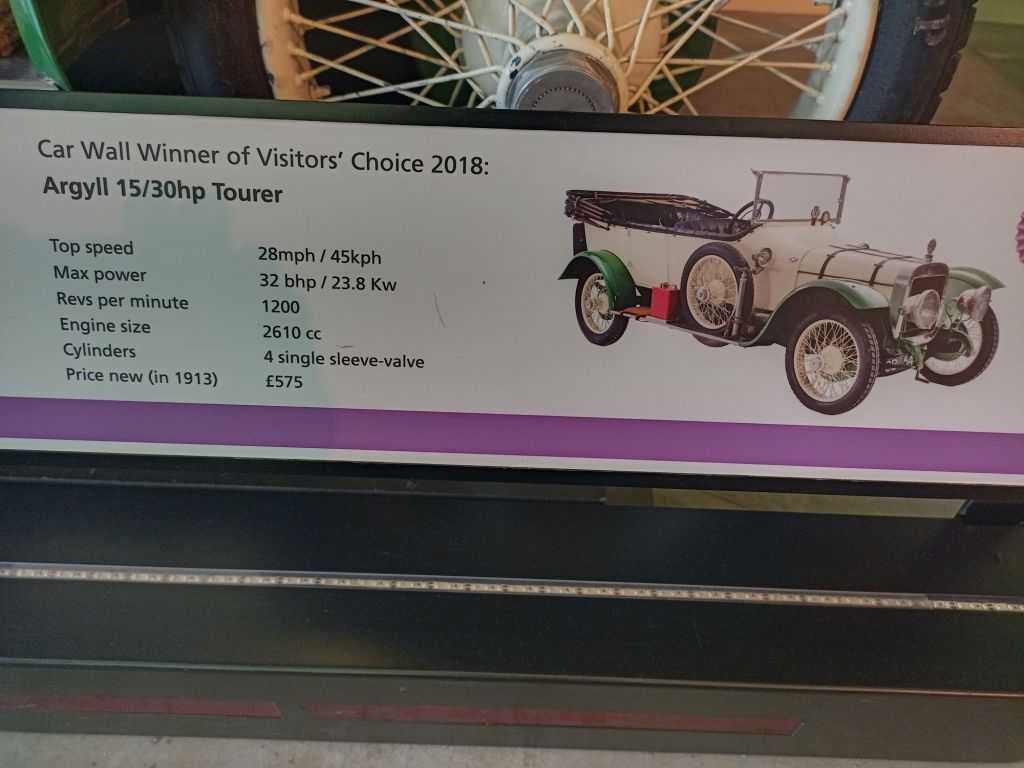
Riverside Museum
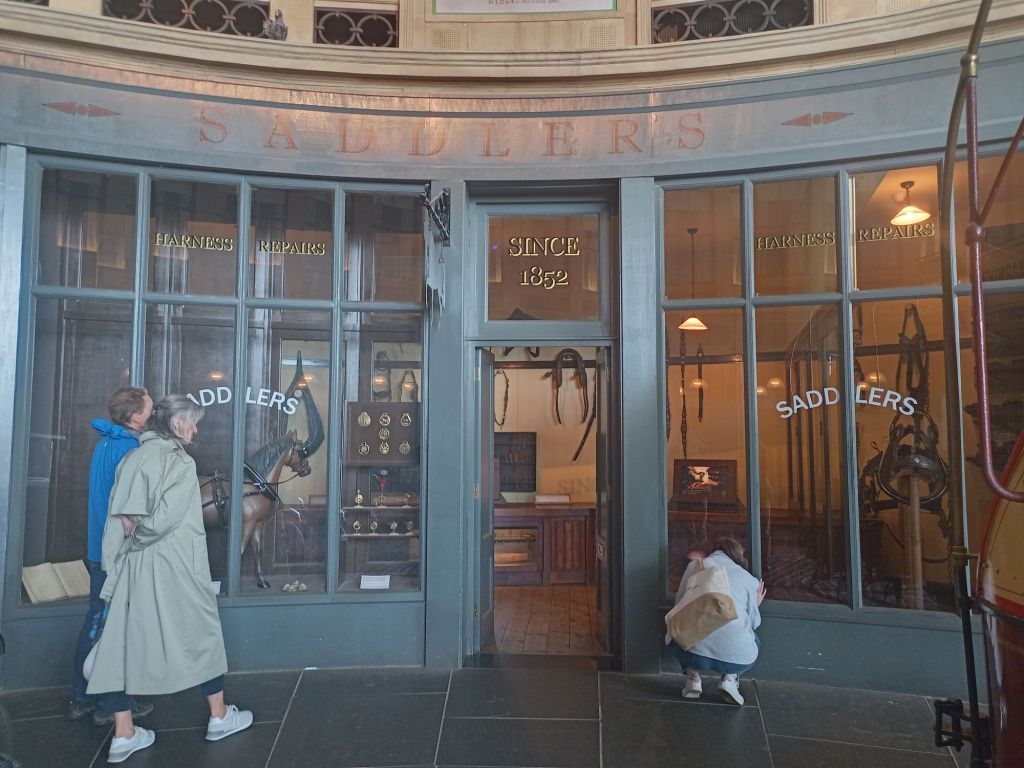
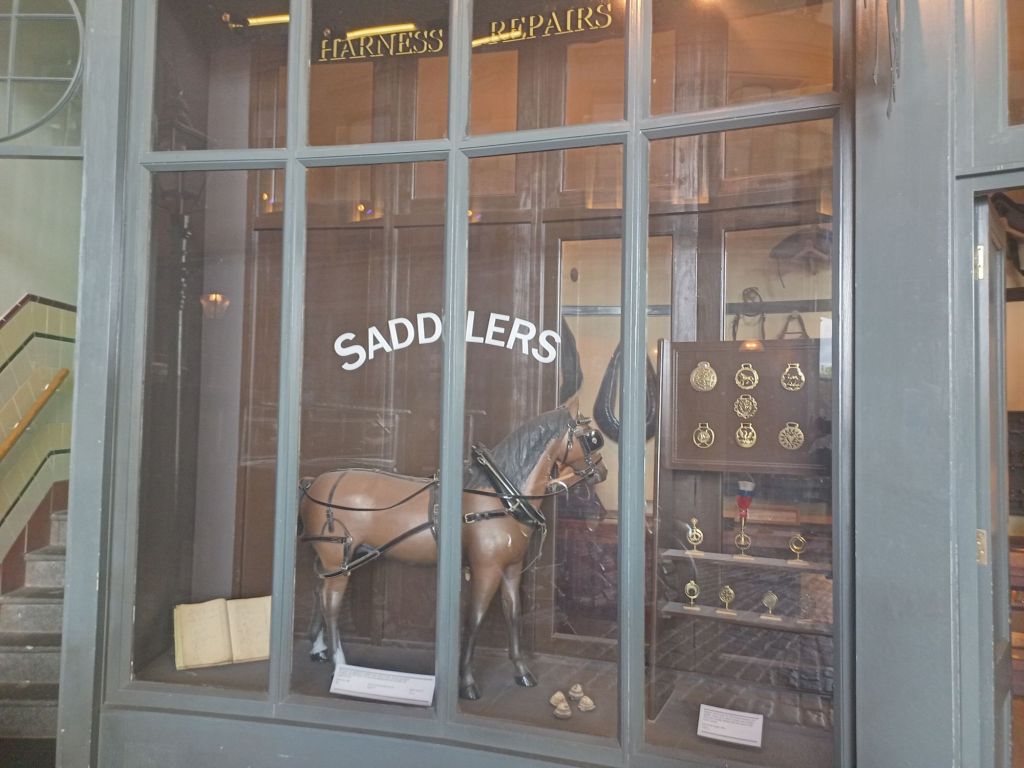
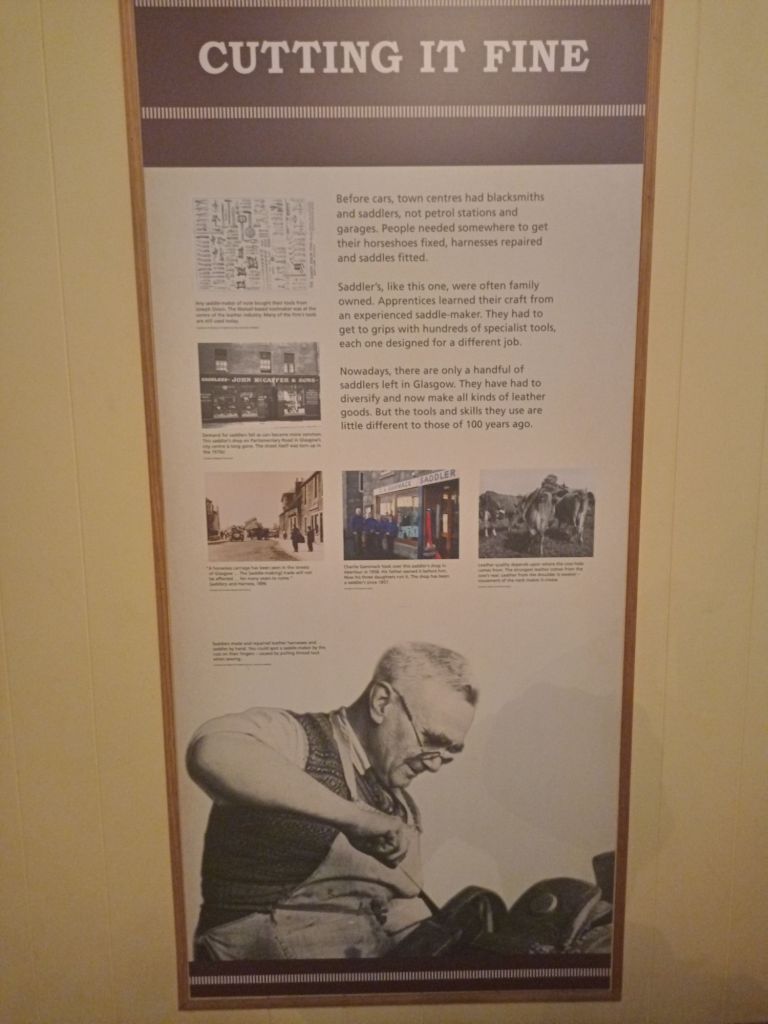
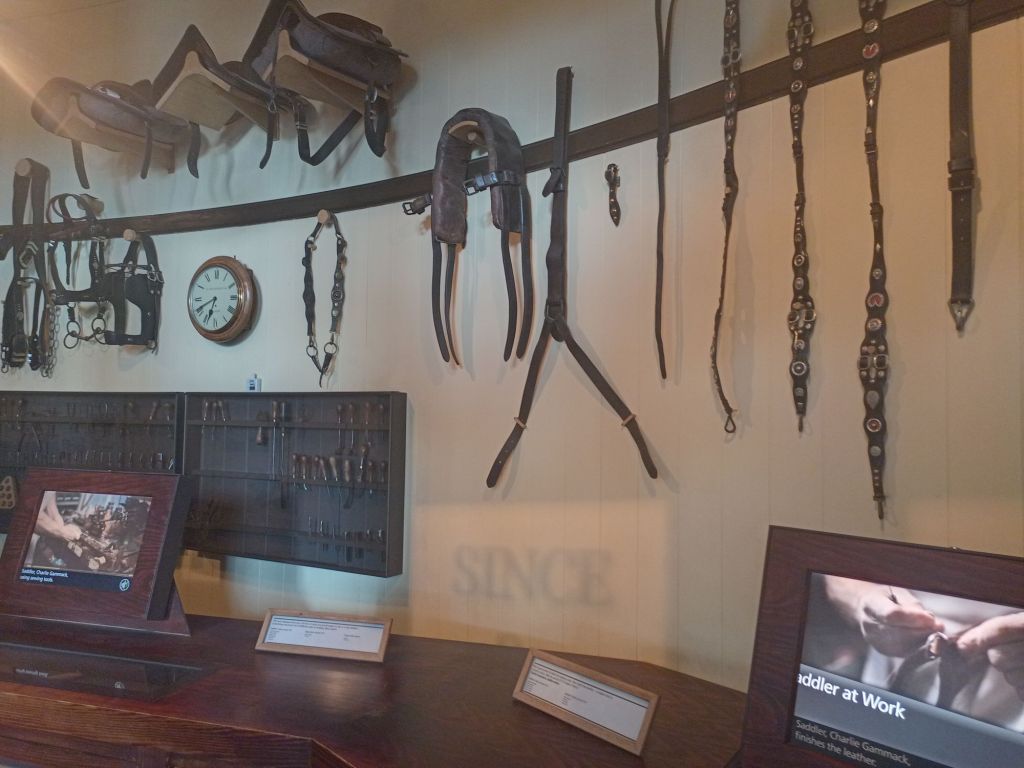
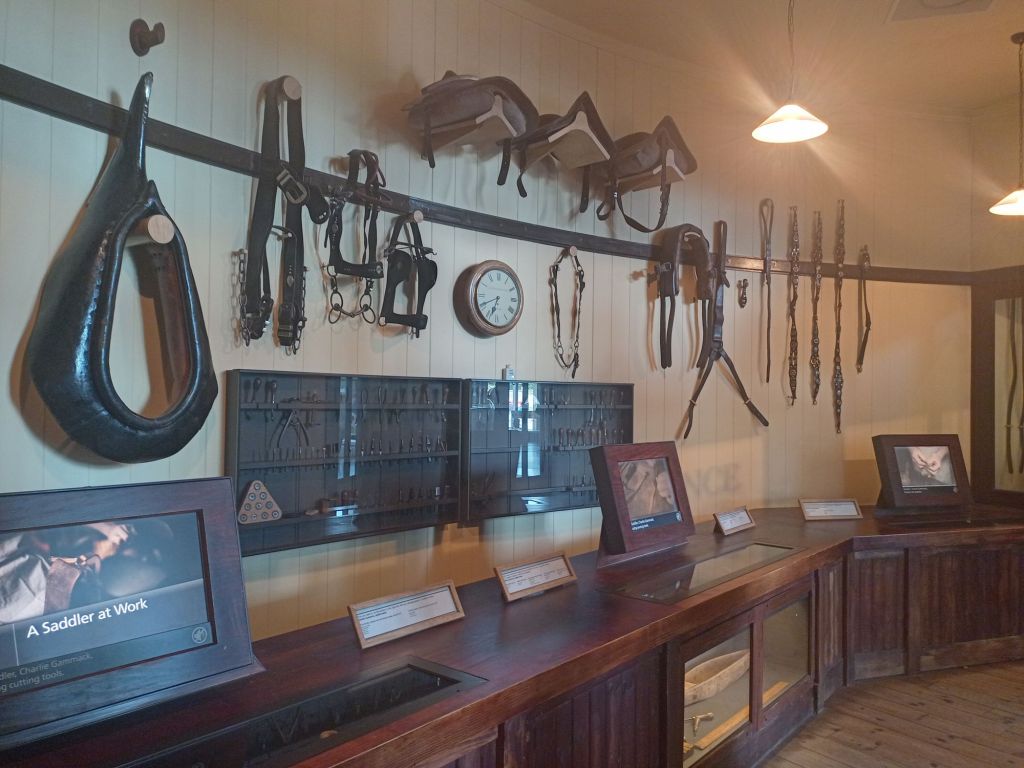
Ian’s maternal great-grandfather, James Haig, was a Glaswegian saddler who immigrated to New Zealand in the 1880s.
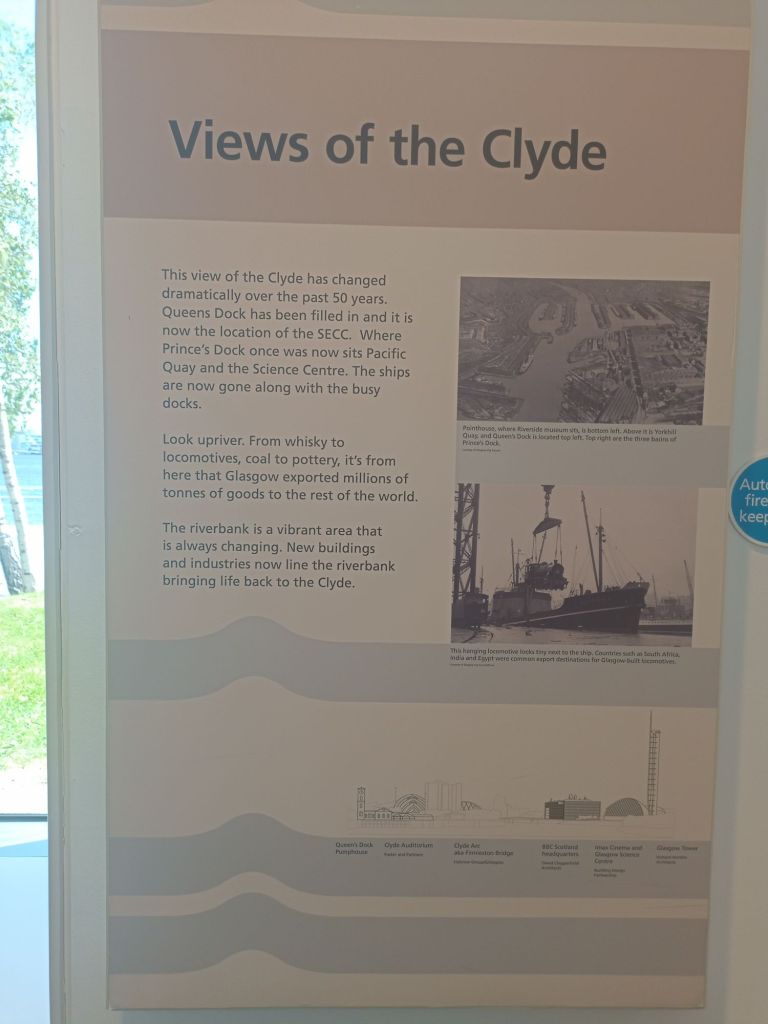
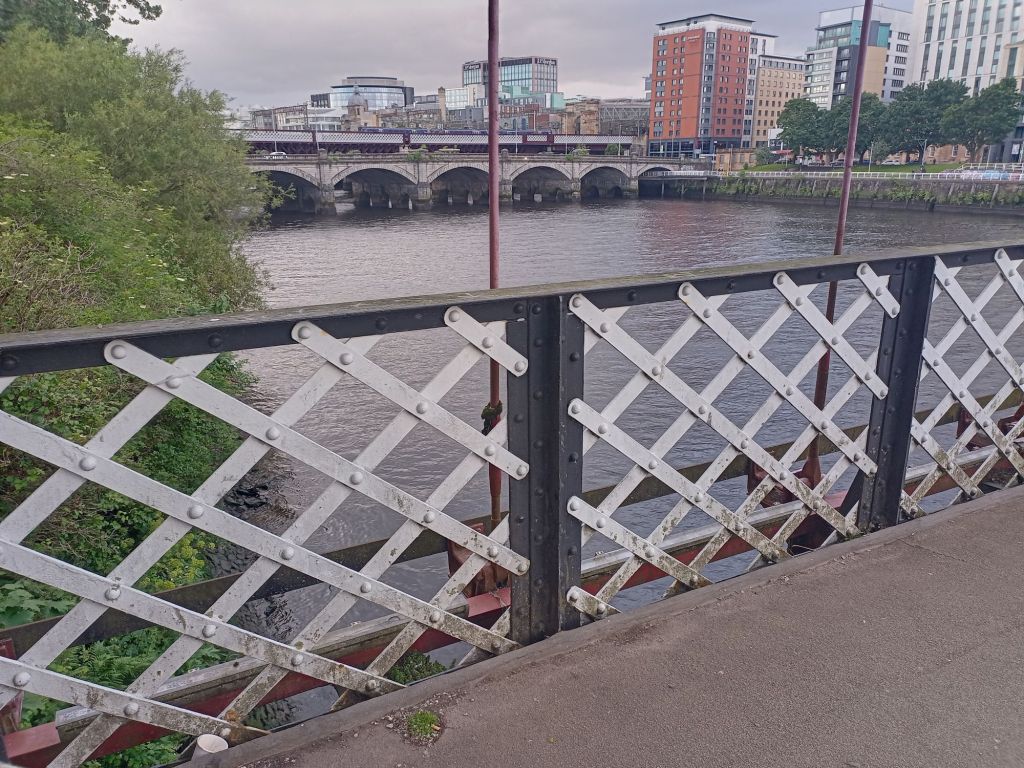
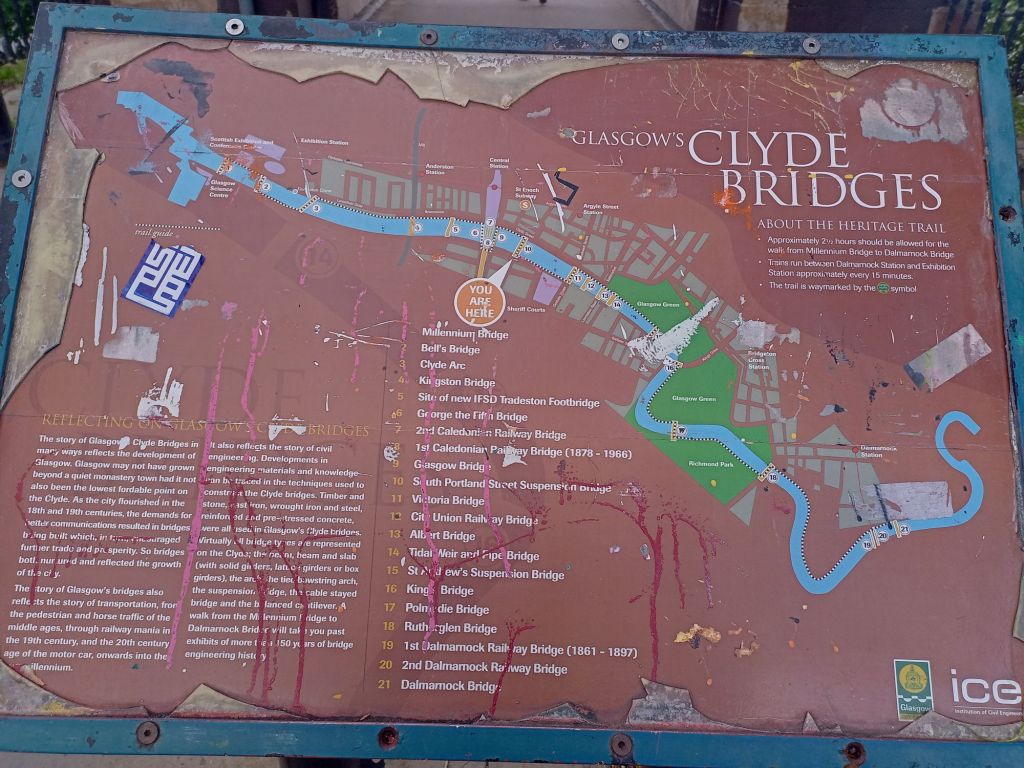
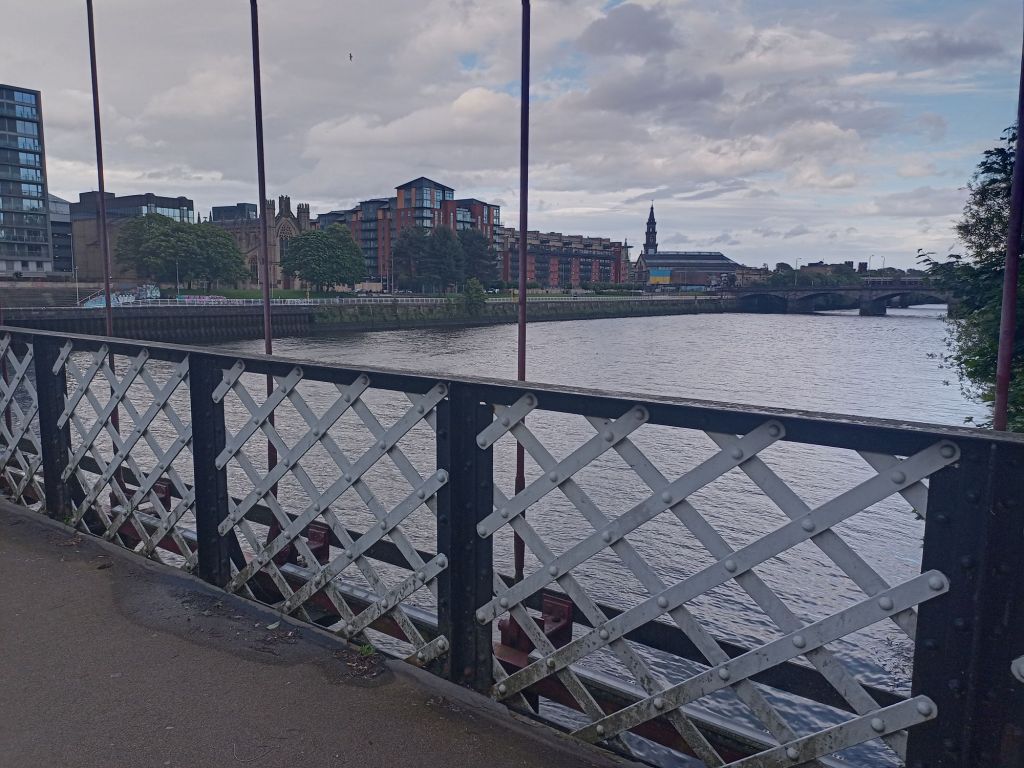
River Clyde
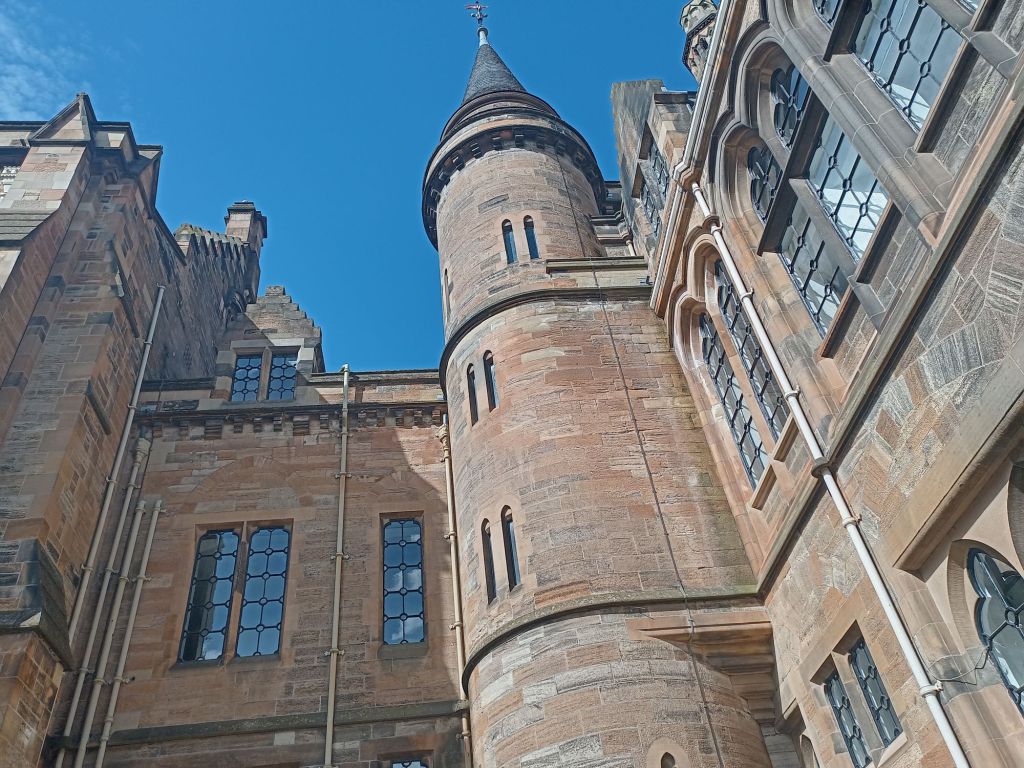
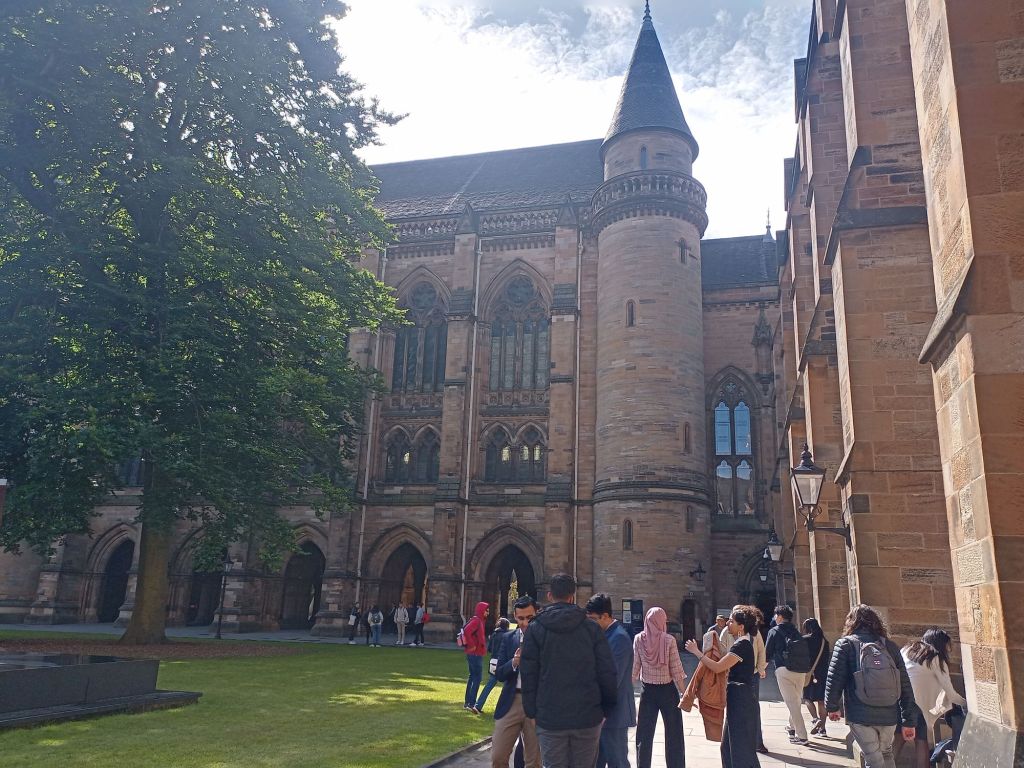
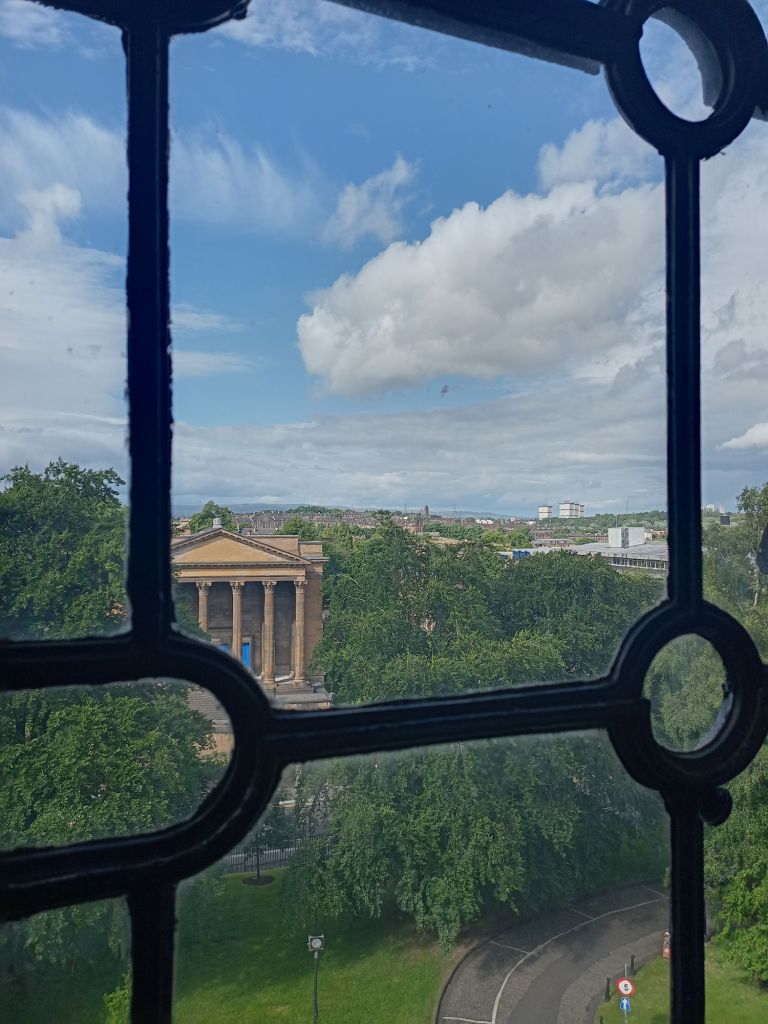
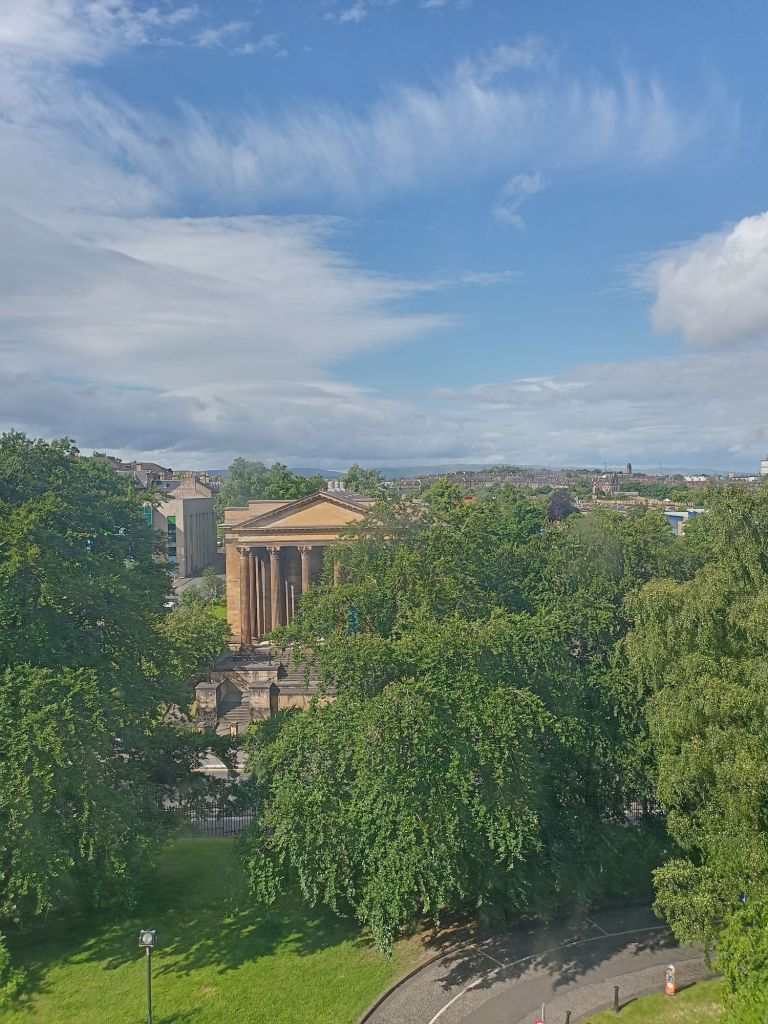
Unversity of Glasgow
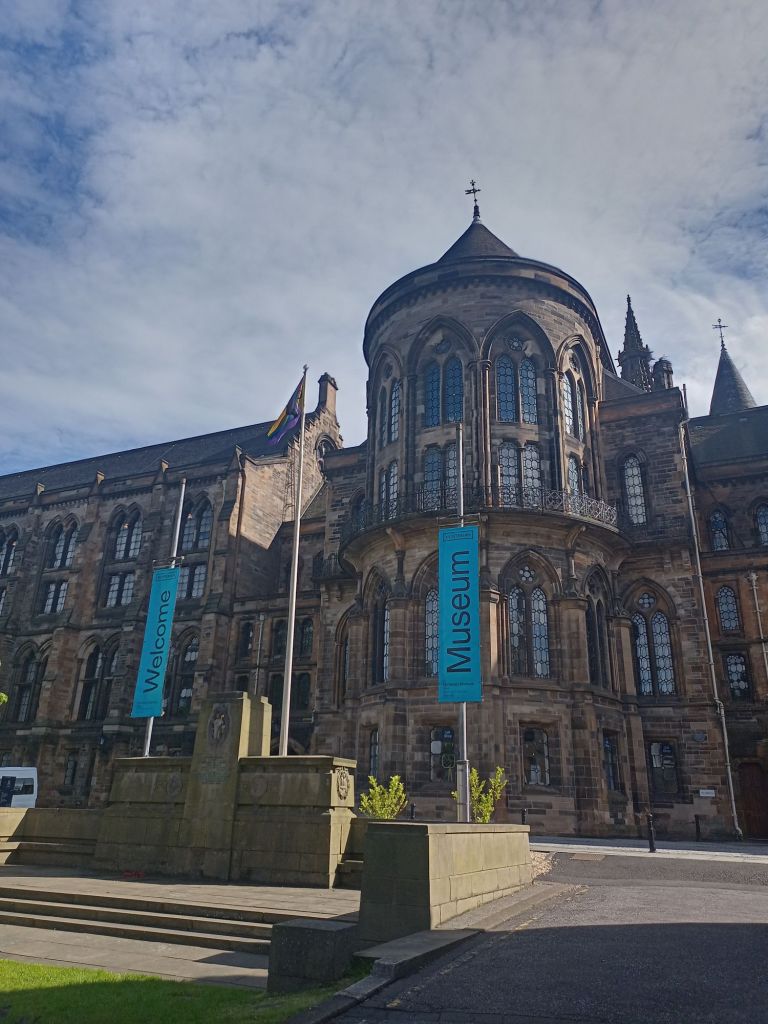
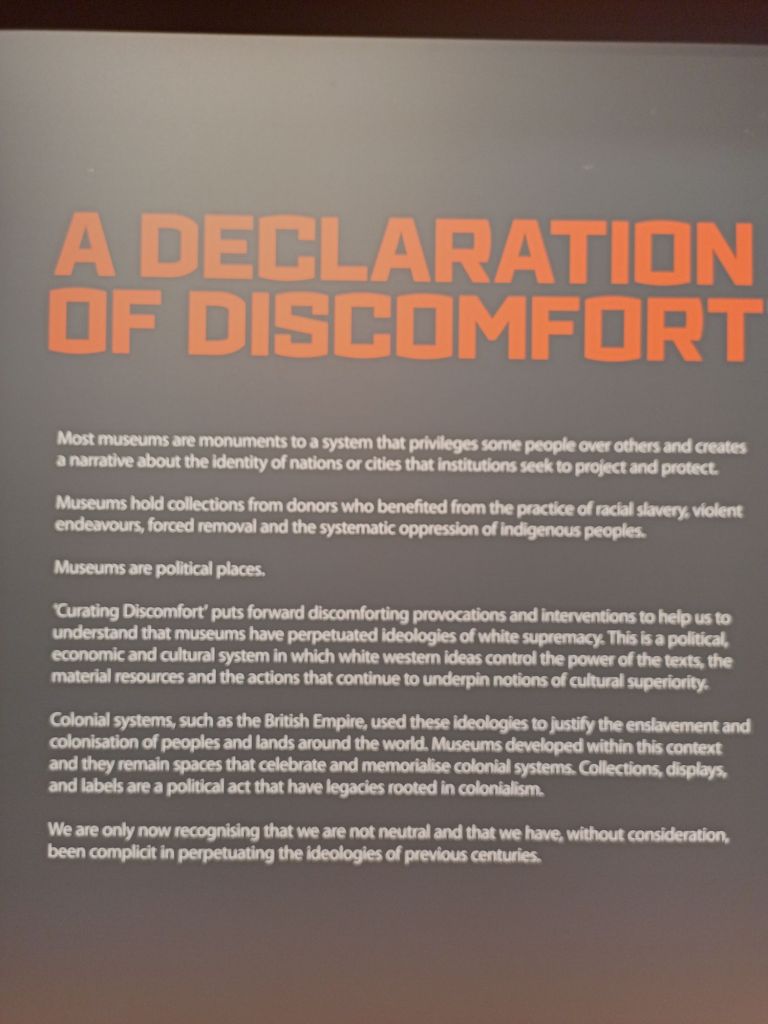
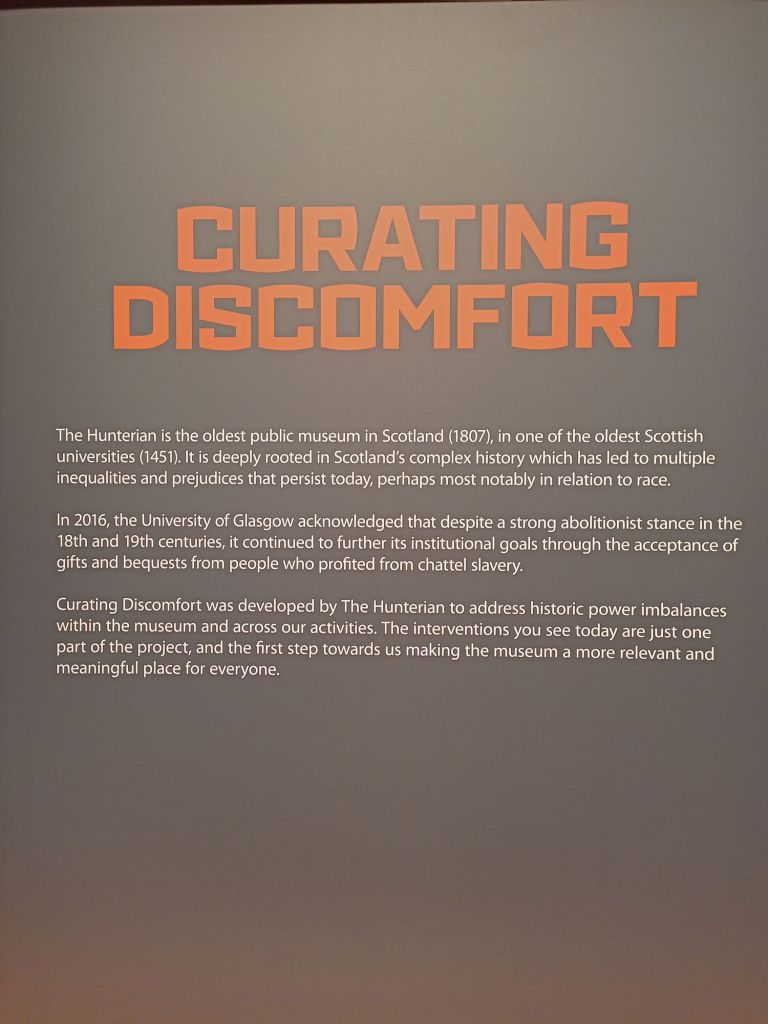
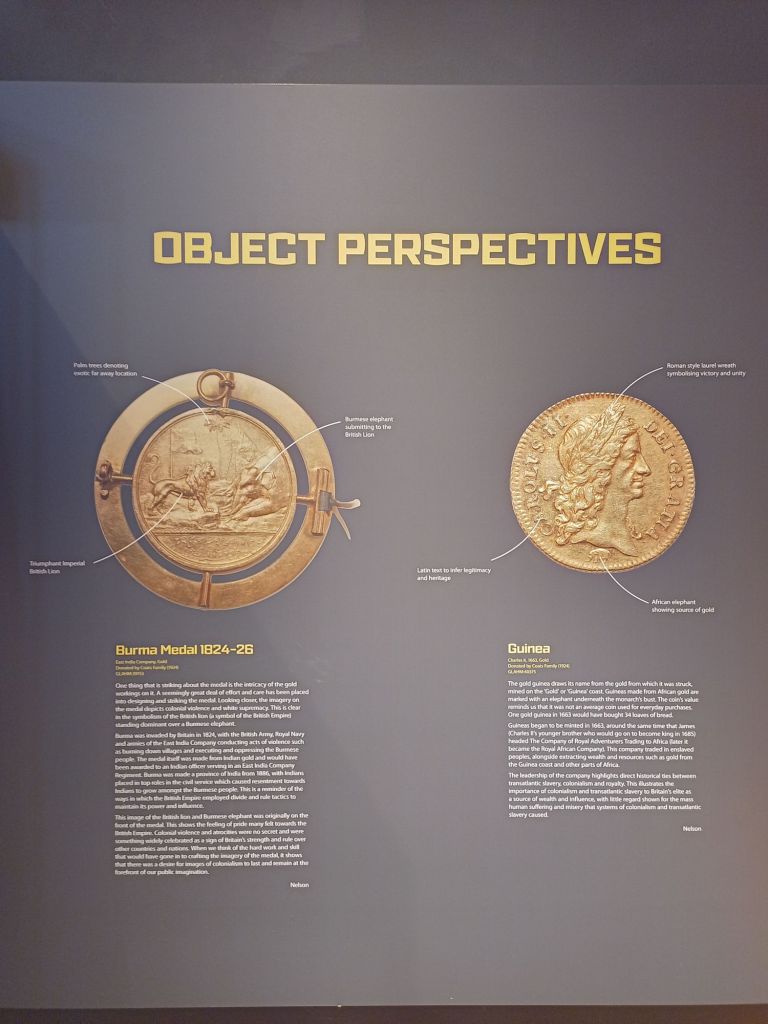
University Museum
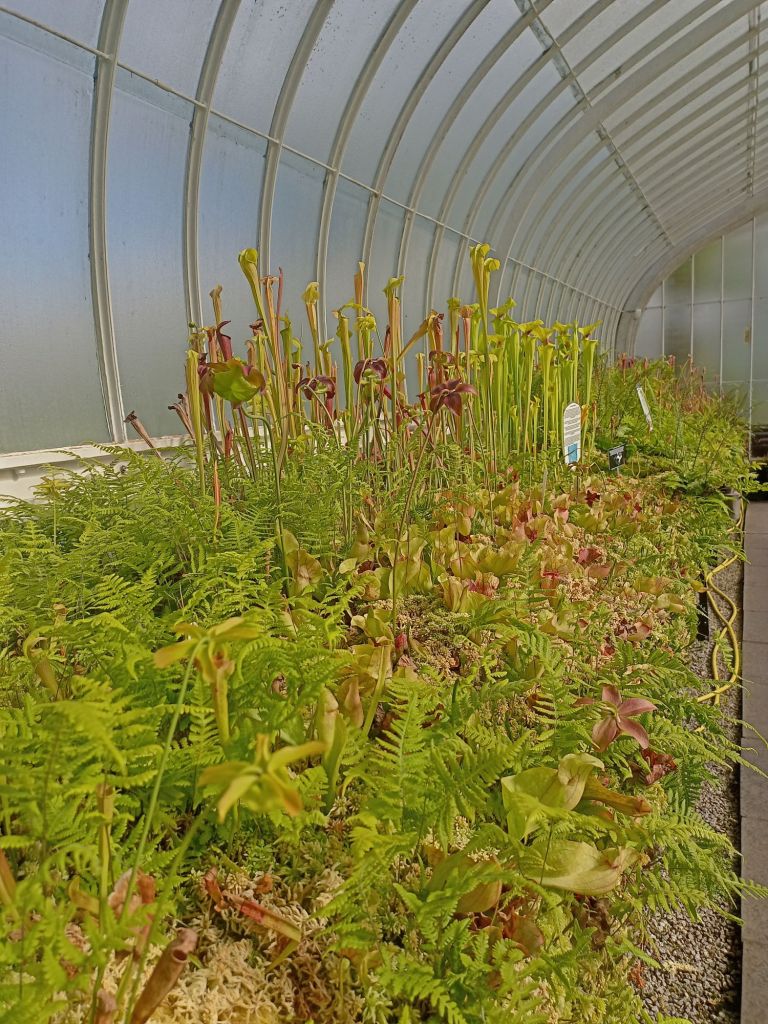
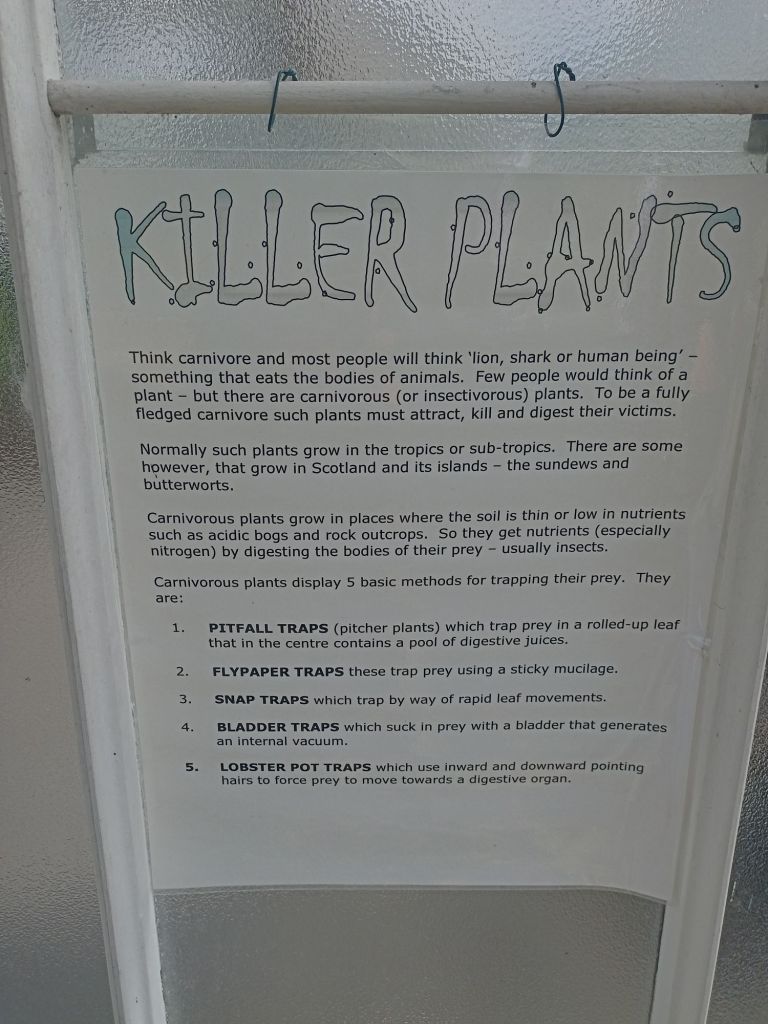
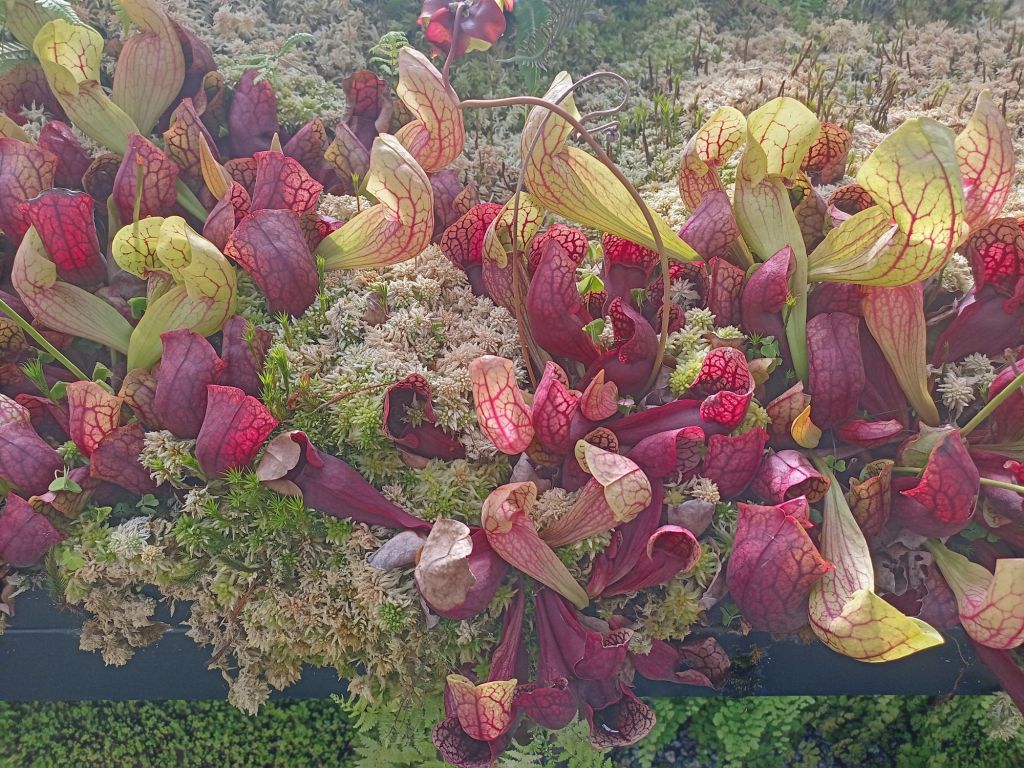
Glasgow Botanic Garden
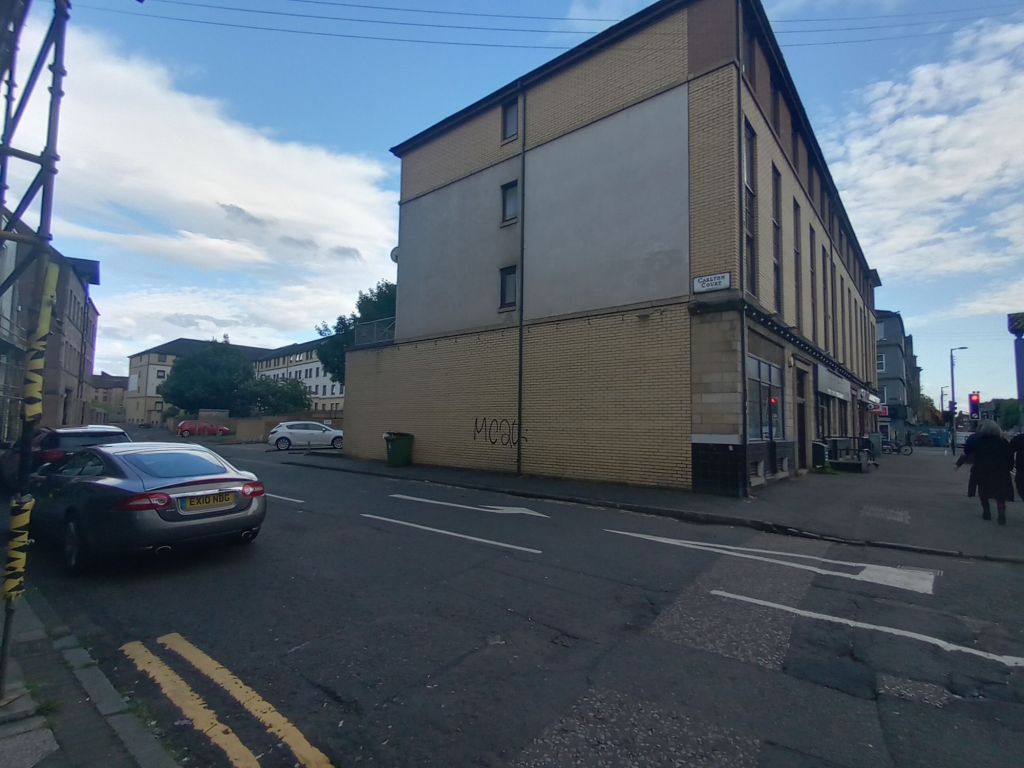
Carlton Court, the street where Ian’s maternal great-grandfather, James Haig, lived with his parents before he left Glasgow for Australia and New Zealand in the late 1870s to early 1880s. Few if any of the buildings of that era are still standing today.
Edinburgh Day 15 – Day Trip to Alnwick, Borders, Blackford Hill
Today, the three of us travelled about one and three-quarter hours by car down the A1 to the town of Alnwick in Northumberland. We then returned to Edinburgh via some beautiful Northumberland and Scottish Border rural roads. We ended the day with a walk up Blackford Hill to get a view of Edinburgh at night.
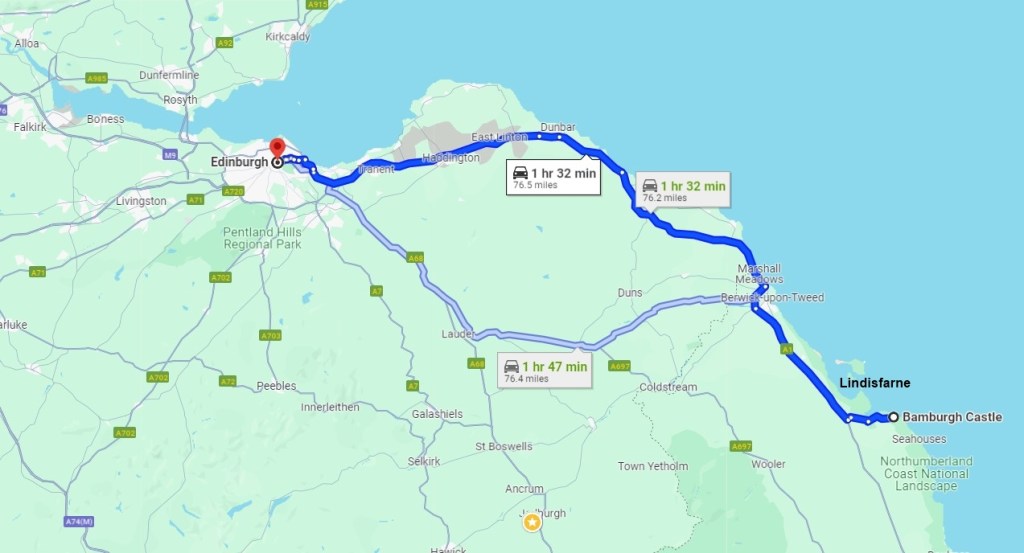
This was roughly our route
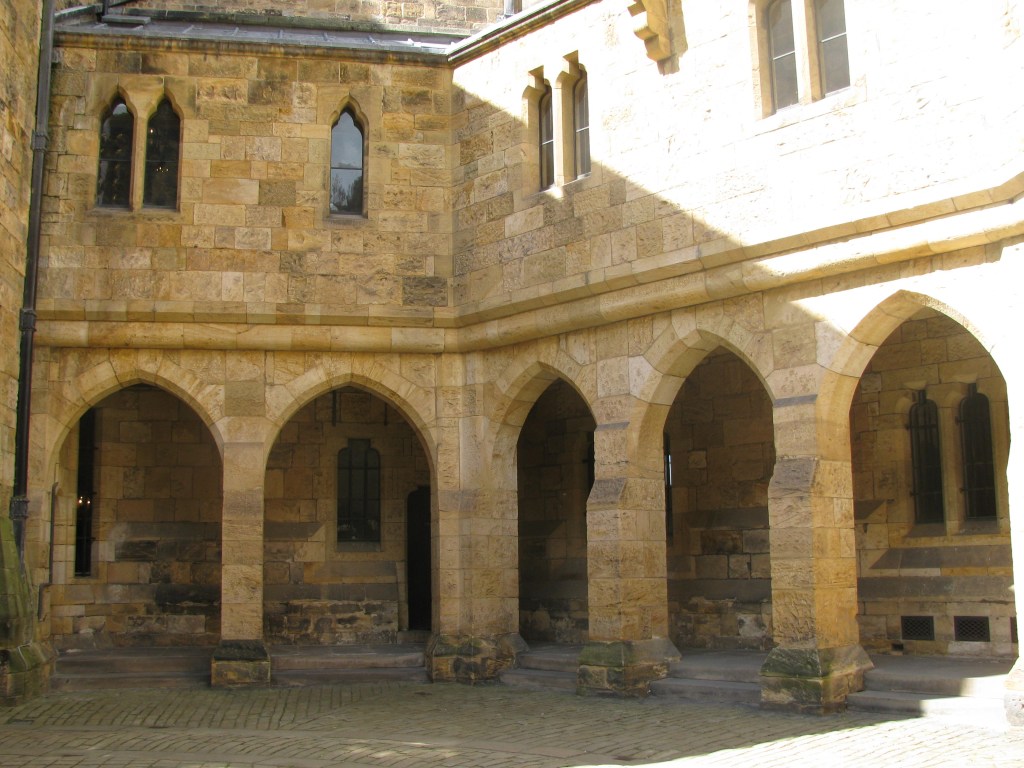
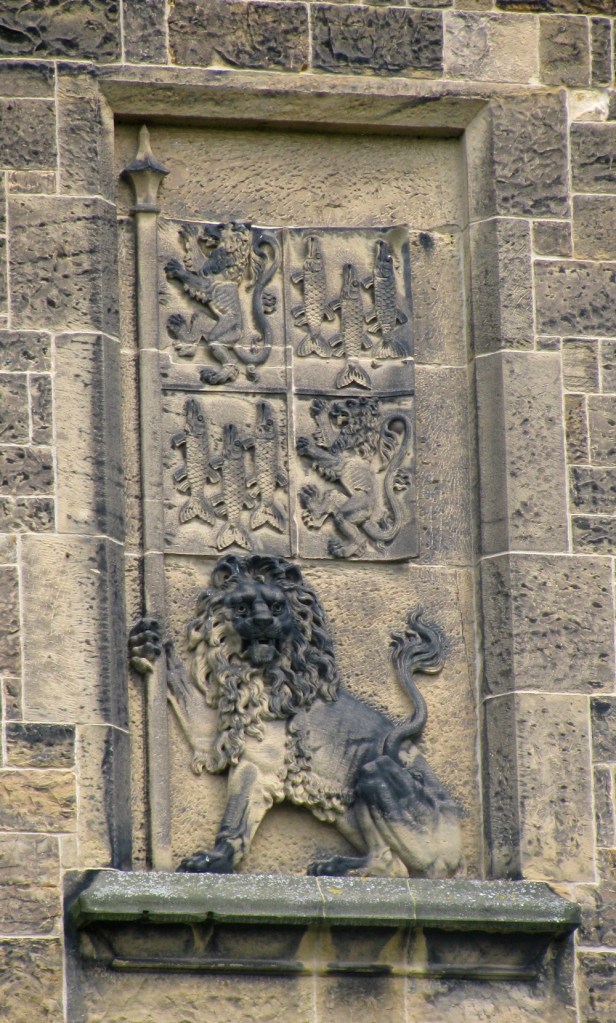
Alnwick
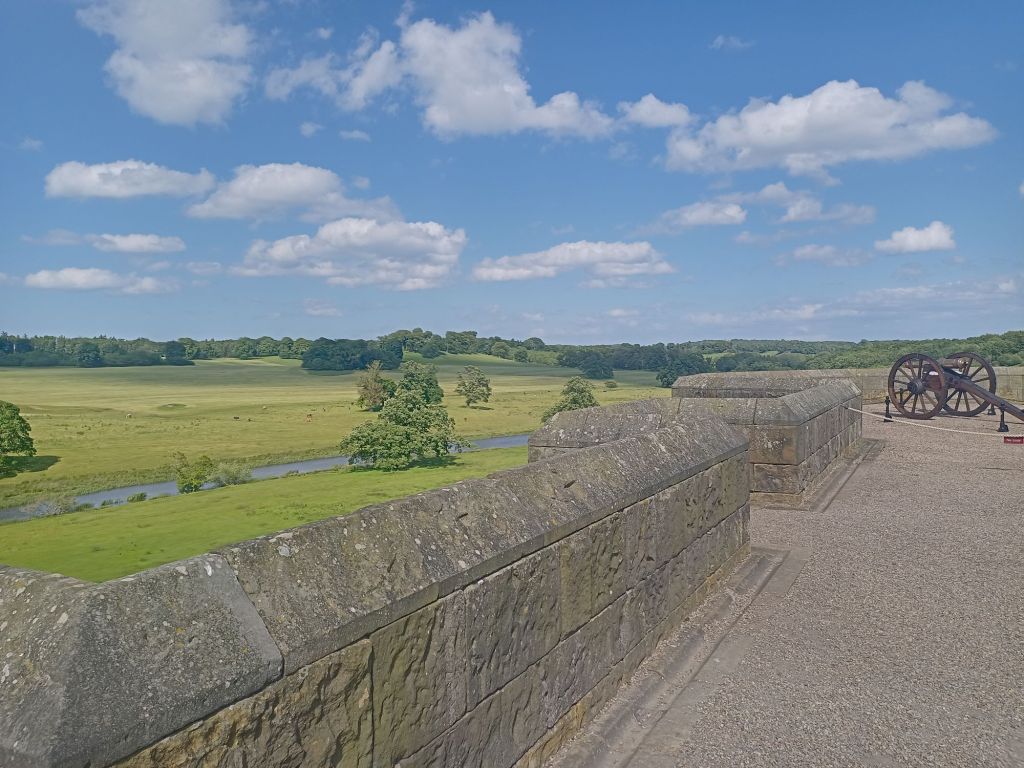
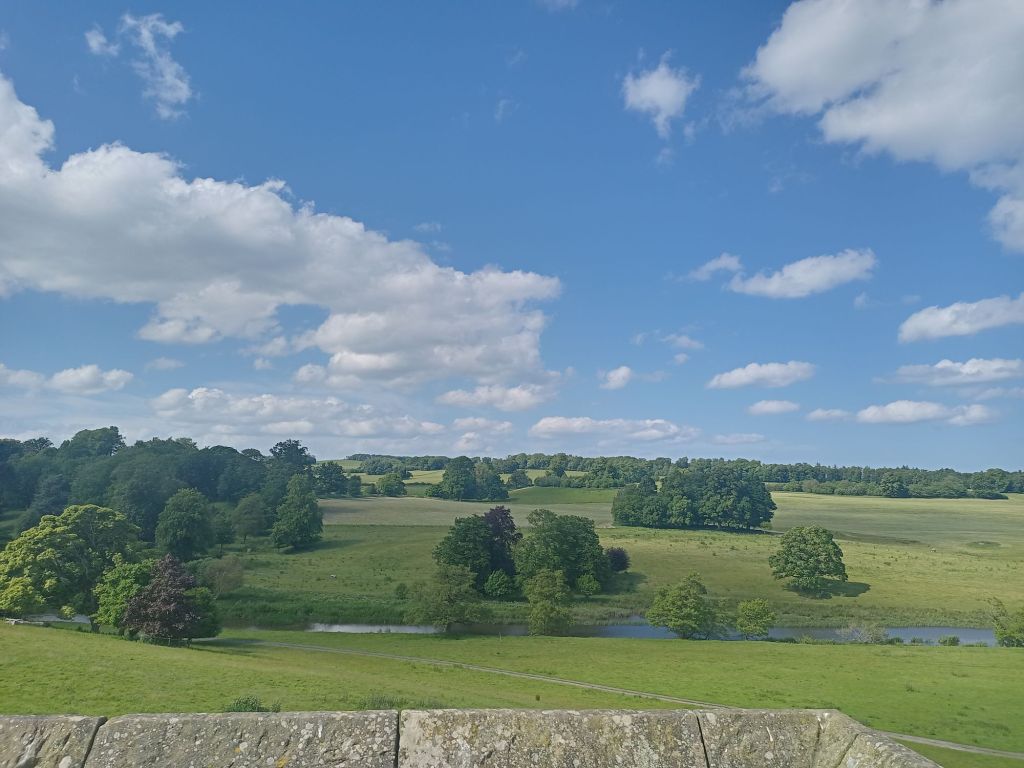
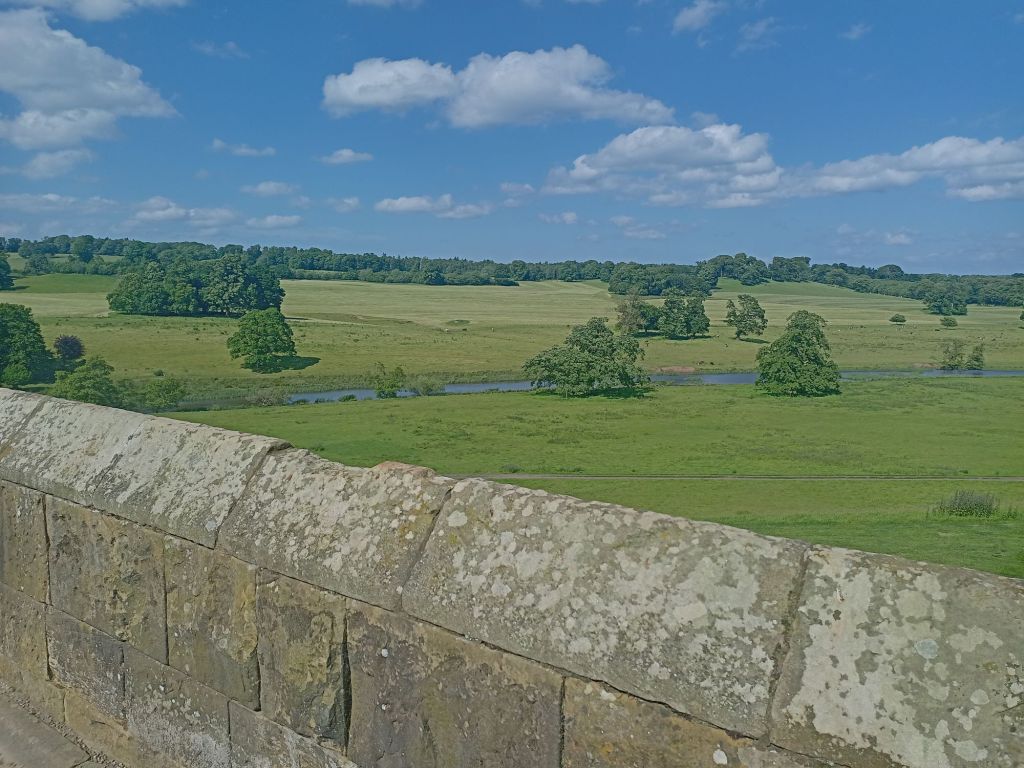
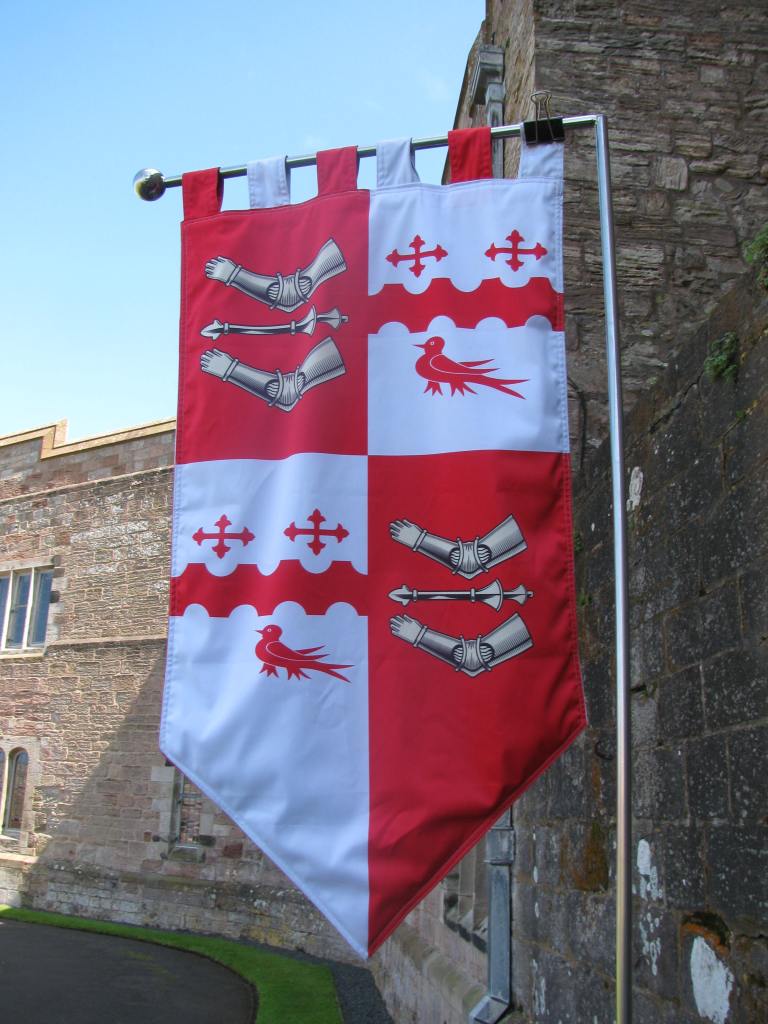
One reason for going to Alnwick was so we could make use of our Historic Houses membership cards to see Alnwick Castle. We’d already used these cards to see the Japanese Garden, Traquair House and Bamburgh Castle.
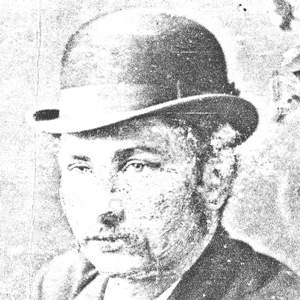
Another reason for going was that Caroline’s 3x great grandfather – George Tate (1805-1871: family tree https://nzfamilyhistorysearch.co/projects/tate-simpson/tate-simpson-family-tree/) – was well-known in the town of Alnwick during the 19th-century. He was born there and became a draper and then the town’s postmaster for many years. He was also a historian / ‘antiquarian’, archaeologist, geologist, botanist, and zoologist, among other things. He published a significant number of books and and academic papers, mainly about Northumberland, and was a fellow of the Geological Society, and prominent member of the Berwickshire Naturalists’ Club and Alnwick Mechanics’ Scientific Institution. (See https://en.wikipedia.org/wiki/George_Tate_(topographer) for a brief summary of his life.)
George Tate (1805-1871). Credit: History of the Berwickshire Naturalist Club: 1869-1872. Alnwick, Henry Hunter Blair, Market Place, 1872.
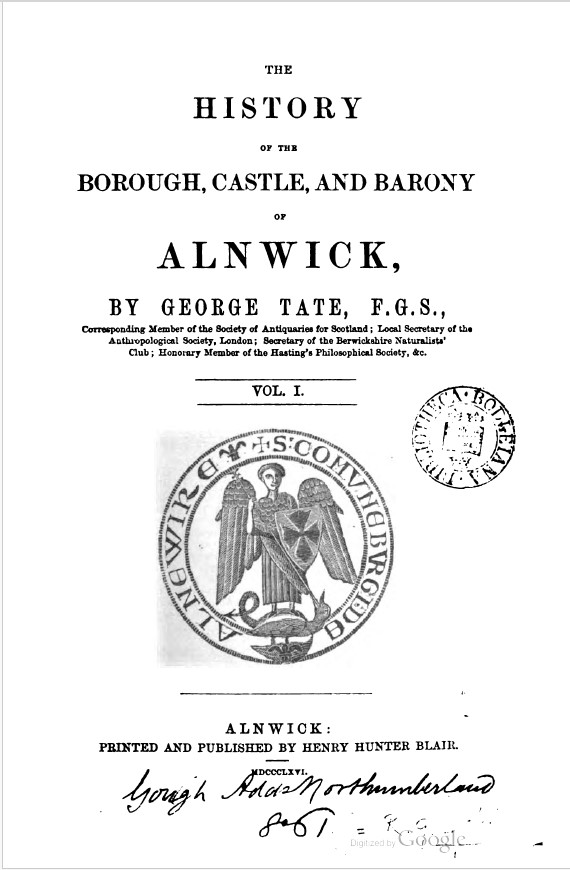
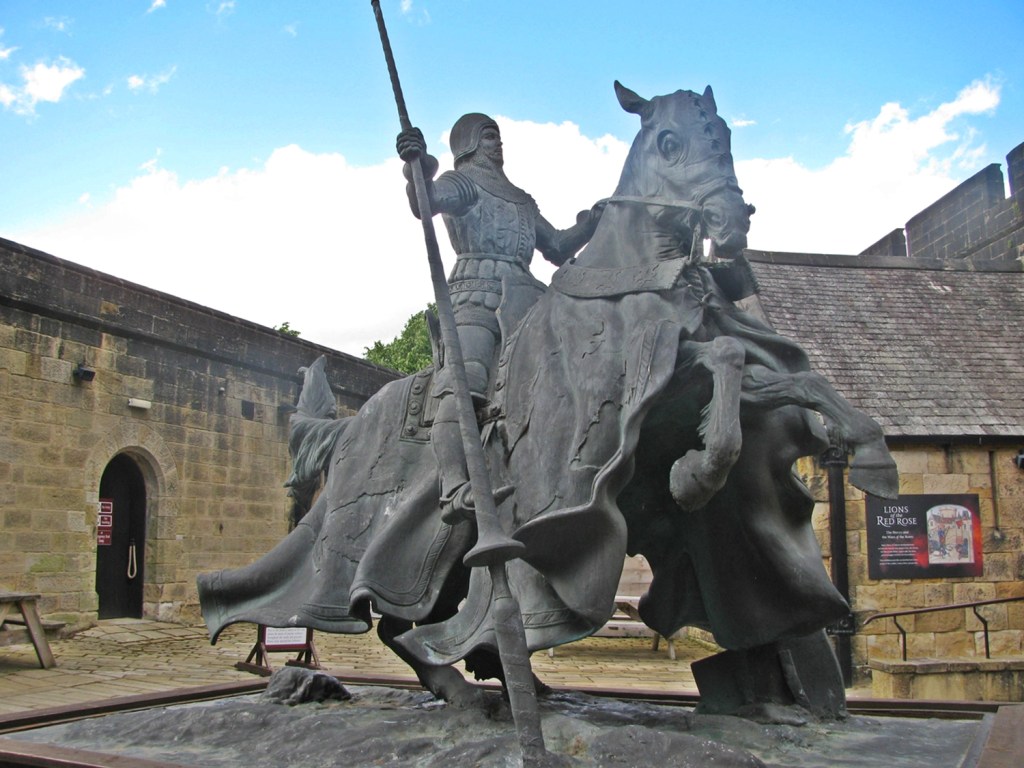
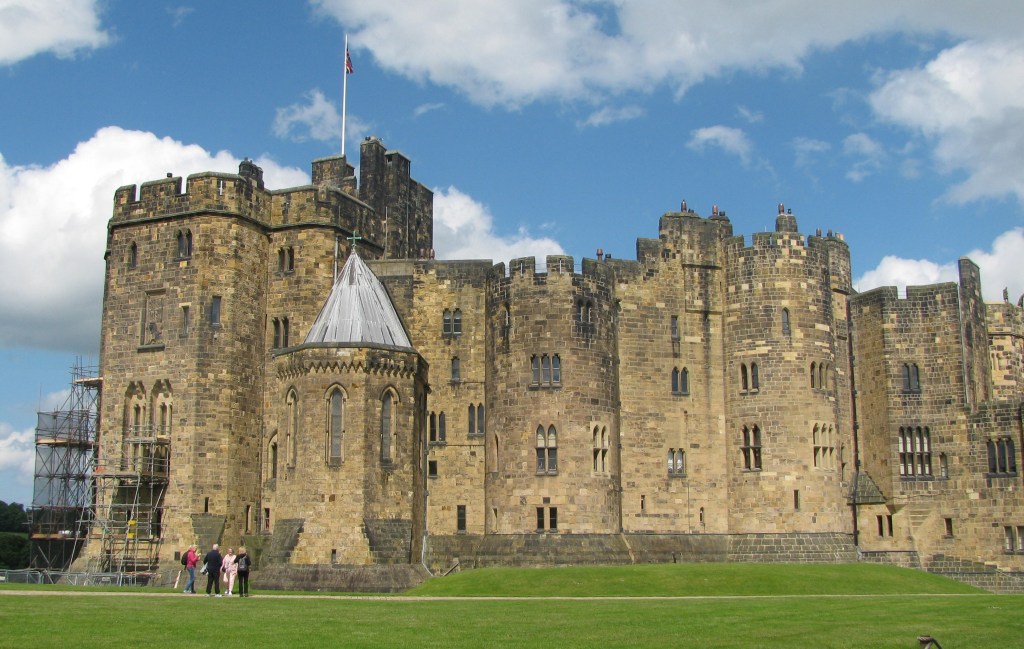
Perhaps George’s most substantial book was his history of Alnwick (published in 1866), which covered everything from the town’s geography and first inhabitants, to local customs, and the history of Alnwick Castle and the Percy family (which still owns the castle today).
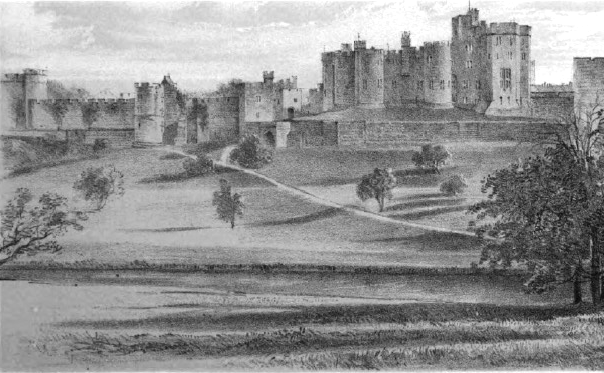
…and in George Tate’s (1866) book, facing page 367
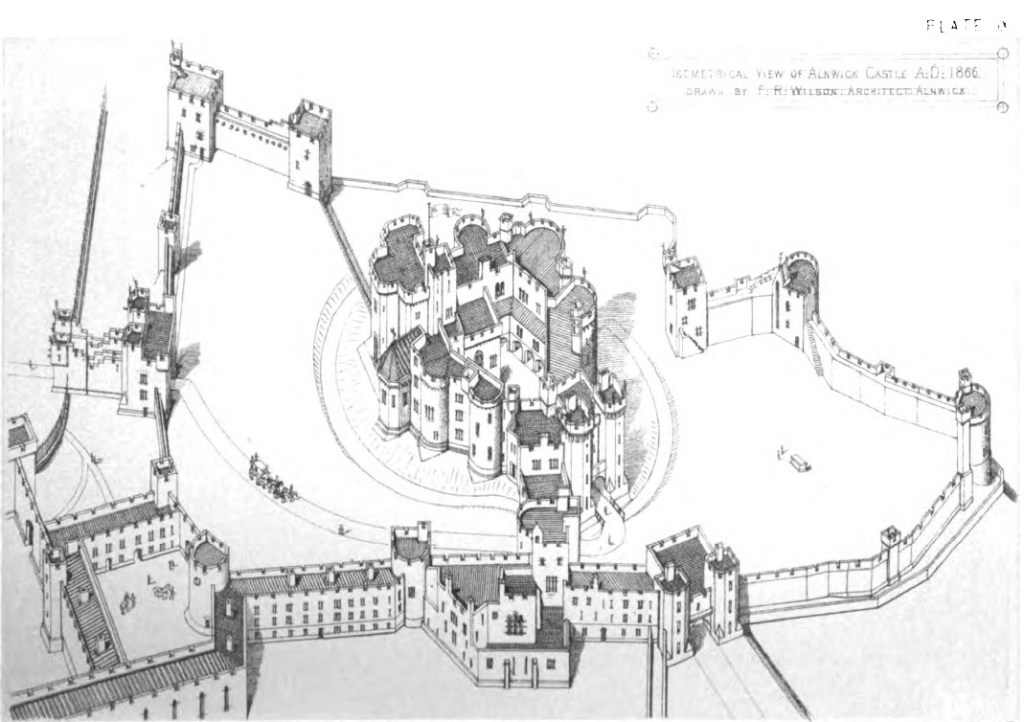
Alnwick Castle in 1866 – isometric view drawn by F.R. Wilson, Alnwick architect. In George Tate’s book, facing page 377
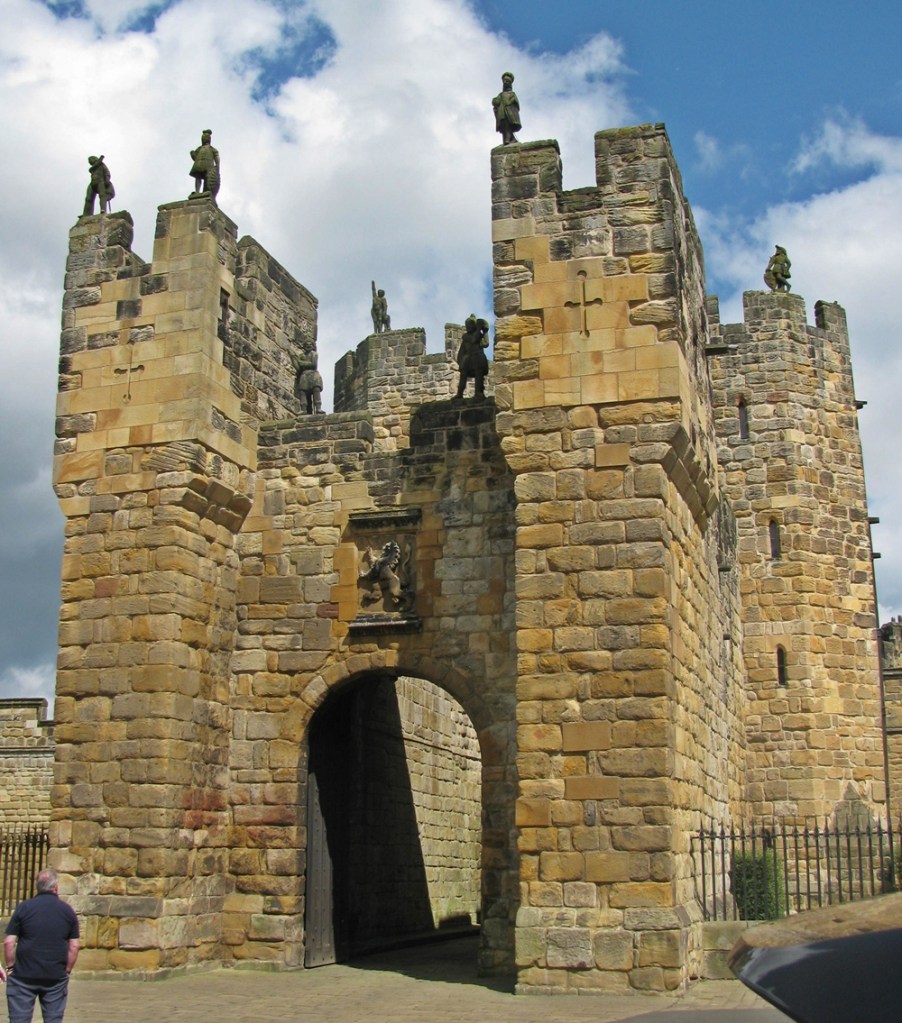
Current public castle entrance
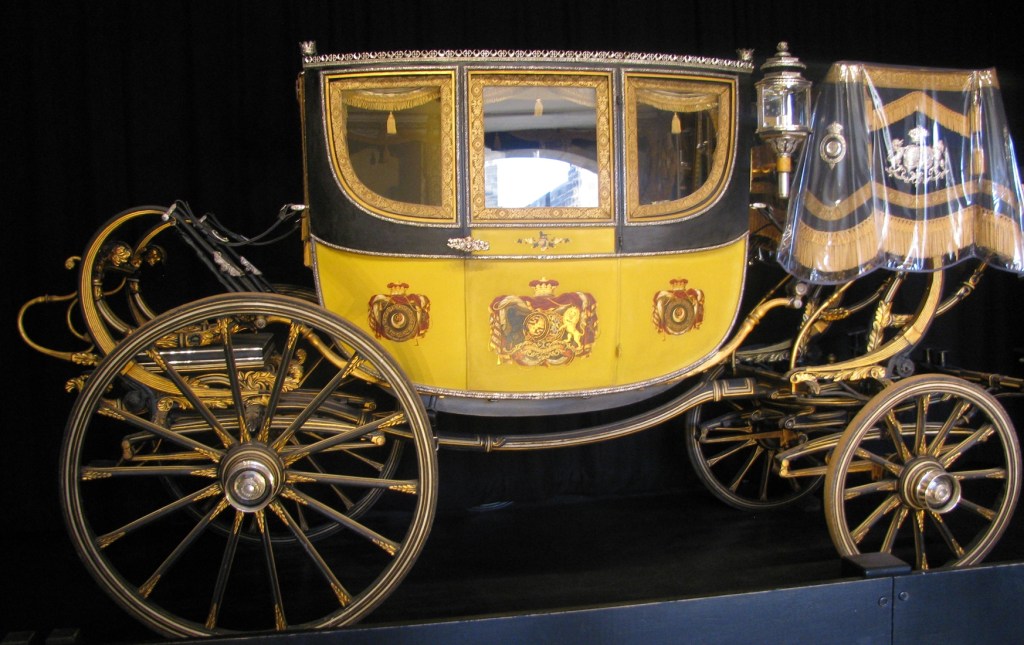
State coach of the Duke of Northumberland c. 1825
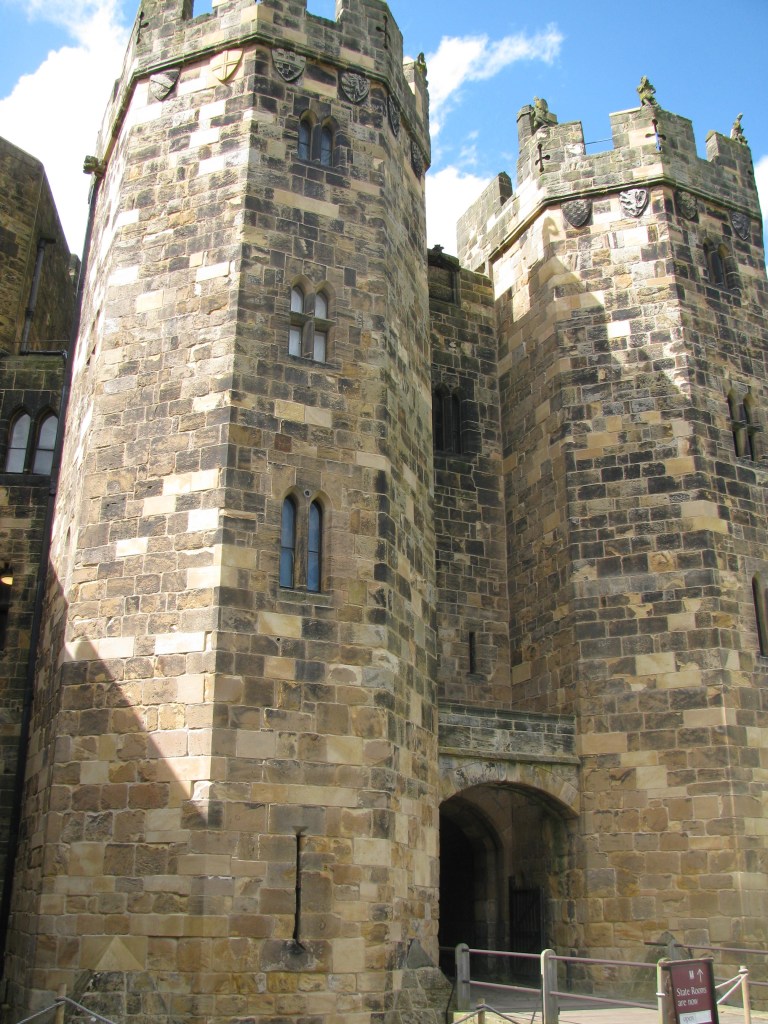
The Barbican (fortified gate)
Much of Alnwick Castle is still inhabited. The publicly-accessible ‘state rooms’ are sumptuously decorated and furnished (but no photography is allowed). The photo above is of the Octagon towers of the Castle Keep with an archway that leads to the state rooms
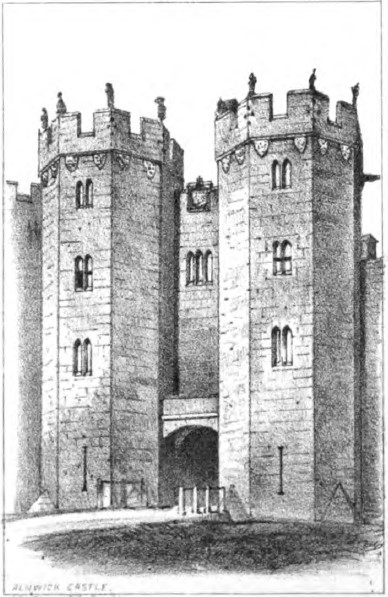
These are the same towers in George Tate’s 1866 book, facing page 85. They were built about 1330
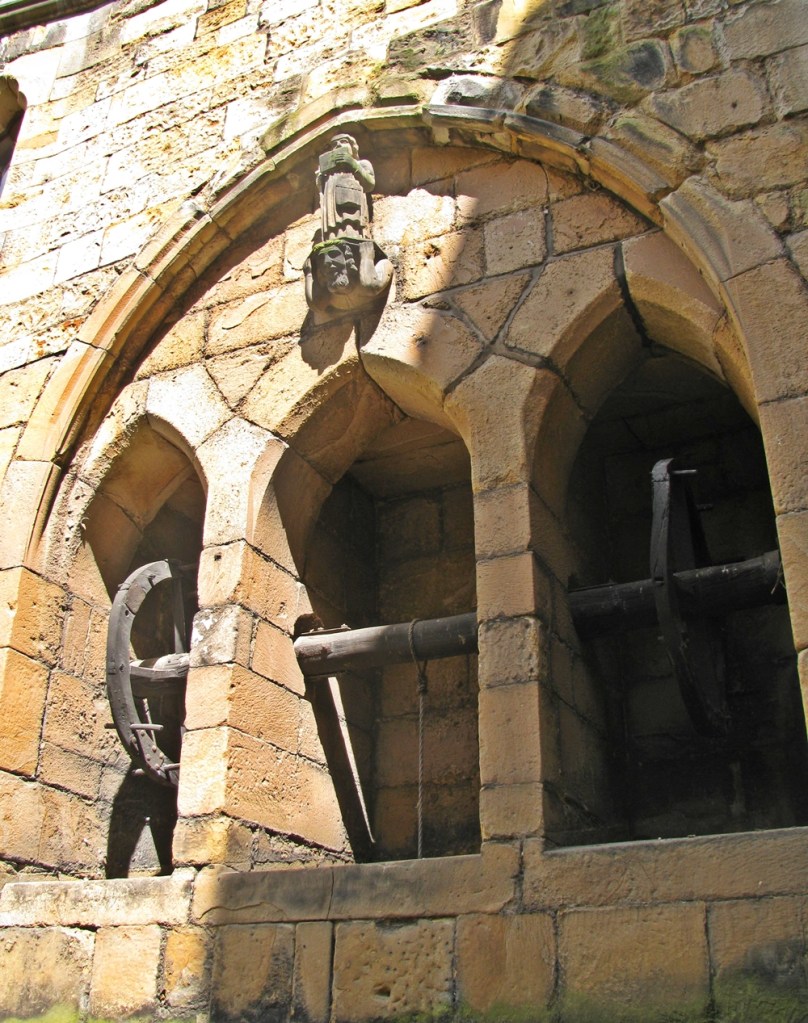
‘Percy draw well’ now…
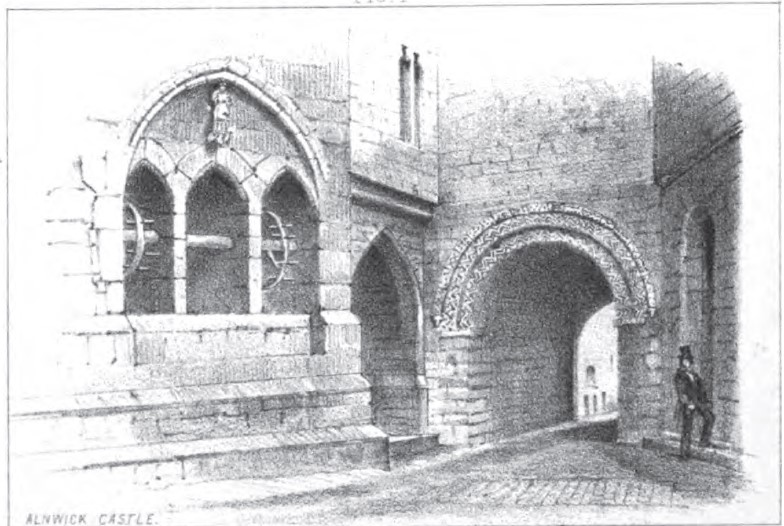
… and in George Tate’s 1866 book, facing page 85
Constable Tower
Christian relics in castle museum
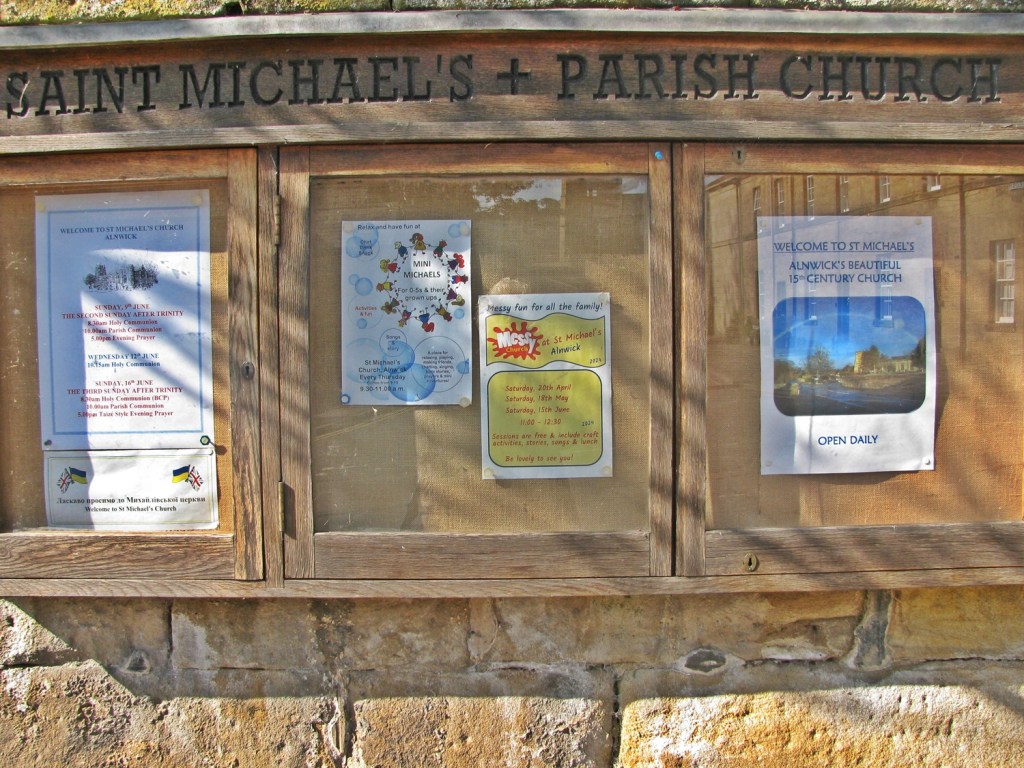
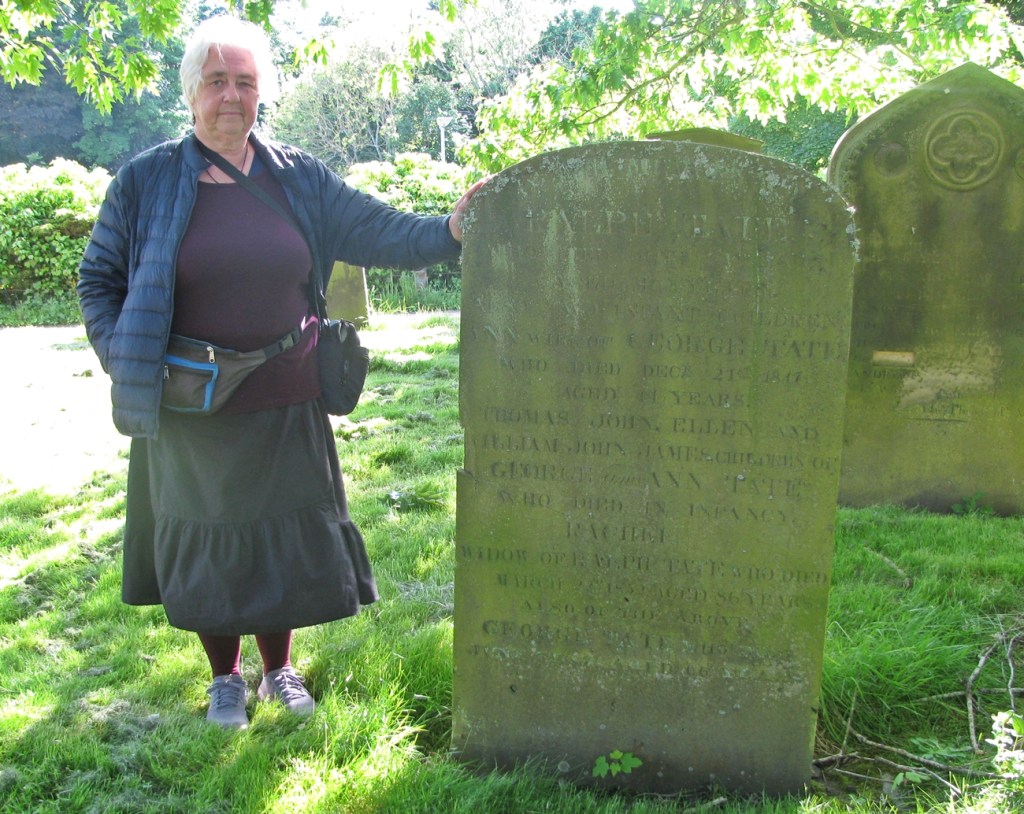
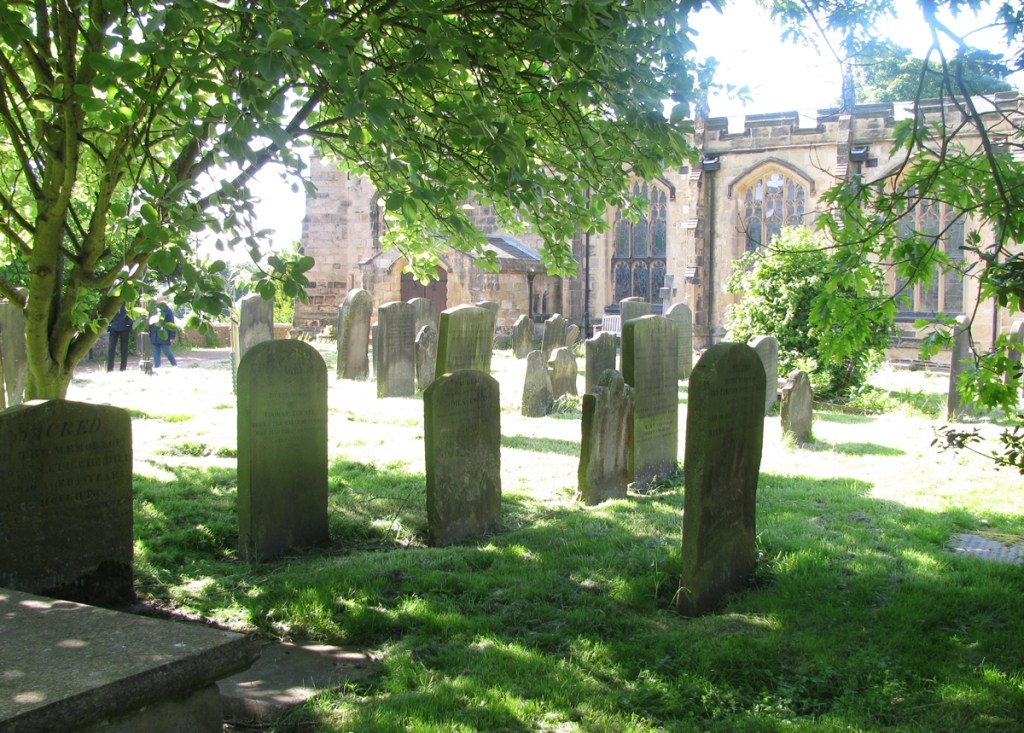
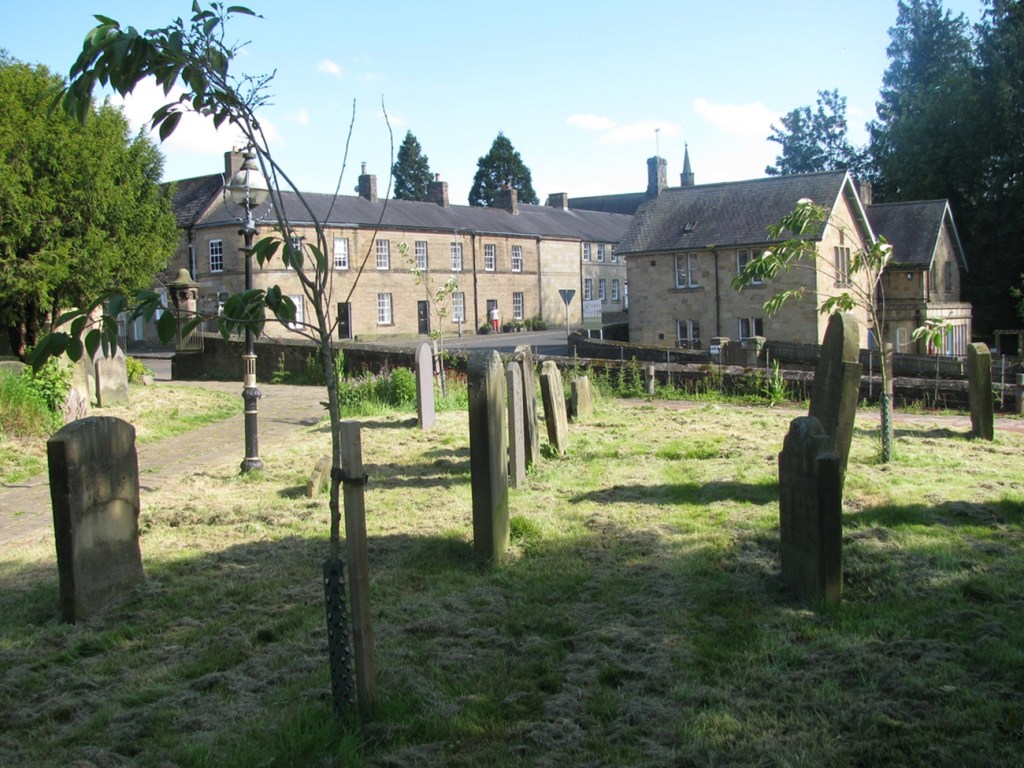
After visiting the Castle, we went on a short walk to St Michael’s Parish Church to look for George Tate’s family grave, which we (Ian) eventually found under a tree.
Transcript of the headstone (by Philip Tate, 2020): To the Memory of RALPH TATE [George’s father] who died on Oct 24th 1827 aged 46 years Also two infant children ANN Wife of George Tate who died December 21st 1847 aged 44 years Thomas John, Ellen and William John James, children of George and Ann Tate who died in infancy RACHEL Widow of Ralph Tate who died March 22nd 1852 Aged 86 years Also of the above George Tate who died June 7th 1871 aged 66 years
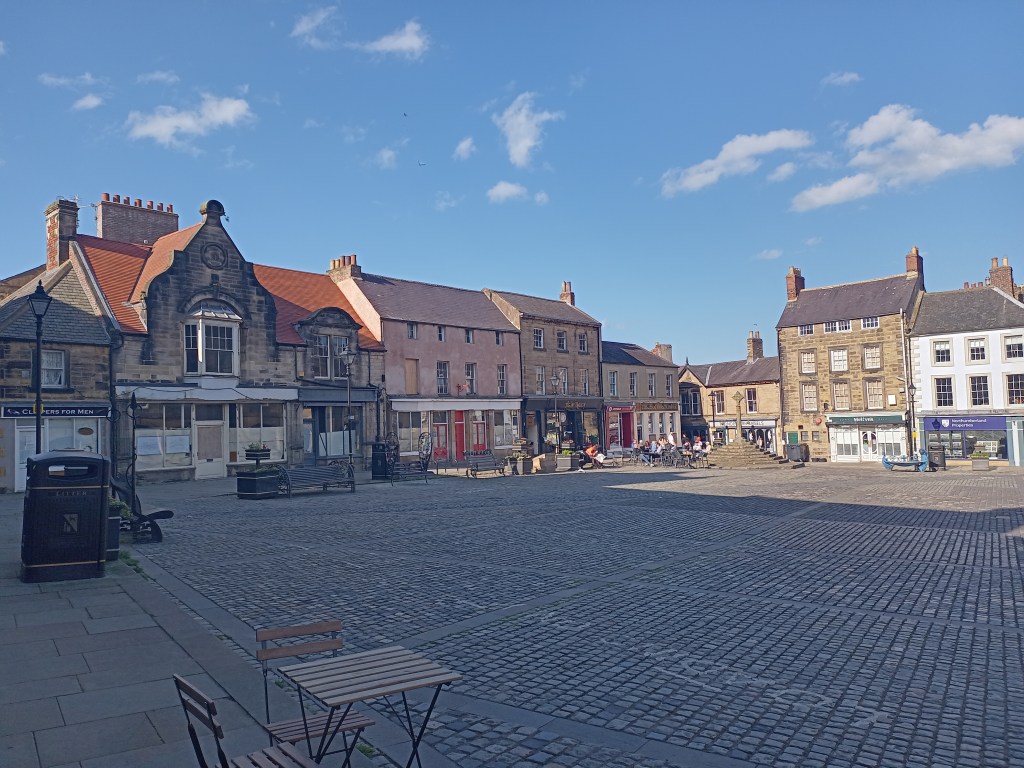
Alnwick market place
Alnwick Fenkle Street – George Tate’s original Post Office was a bit further down this street on the right
Drive through rural Northumberland and the Scottish Borders
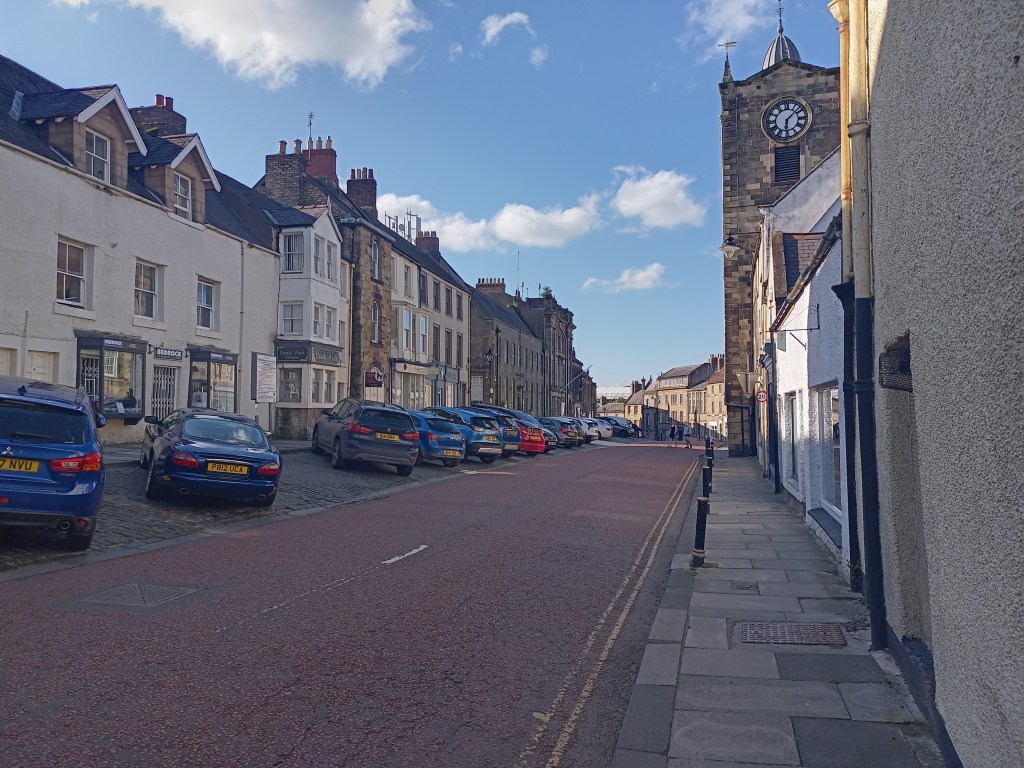
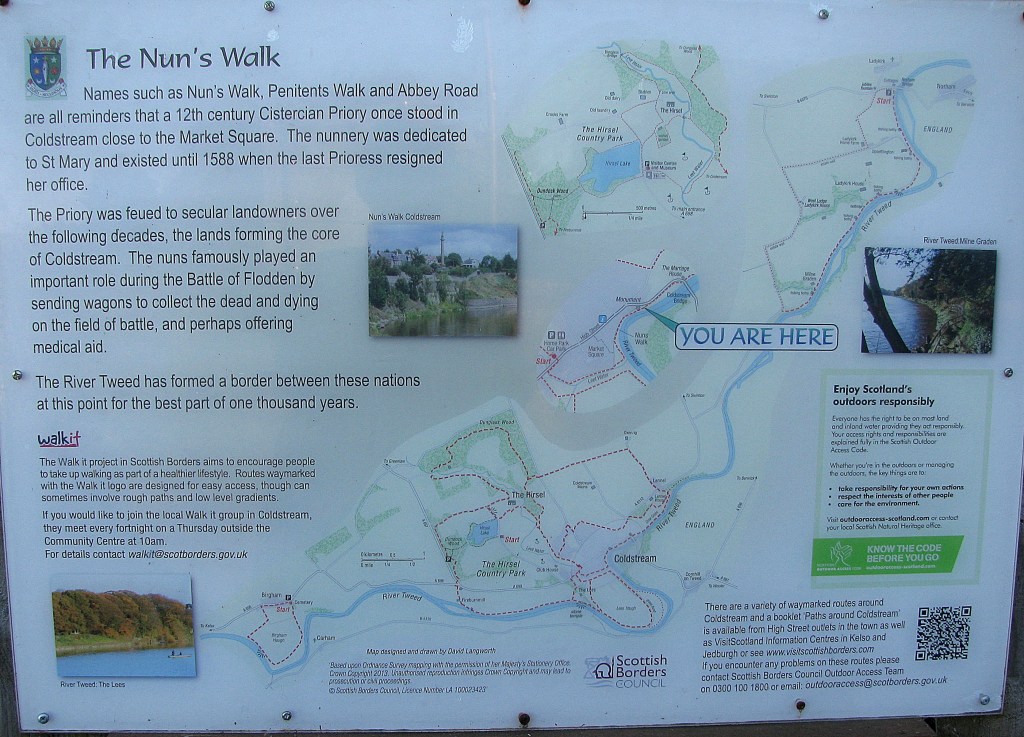
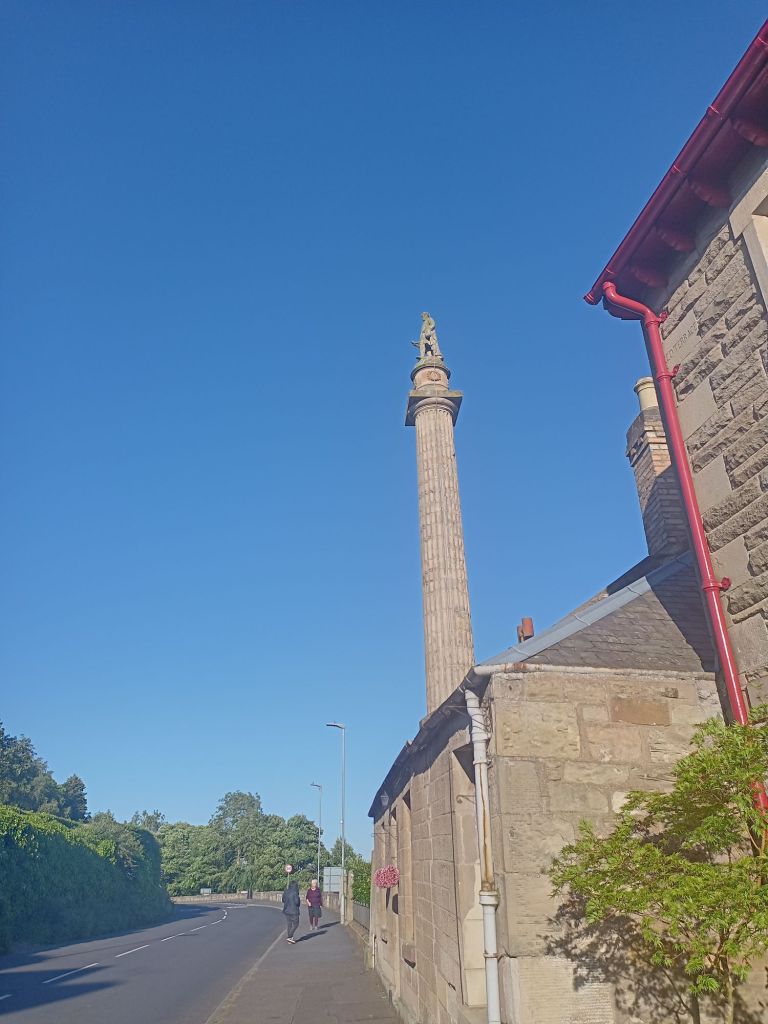
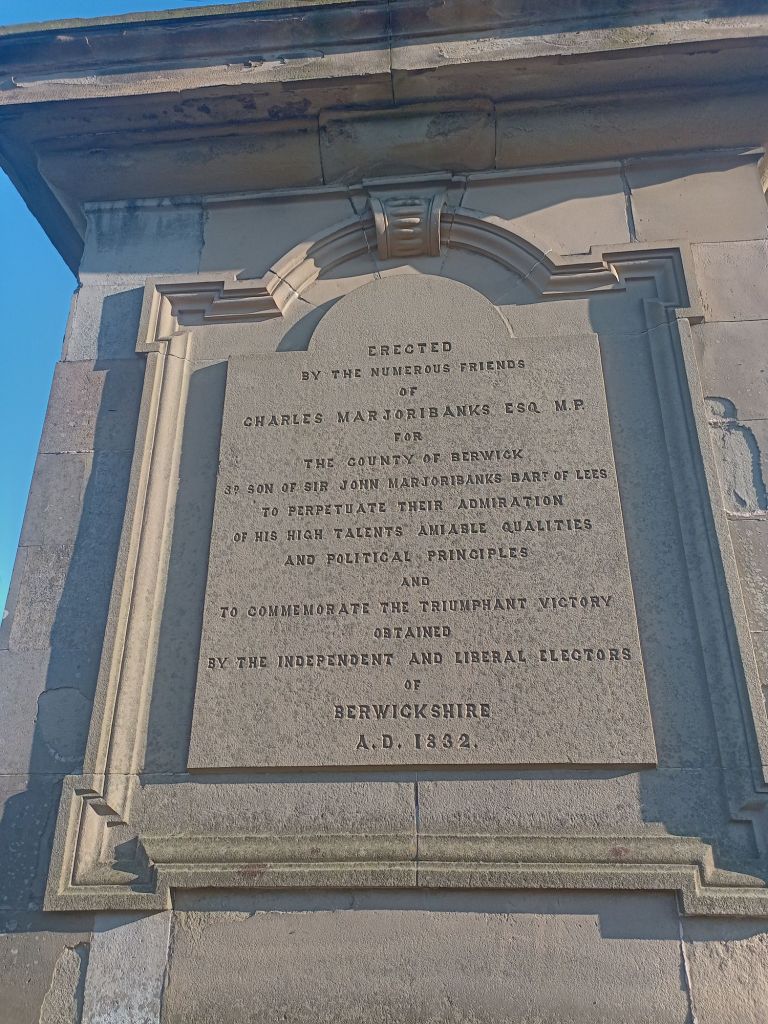
After Alnwick, rather than using the A1 again, we decided to drive back to Edinburgh via rural B roads as much as possible. This was a good choice, as the late afternoon / early evening sun enhanced the already-beautiful rolling farmland and villages. We stopped at a few places on the way, including Coldstream and Kelso.
Coldstream…
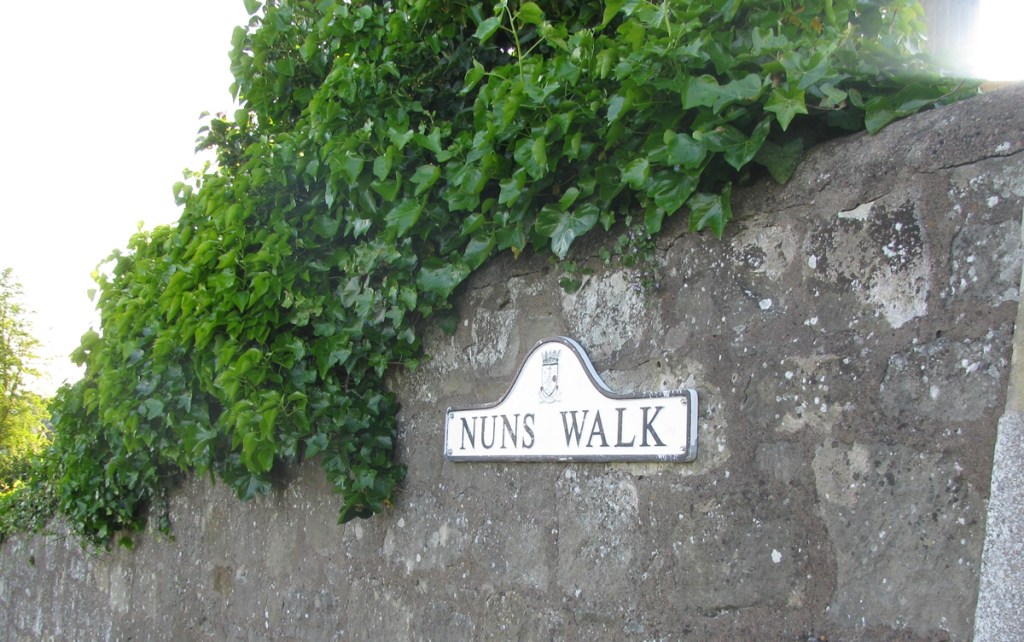
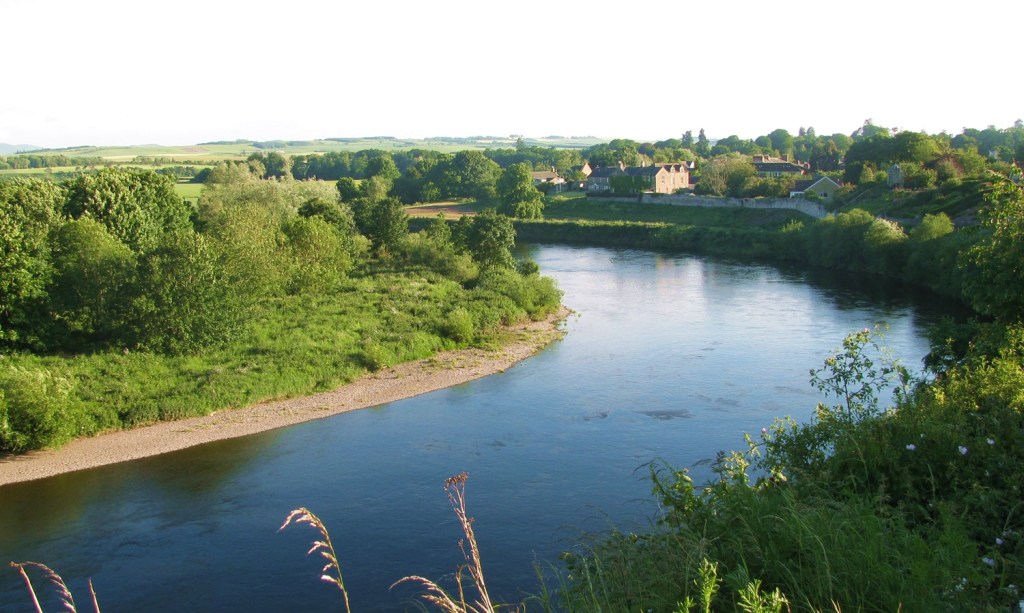
River Tweed from the Nun’s Walk – the river forms the border between Scotland and England
Blackford Hill
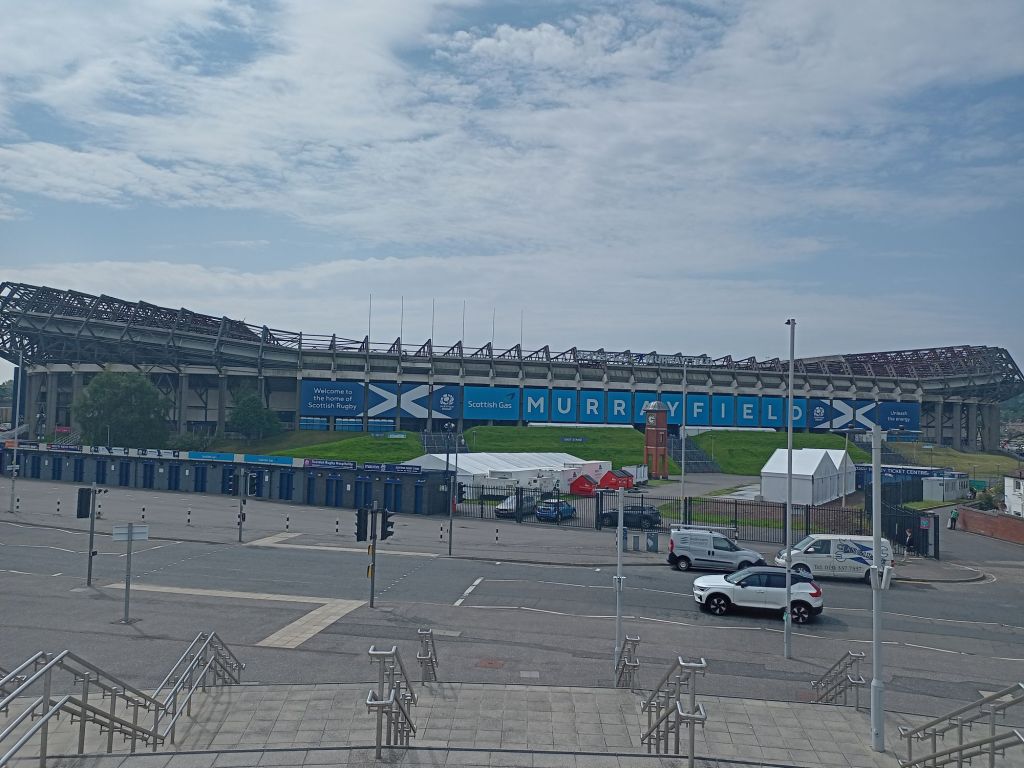
We ended the day by walking up Blackford Hill, past the Edinburgh Royal Observatory, to get a night-time view of the city. By now it was nearly 10 pm, but still light enough to see where we were going. (Ian had already walked there during daylight on Edinburgh Day 1). We were accompanied by the sound of Taylor Swift’s concert which was taking place at Murrayfield Stadium, about 4km away…
Arthur’s Seat
Night view of Edinburgh looking north-east through to north-west
(Note: Ian went for a long walk from Morningside to Edinburgh New Town and back on Day 13, but there are no photos).
Edinburgh: Day 14
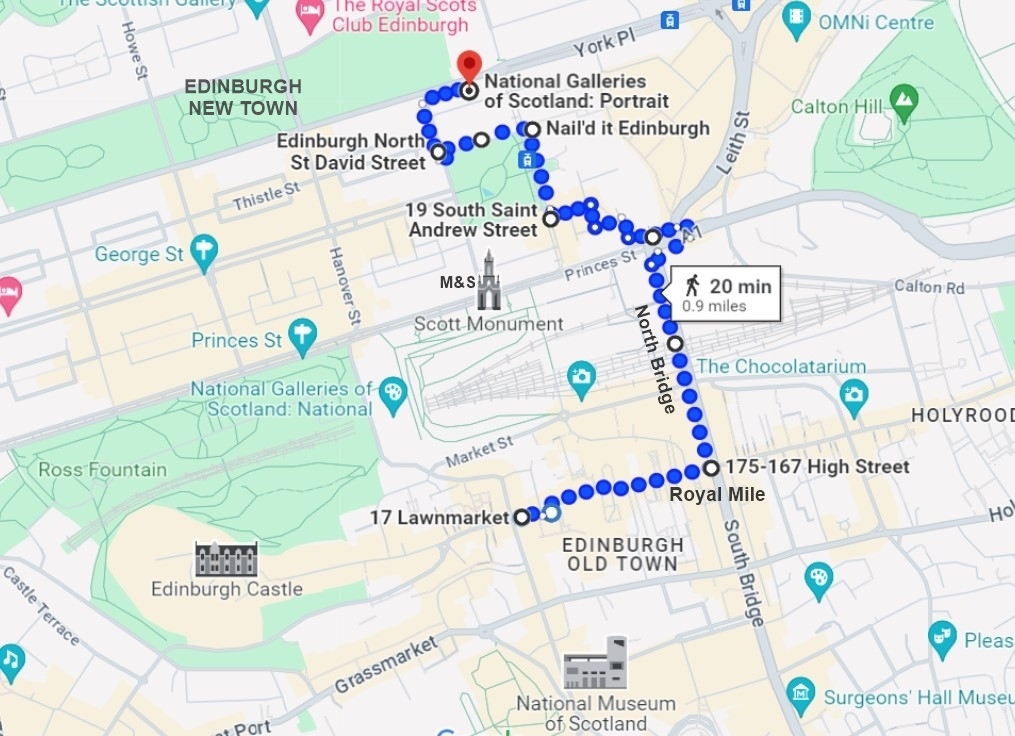
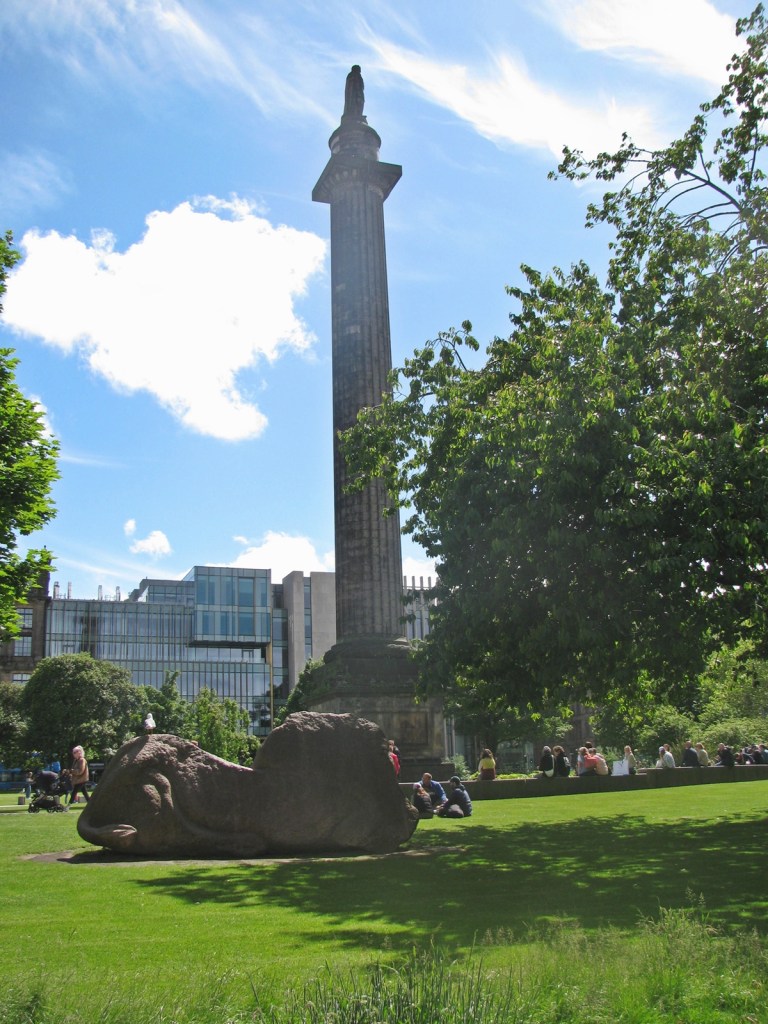
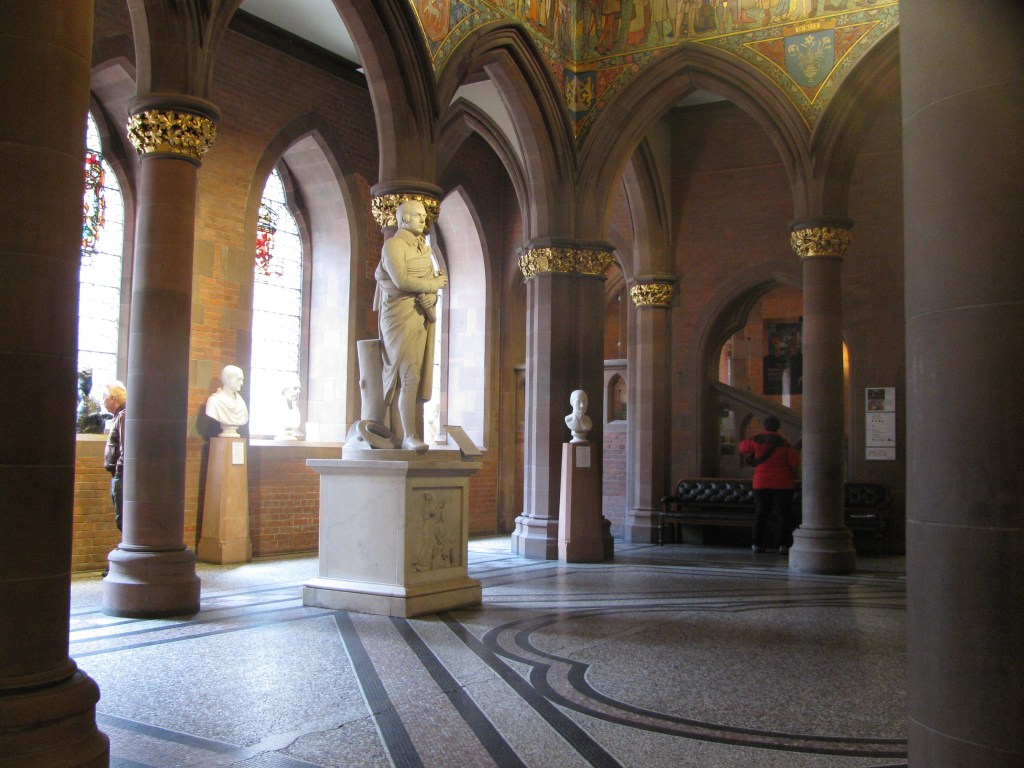
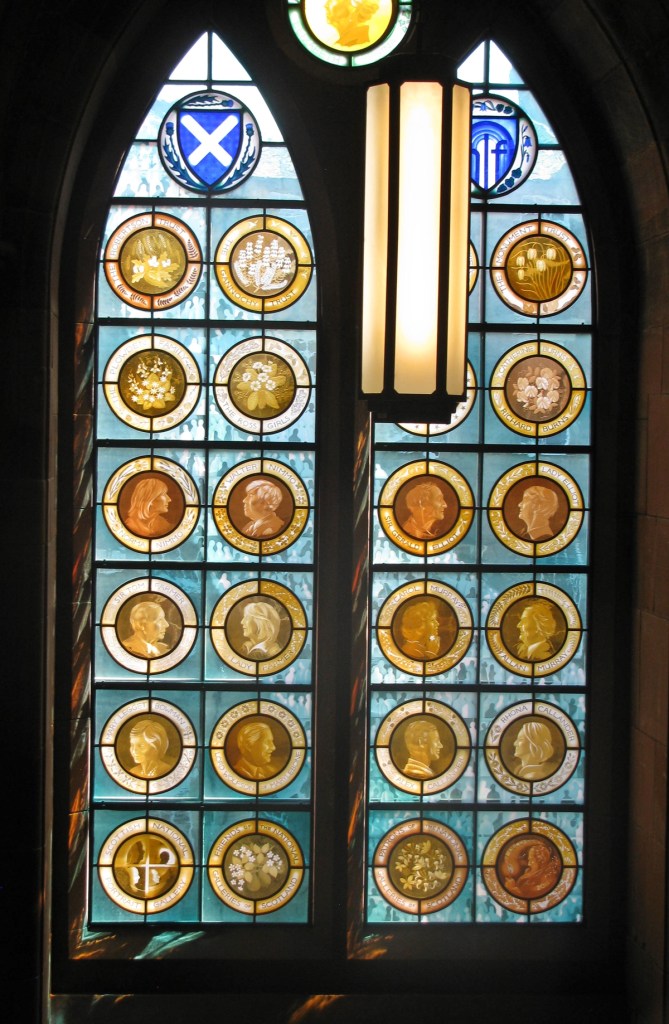
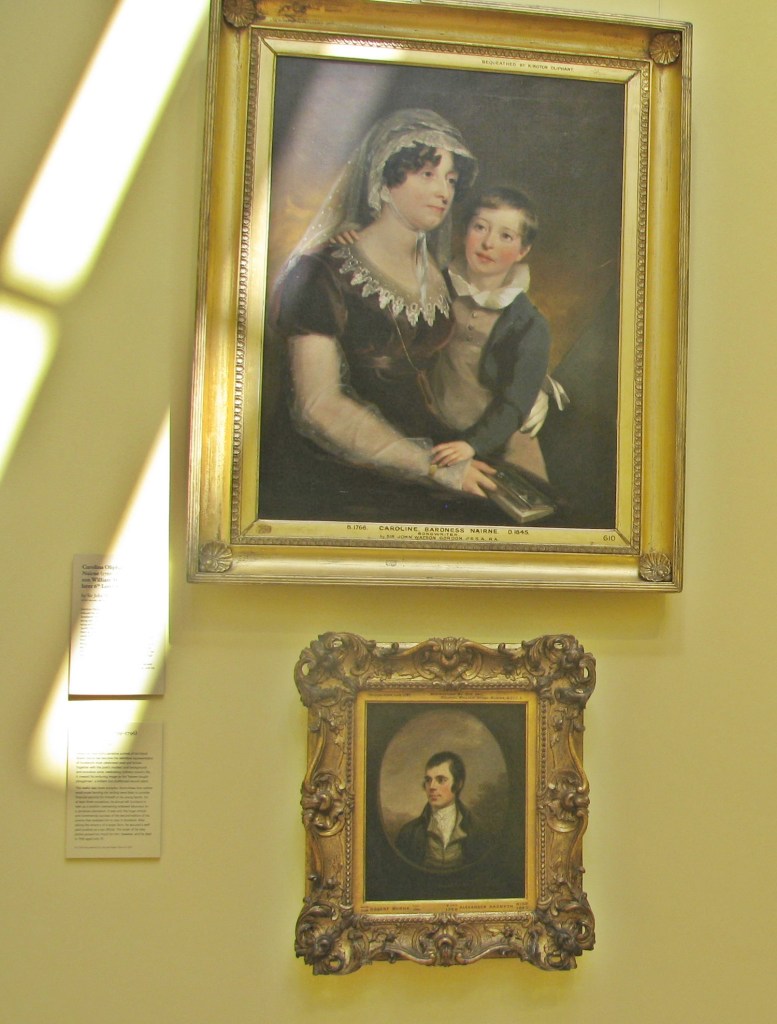
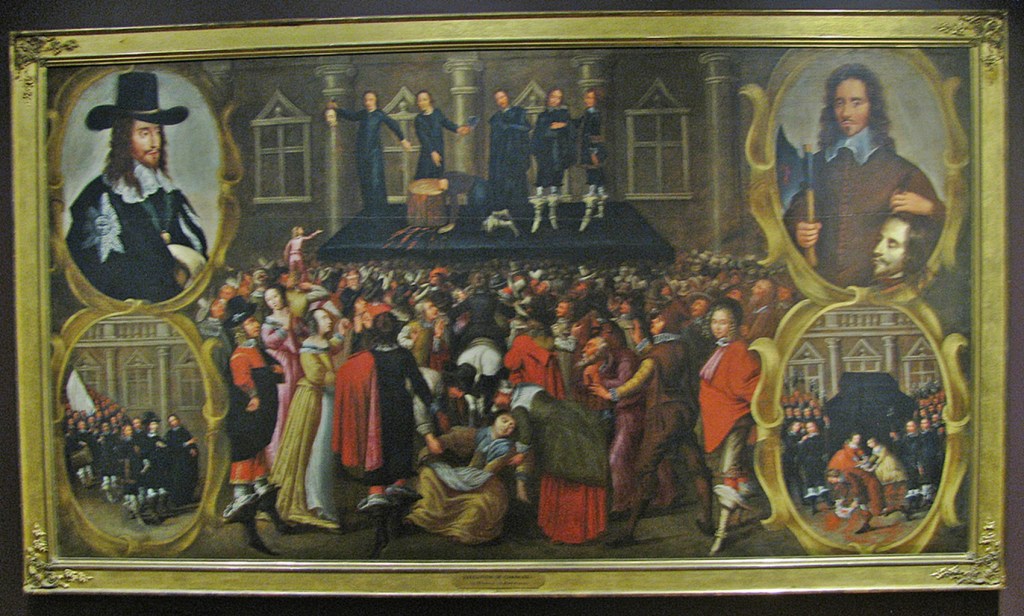
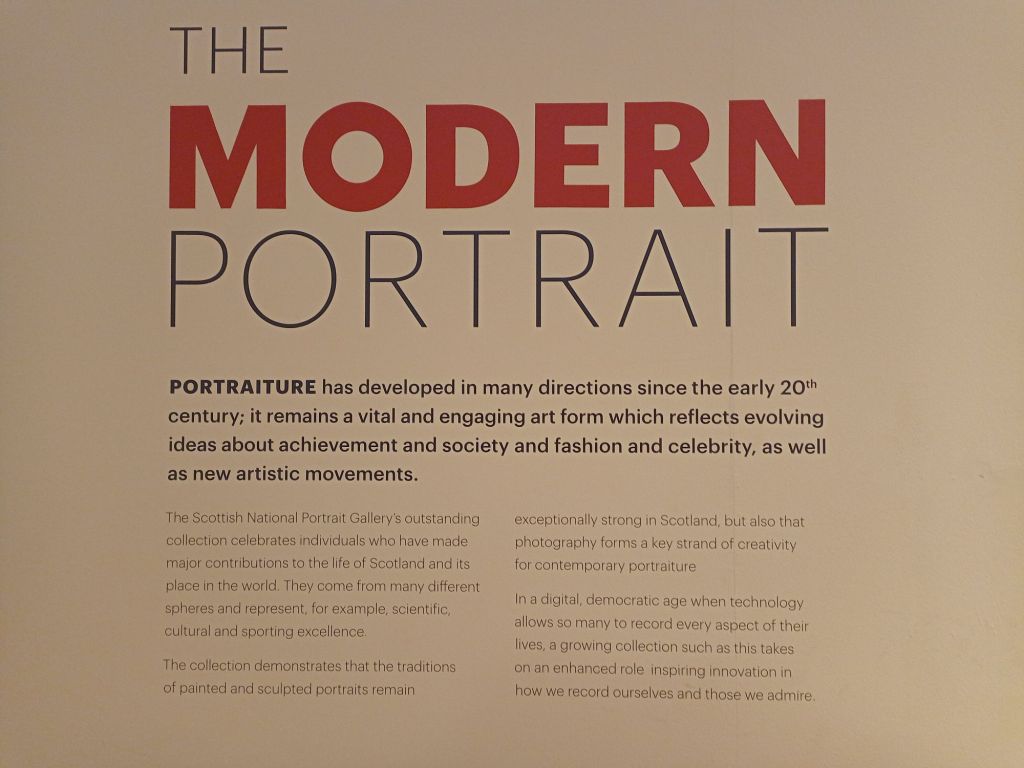
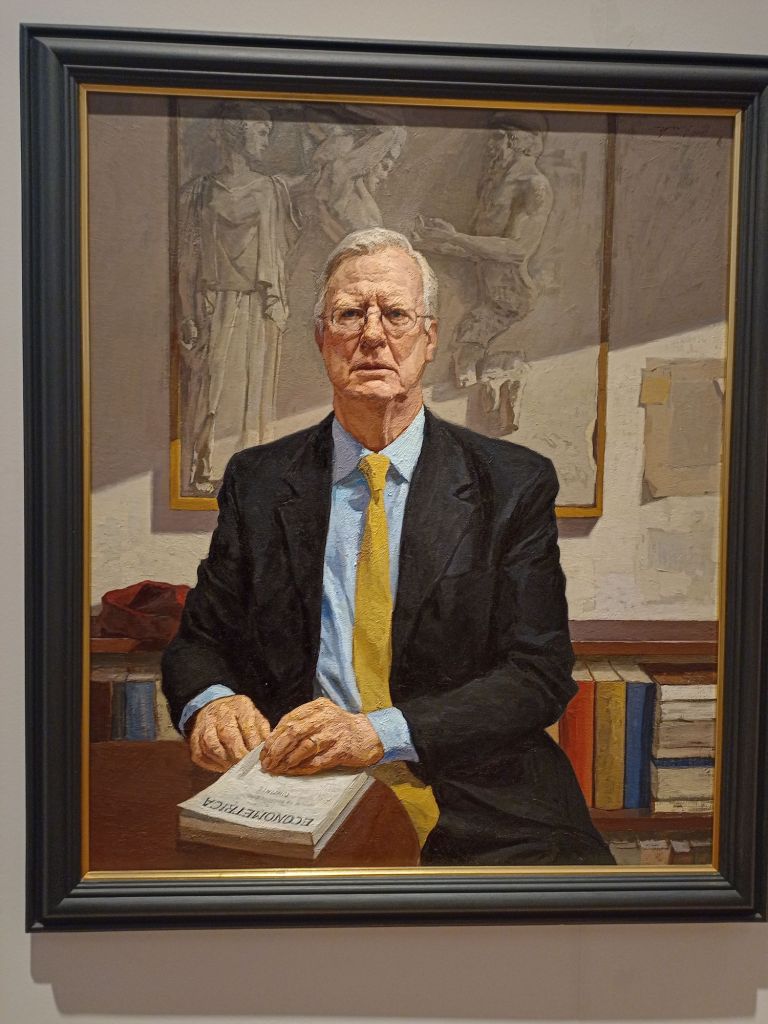
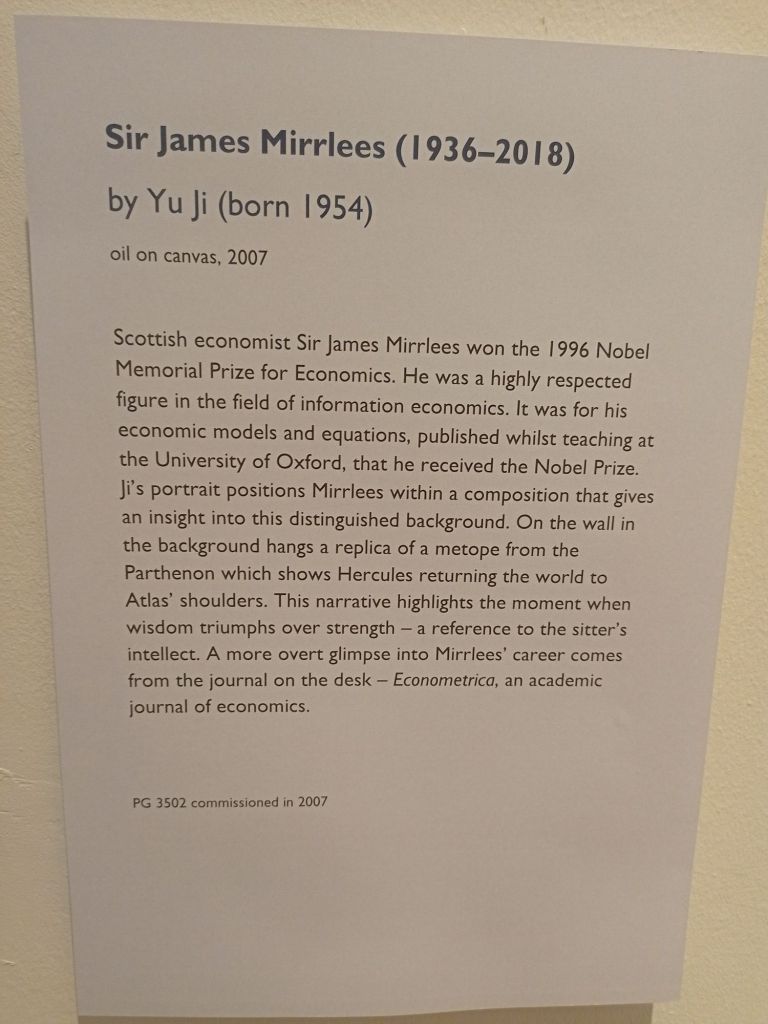
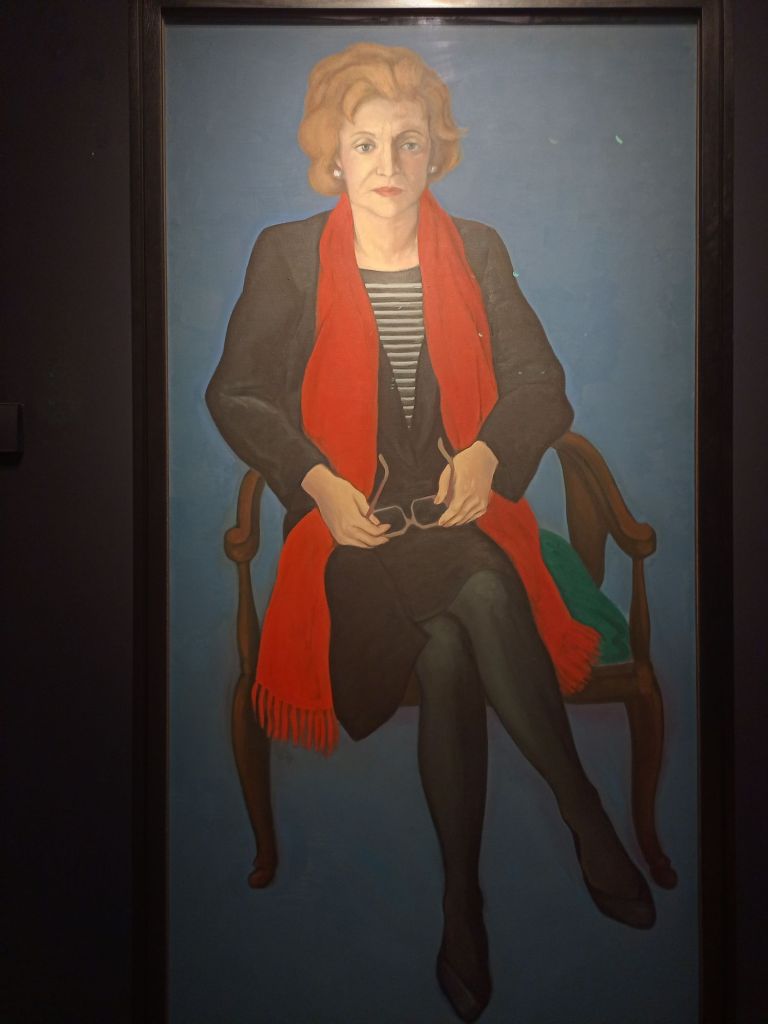
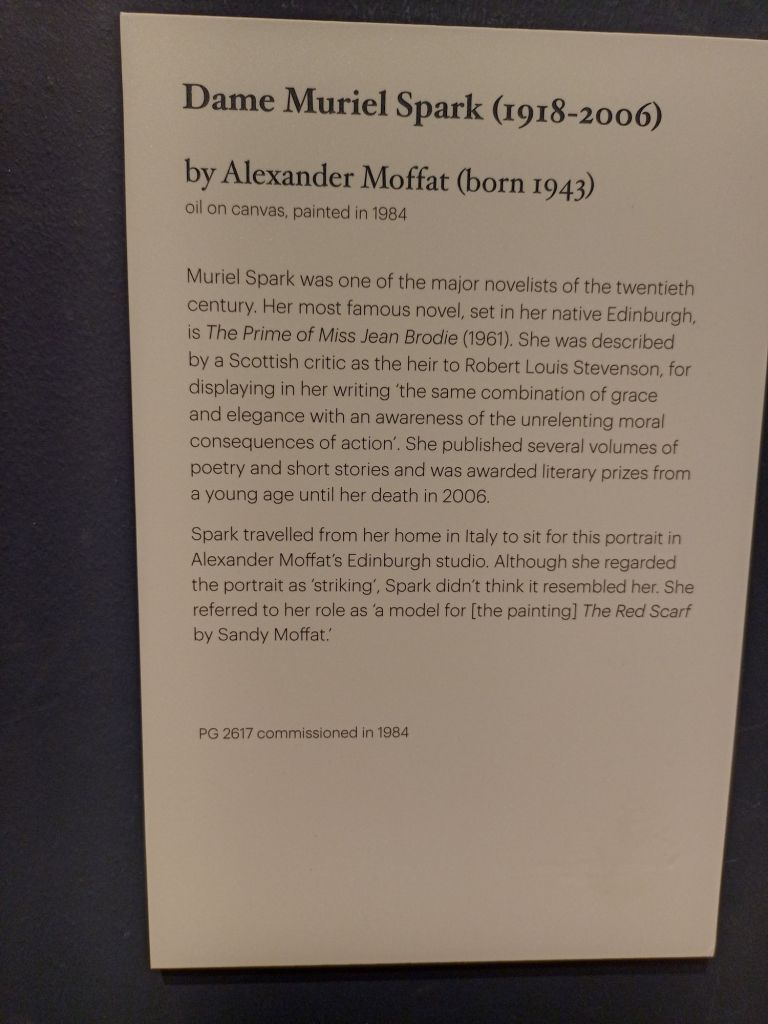
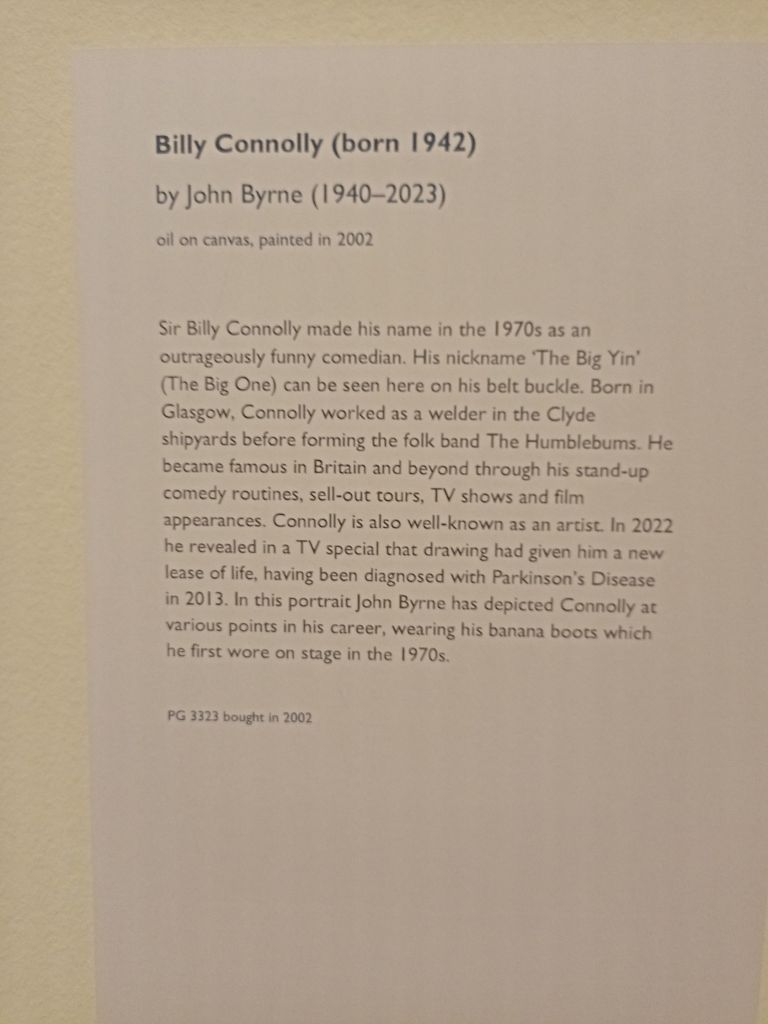
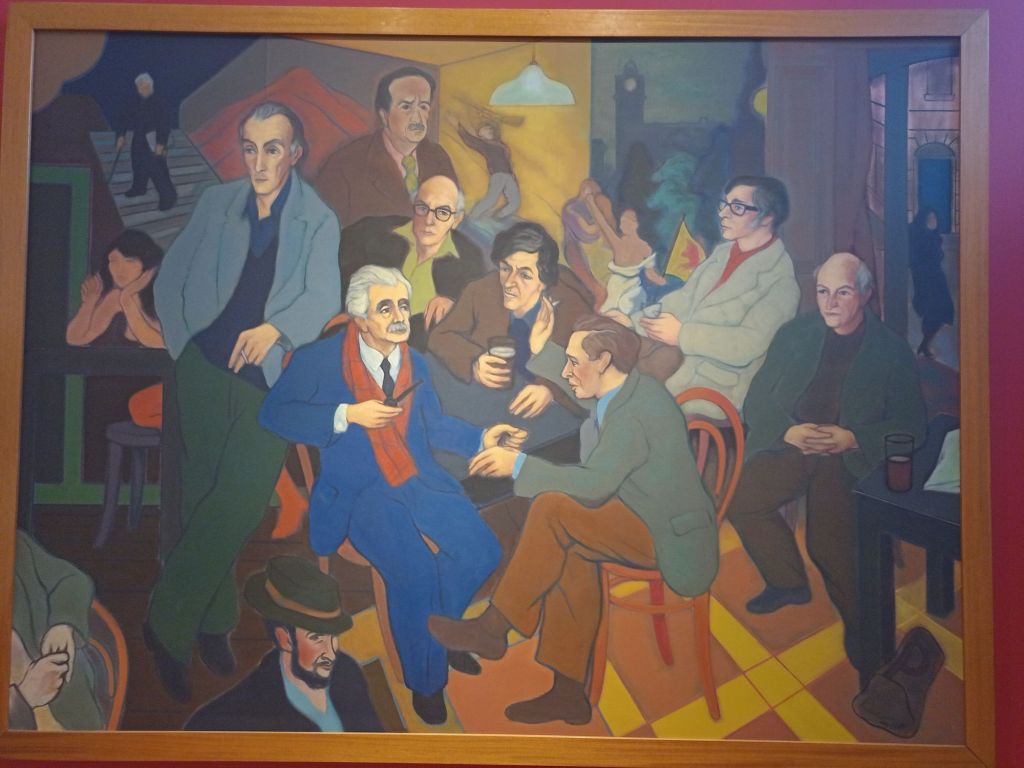
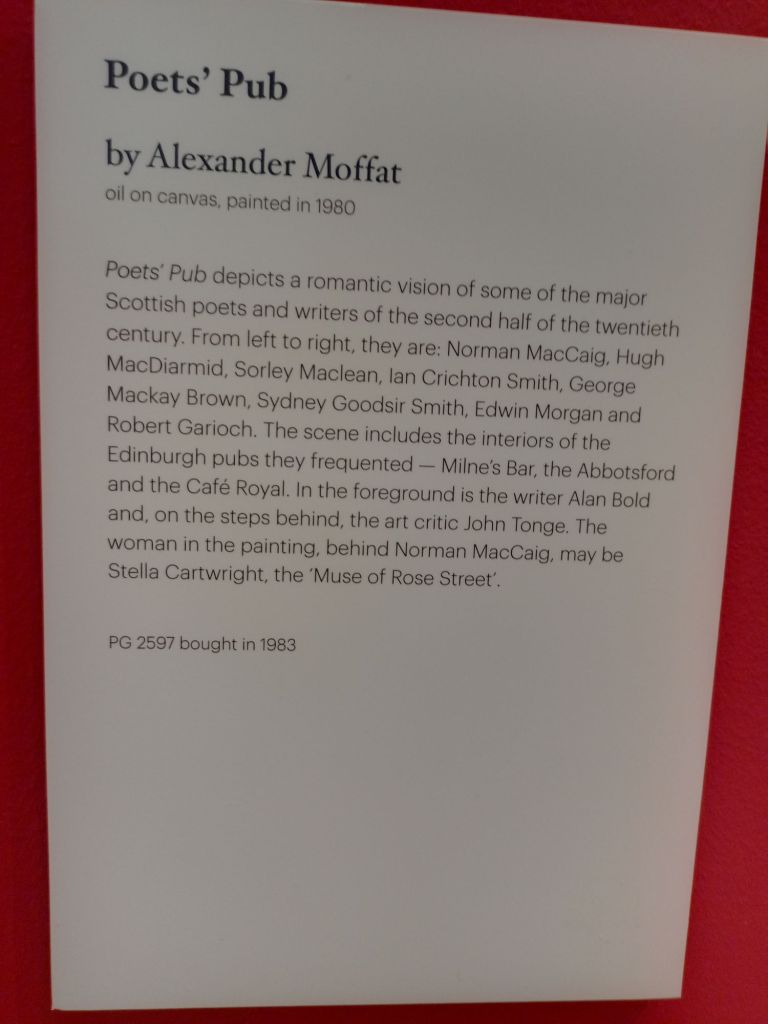
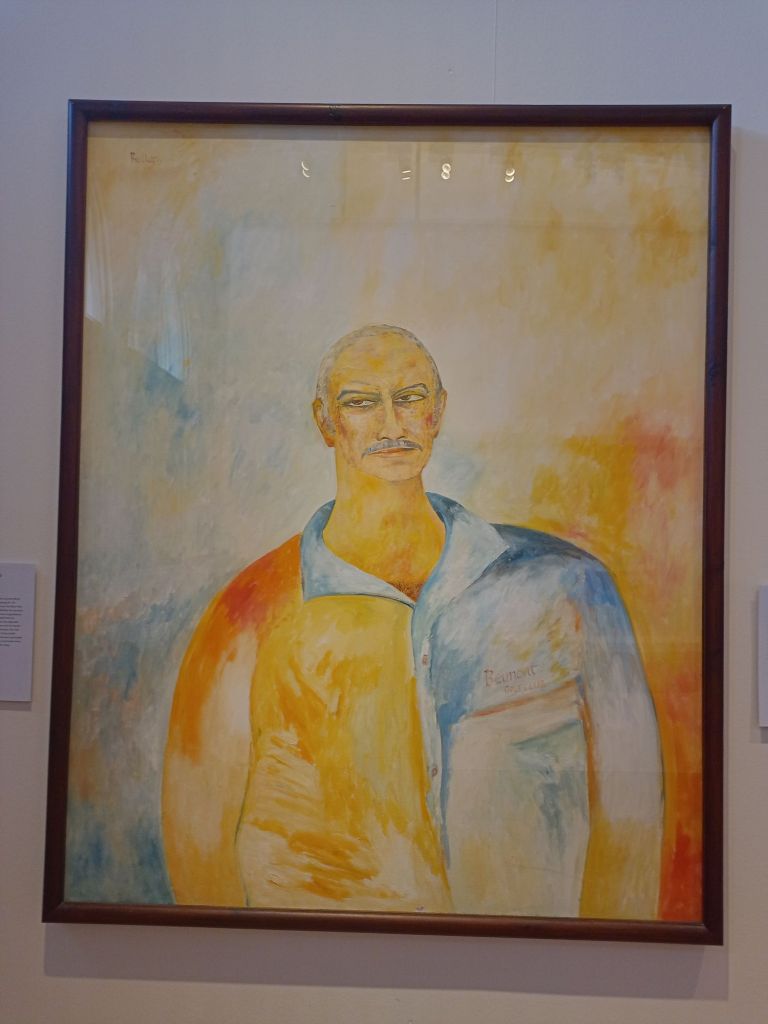
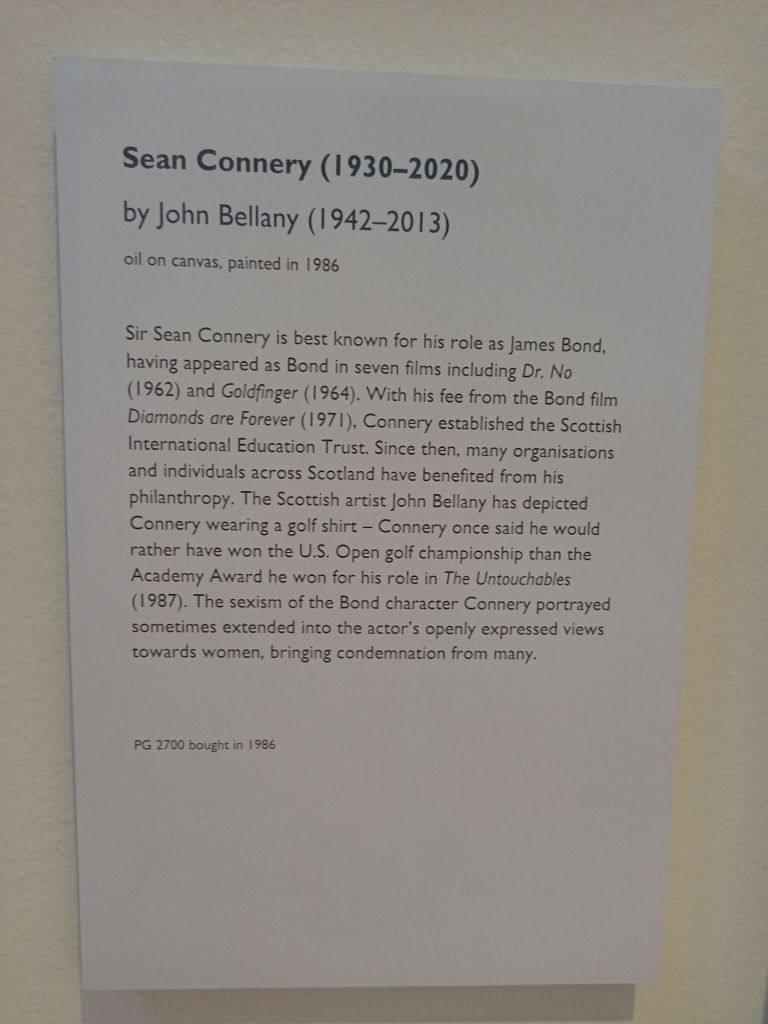
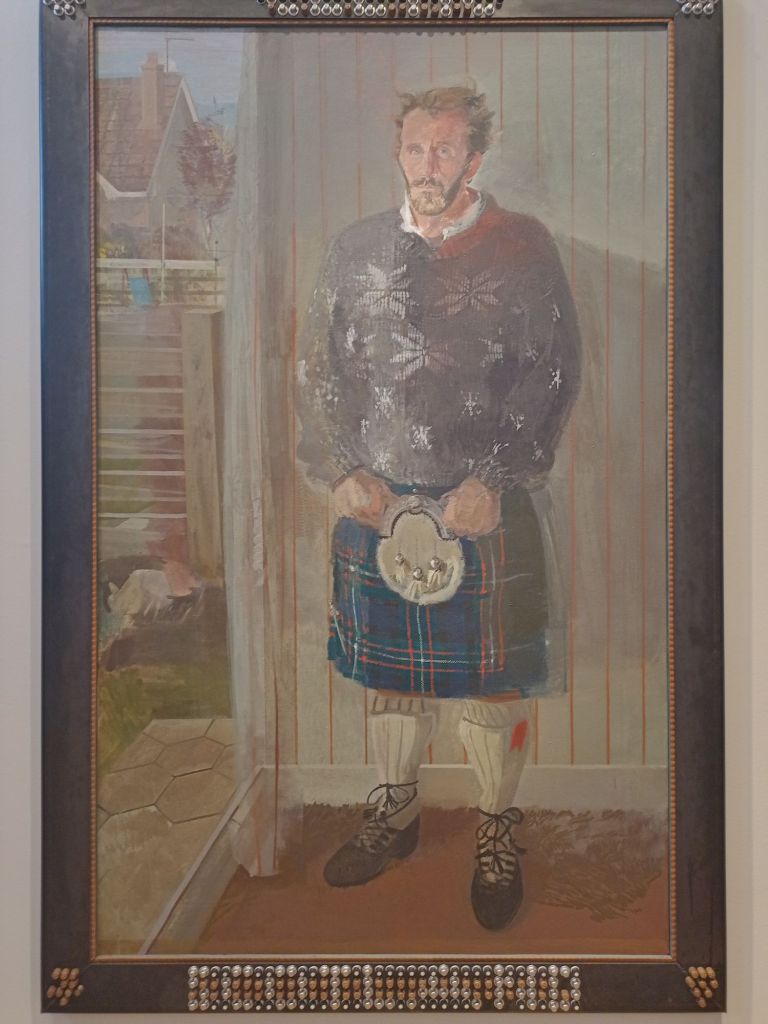
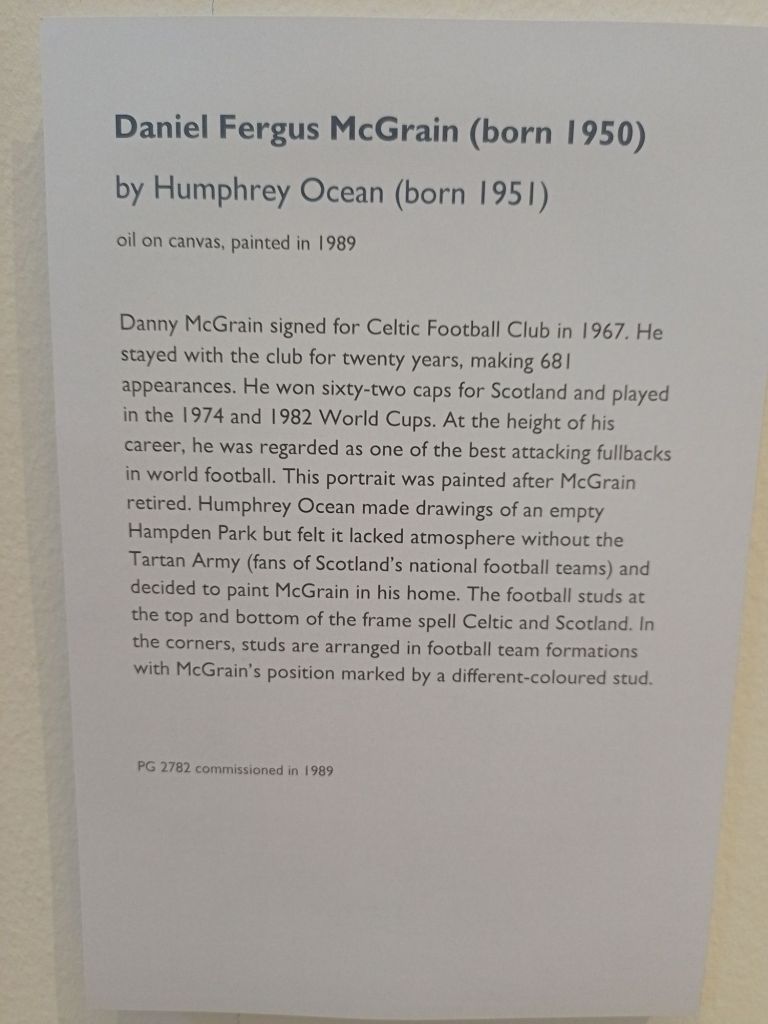
Today, Ian and Caroline went by bus to the Royal Mile in the Old Town of Edinburgh. This is one of the main tourist attractions of Edinburgh, with many historic buildings, churches, statues and other landmarks, souvenir shops, buskers playing bagpipes, etc. along a pedestrianised street. Ian had already been there (see Edinburgh Day 3), but Caroline hadn’t. It was very busy, so we only walked along part of it, and then along North Bridge which crosses above Waverley station and links Edinburgh Old Town to Edinburgh New Town. We then walked through some alleyways to St Andrew Square, and further on to the Scottish National Portrait Gallery, which is housed in a lovely old building and has some fascinating historic and modern paintings of Scottish people.
Later in the afternoon, Ian met up with E and they had a long walk around parts of Edinburgh University, while Caroline made a second trip to Marks and Spencer on Princes Street, and then went back home.
Royal Mile to Scottish National Portrait Gallery
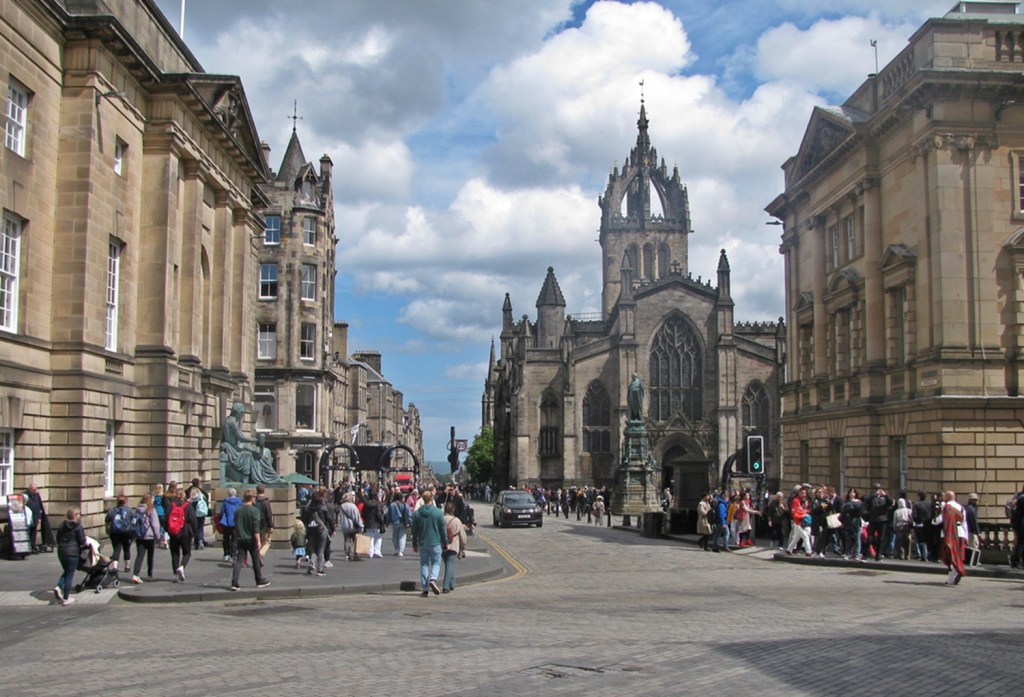
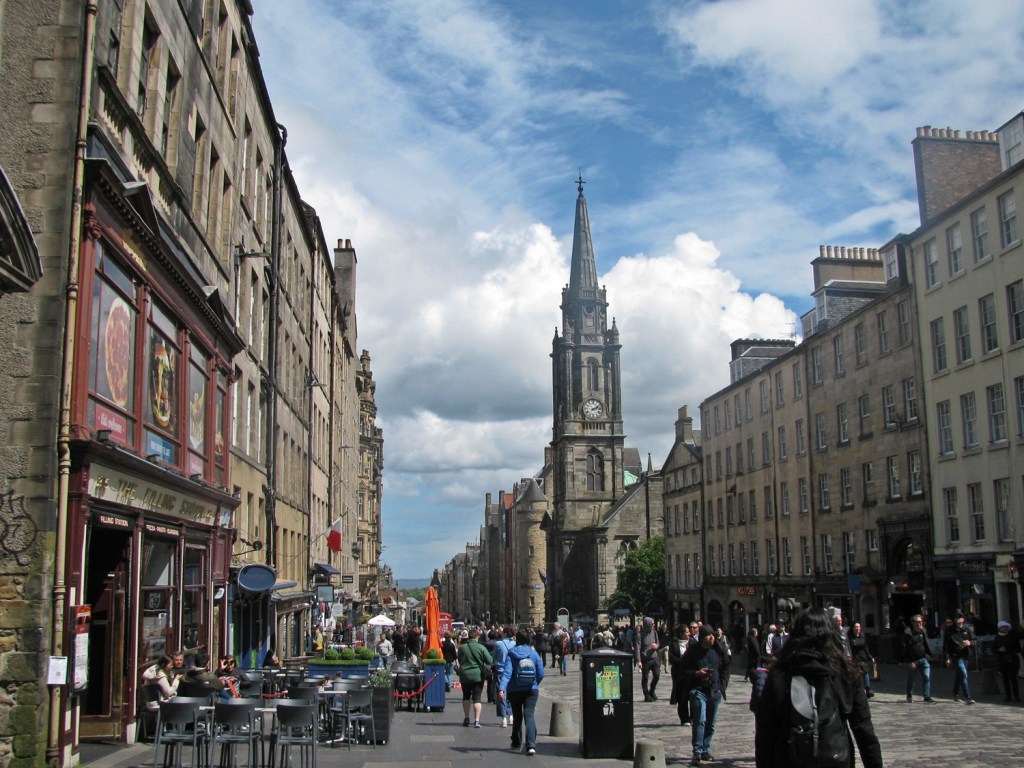
Royal Mile with St Giles Cathedral
Statue of David Hume (1711-1776) – Scottish philosopher and historian
Adam Smith statue outside St. Giles
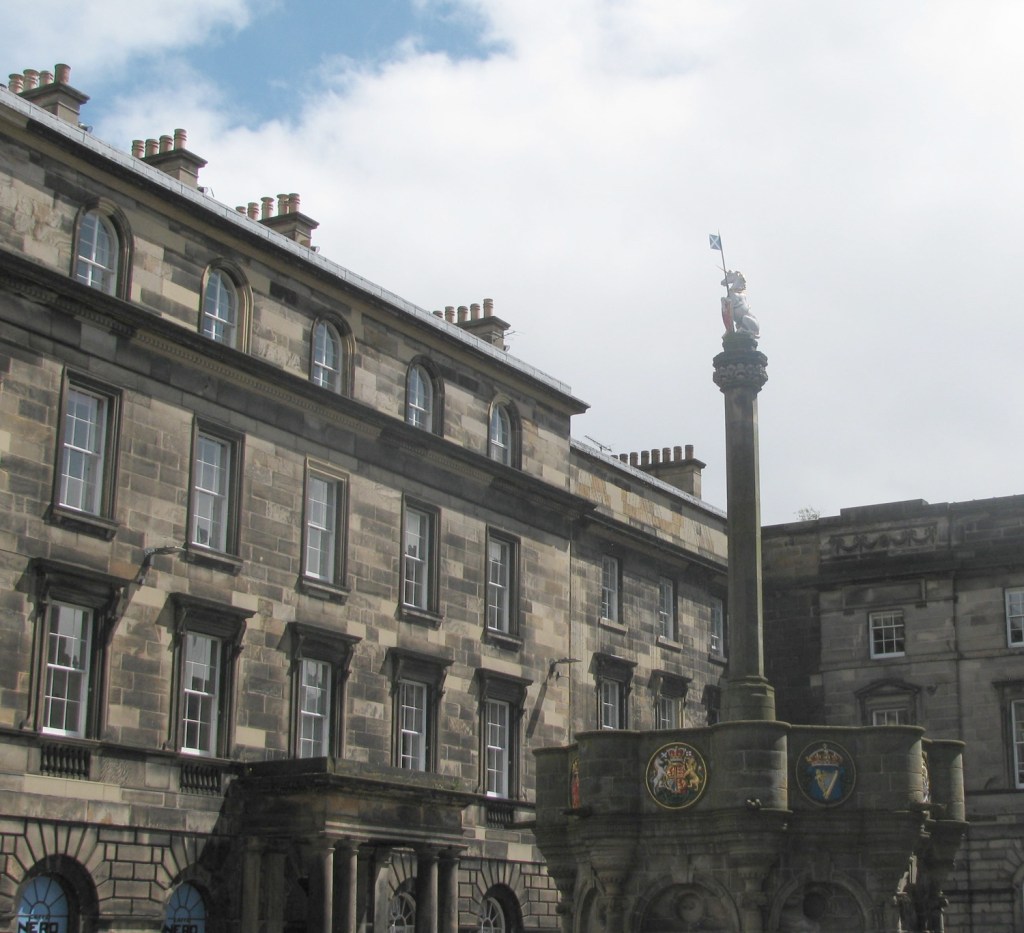
The Mercat Cross with unicorn on top, Parliament Square
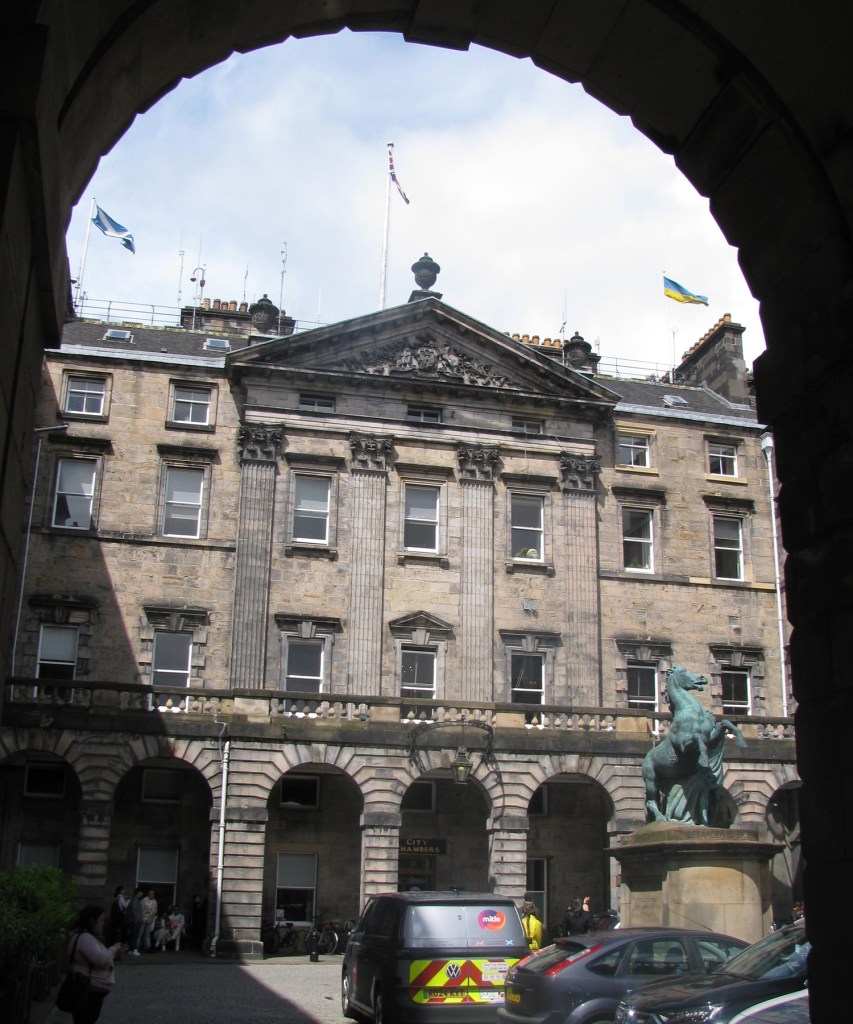
City Chambers
Royal Mile
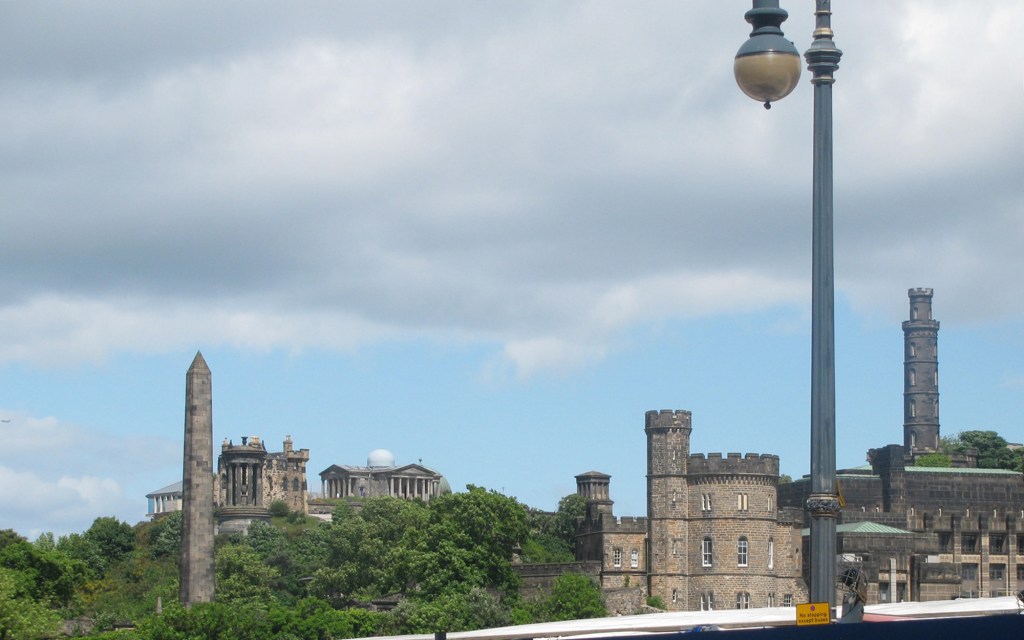
View from North Bridge towards Calton Hill
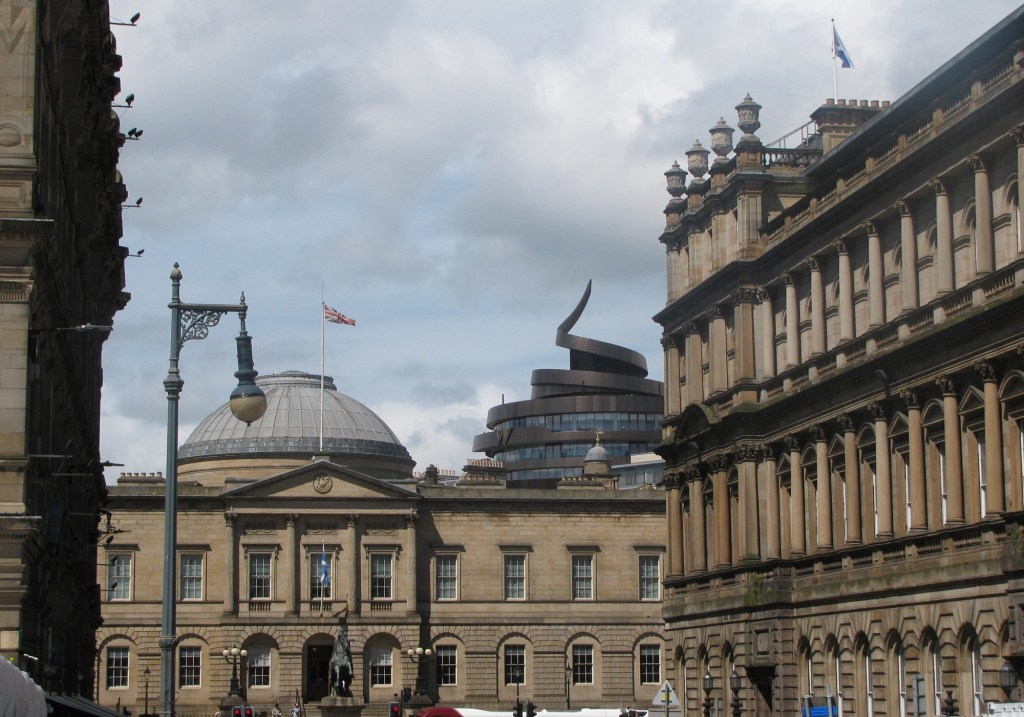
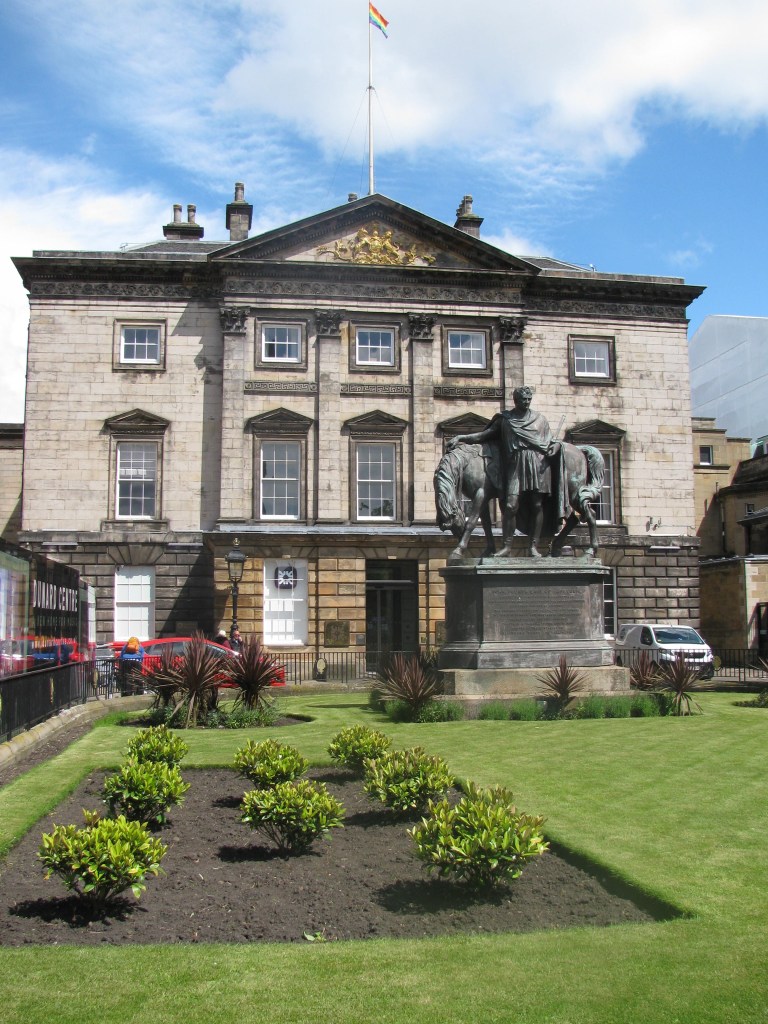
North Bridge and Princes Street intersection. General Register House, with spiral-roofed W Edinburgh – St James Quarter behind
Top: Carolina Oliphant, Lady Nairne, 1766 – 1845. Songwriter (With her son William Murray Nairne, later 6th Lord Nairne, 1808 – 1837). Oil on canvas by Sir John Watson Gordon, painted about 1818.
Bottom: Robert Burns (1759-1796). Oil on canvas by Alexander Nasmyth, painted about 1787.
The execution of Charles I. Oil on canvas, painted by an unknown artist after 1649
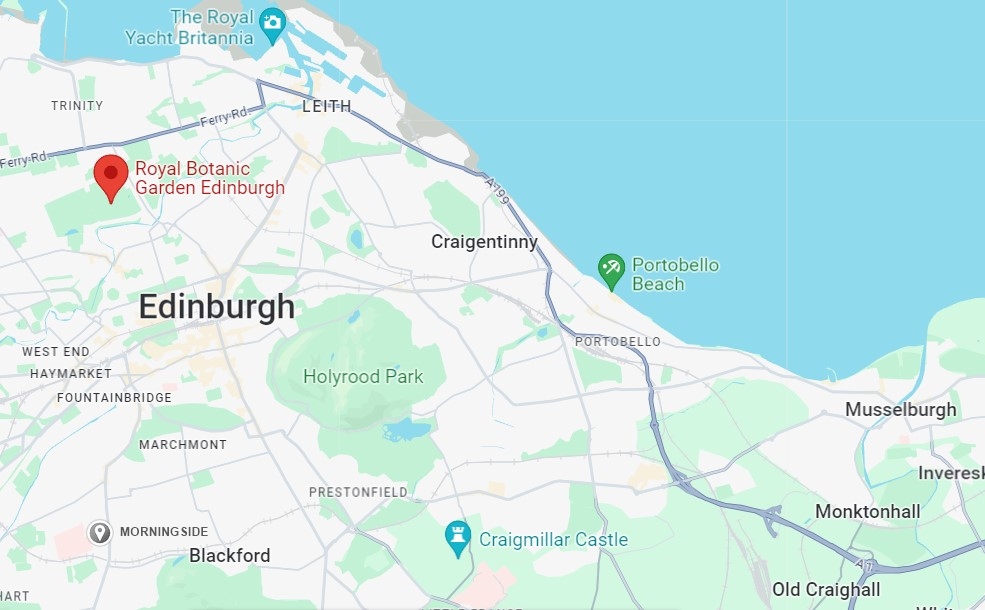
On Day 11 all three of us took the bus to Edinburgh’s Royal Botanic Garden. After that we went by bus and tram to Portobello, one of Edinburgh’s coastal suburbs.
The next day we had a long day trip to St. Andrews, north-east of Edinburgh.
Edinburgh: Day 11 – Royal Botanic Garden and Portobello
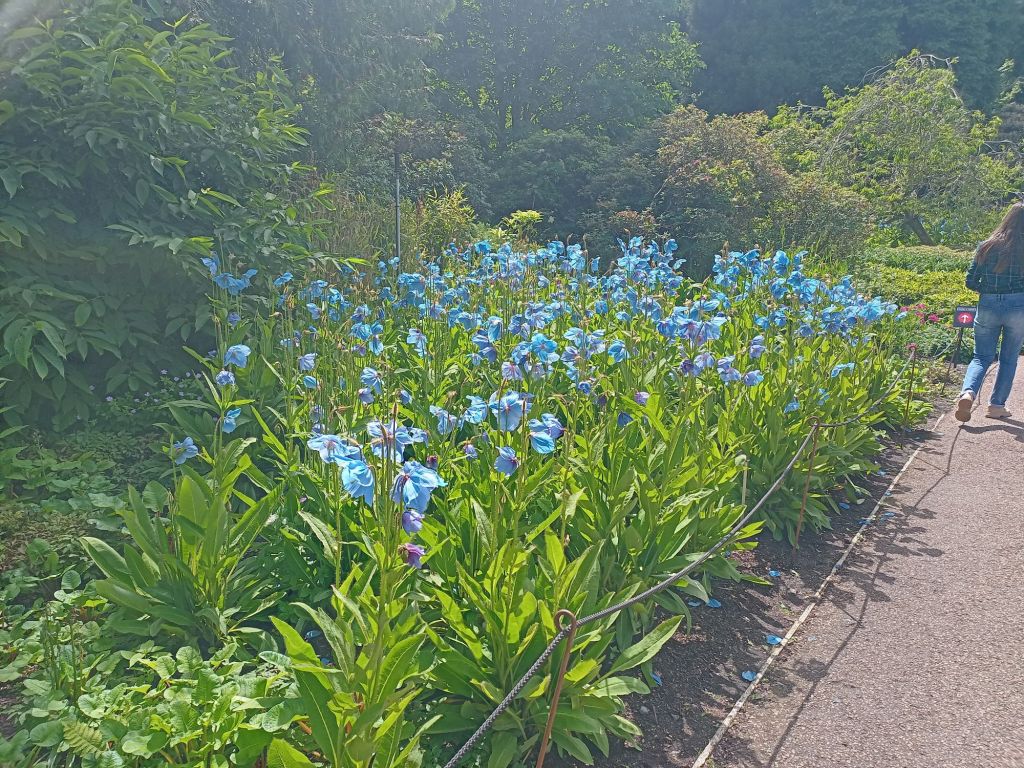
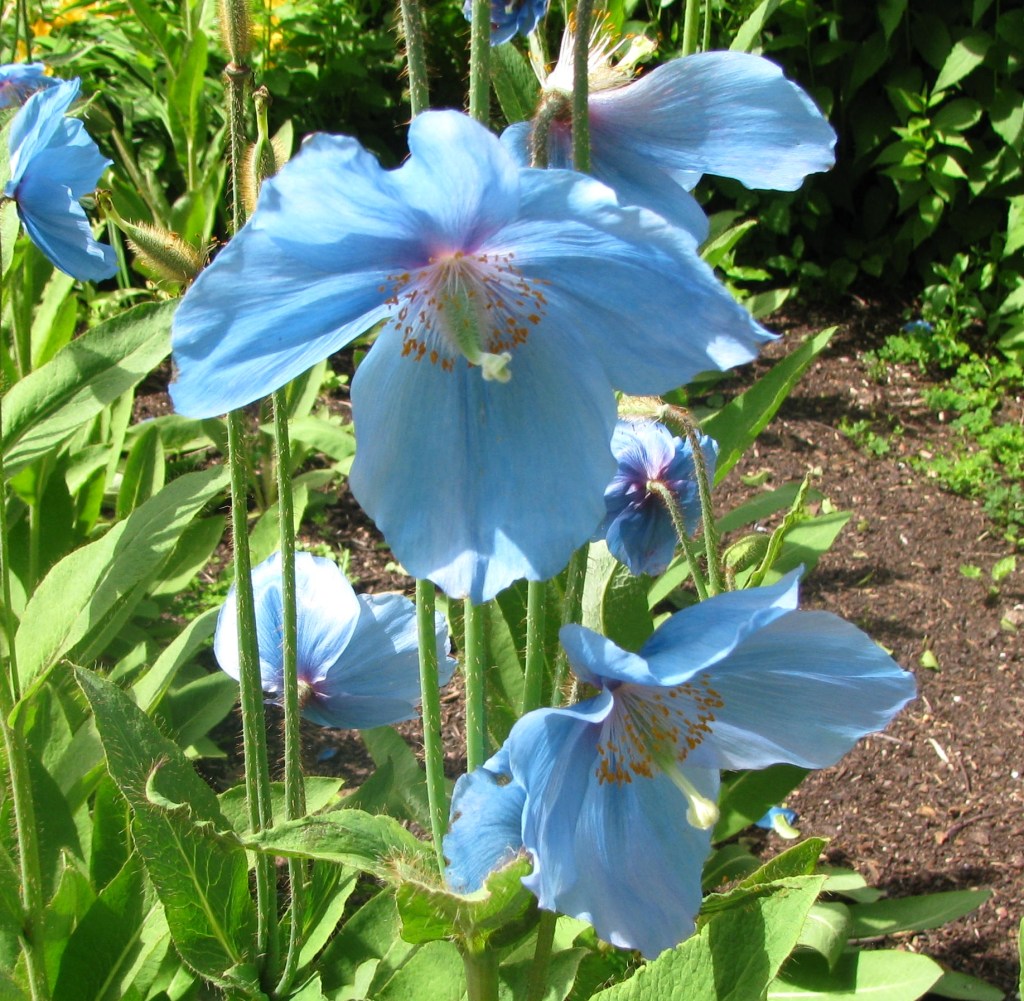
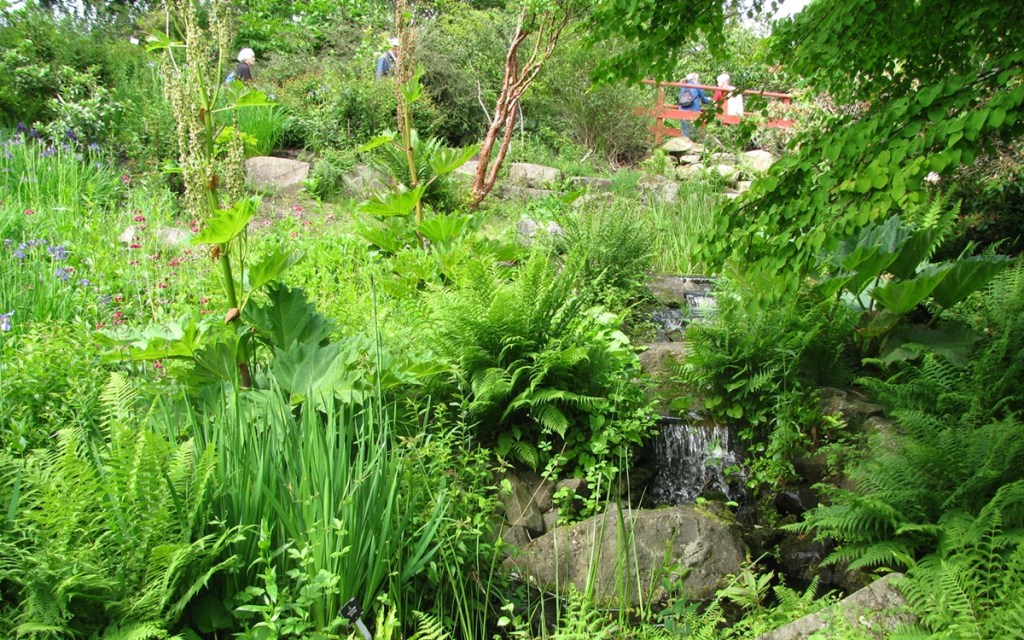
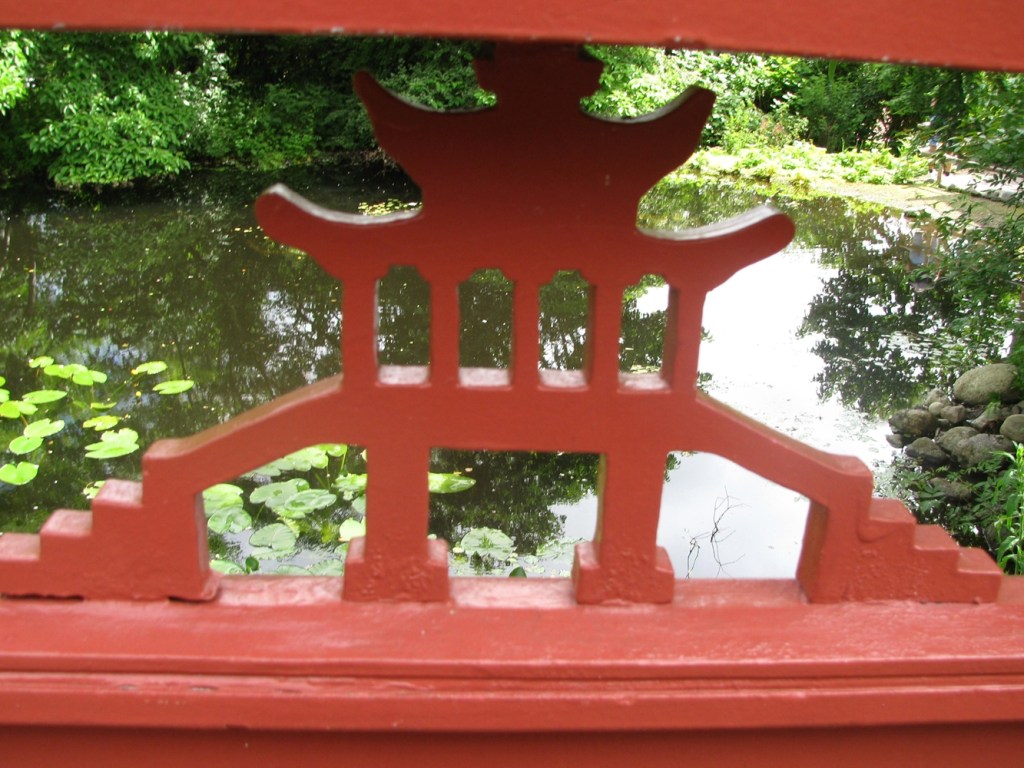
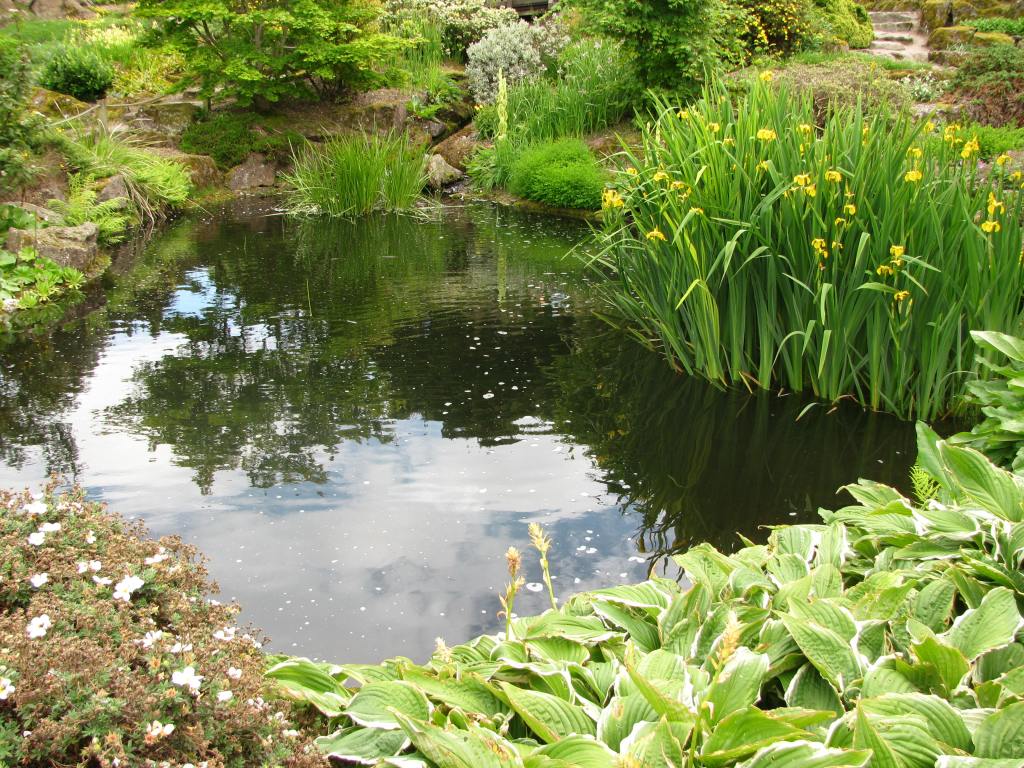
Using a public transport day ticket, first we boarded a local bus heading to the Royal Botanic Garden. The Garden was in full bloom and bustling with people enjoying the Edinburgh sunshine. We particularly appreciated the blue poppies, the Chinese hillside garden, and the extensive rock garden which even had a New Zealand plant section!
After that, we went by bus and tram to Leith, then transferred to another bus going to Portobello. Portobello was a popular beach resort in Victorian times, but its glory is now somewhat faded. Nonetheless, on the day we visited there were many people sitting and walking on the promenade, enjoying a meal or drink at one of the several cafes and food stalls, or chancing their luck at an amusement arcade. A few people were swimming, although the water didn’t look too inviting by NZ standards, especially as a cool afternoon breeze was blowing.
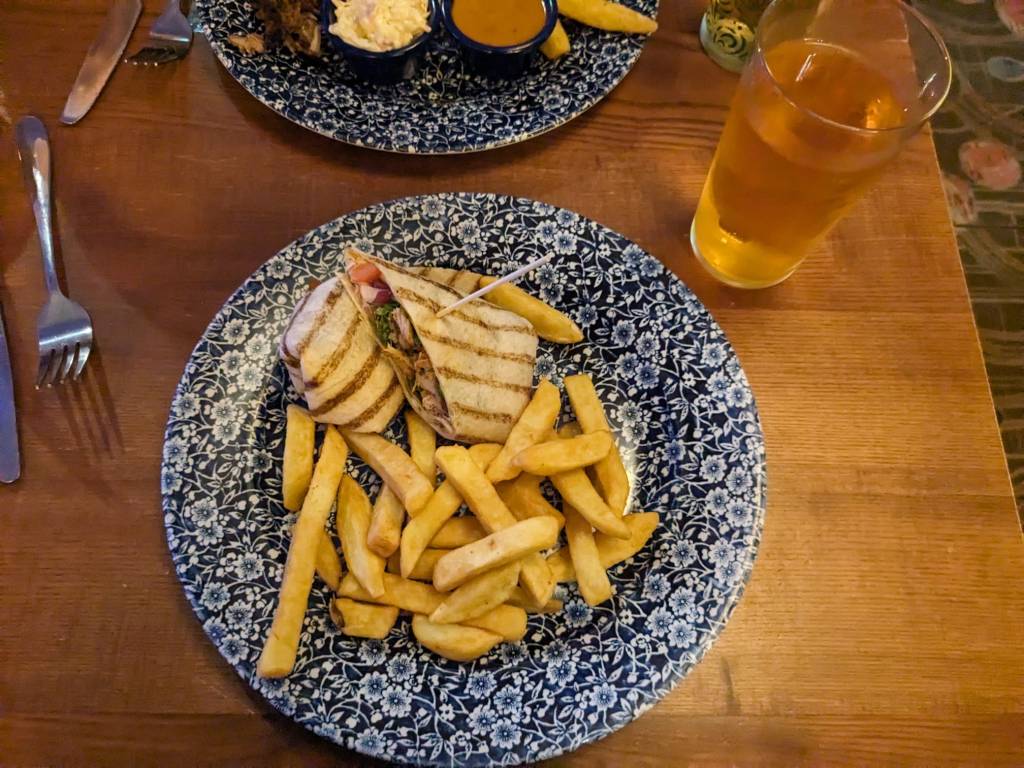
By now it was dinner time, so we took another bus to Musselburgh, a little further down the coast, where we had a cheap and cheerful Wetherspoon pub meal. This was more for the experience of dining in an Art-Deco-ish ex-cinema rather than the expectation of a gourmet delight, but the food and drinks were fine. After that it was back on the buses to Morningside and ‘home’. We all agreed we had definitely made the most of our transport day tickets.
Edinburgh Royal Botanic Garden – blue poppies…
Chinese hillside garden
Rock garden
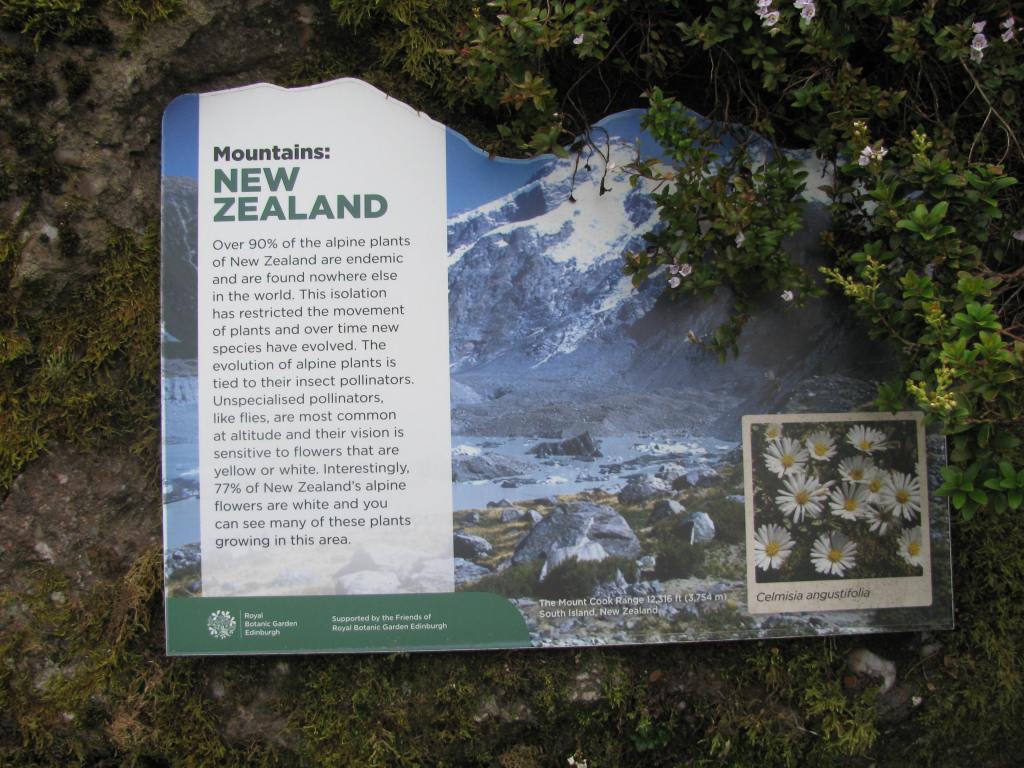
NZ section with astelia, hebes and ferns
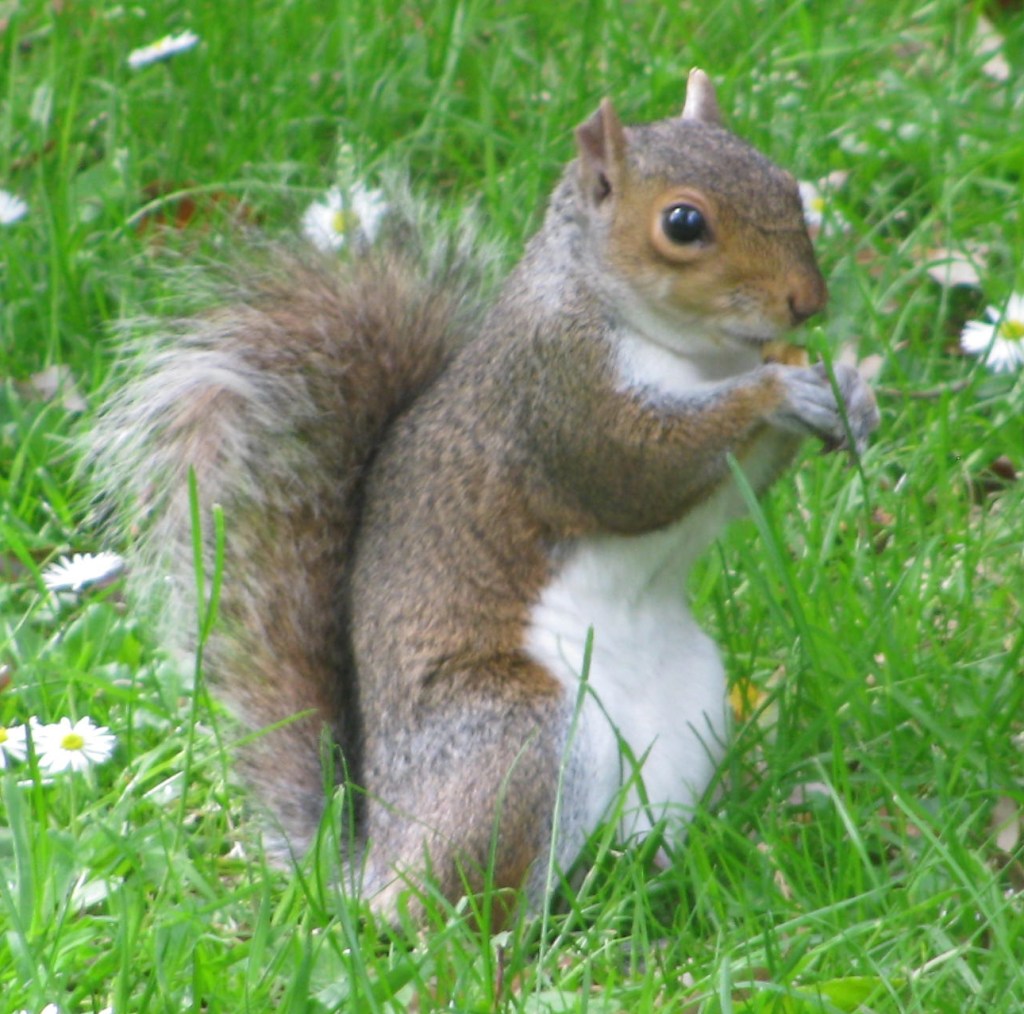
Grey squirrel enjoying treats from garden visitors
Wetherspoon fare
Edinburgh Day 12 – Day trip to St. Andrews
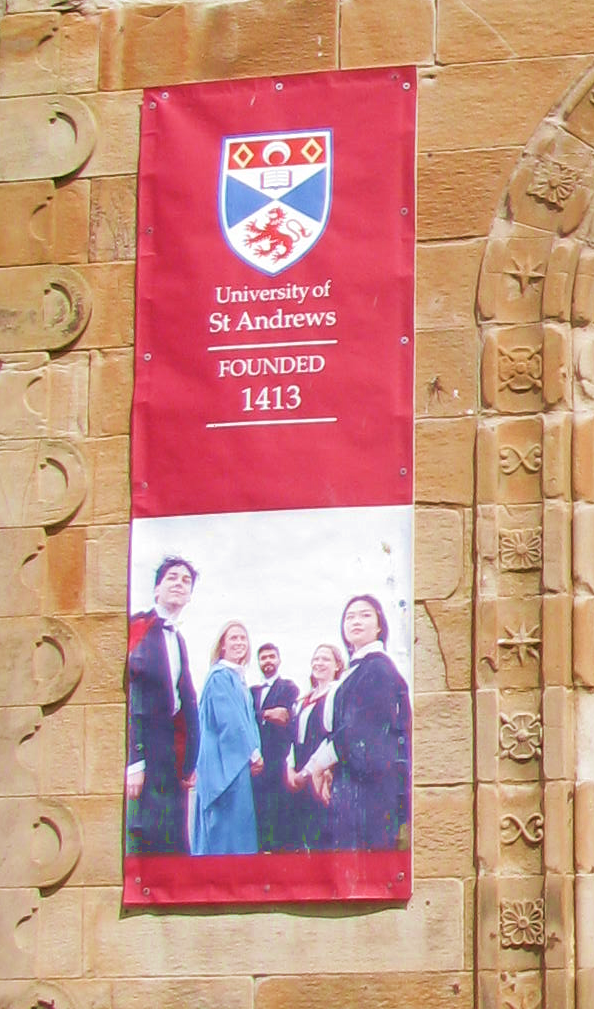
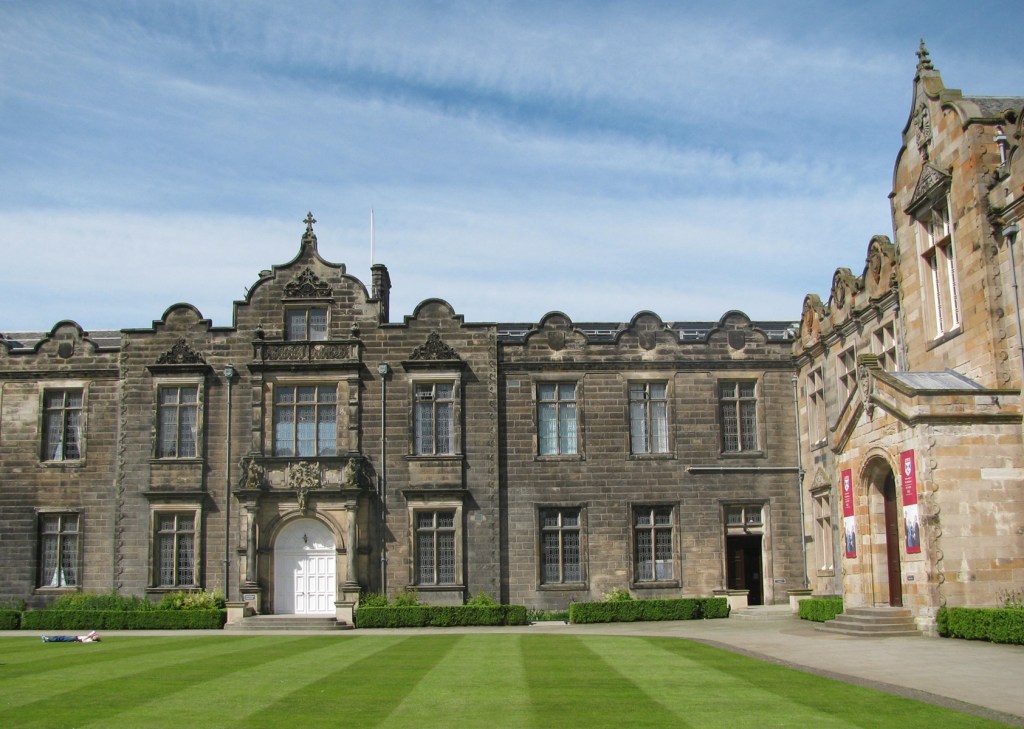
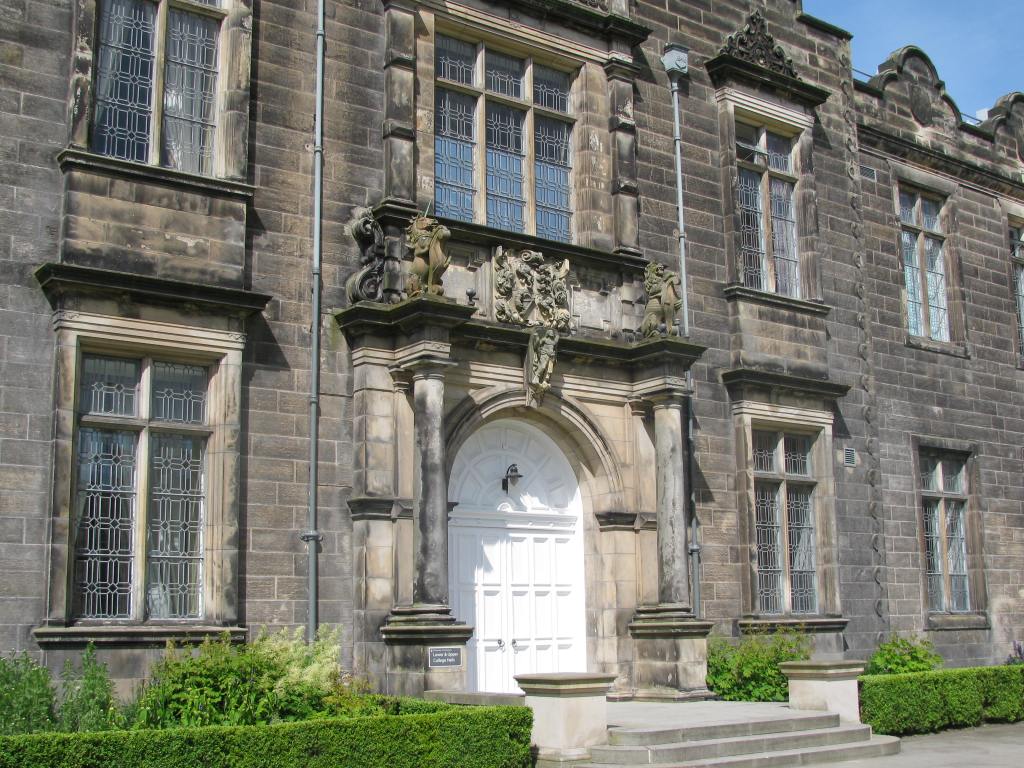
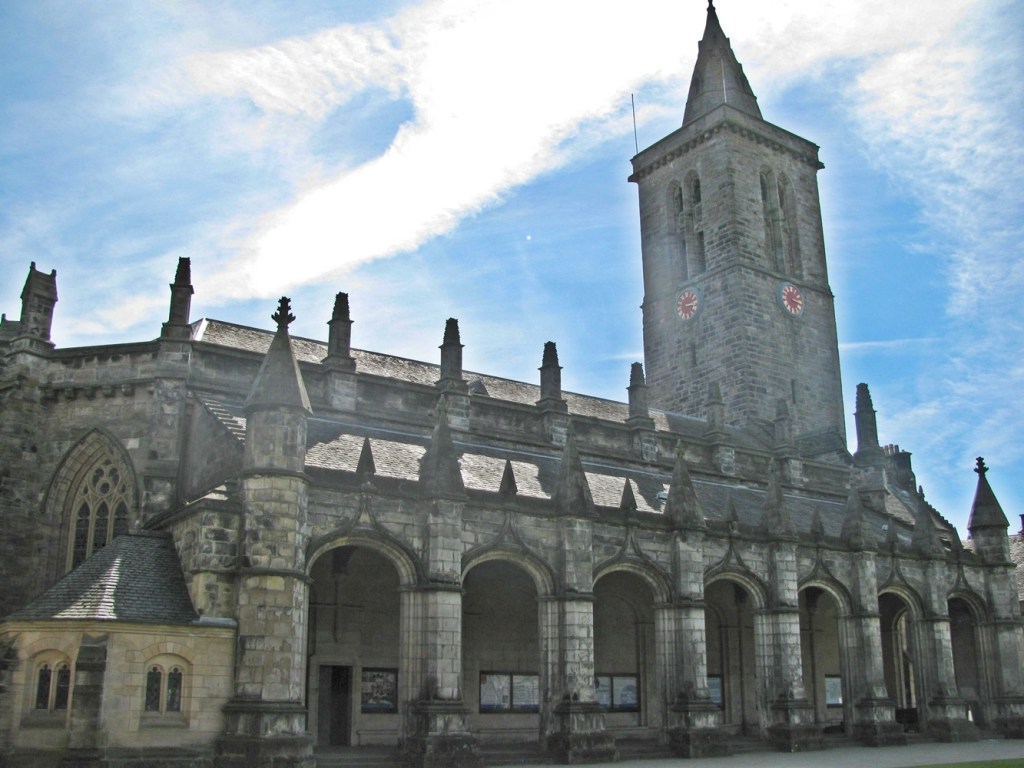
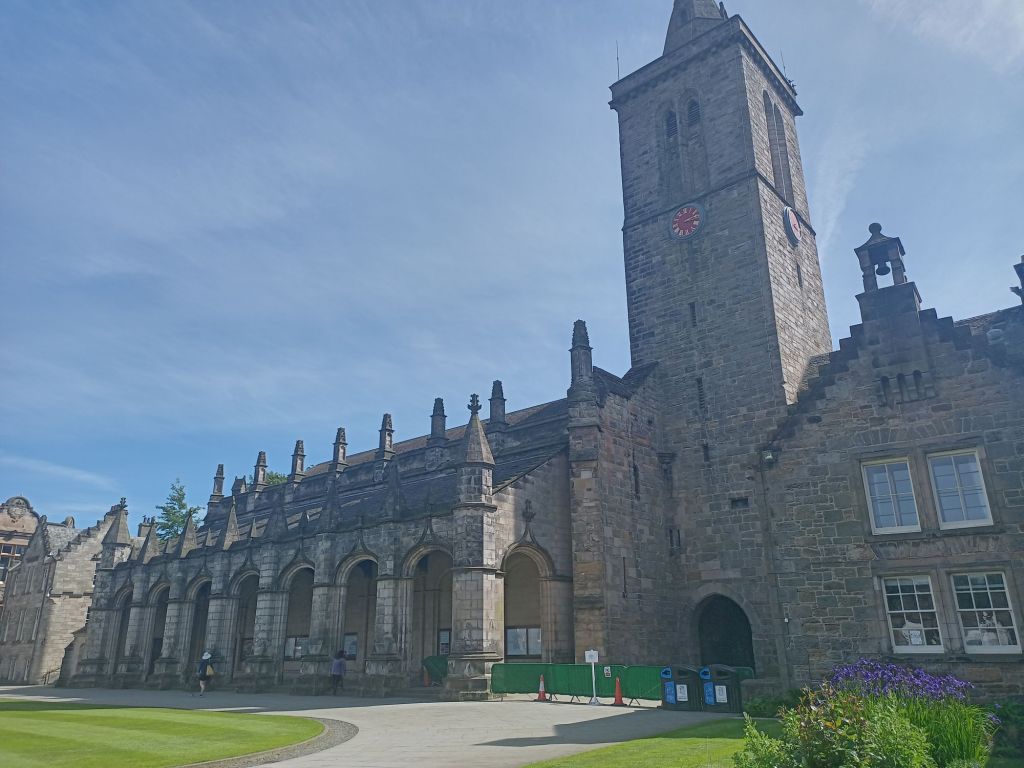
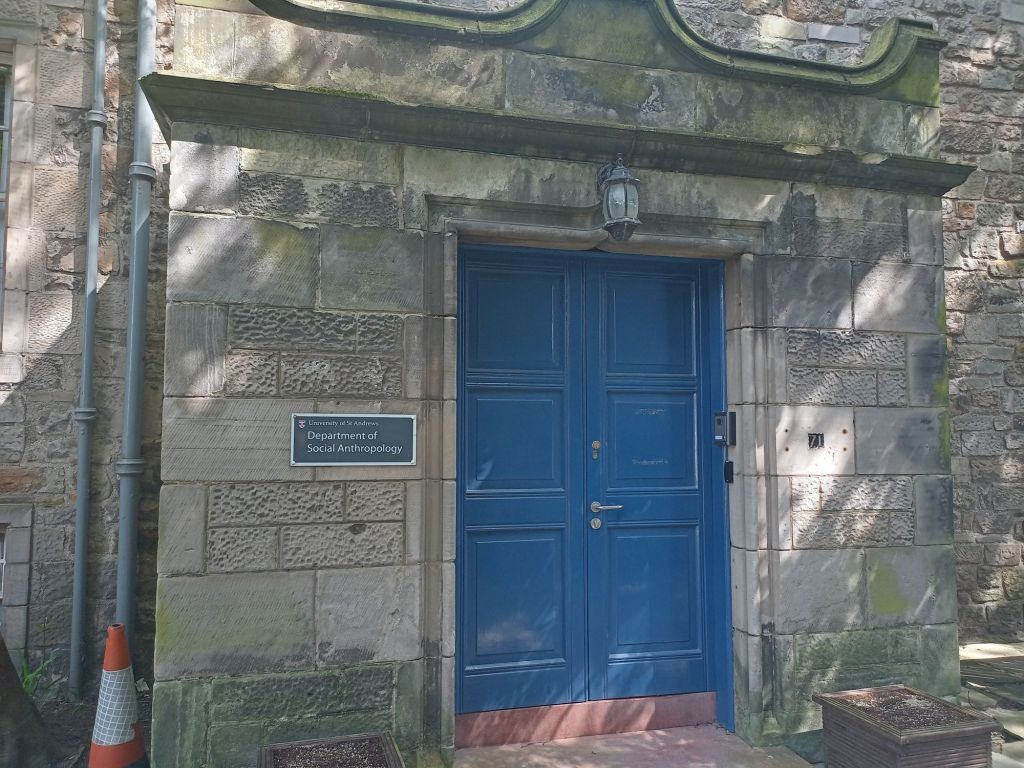
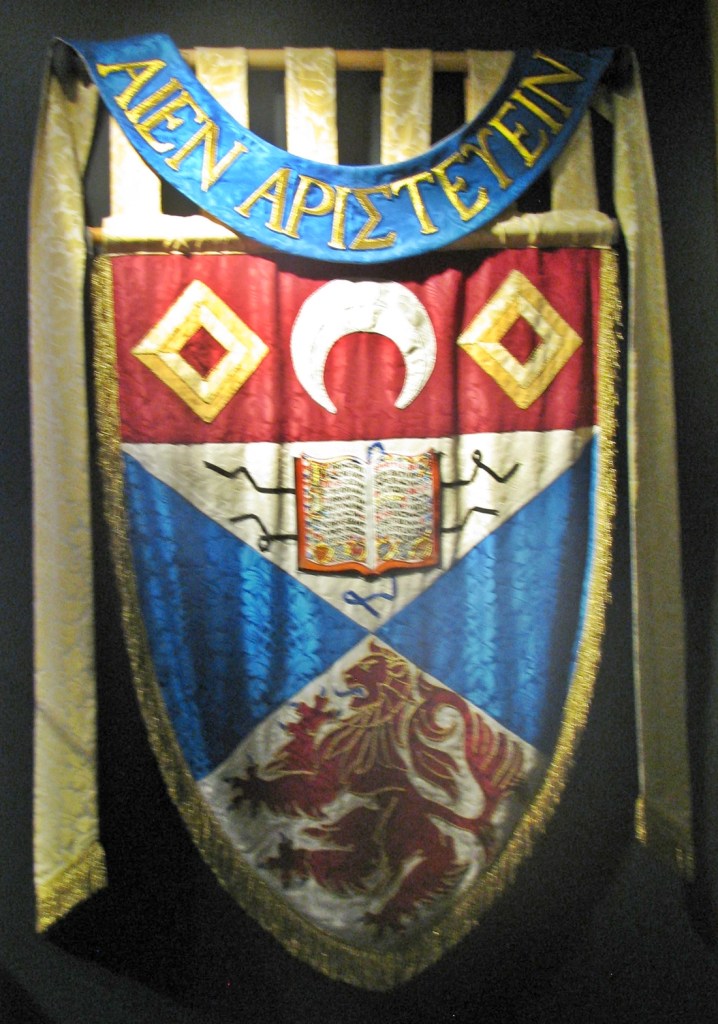
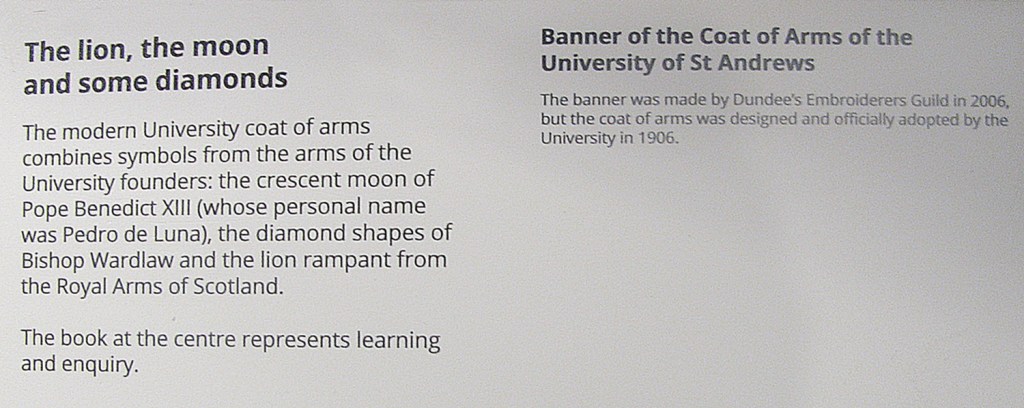
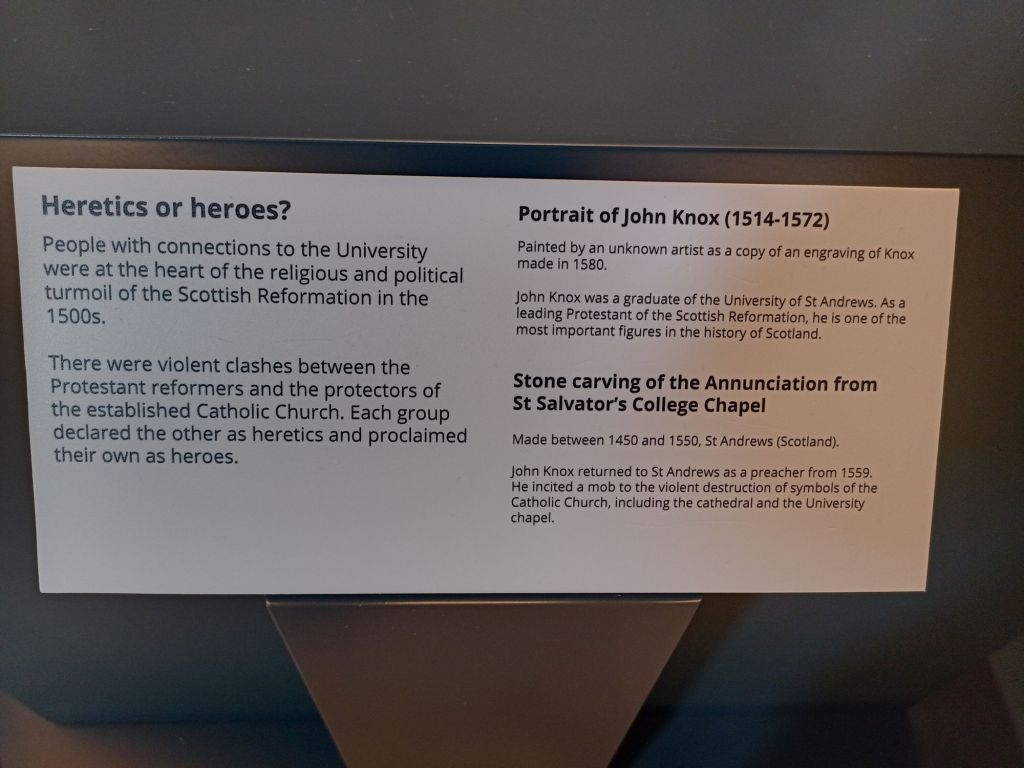
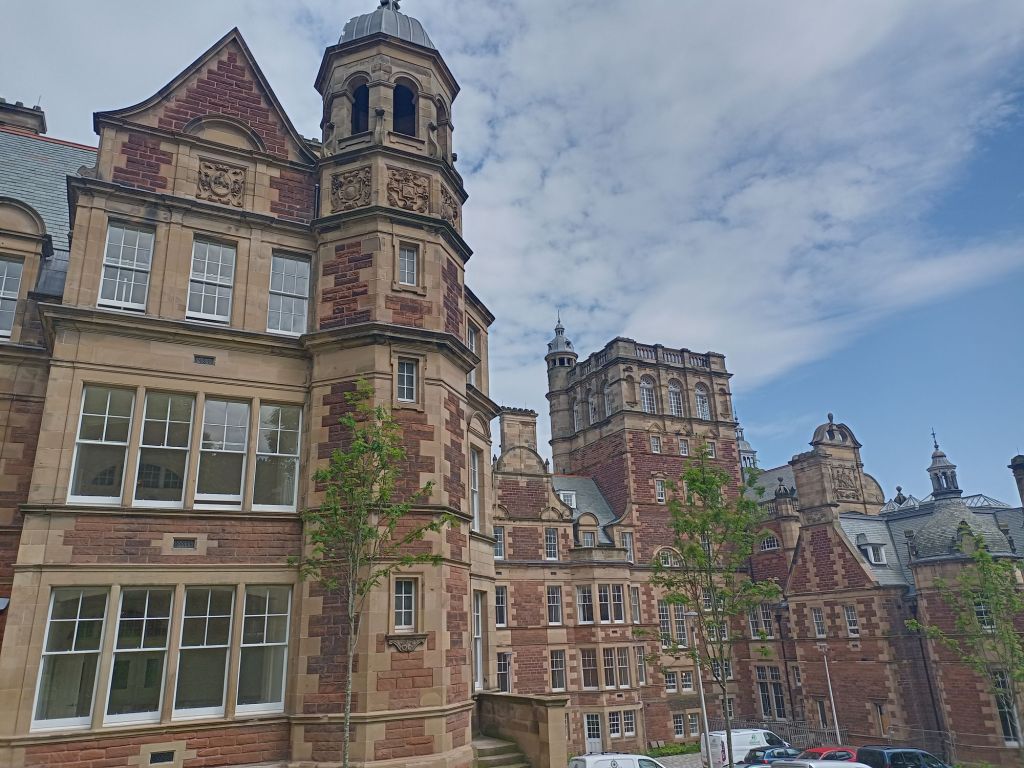
Another sunny day and we travelled north, back across the Firth of Forth, via Dundee, to St. Andrews – a drive of about two hours. First, we visited the University of St Andrews, which is the oldest university in Scotland (founded in 1413), and the third oldest in the English-speaking world after Oxford (1096) and Cambridge (1209). It’s also where Caroline and several of her school friends stayed in halls of residence for several nights when they experienced a promotional preview of the university in 1974.
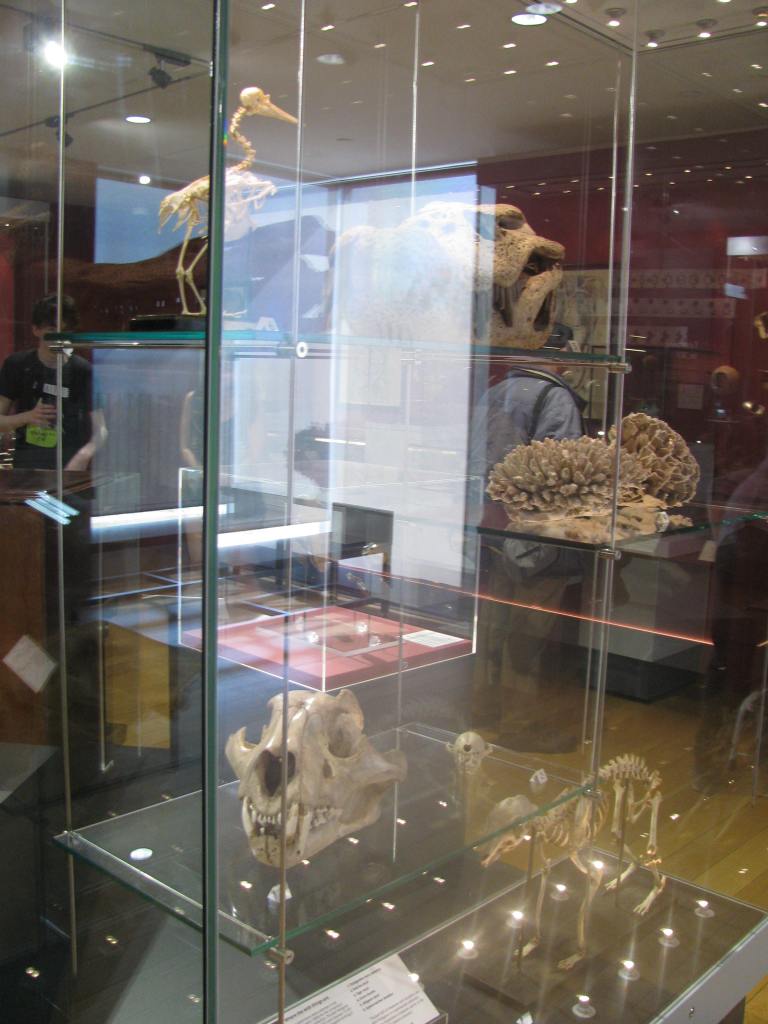
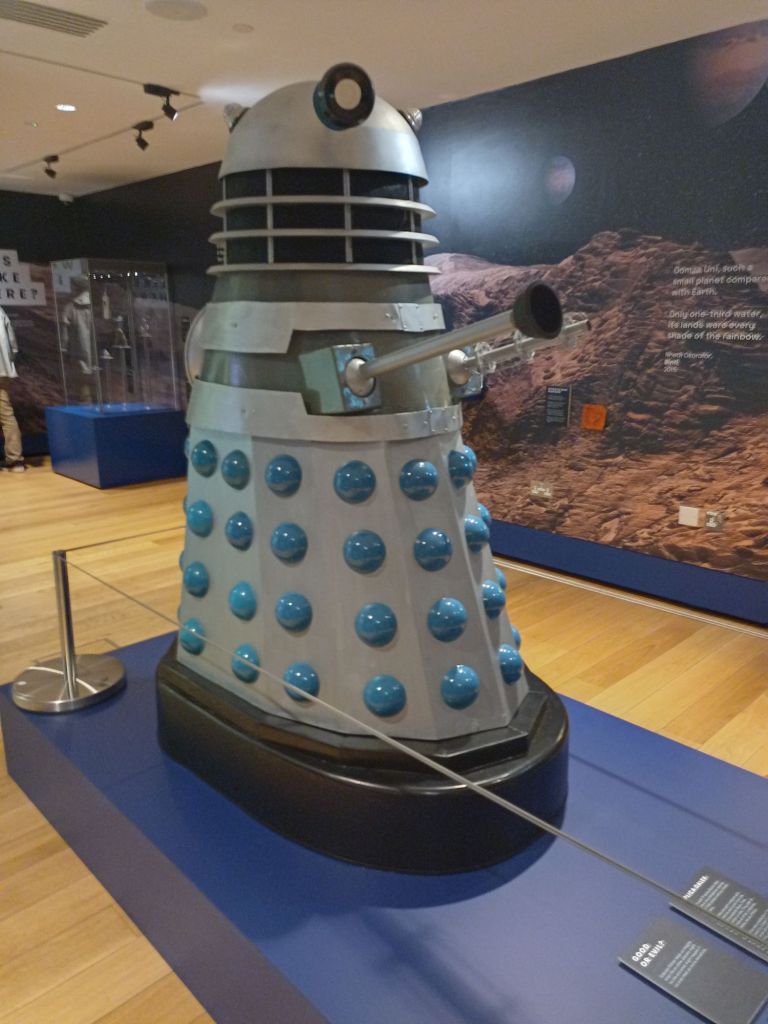
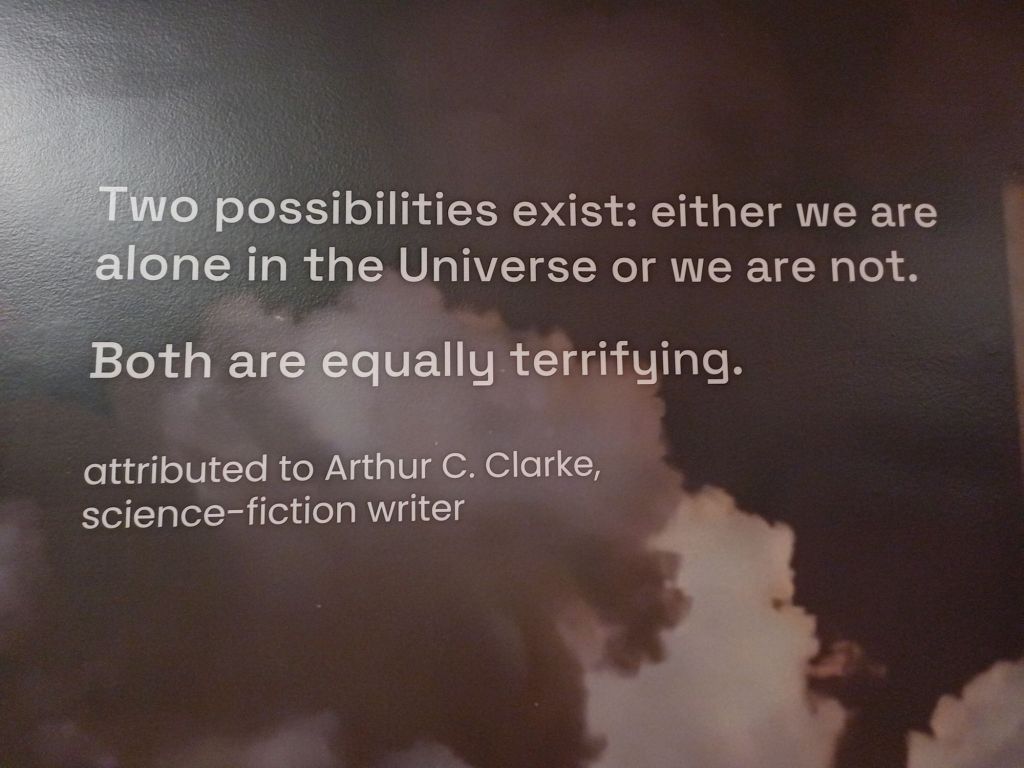
Next we walked into the centre of town in search of toilets (again – not an easy task) and some Greggs sausage rolls which we ate in the University courtyard. We then explored the small but very interesting University Museum (which had an exhibition on space), followed by some tasty gelatos from the main street of town.
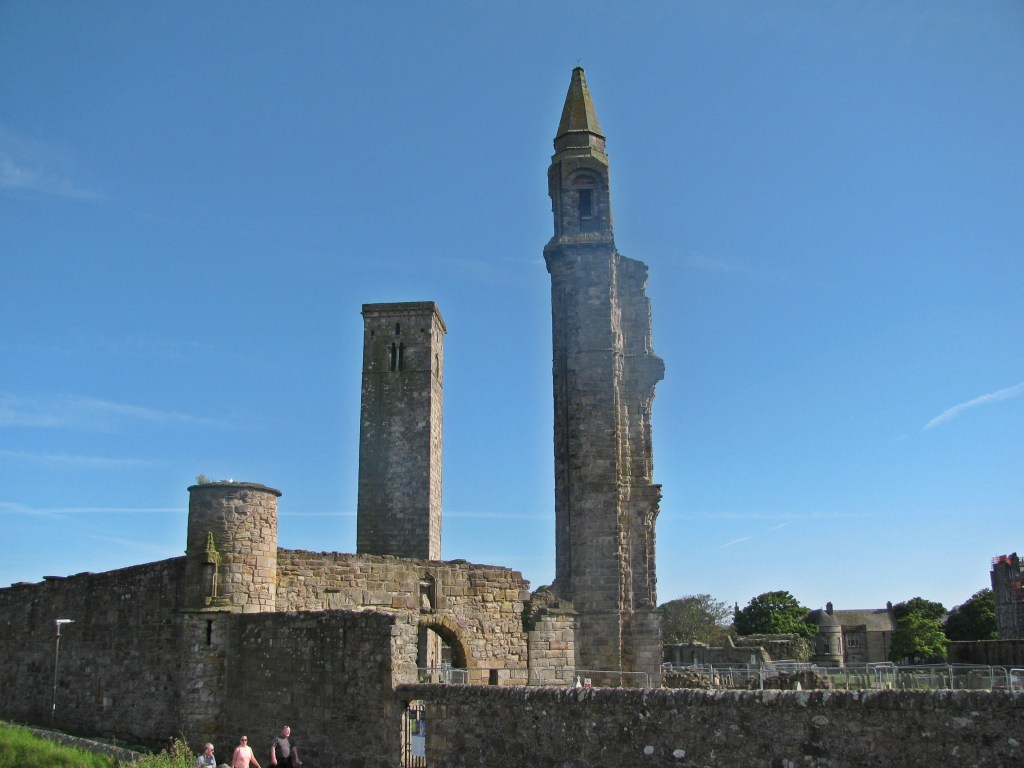
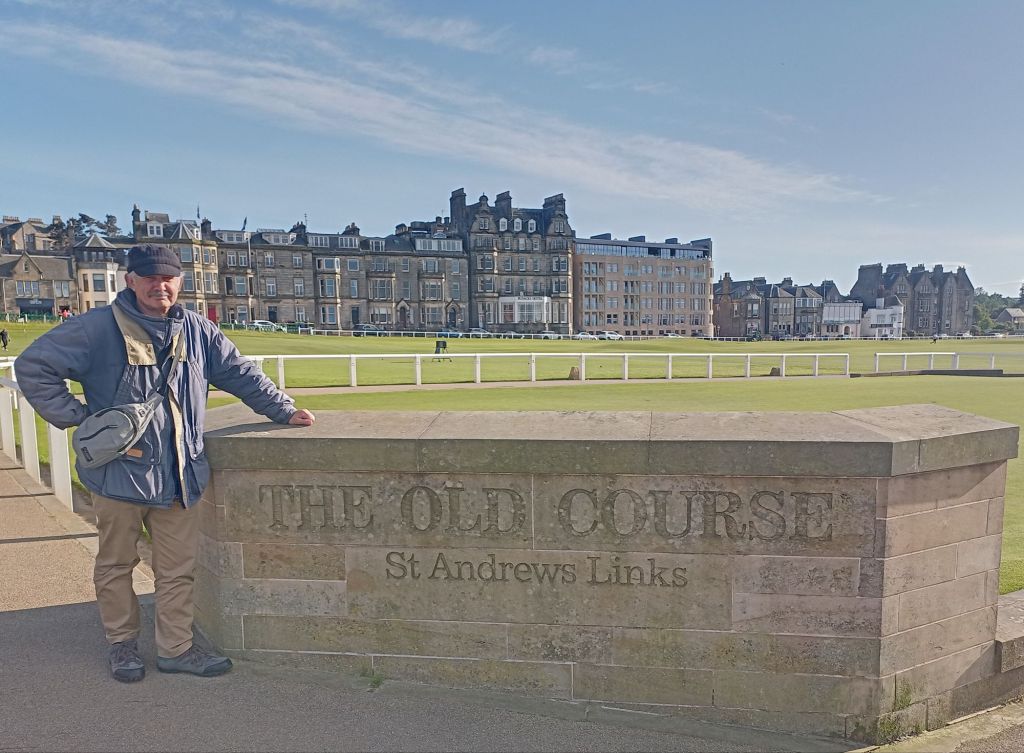
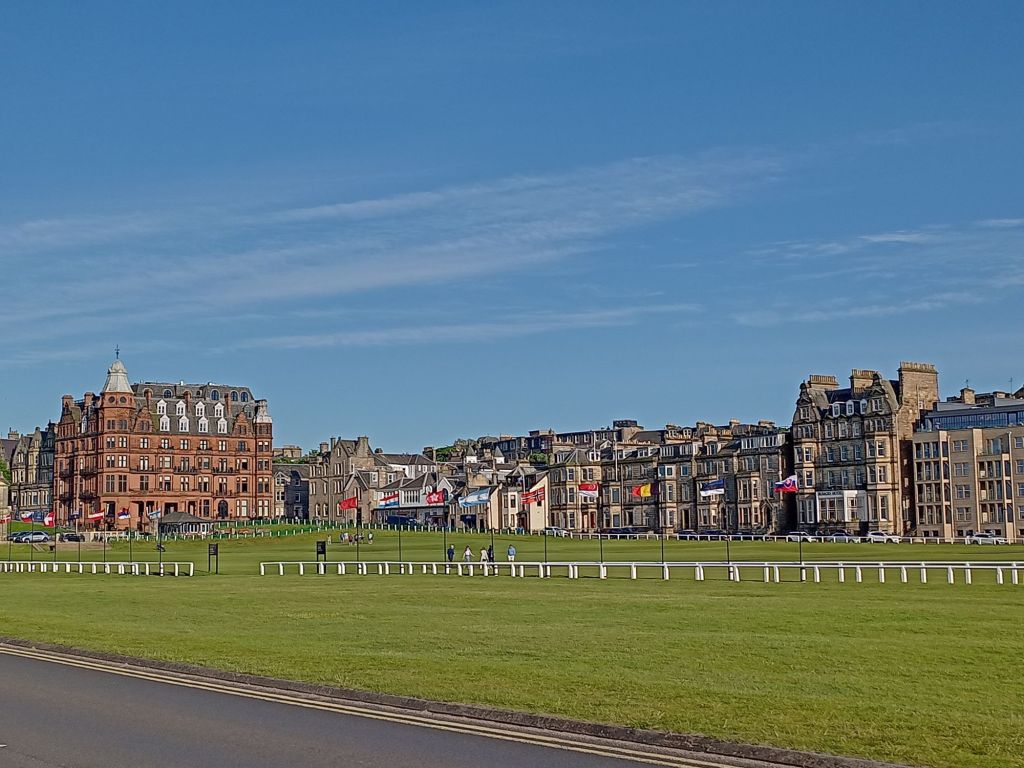
We had a quick walk along the cliff top to look at the outside of the Cathedral ruins, and then drove to the carpark near St Andrews golf course. In fact, there are several golf courses at St Andrews, including the famous Old Course, all situated very close to each other. Ian and E spent an hour or so examining the golf course area while Caroline sat on the promenade next to the beach.
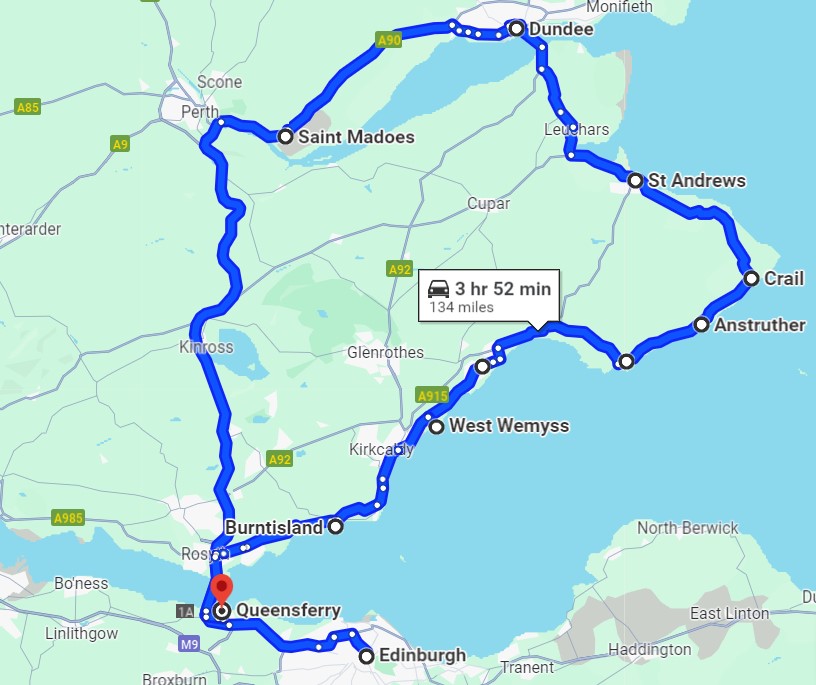
We took the scenic route back to Edinburgh along the Fife coast, with its beautiful farm pastures, woodlands, harbours and fishing villages. As usual, it was well after sunset by the time we arrived back in Edinburgh.
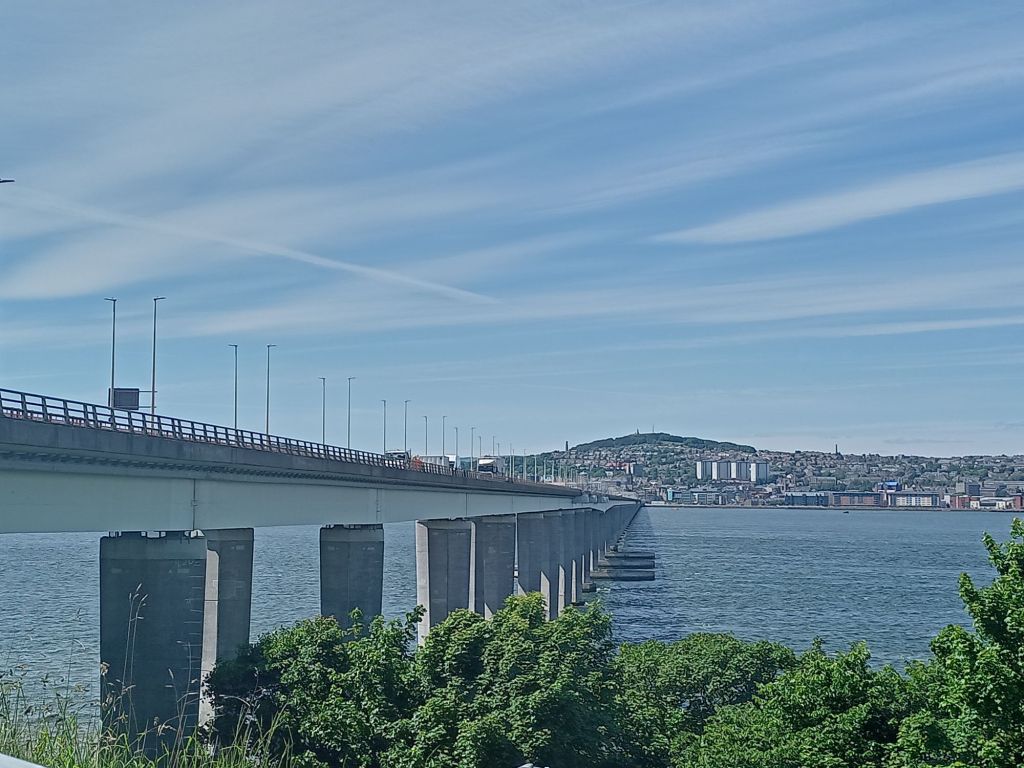
Dundee and bridge over the River Tay
St Andrews Castle
People in the sea on the beach below the castle
University of St Andrews Museum…
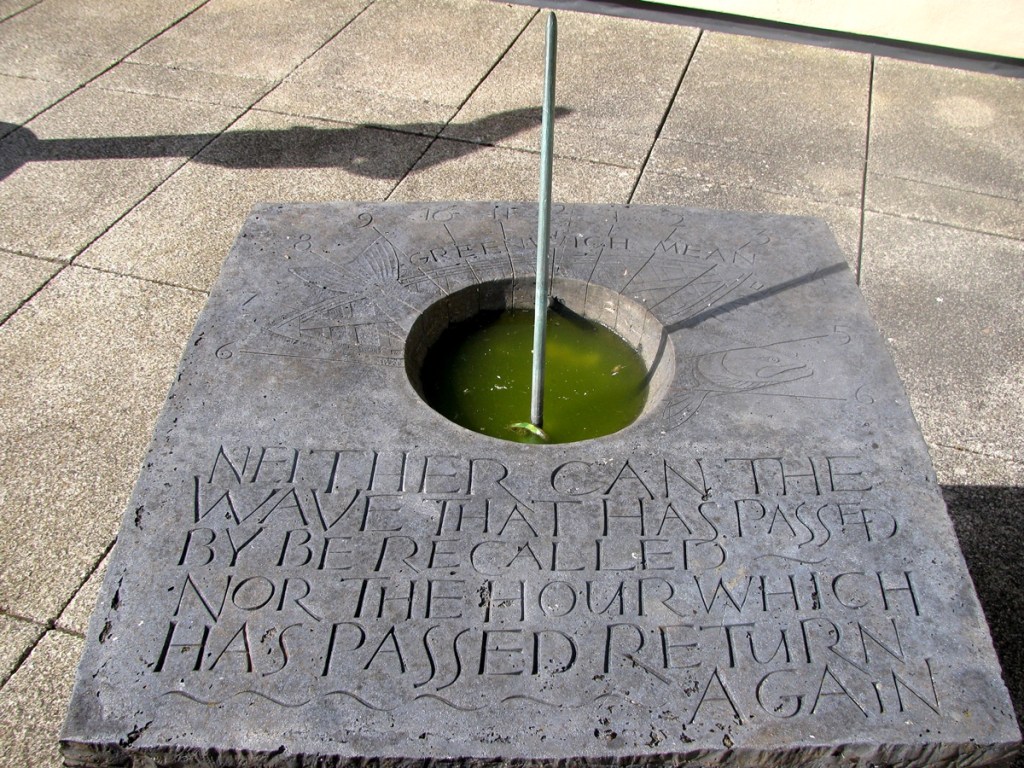
Sun dial on museum’s roof terrace – it was one hour behind because of British Summer Time (daylight saving). Quote by Ovid, the Roman poet: ‘Neither can the wave that has passed by be recalled, nor the hour which has passed return again.’
St Andrews Cathedral and Rule’s Tower
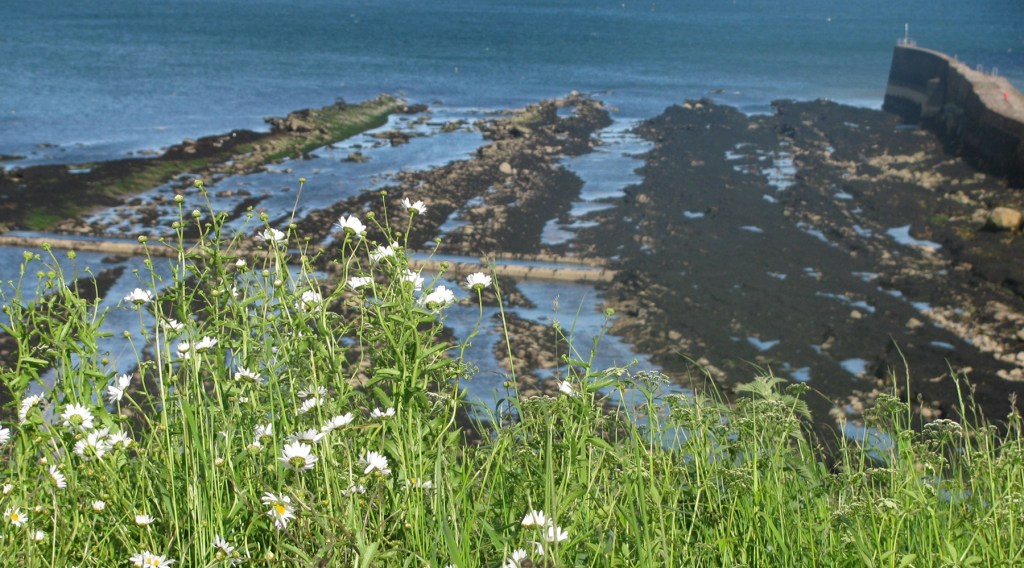
View of St Andrews old pier (top right) from clifftop walkway
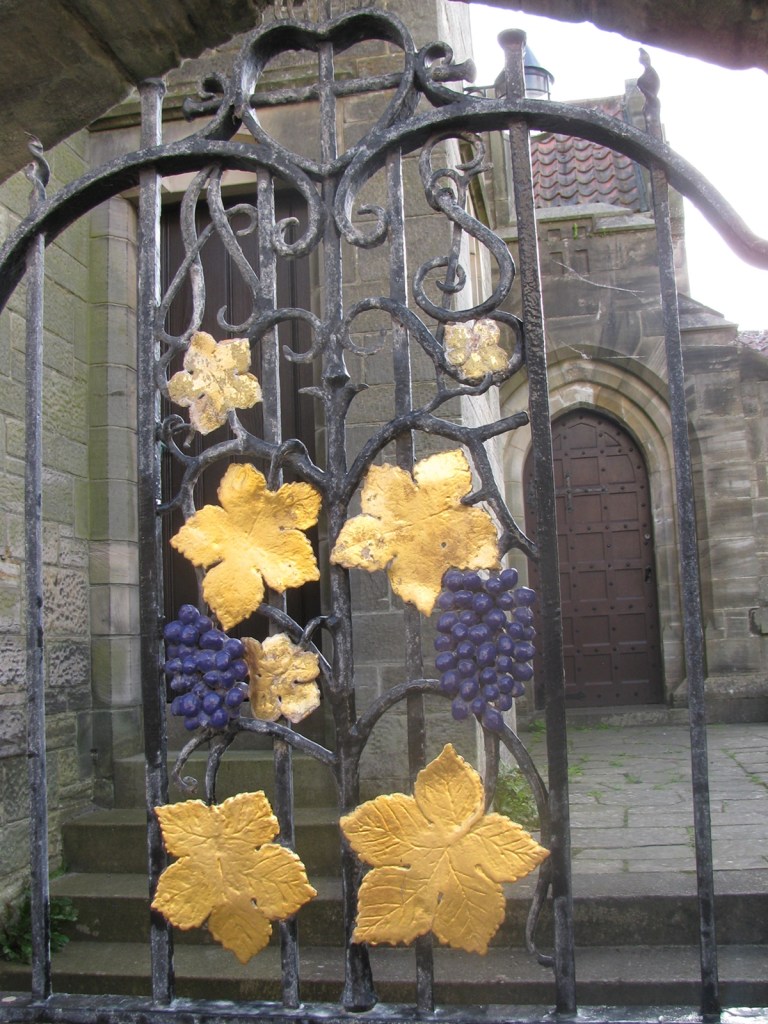
All Saints’ Church gate
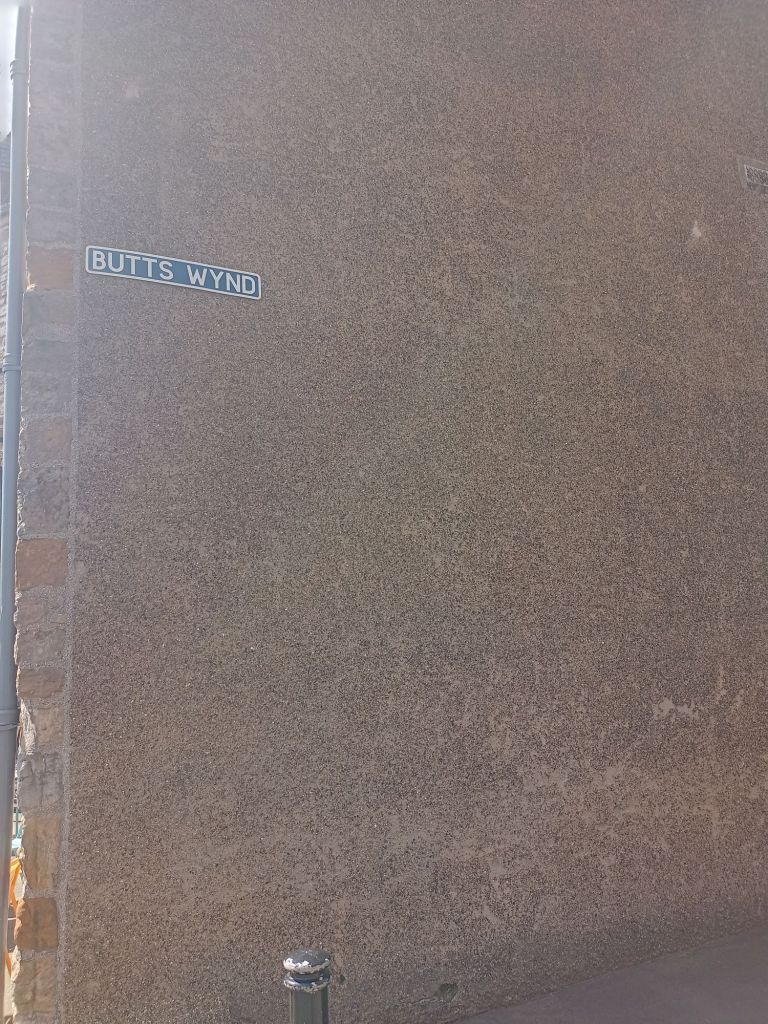
Street sign
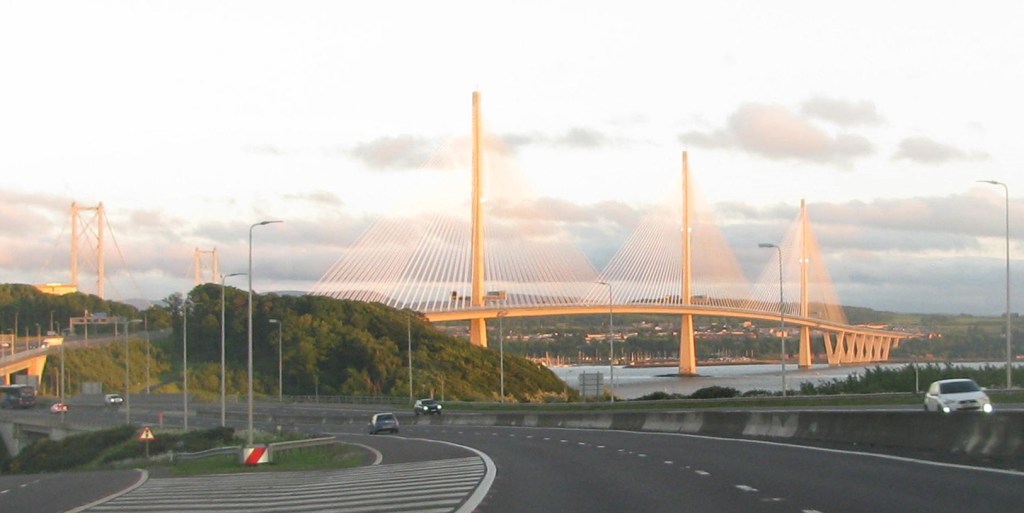
Queensferry Crossing (bridge) across the Firth of Forth, at sunset (Forth Road Bridge towers also visible on the left)
For the final week and a half of our UK adventure we again based ourselves in Edinburgh, continuing to explore the city by bus, tram or on foot. As well, we went on several day trips in the car or by train to explore other parts of Scotland and Northumberland.
This page includes Ian’s visit to Edinburgh’s Museum of Modern Art on Day 9, and our long day trip to Northumberland’s Bamburgh and Lindisfarne Island on Day 10.
Edinburgh: Day 8
This day was mainly spent unpacking, reorganising and recovering after our Outer Hebridean trip.
Edinburgh: Day 9 – Ian takes a walk to local places, Museum of Modern Art
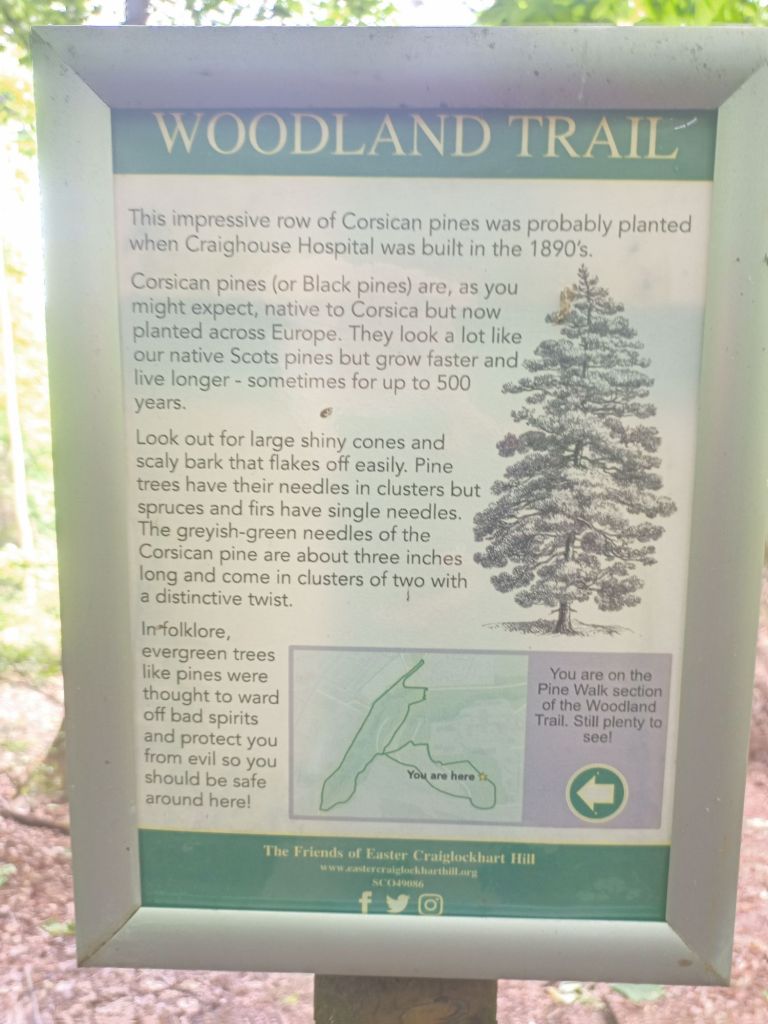
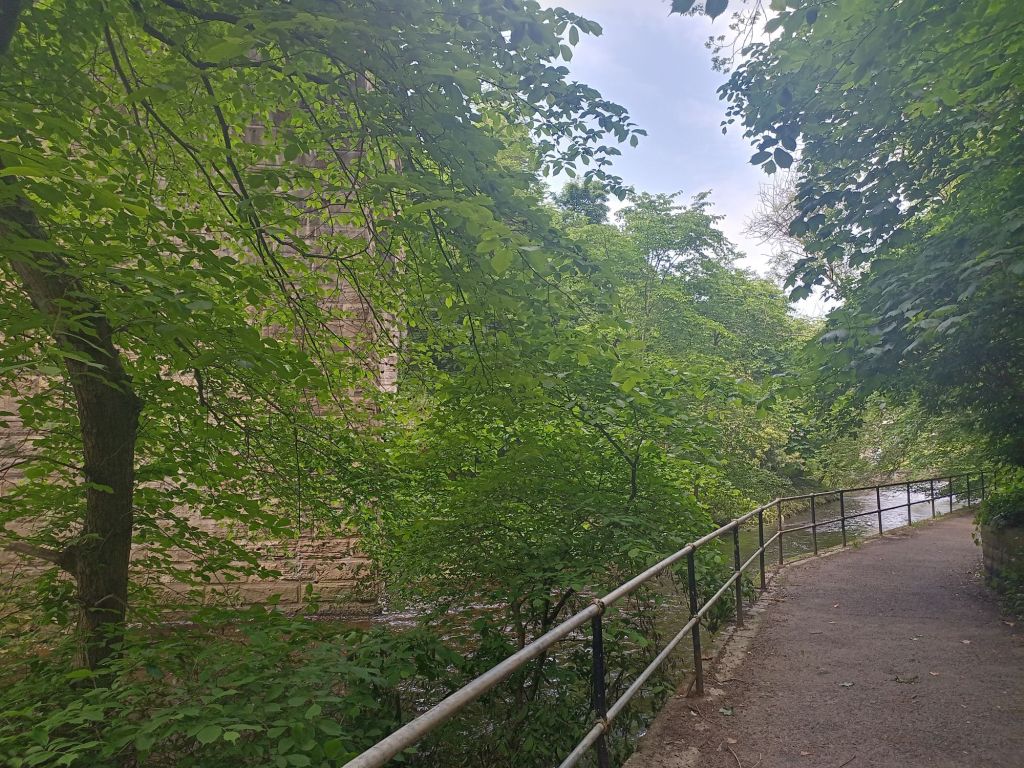
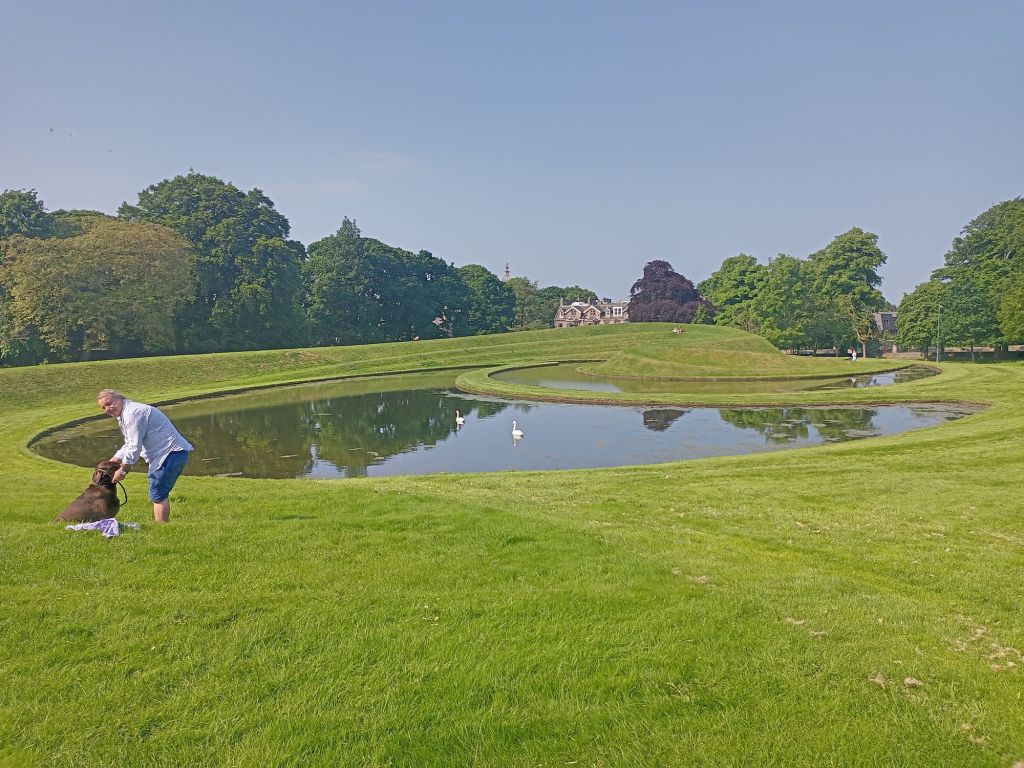
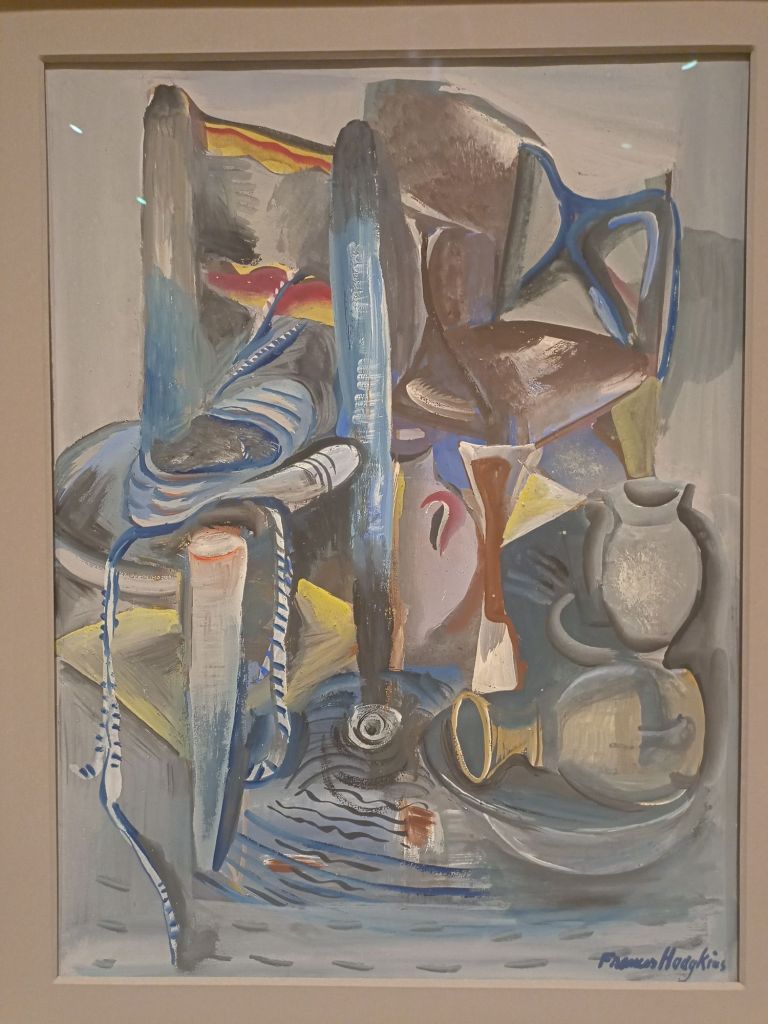
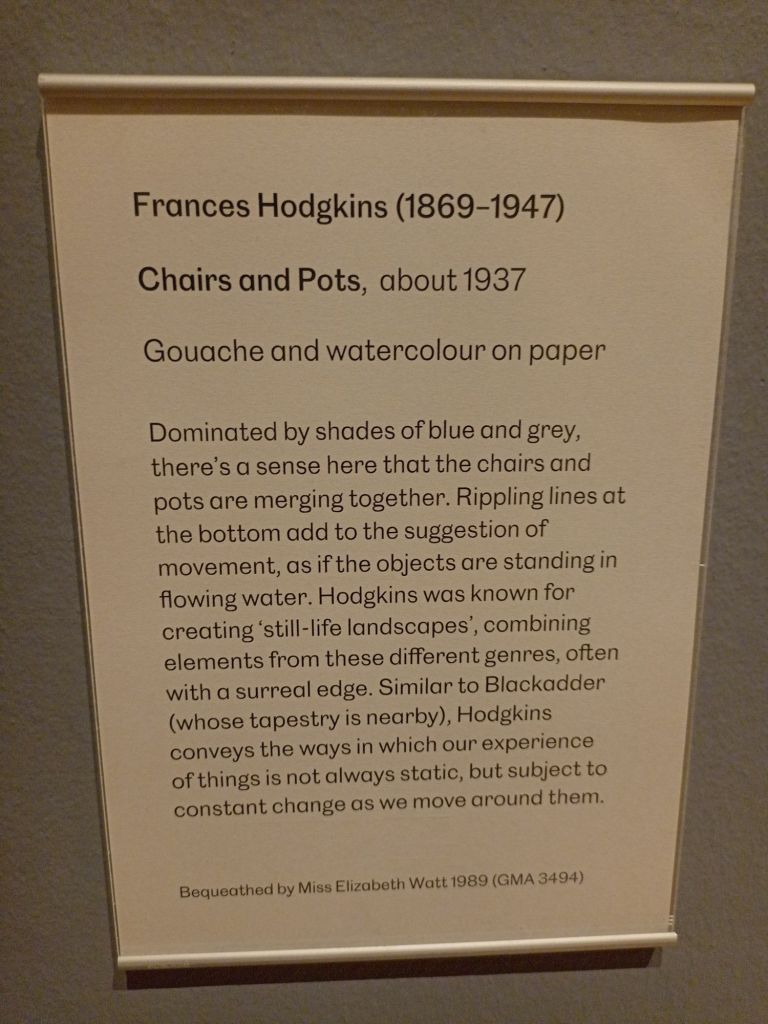
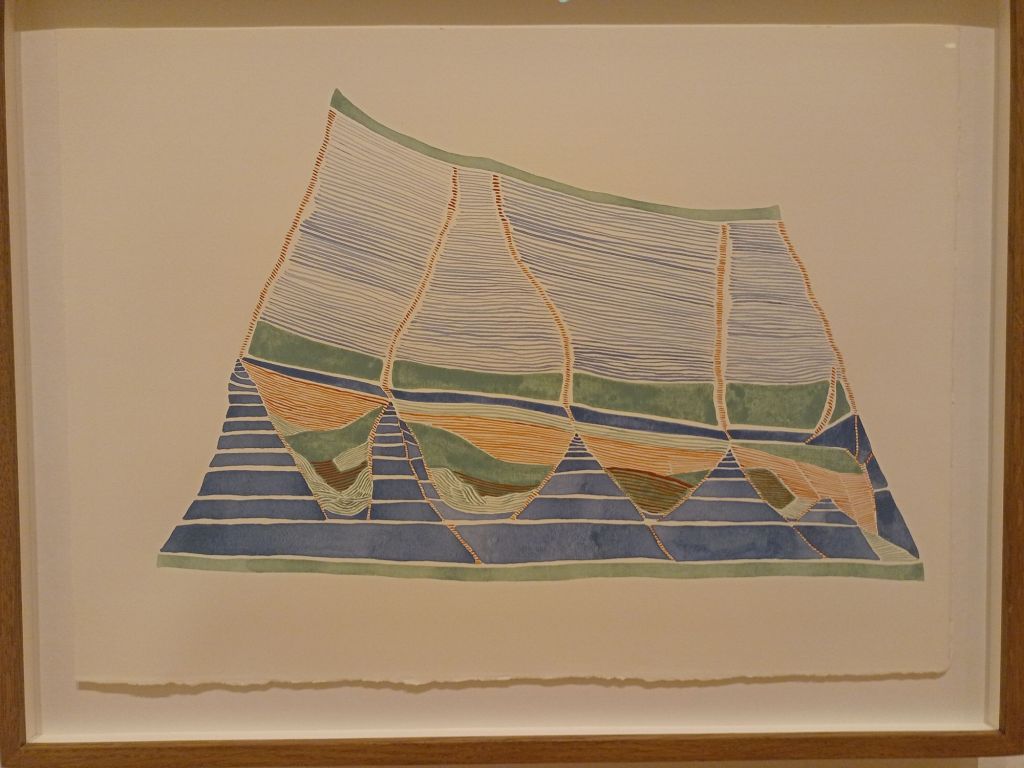
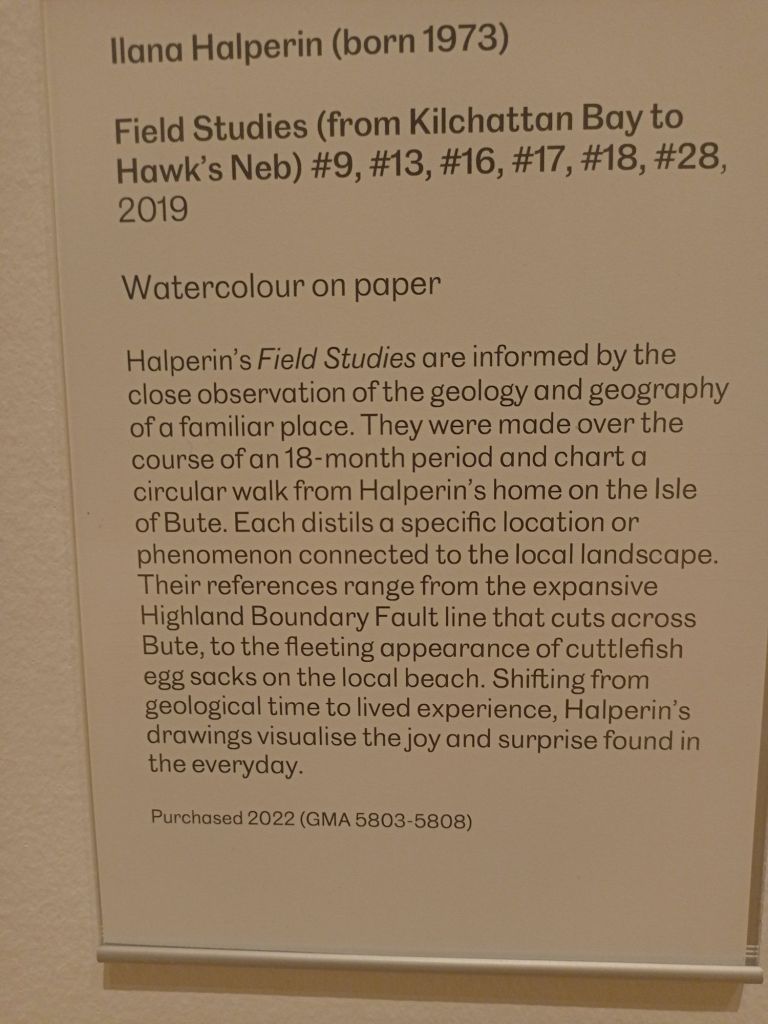
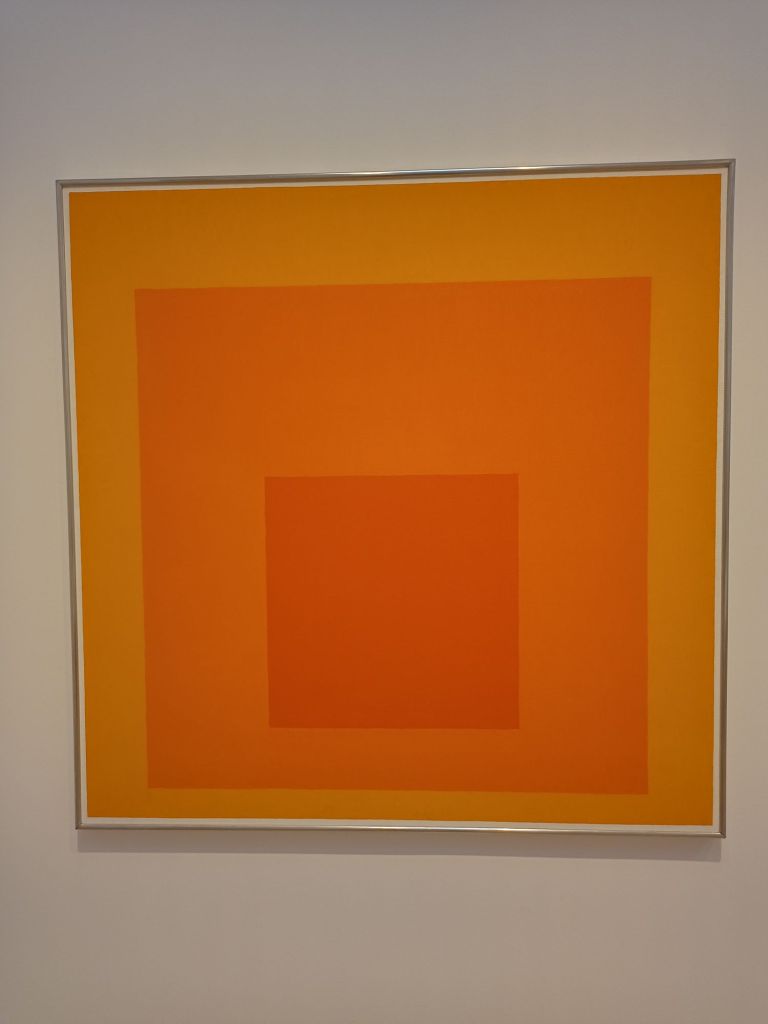
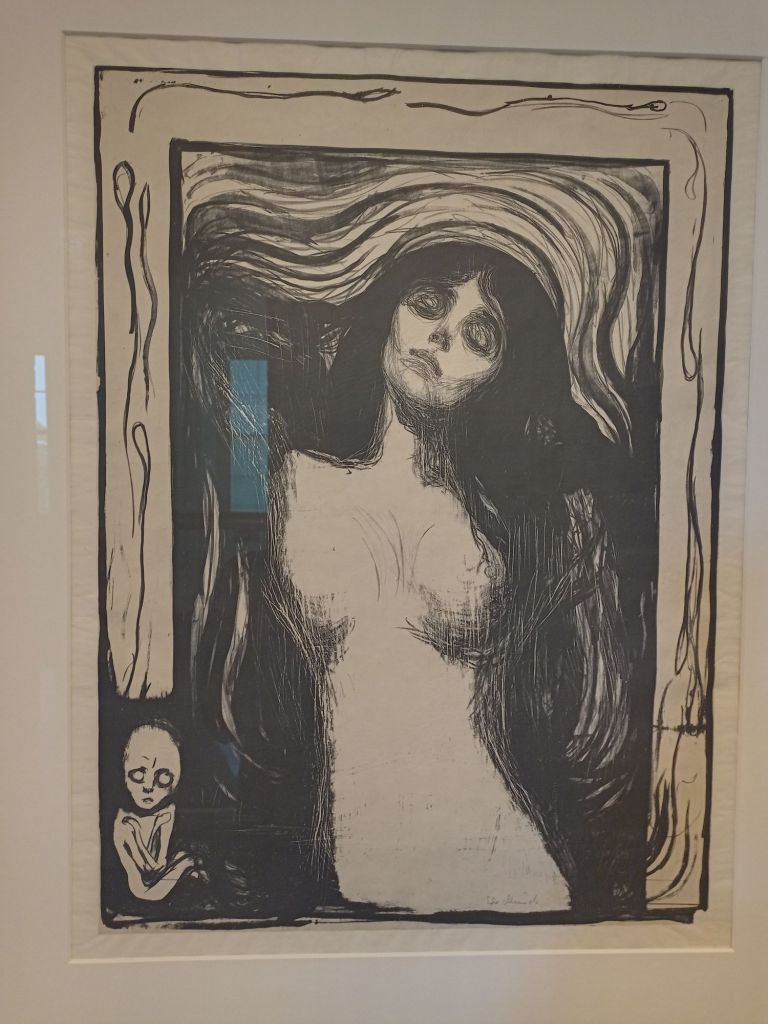
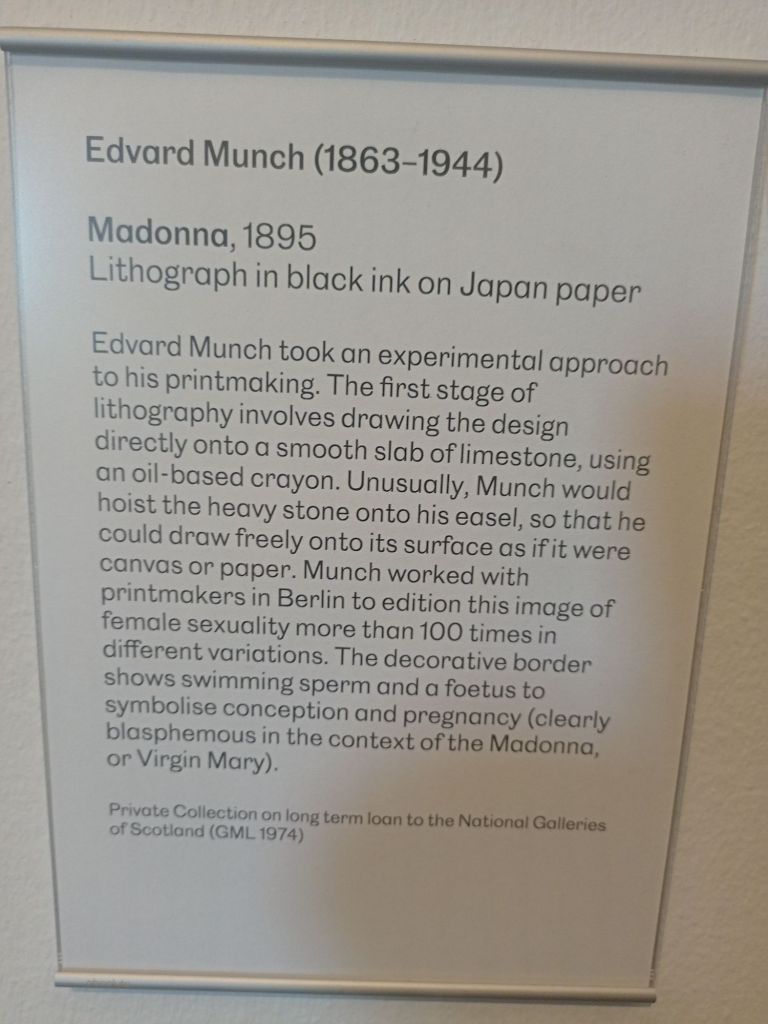
The main building at the former Craighouse Hospital, Edinburgh’s inpatient psychiatric care facility built in the 1890s. The whole site, including this and other buildings, is now privately owned and mainly consists of upmarket residential homes and apartments.View from Craighouse towards the city, including Arthur’s Seat at right.Outside Murrayfield Rugby Stadium, where Taylor Swift performed three sold-out concerts later in the week (also see Edinburgh Day 15).By the waters of the LeithThe green space outside the Museum of Modern Art. A selection of works on display at the time are featured below.
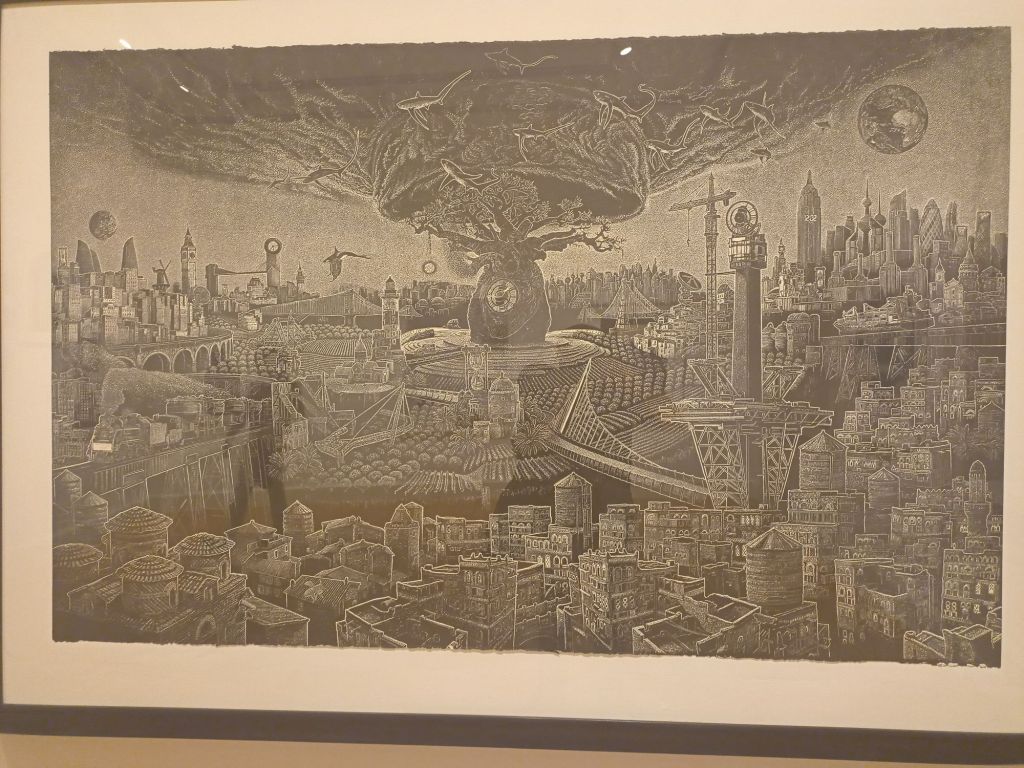
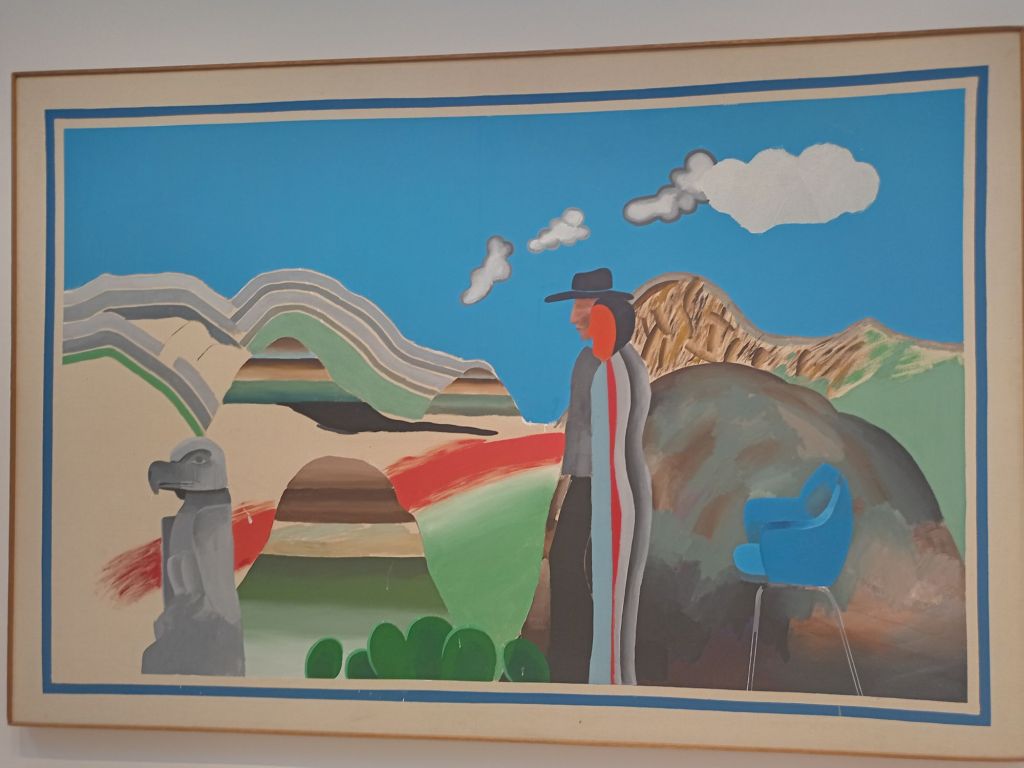
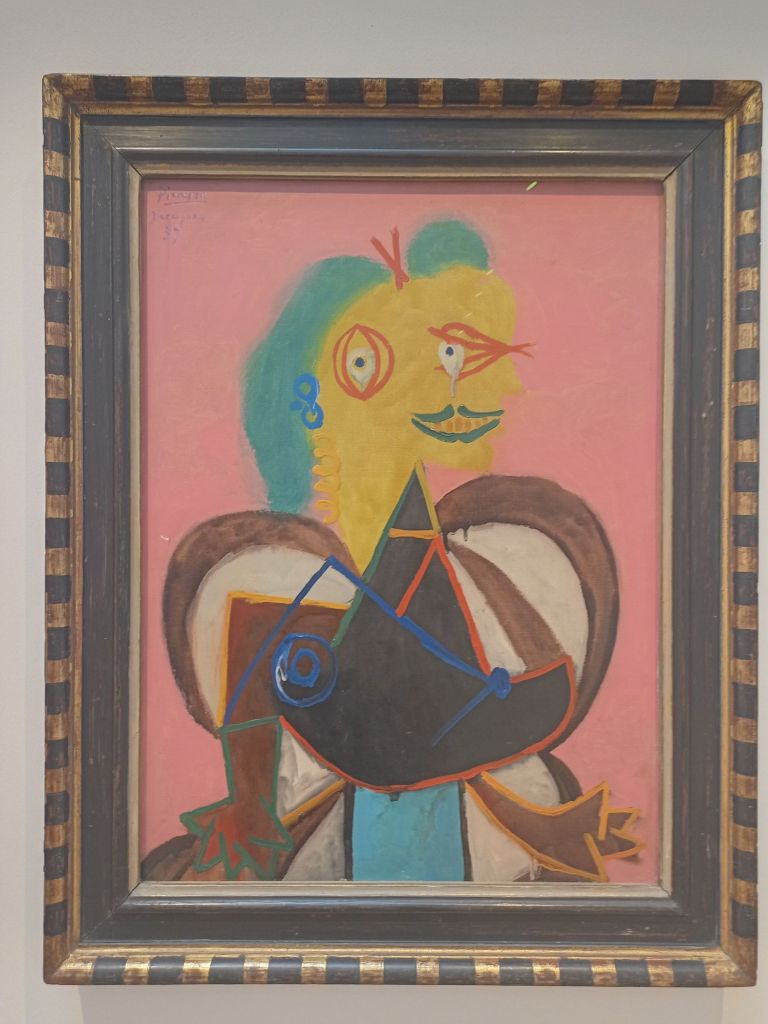
Ade Adesina (born 1980)
The View After the Questions, 2018 Linocut on paper
A storm is brewing. Sharks circle overhead and a hybrid city spins outwards from a central baobab tree. Mixing the personal with the political, Adesina turns his chosen medium into a monument to the imagination. The clash of urban environment and the natural world is real and urgent, and the strange world is infused with a surreal sense of foreboding. Adesina’s large scale linocuts are drawn in outline then painstakingly cut by hand or with electric drills to create his distinctive black and white images…
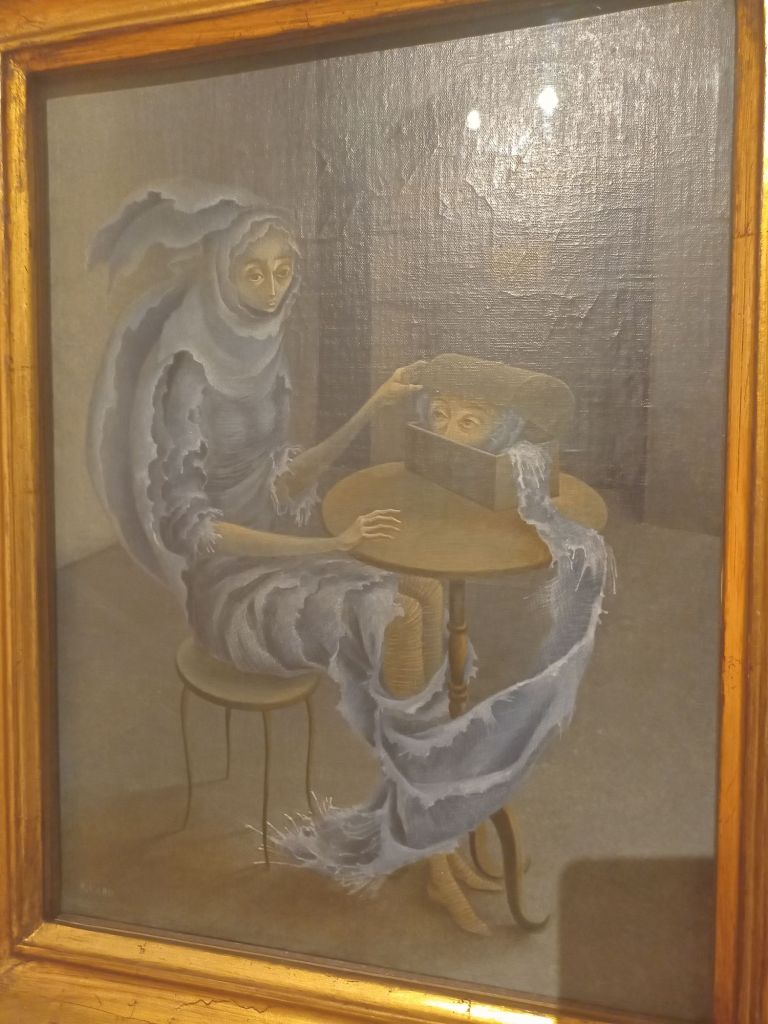
Remedios Varo (born 1908)
Encounter (Encuentro), 1959 Oil on canvas
This major new acquisition is the first work by Spanish artist Remedios Varo to enter a public collection in Britain. Varo was a leading figure in Mexican Surrealism during the 1940s and 1950s. She often depicted enchanted domestic scenes, magical machines and stange otherworldly beings. In tis striking composition, a seated figure carefully lifts the lid of a tiny casket to find her own eyes staring back at her. Several similar boxes sit on the shelves in the background, suggesting many more ‘selves’ are to be discovered. The image can be read as a self-portrait: many of the characters that Varo painted feature her heart-shaped face and almond eyes…
Anne Redpath (1895-1965)
The Worcester Jug, about 1946 Oil on canvas
Many of Anne Redpath’s paintings are intimate portrayals of her own domestic settings. After marrying in 1920, she devoted the next 14 years to raising a family. ‘I put everything I had into house and furniture and dresses and good food and people’, Redpath recalled, ‘All that’s the same sort of thing as painting really, and the experience went back into art when I began painting again’. The Worcester Jug depicts Redpath’s home in Beaconsfield Terrace, Howick. The expressively rendered paint and resplendent colours emphasize the room’s warmth and personality. In the absence of human figures, the neatly laid out tea set becomes a stand in for domestic activities and familial relationships. Known as a convivial host, Redpath’s home became a gathering place for the city’s creative circles after her move to Edinburgh from Howick in 1949.
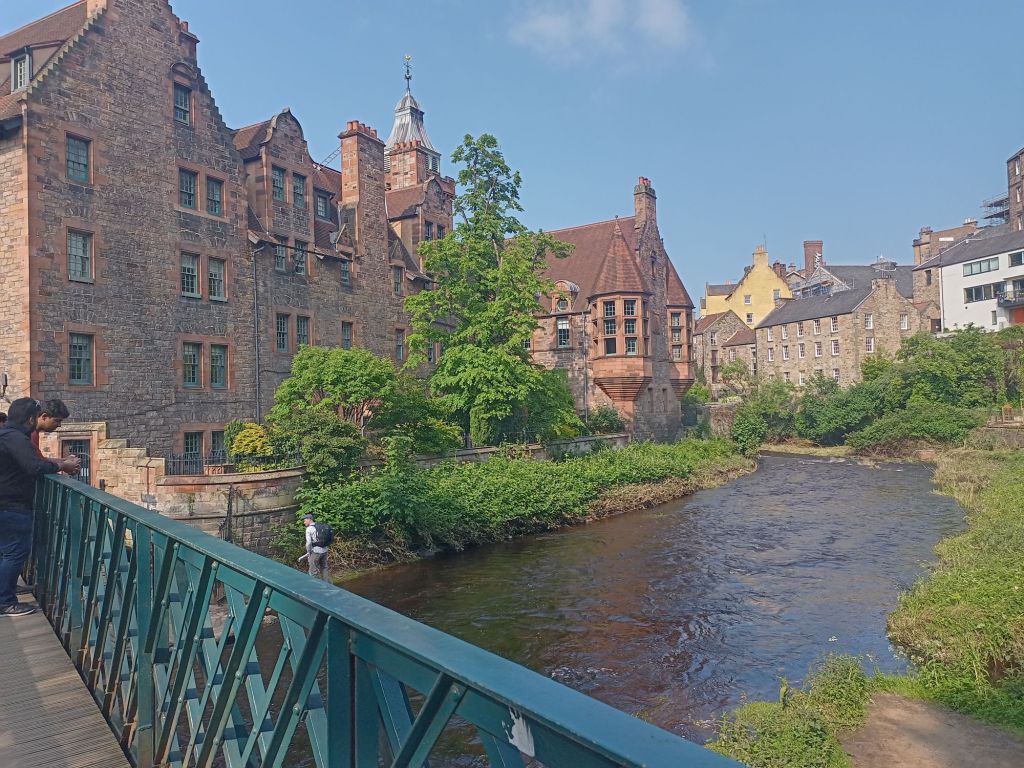
Dean Village, bordering the river Leith, a kilometre or so from the central city.
Edinburgh: Day 10 – Day trip to Bamburgh Castle and Lindisfarne / Holy Island
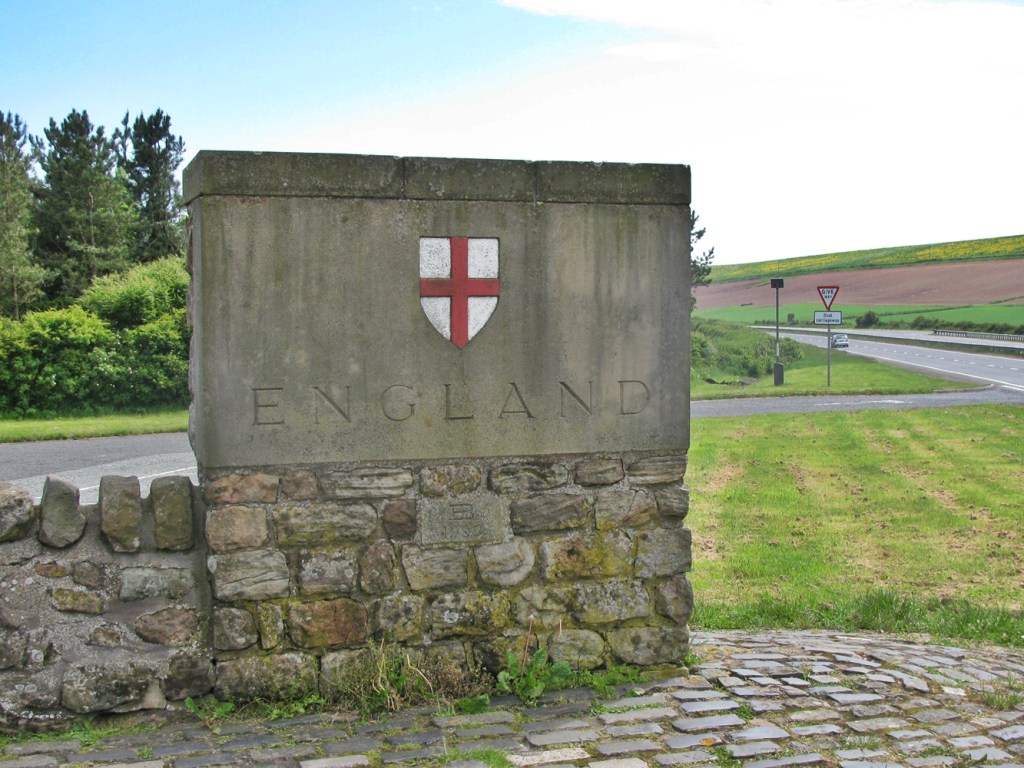
Our first long day trip was to the south-east. It included an hour and a half drive along the A1 across the Scottish-English border to Bamburgh Castle and Lindisfarne / Holy Island on the Northumberland coast. The weather was beautiful, sunny and warm, although a rather chilly wind arrived later in the afternoon.
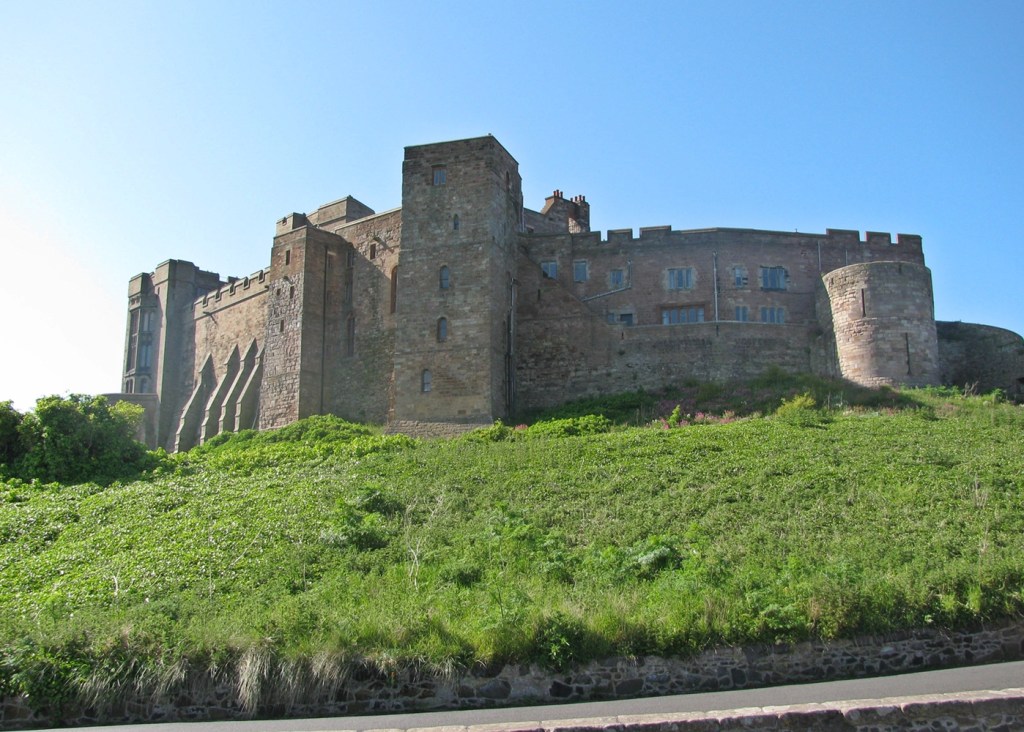
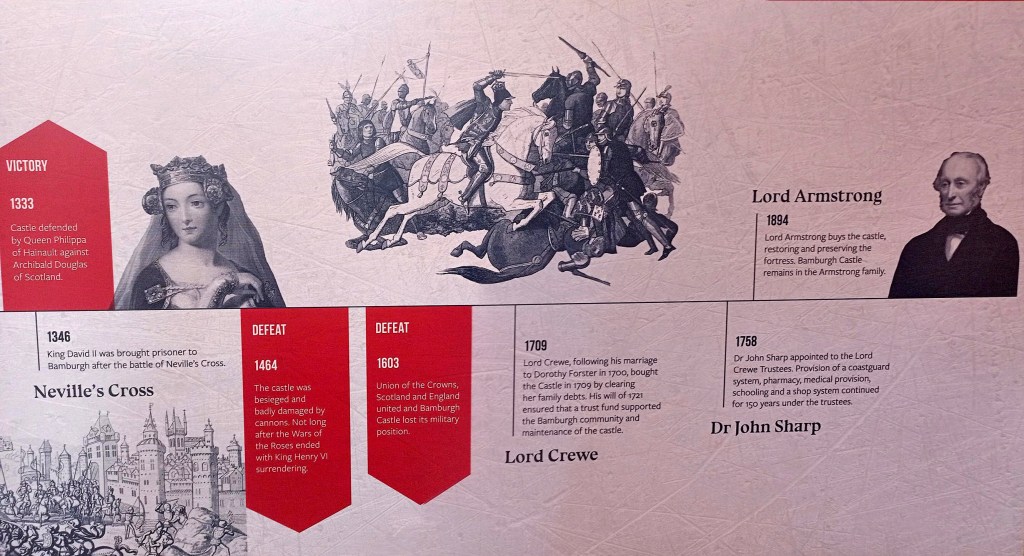
Bamburgh Castle
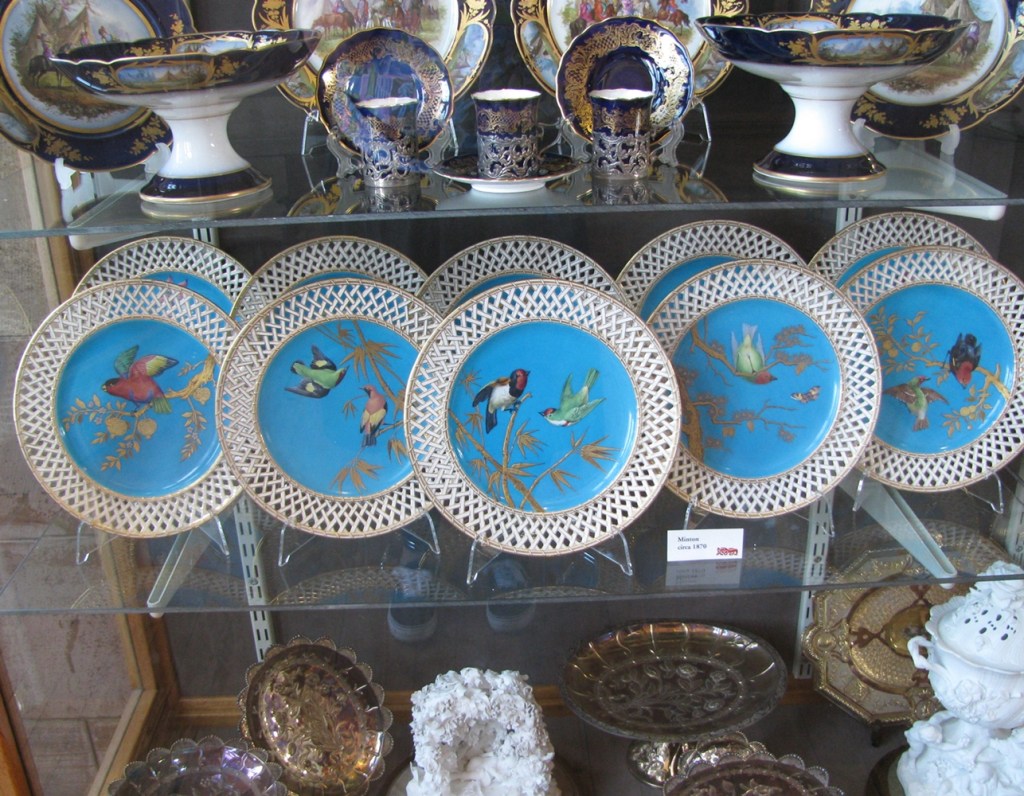
Built on a large 9-acre outcrop of rock, Bamburgh Castle is huge and visible from many different vantage points along the Northumberland coast. Most of the castle is still intact and occupied. It was originally built by Normans in the 11th century, on the site of an earlier Celtic fort. It has had many additions and renovations since then, and has been used frequently as a film and TV set (most recently for The Last Kingdom and Indiana Jones and the Dial of Destiny).
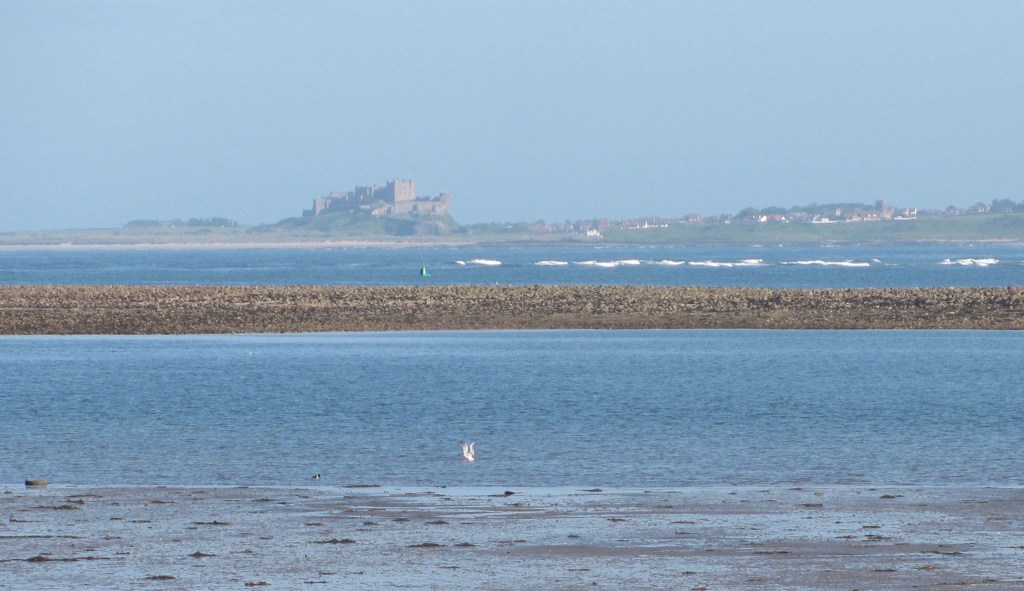
Bamburgh Castle from Lindisfarne
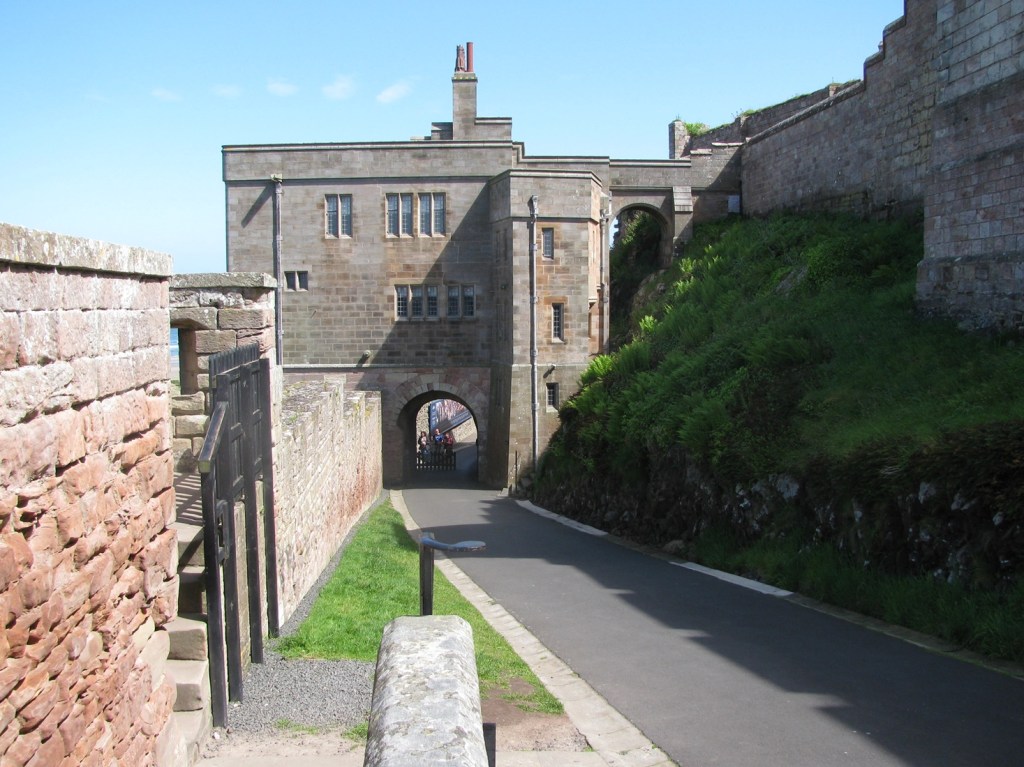
Castle entry / exit
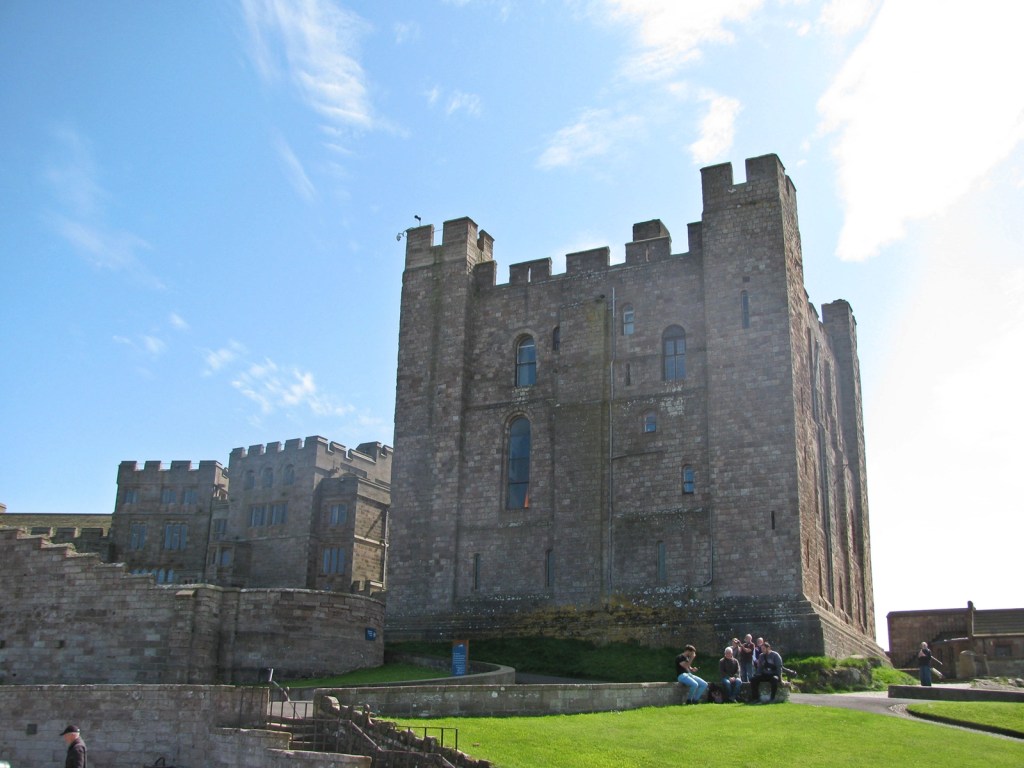
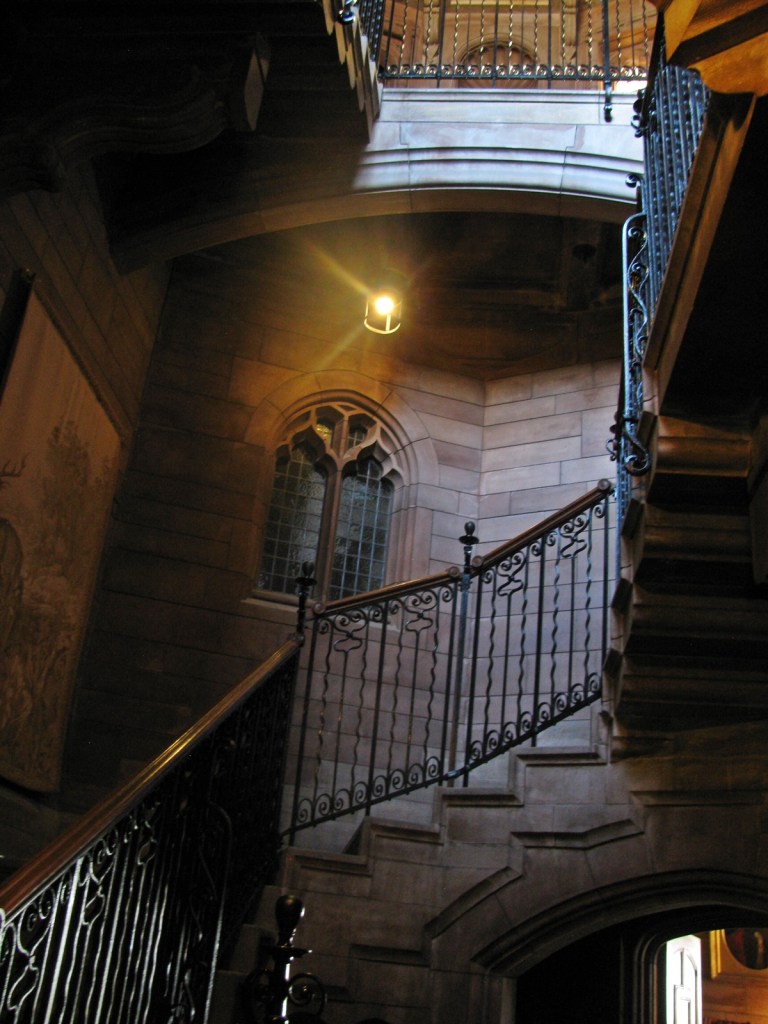
The Keep
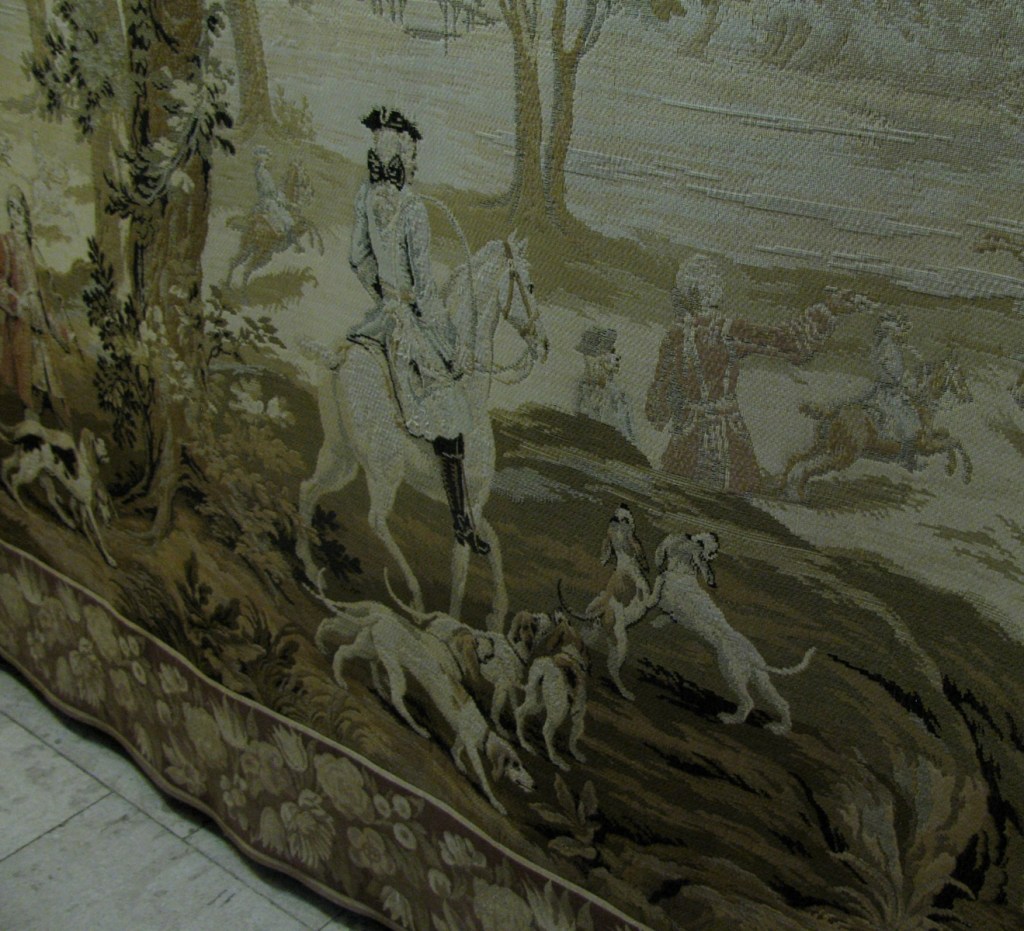
Tapestry detail
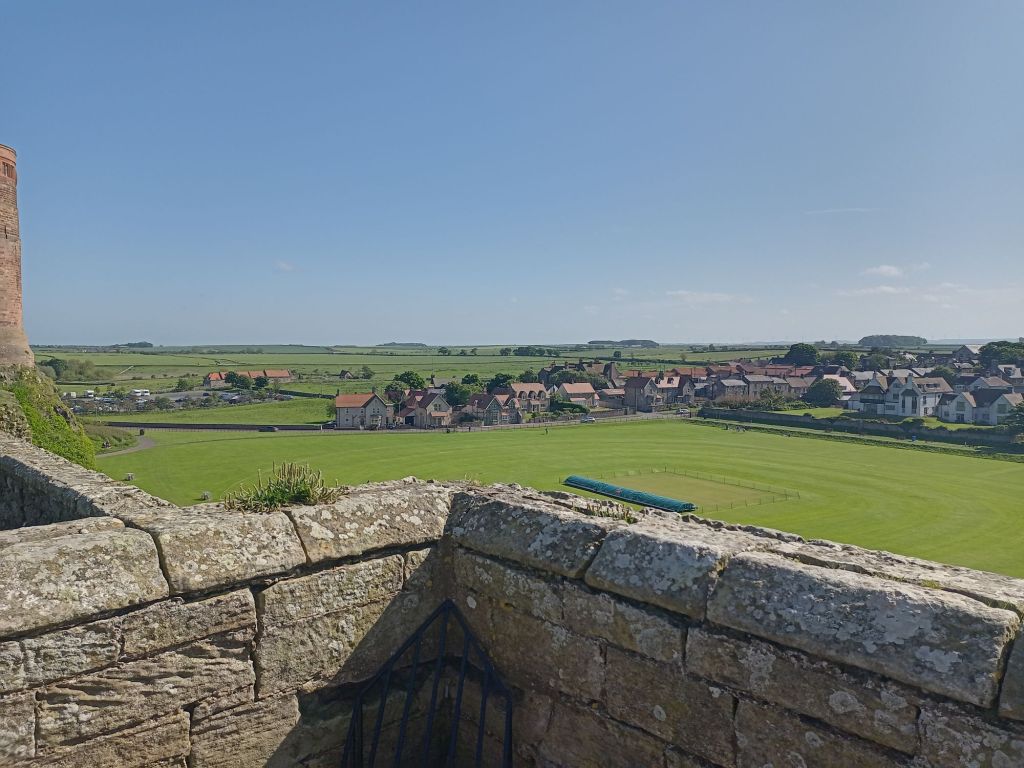
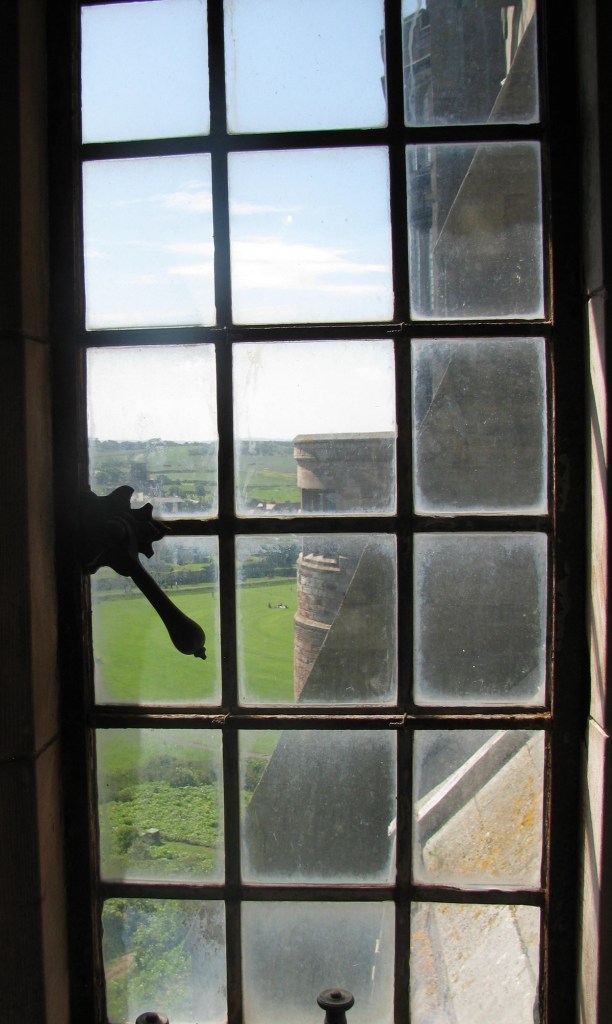
View from the Keep
The scullery
Bamburgh Beach
Farne Islands from the castle
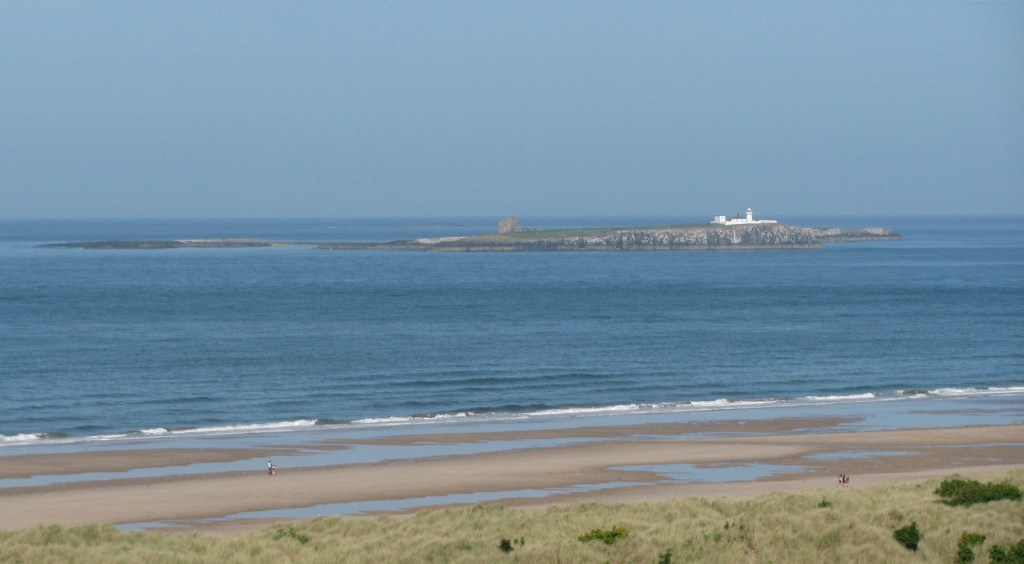
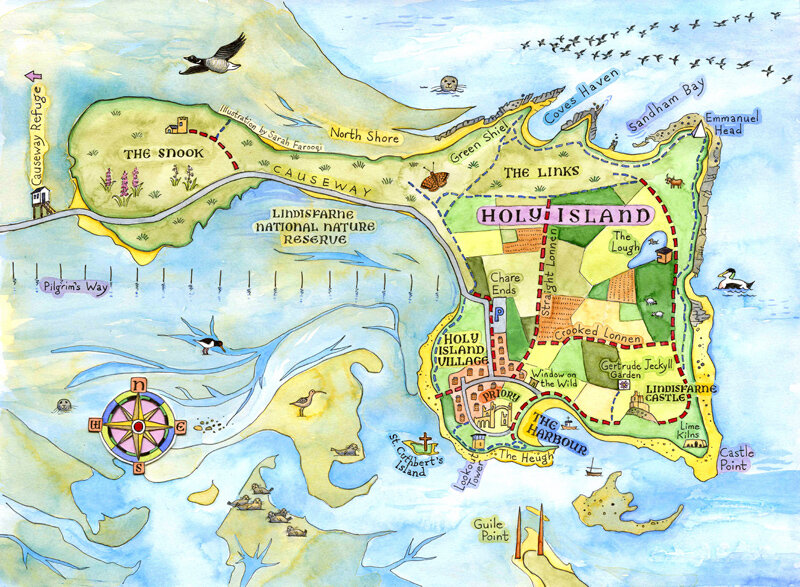
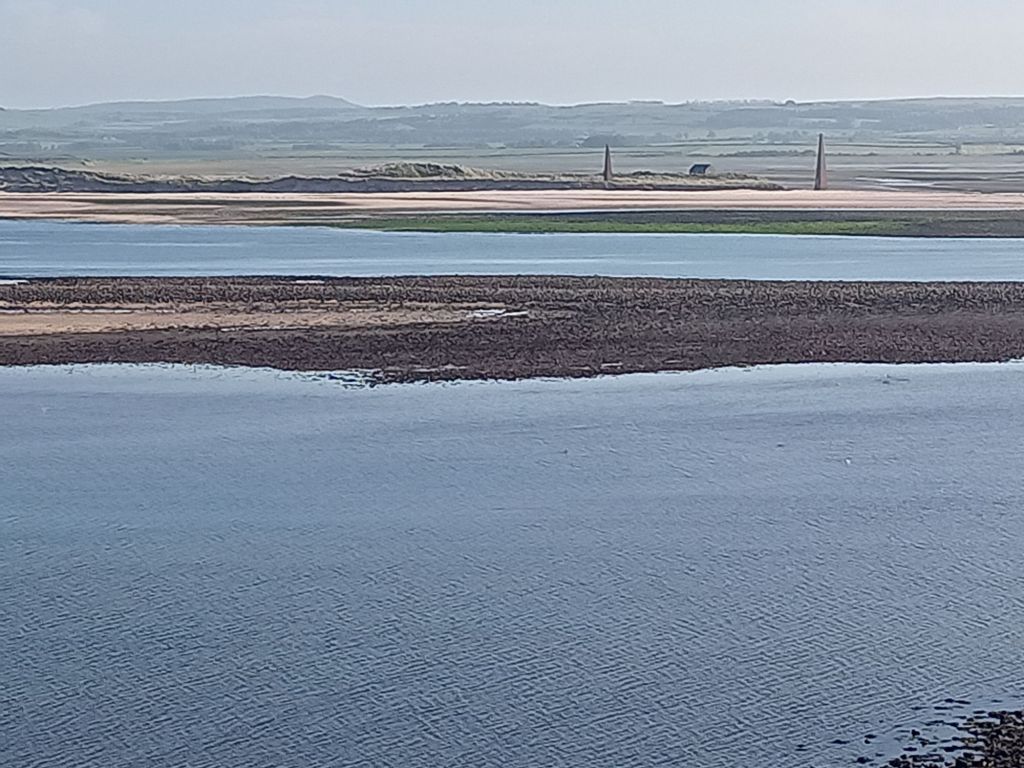
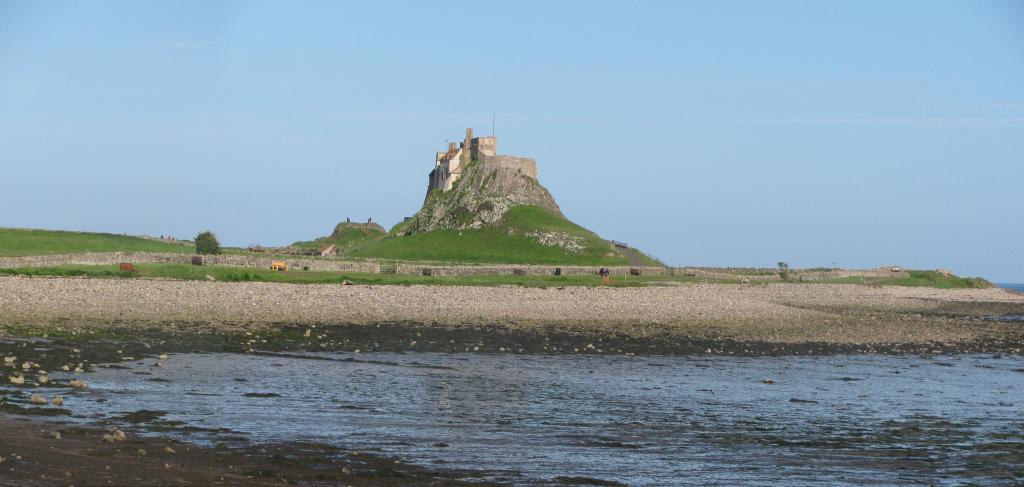
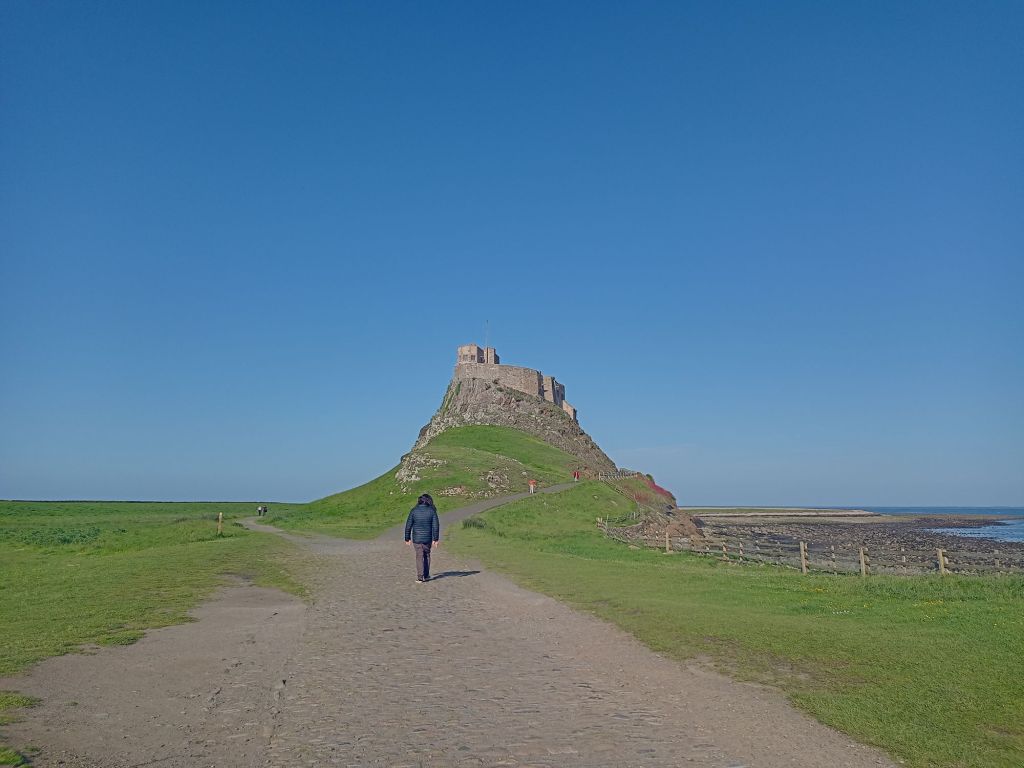
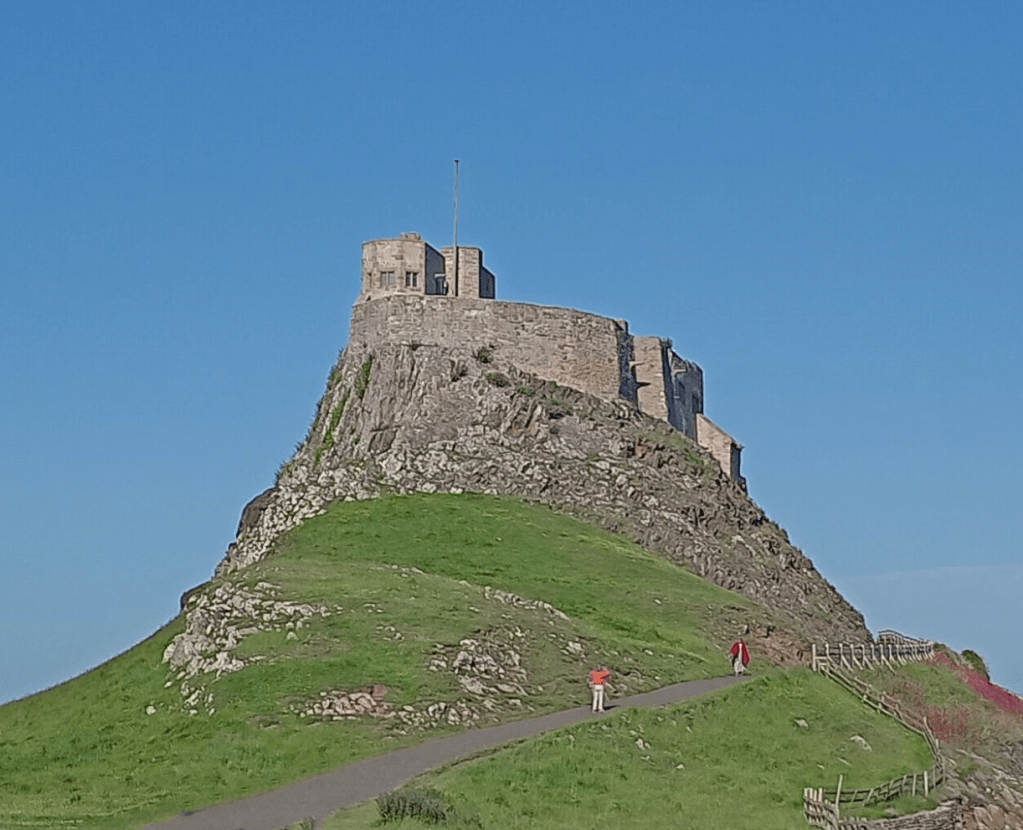
Lindisfarne / Holy Island
After Bamburgh Castle, we drove north along some narrow country lanes back up the coast towards Lindisfarne a.k.a. Holy Island. At low-to-mid tide, Lindisfarne is joined to the mainland by a causeway and road, but these are covered by the sea about two hours before and after high tide. Fortunately, on this day, low tide was in the early evening, around the time we arrived. Even better, most weekend day-trippers had left the island by the time we got there, so we had the place more or less to ourselves.
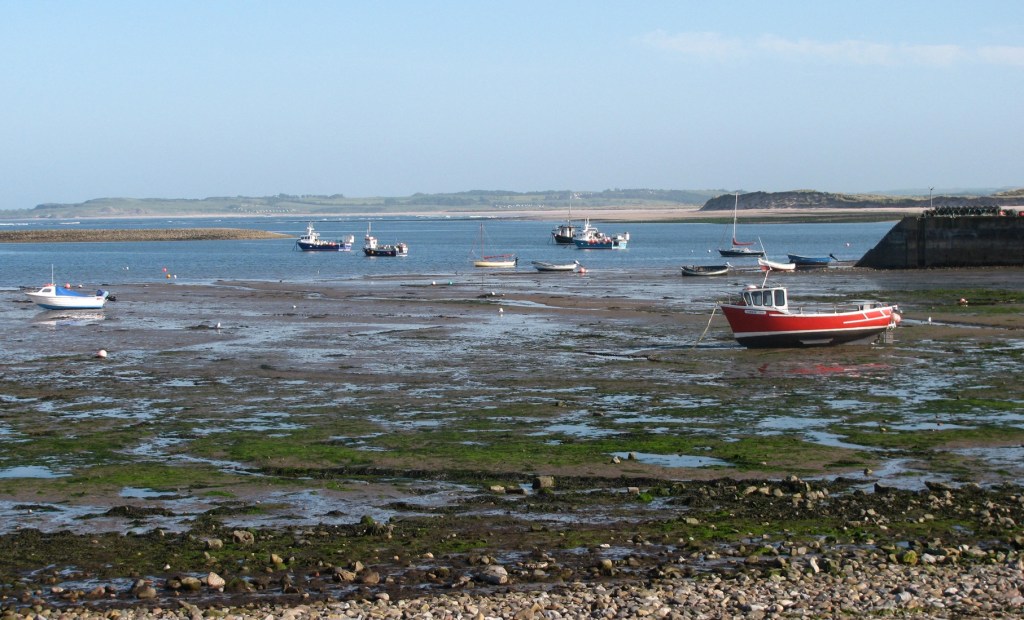
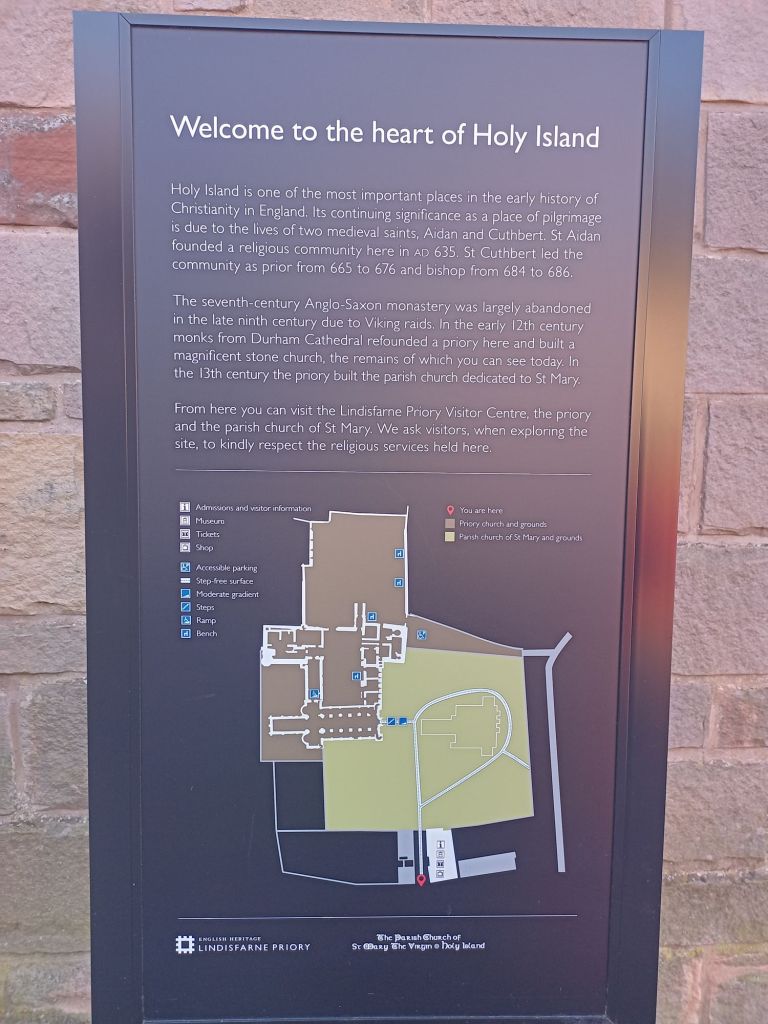
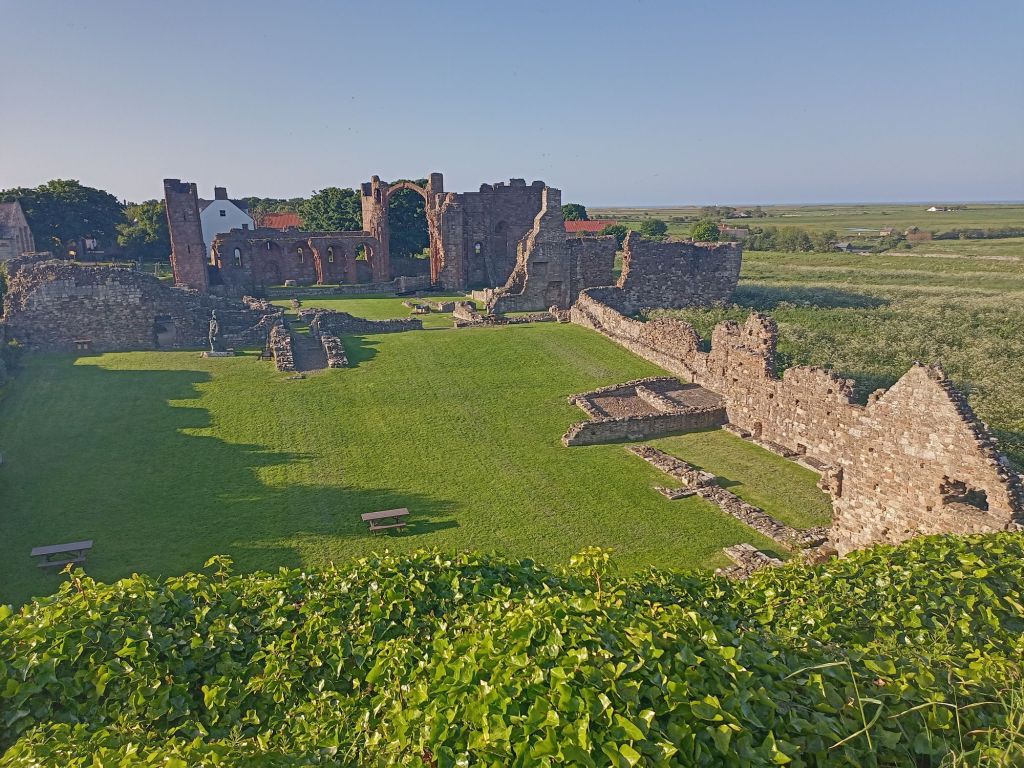
We drove across the causeway and walked from the carpark about 1km to Lindisfarne village and then to the harbour. Caroline sat by the harbour while Ian and E walked to Lindisfarne Castle, the castle garden, the Priory, and other parts of the village.
Lindisfarne is now a National Nature Reserve, and has an interesting history.
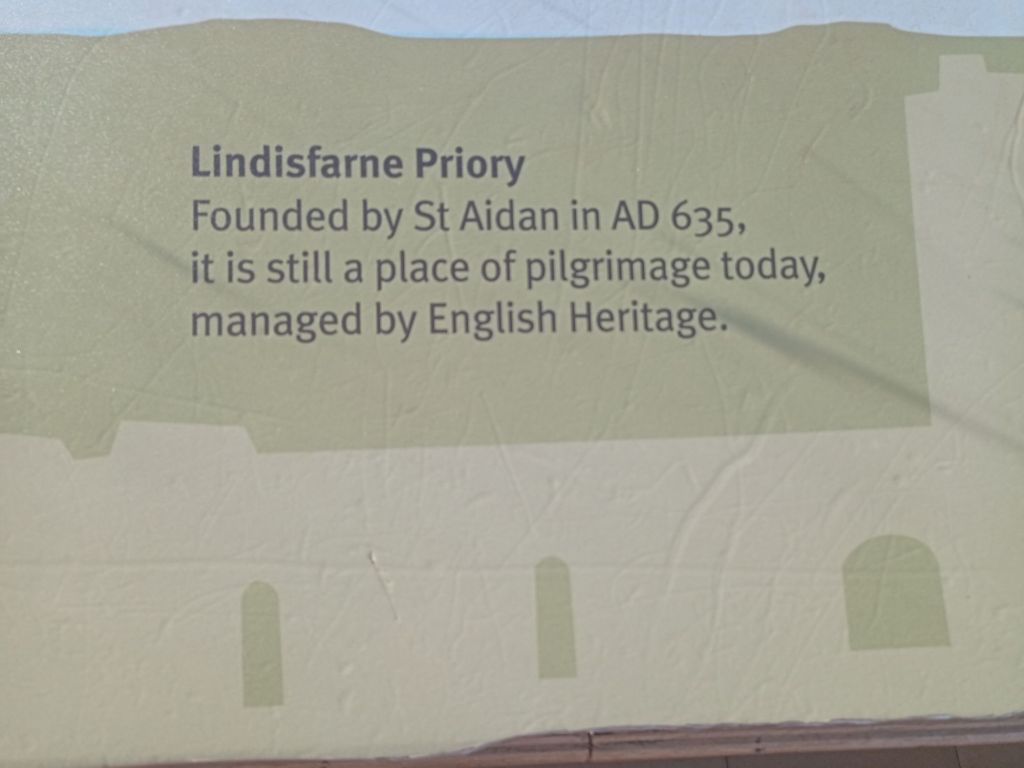
Early Christian Irish monks settled there in AD 635, and one of their members, St. Cuthbert, became a bishop and then a cult figure after his death, attracting many pilgrims to the area. However, in AD 793, Viking pirates attacked the island and killed many of the monks. The remaining monks left the island with St Cuthbert’s remains. In the 12th century the monastery was re-established on Lindisfarne and eventually became the (now-ruined) priory.
According to the National Trust, “[Lindisfarne] castle was strategically vital during the Scottish Wars of the mid-1500s and later saw action in the Civil Wars and the Jacobite Rebellion of 1715.” In the early 20th century, the new leaseholder, Edward Hudson, commissioned major renovations to the castle, as well as a garden designed by Gertrude Jekyll (https://www.nationaltrust.org.uk/visit/north-east/lindisfarne-castle/history-of-lindisfarne-castle).
Outer Hebrides: Day 6 – South-west Lewis and Great Bernera
Having covered a good proportion of the rest of the main island in previous days, we spent our last full day there exploring south-west Lewis.
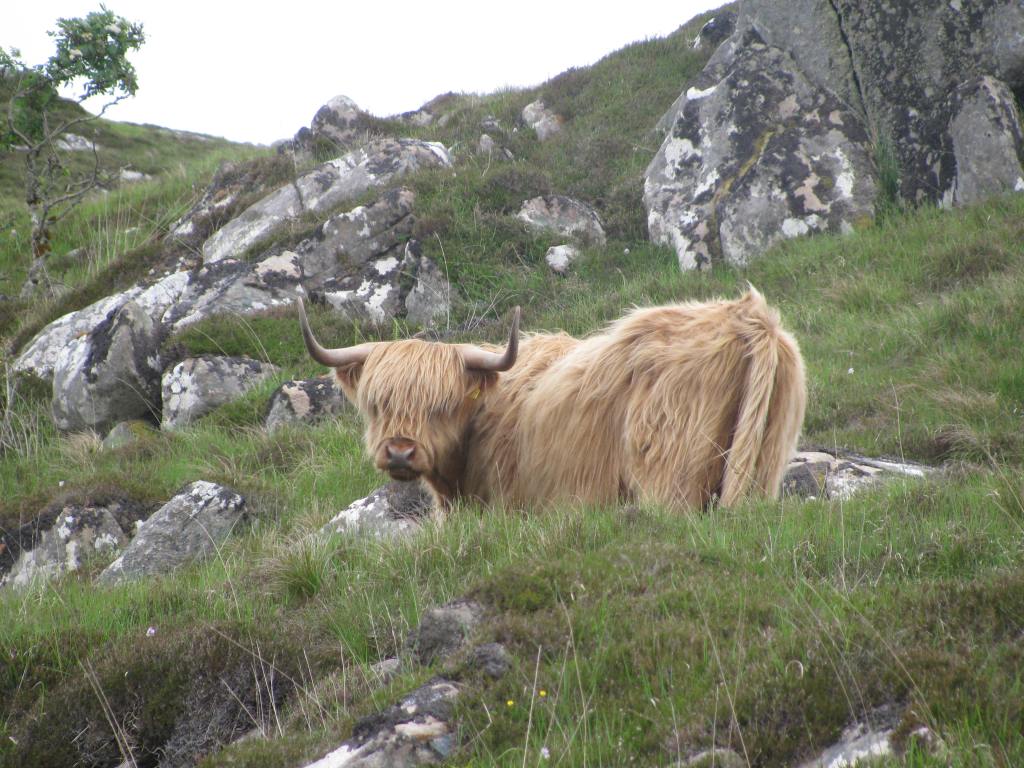
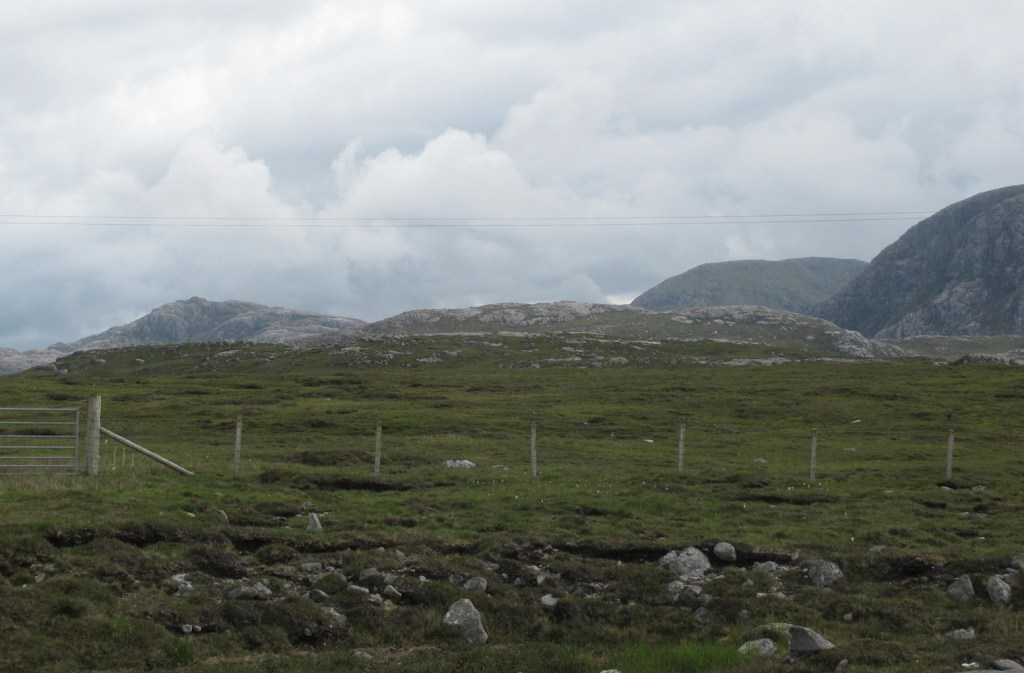
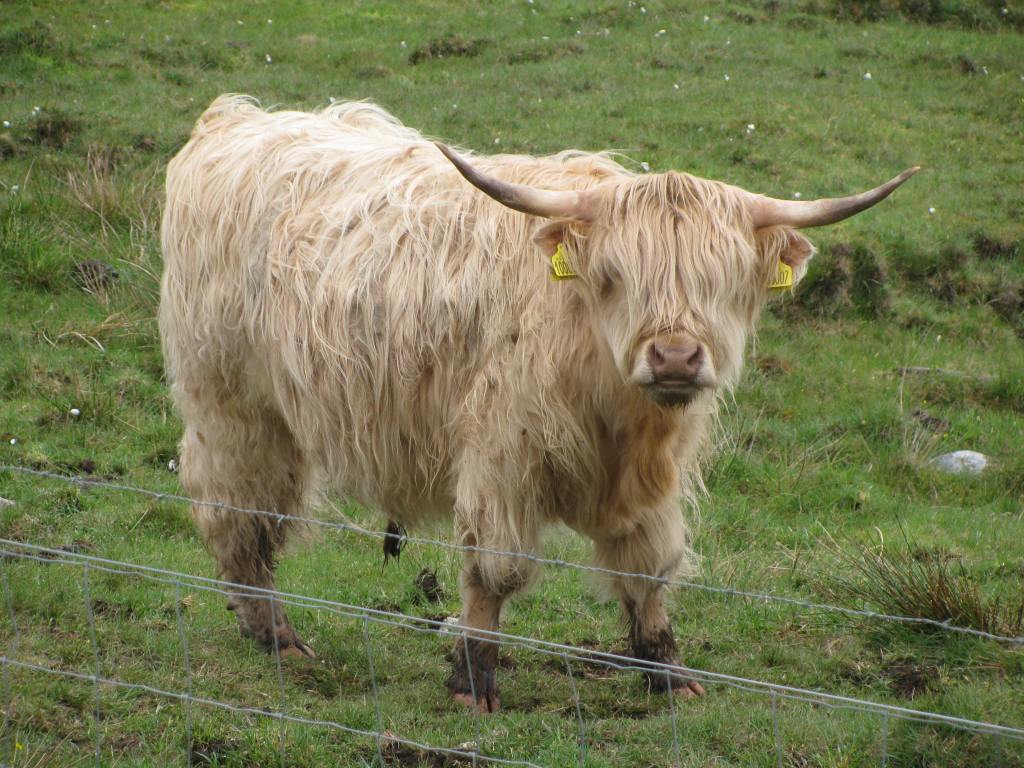
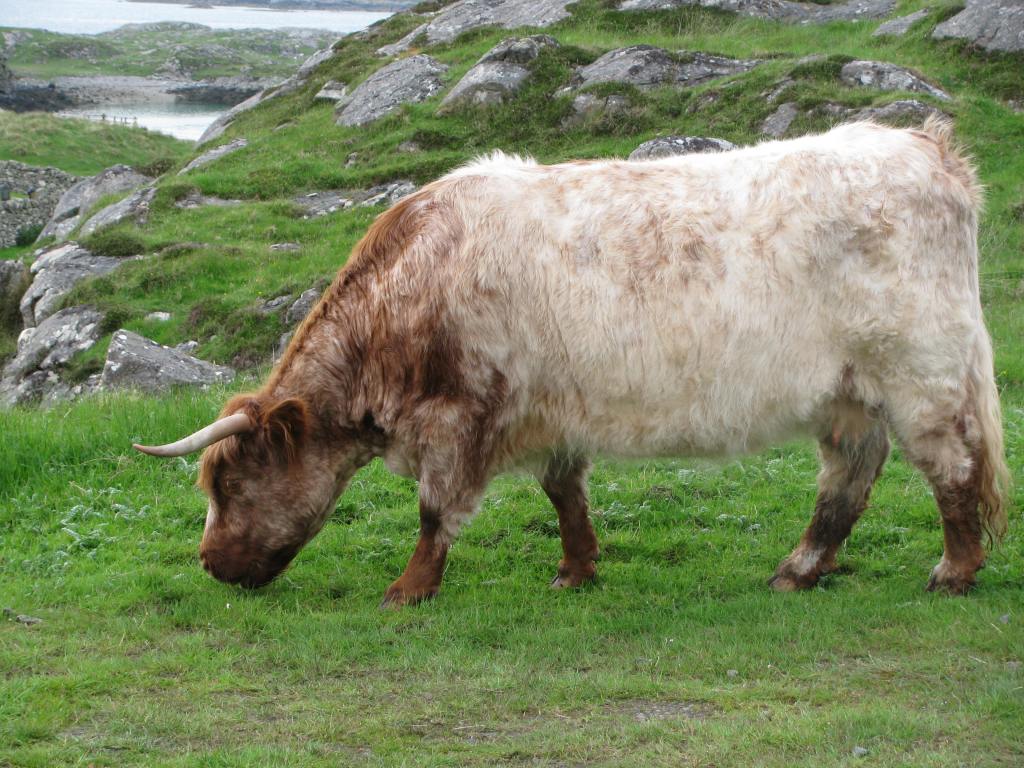
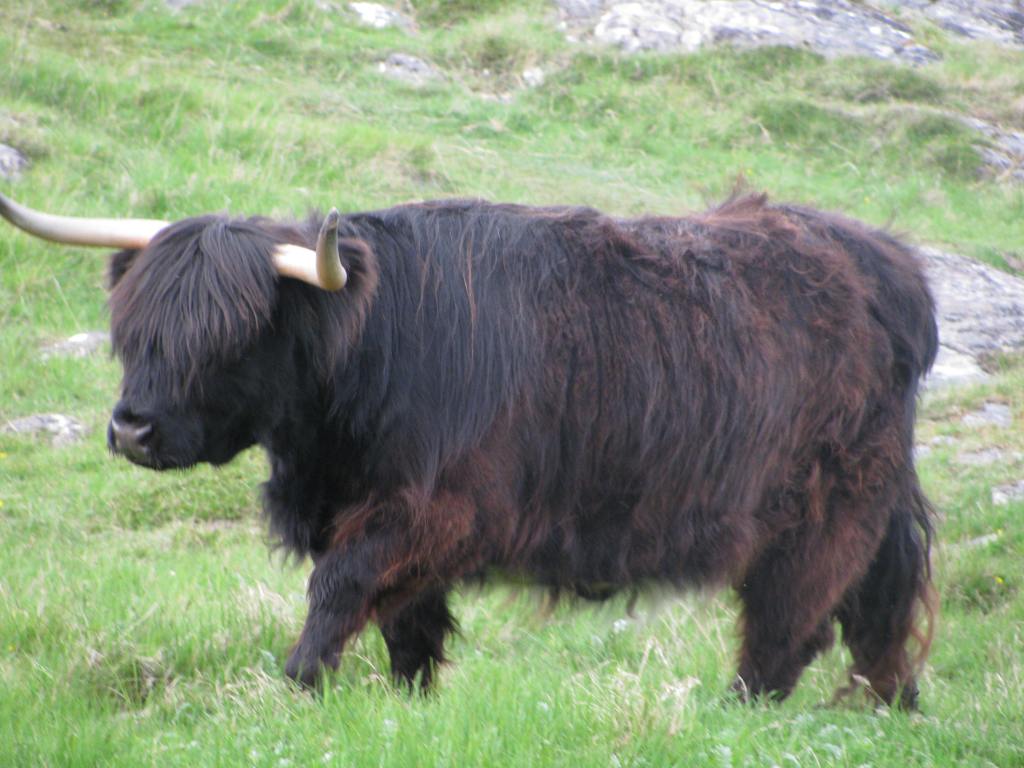
This area included more mountains, rocky areas, peaty areas, and deserted rocky and sandy beaches. Also quite a few more Highland cattle!
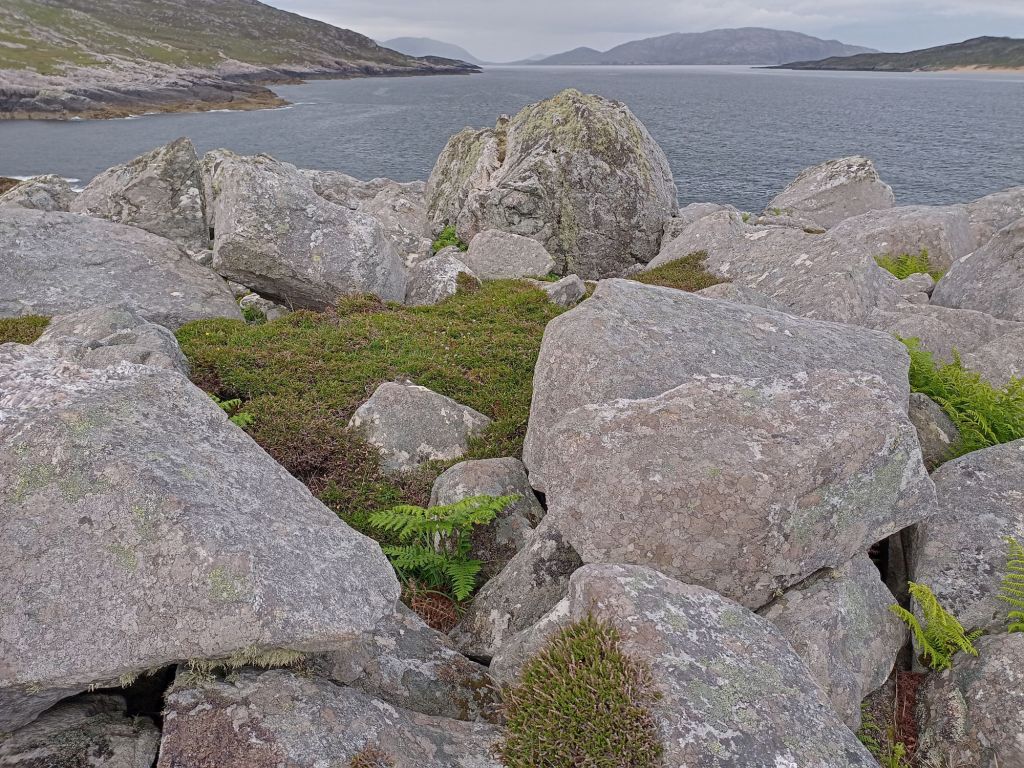
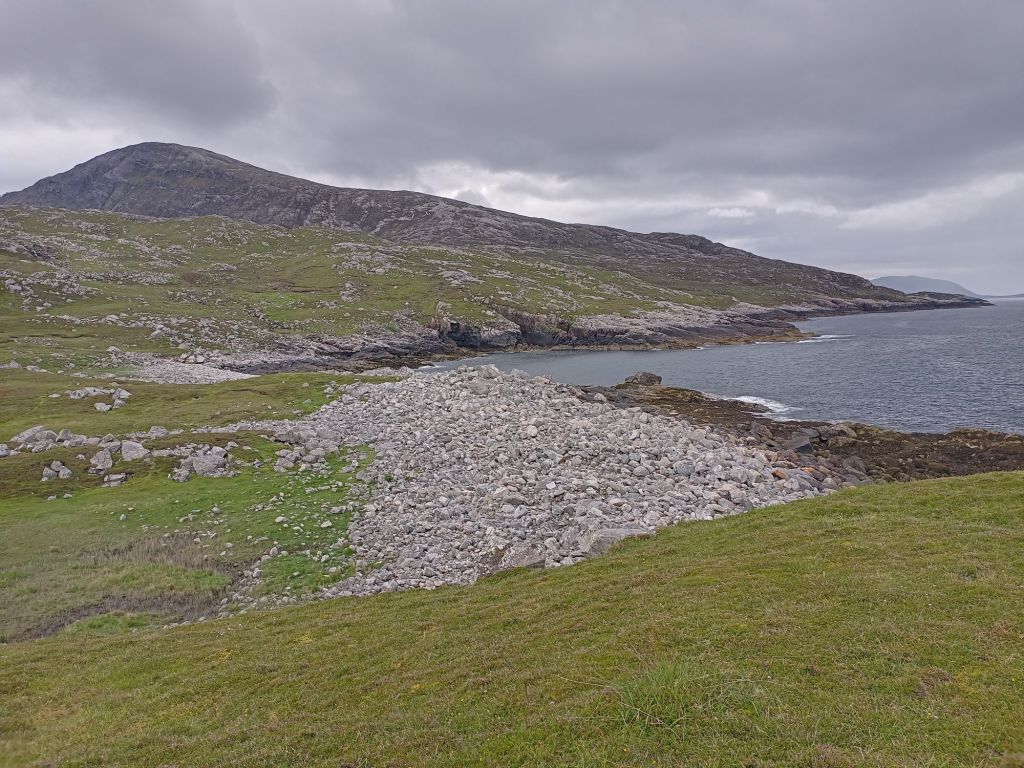
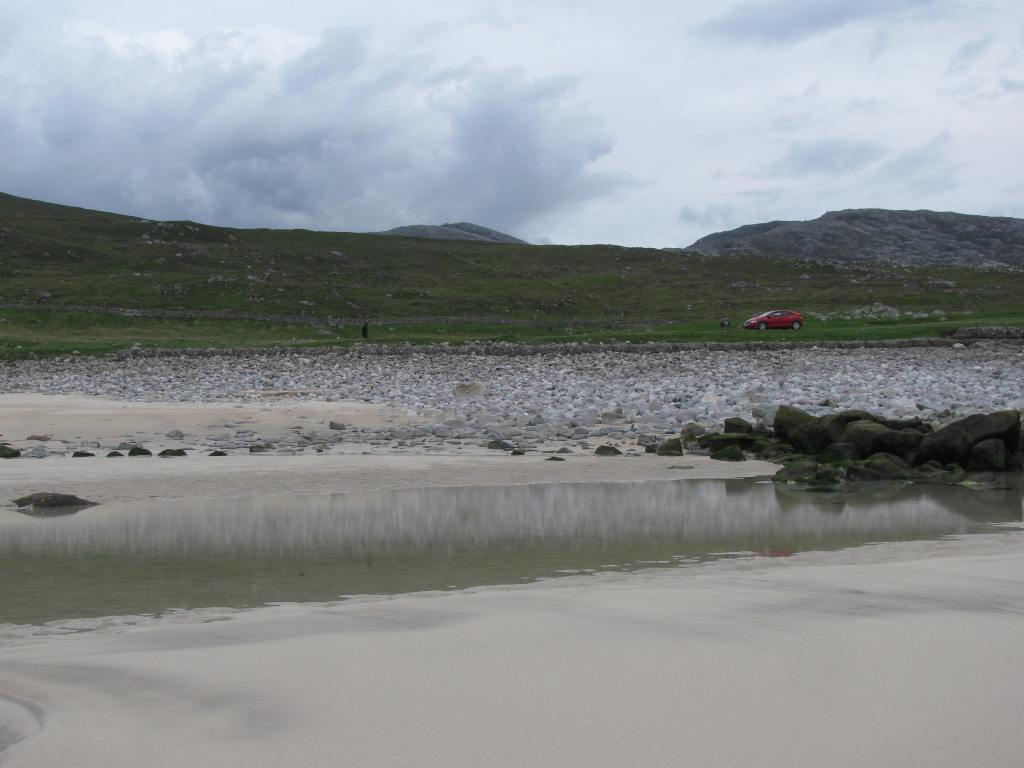
Firstly, we drove south along the west coast from ‘our’ cottage to the end of the road past Mealasta. We sat on picnic chairs eating snacks sitting by the side of the road as there was literally zero traffic. Eventually, two people arrived on bicycles, but it was probably the most unspoilt, quietest place we’d been anywhere on the island. Caroline had another paddle.
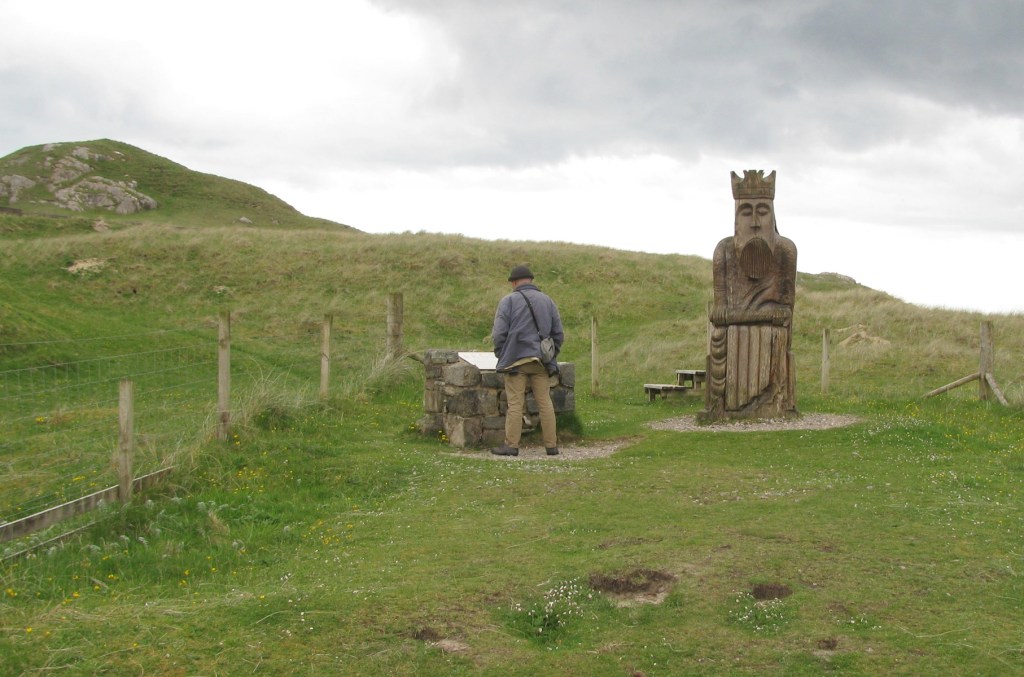
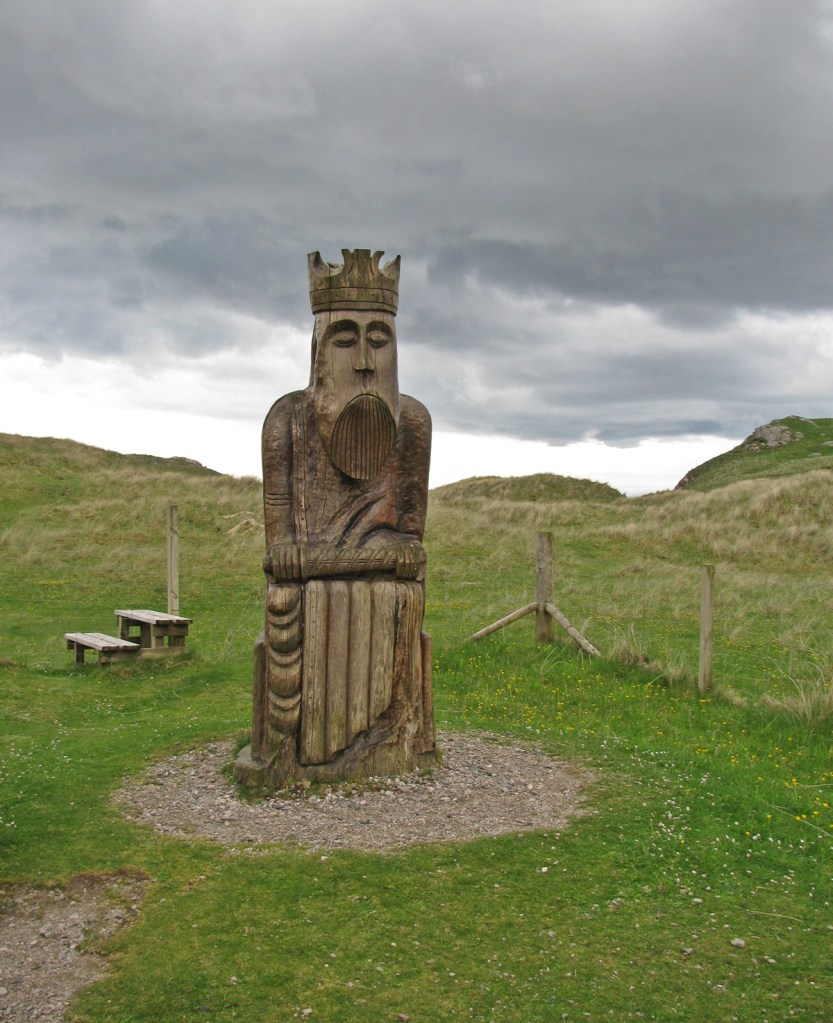
Next, we backtracked northwards up the west coast to Uig – the area where the Lewis chessmen were discovered (see Outer Hebrides Day 2).
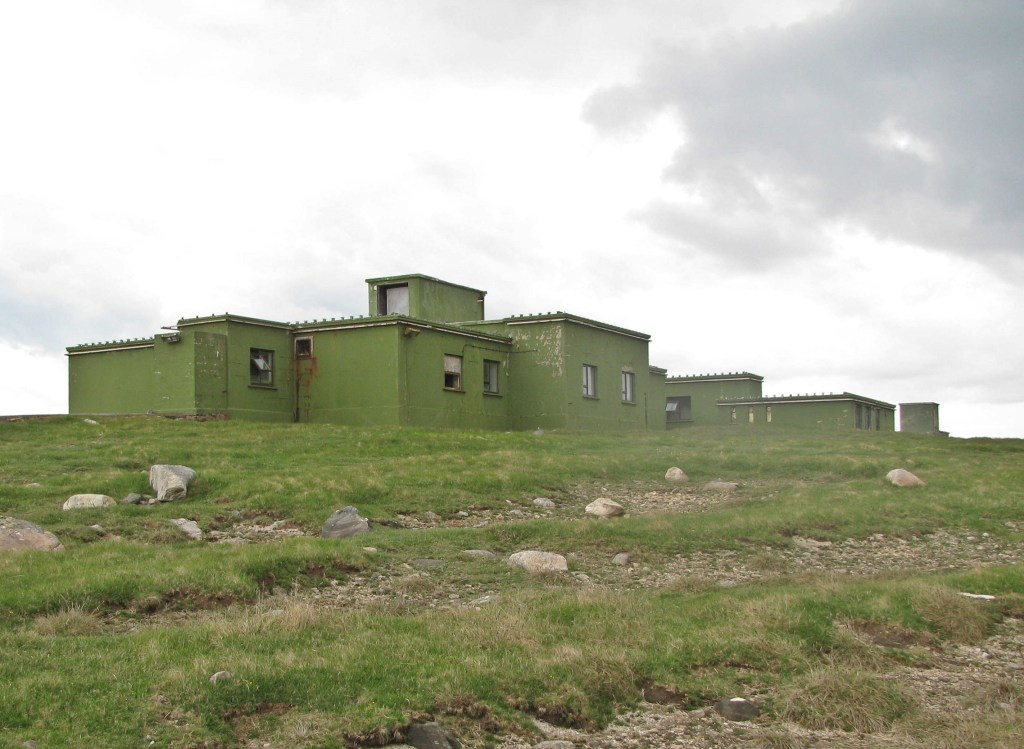
Then we visited the abandoned Royal Air Force base at Aird Uig / Gallan Head, which is now used by a community of people living in the old military buildings, as well as by serious birdwatchers. Apparently golden eagles can be seen there on occasions.
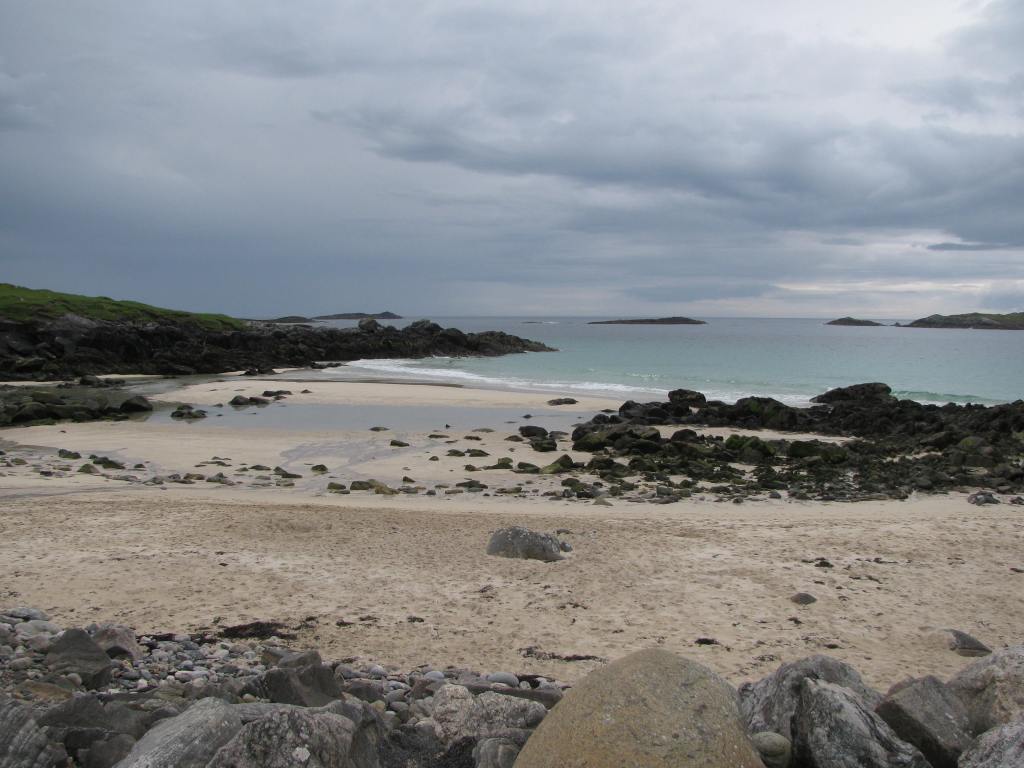
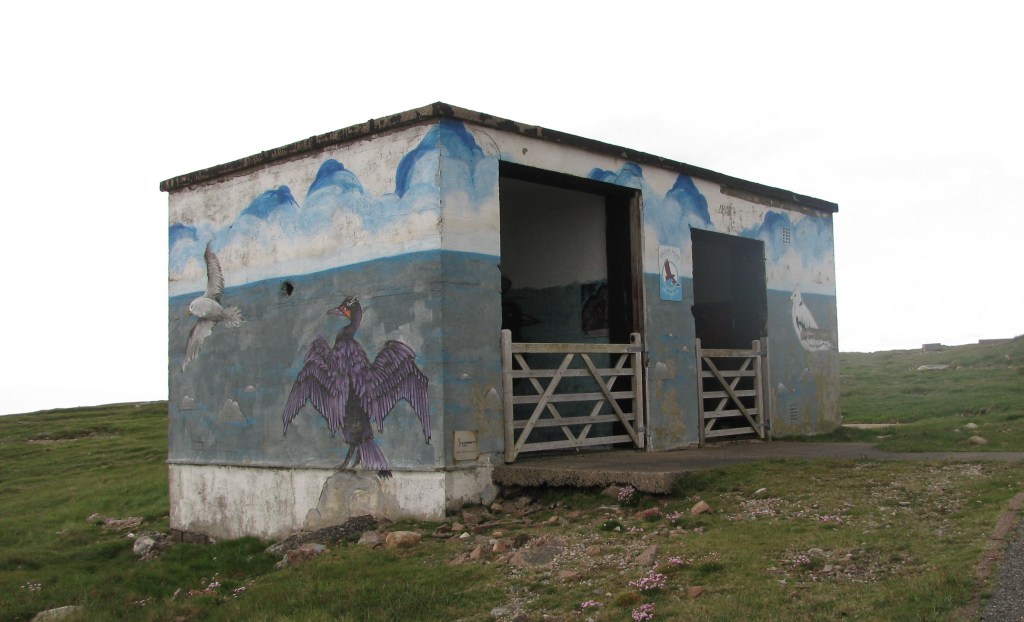
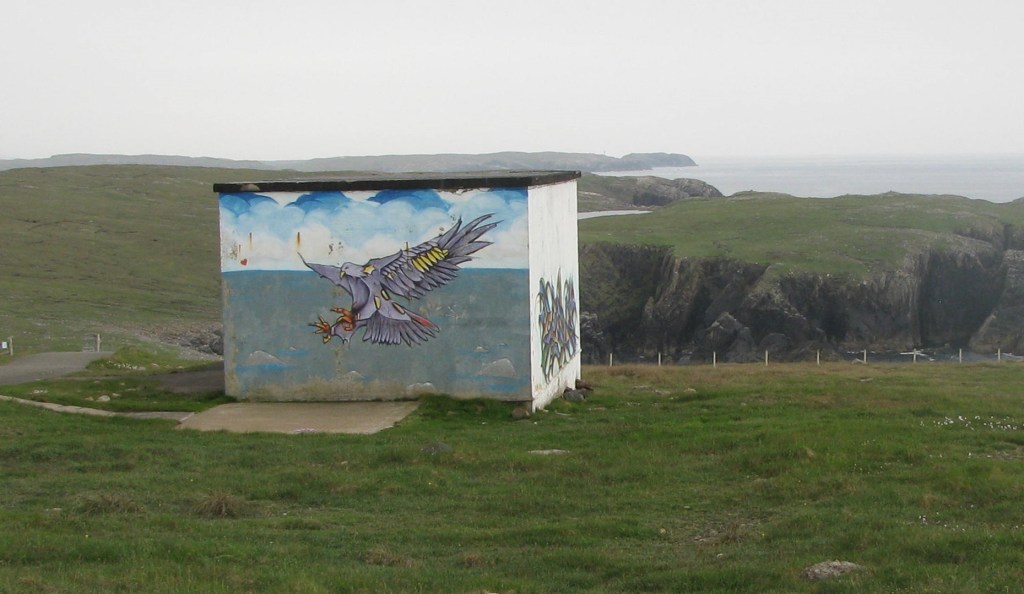
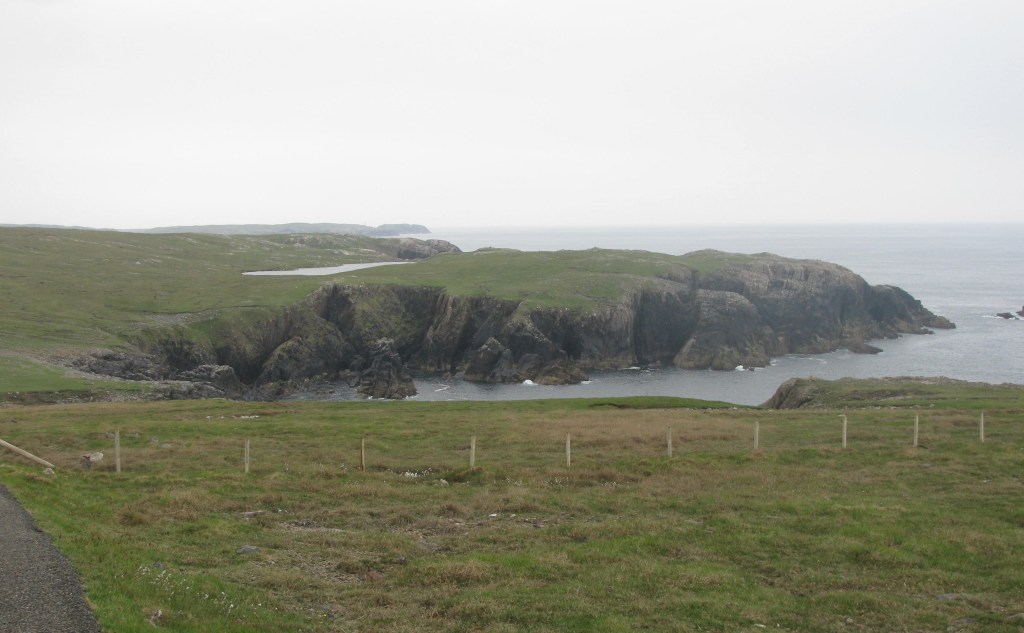
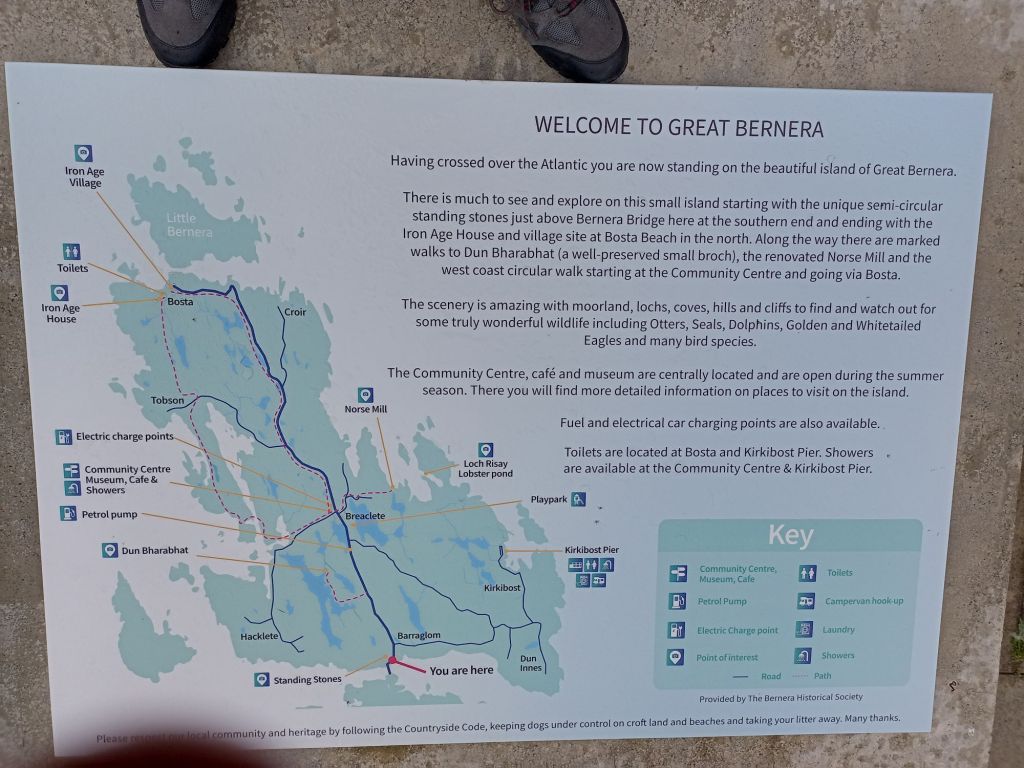
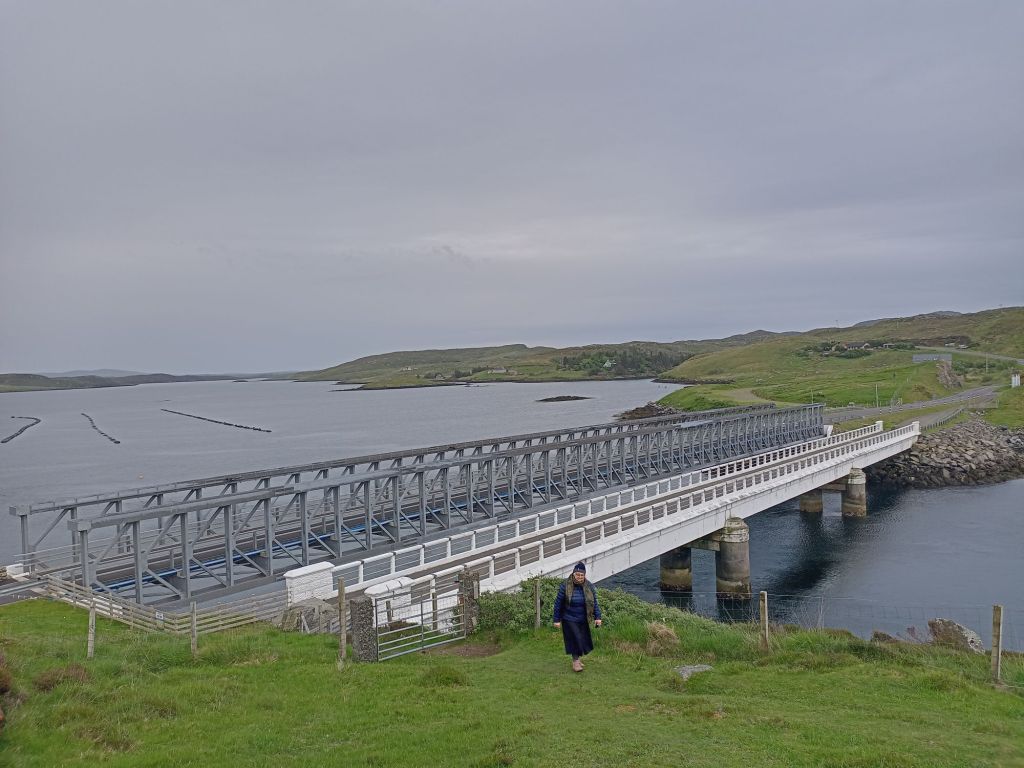
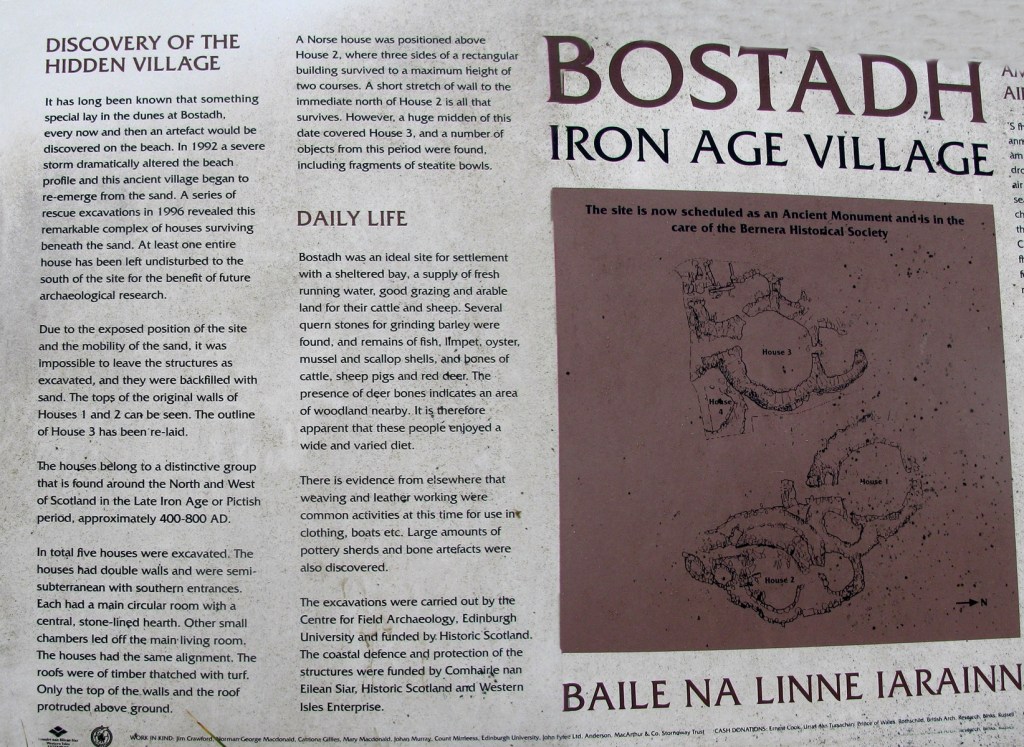
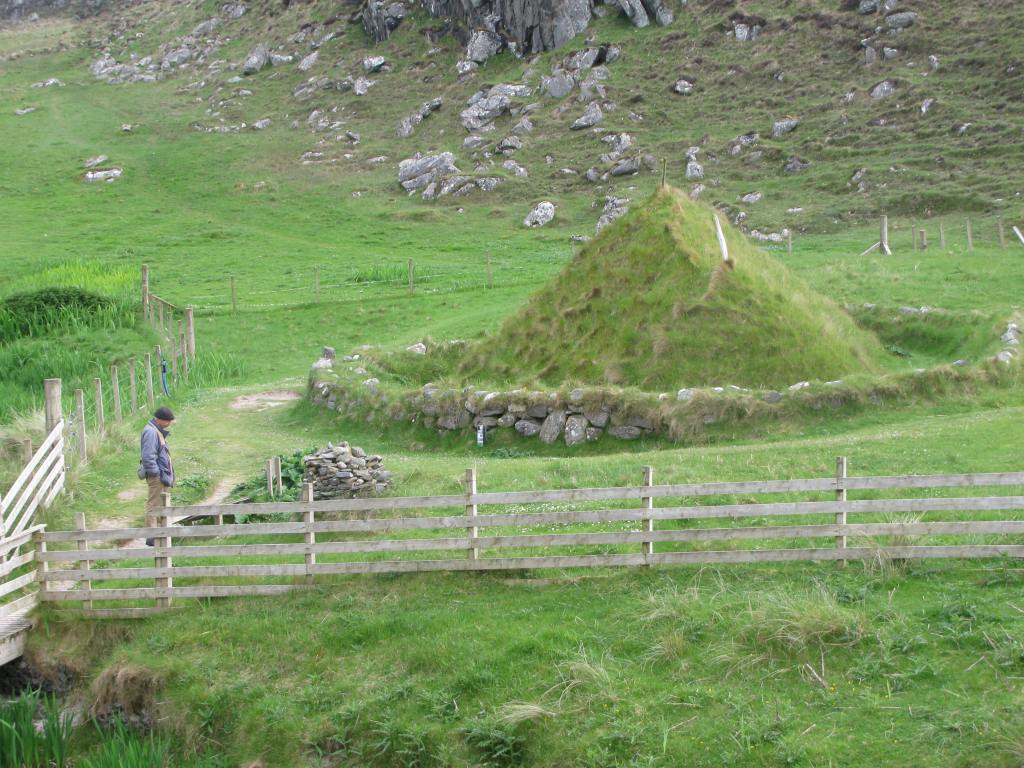
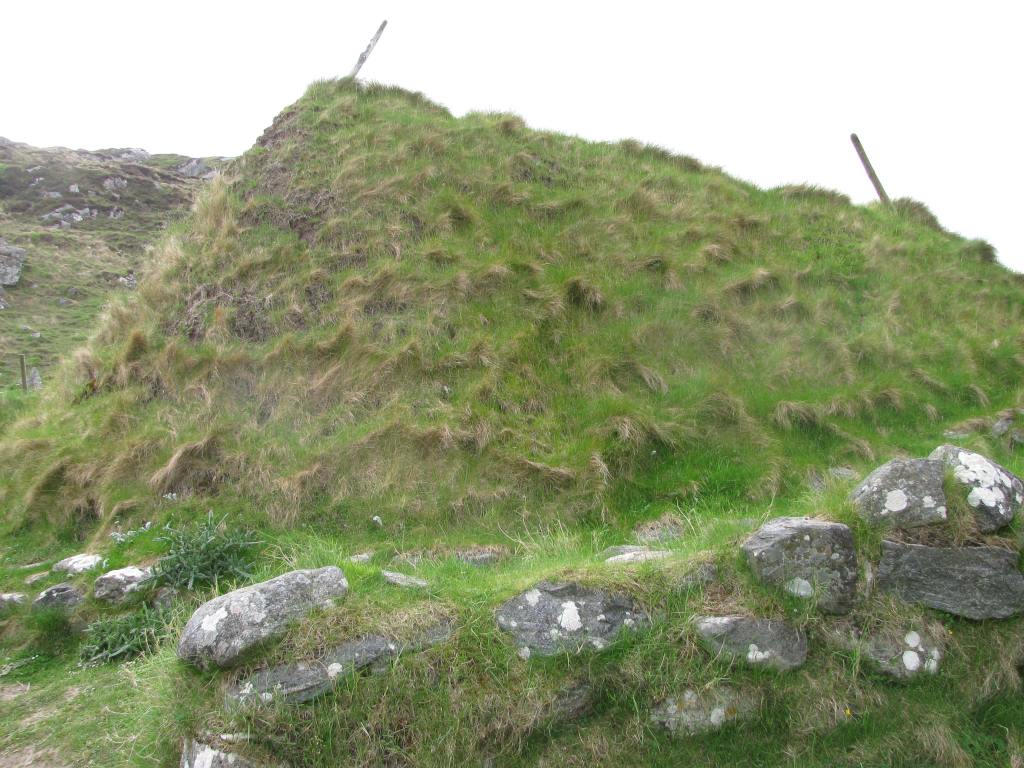
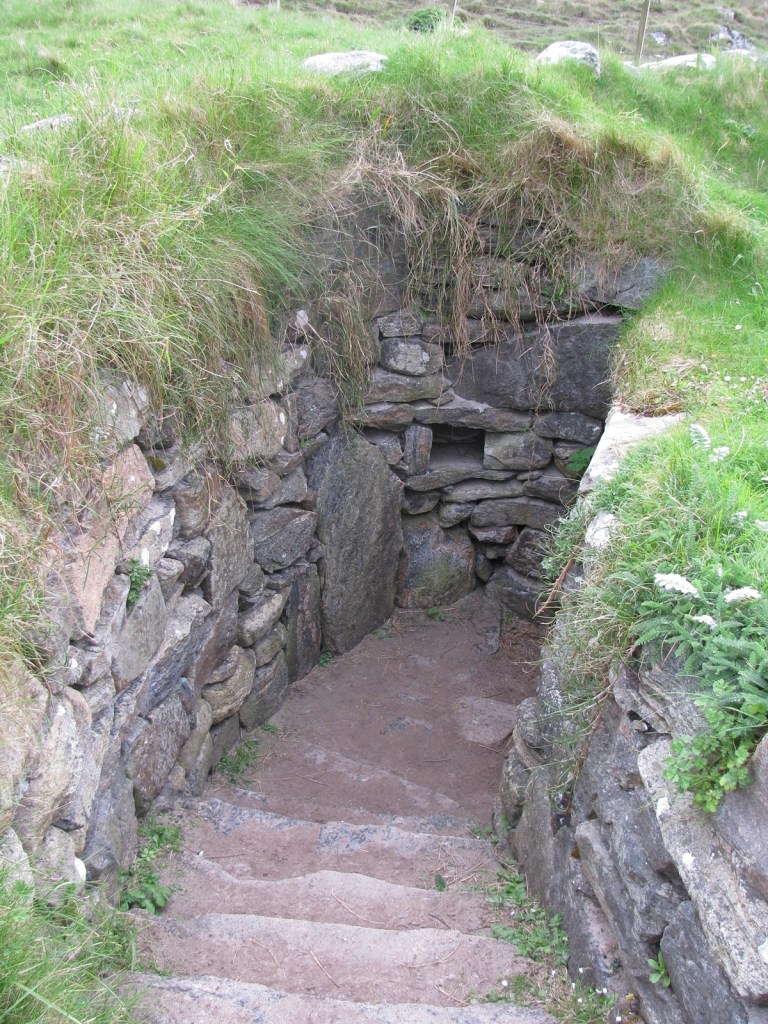
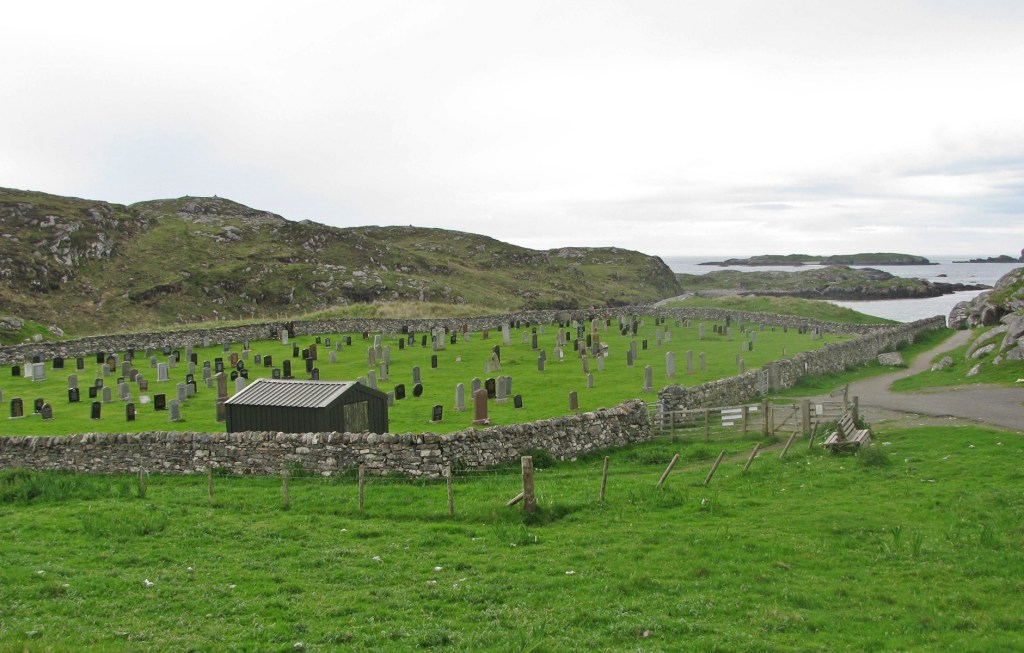
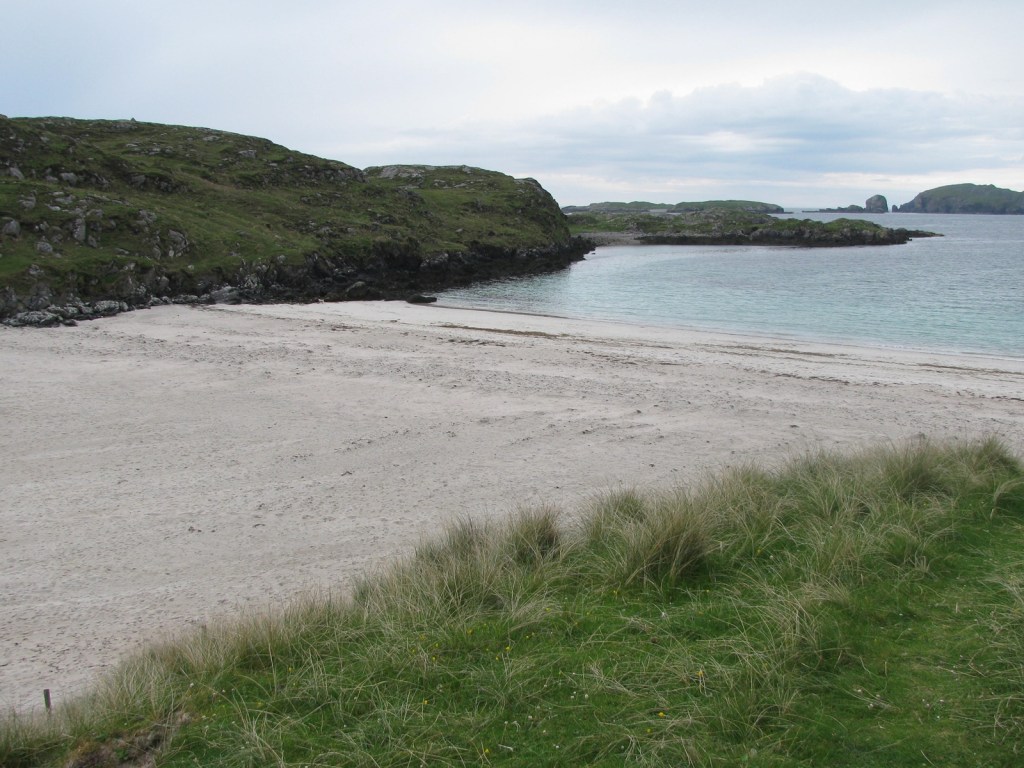
Finally, we drove over the new road bridge that links Lewis with the smaller island of Great Bernera. At the far end (north) of the island, at Bostadh, are the remains of an iron-age village, and yet another beautiful beach.
Another Highland cattle beast next door to the cottage, on our way south west
Driving south west
End of the road beyond Mealasta…
Our snack spot…
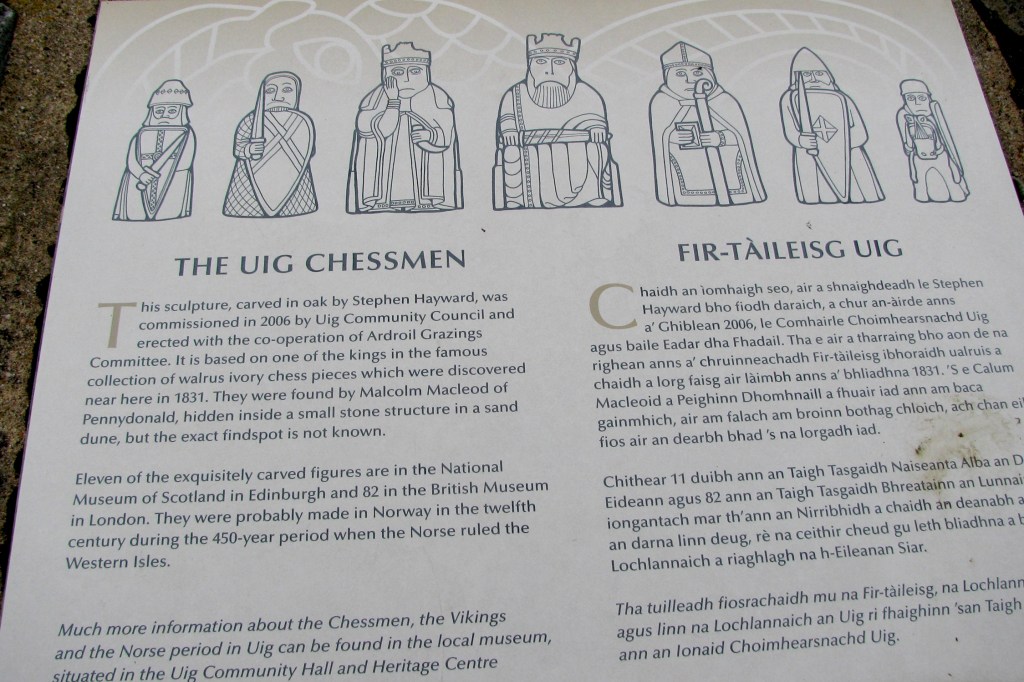
Uig chessman sculpture
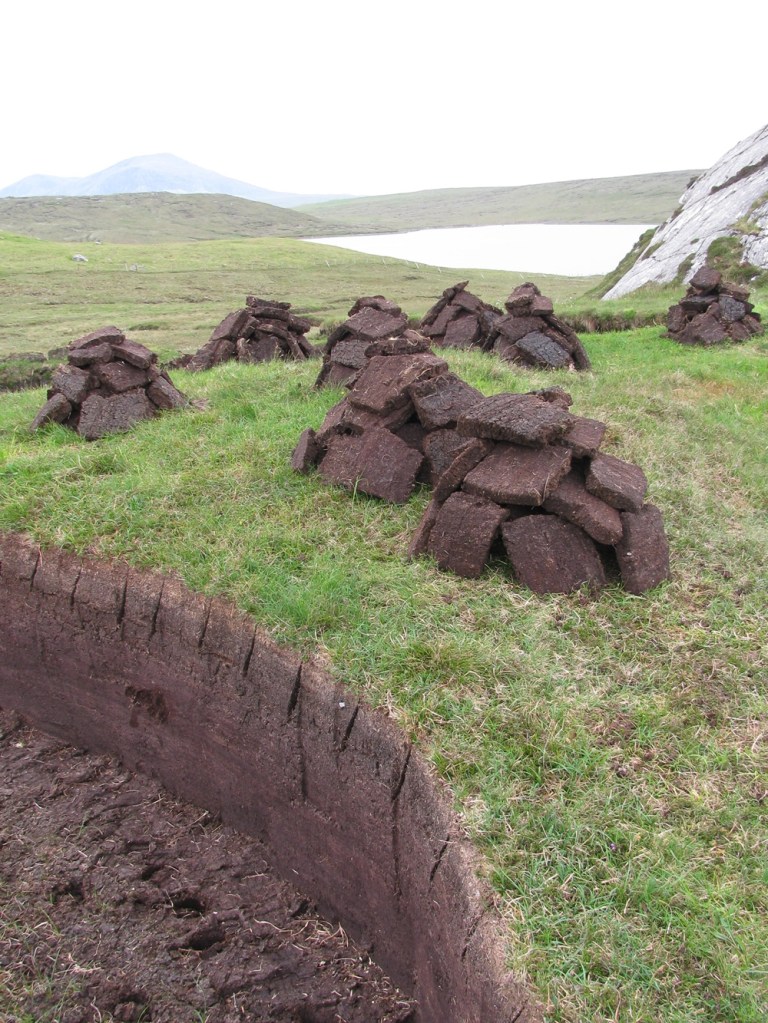
Cut peat left at the side of the road to dry – it’s still used as fuel
Aird Uig…
Great Bernera island
New (grey) and old (white) road bridges between Great Bernera island and Lewis
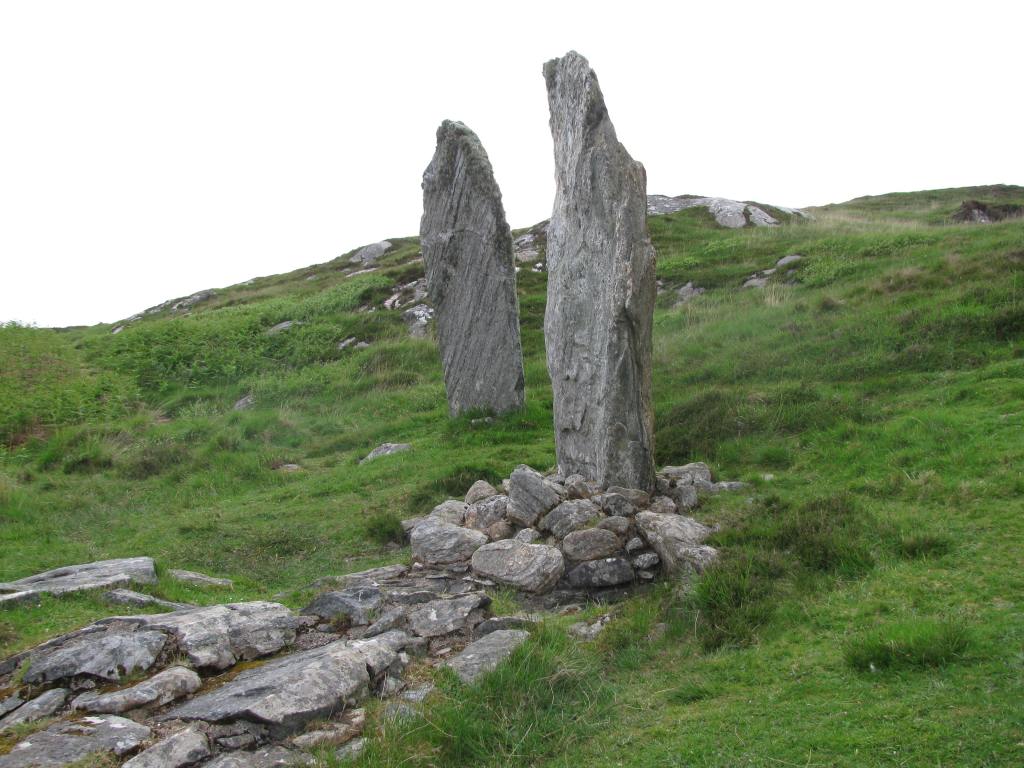
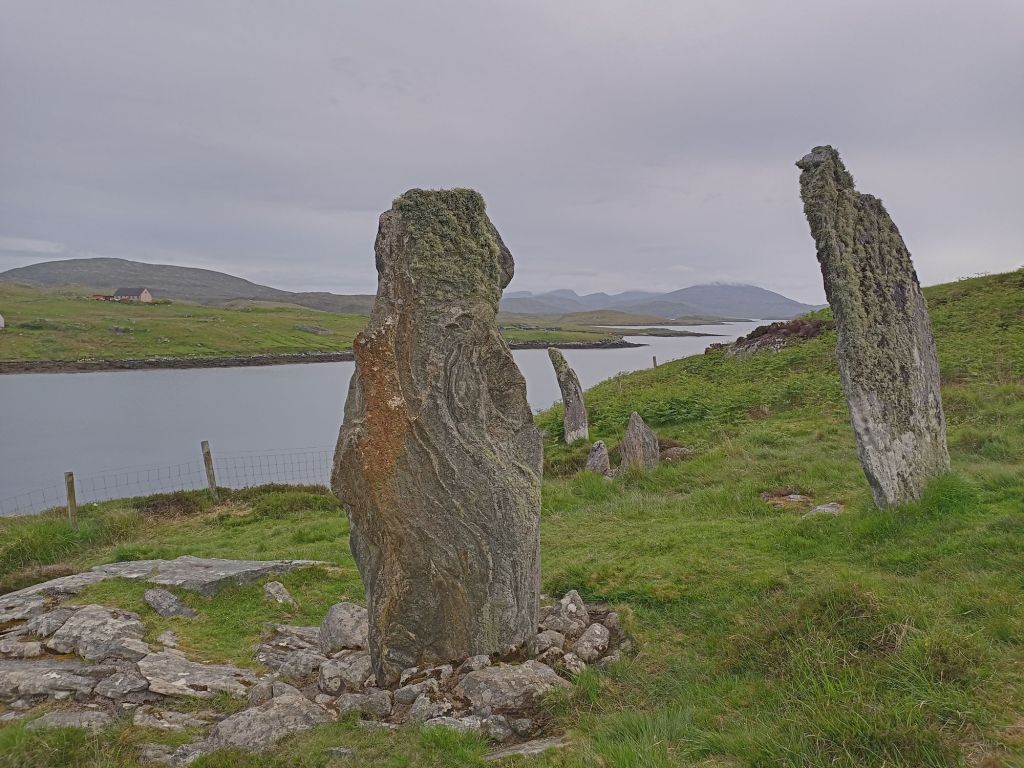
Standing stones near the bridges
Mainly the roof is above ground
Bostadh beach
Outer Hebrides: Day 7 – leaving the islands
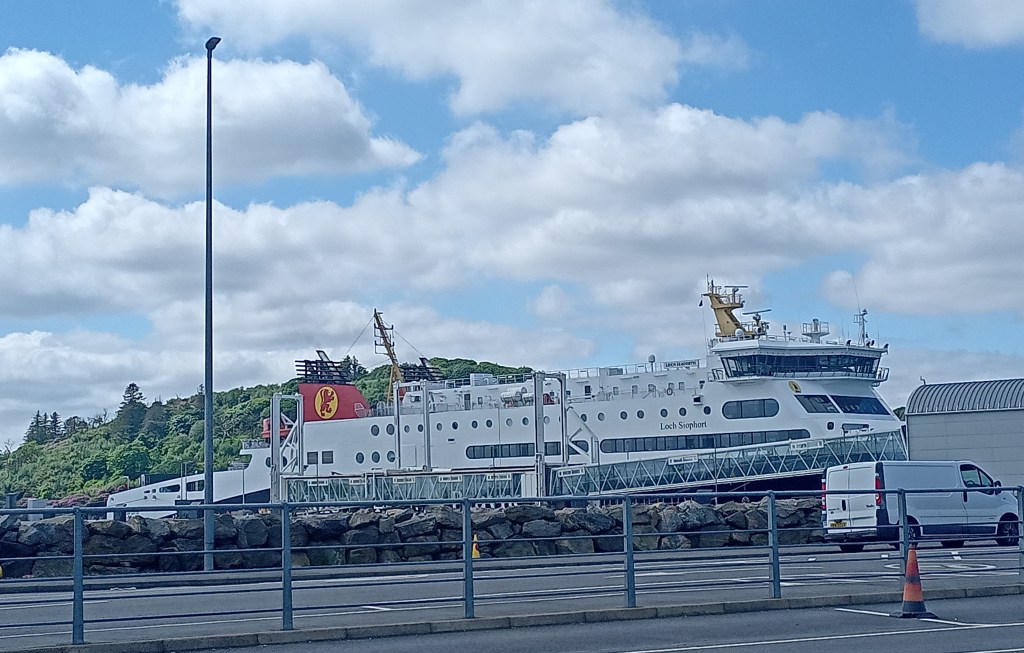
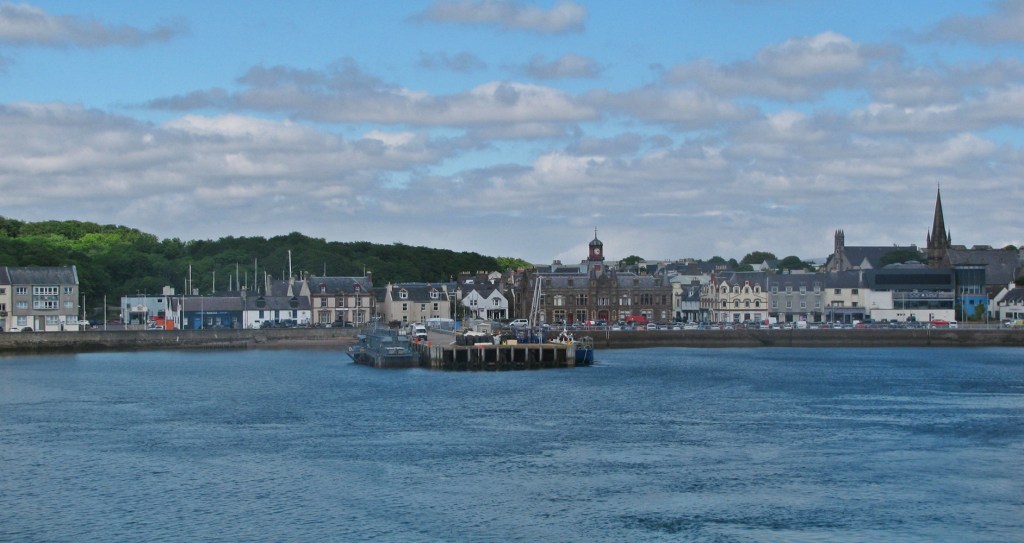
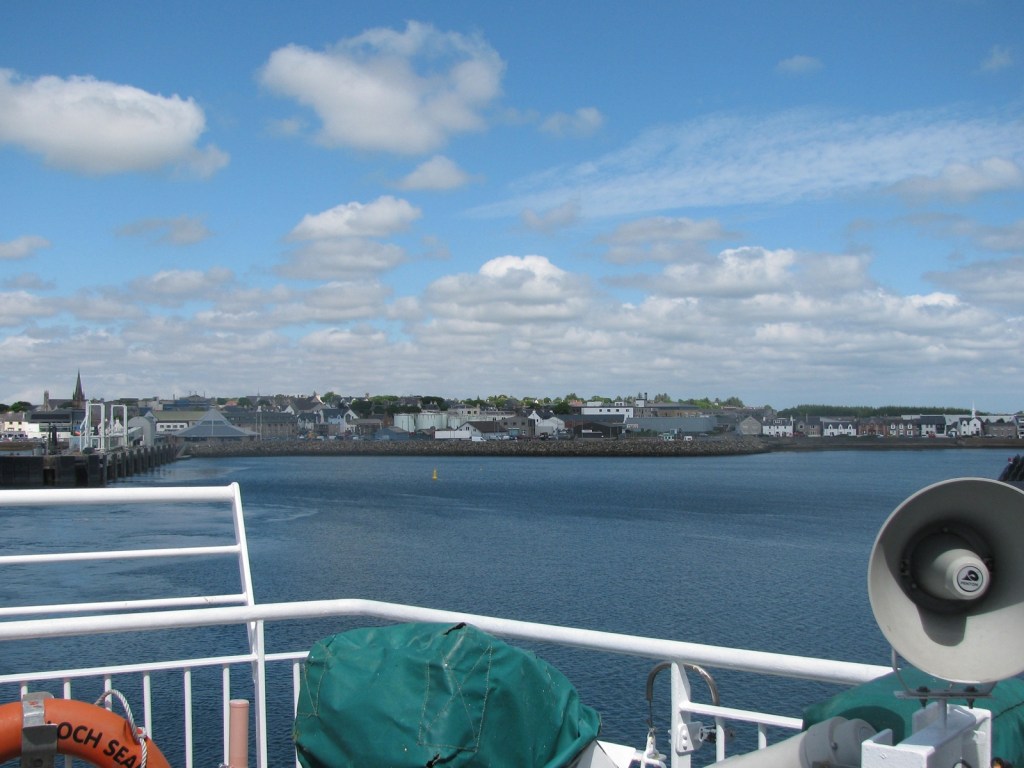
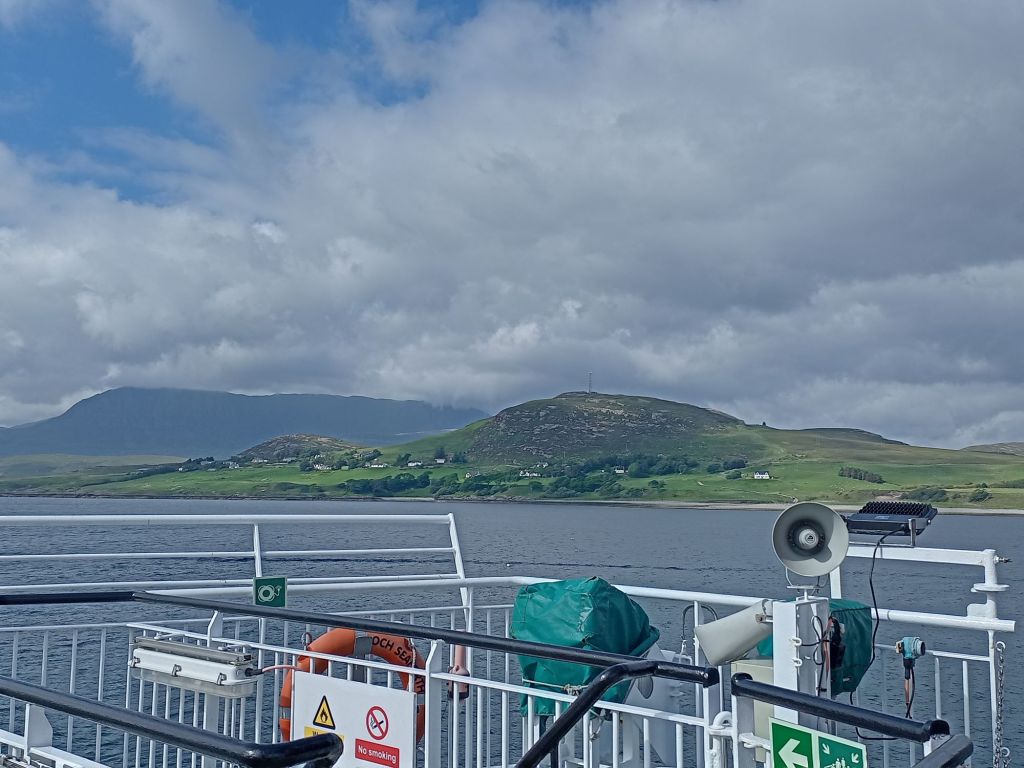
The next day we packed up and drove back to Stornaway to catch the return ferry to mainland Scotland. Fortunately the weather was lovely – calm and sunny – unlike our first, quite rough crossing of ‘the Minch’ a week before.
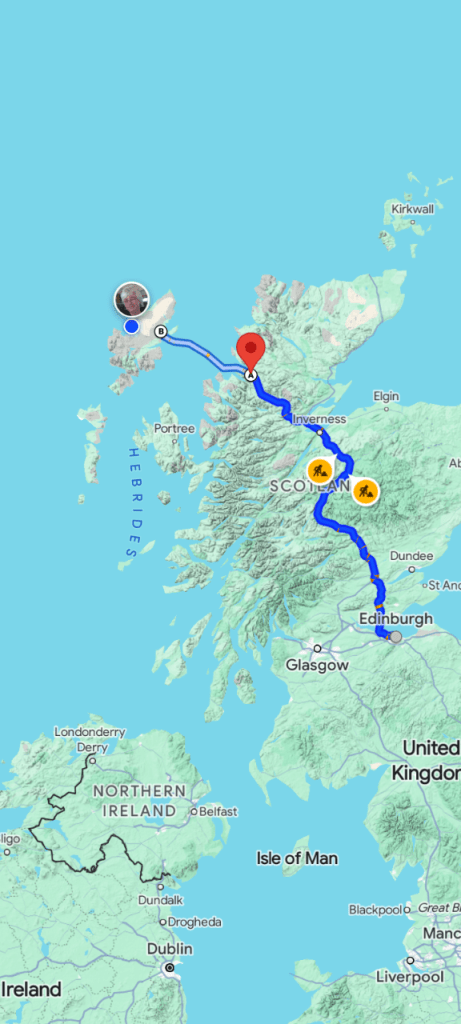
We drove the just over 200 miles back from Ullapool to Edinburgh in the evening, meaning the traffic was relatively quiet.
Our ferry Loch Siophort waiting to leave Stornoway
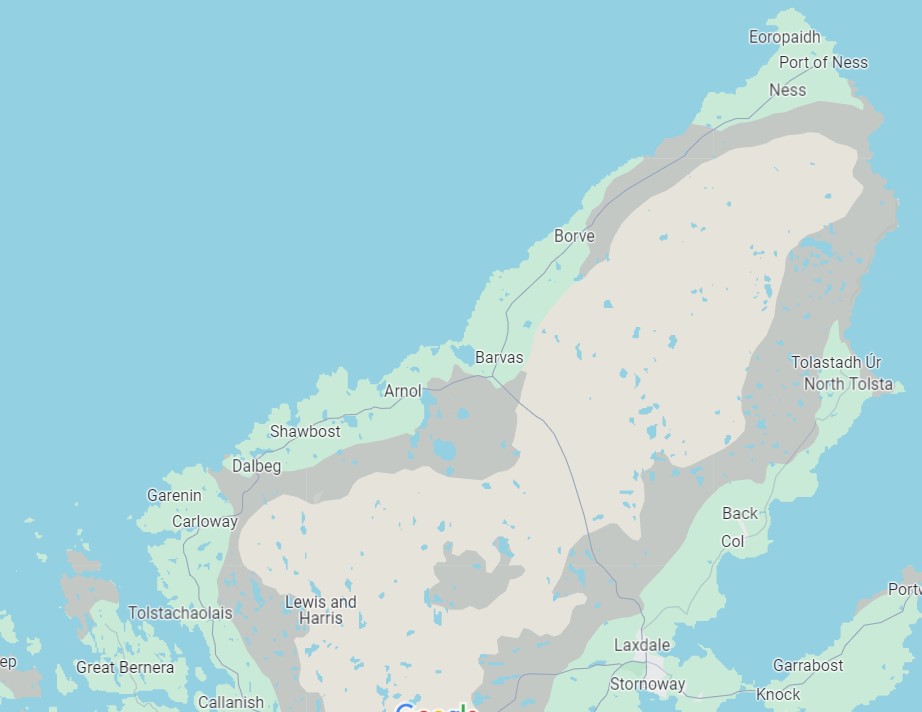
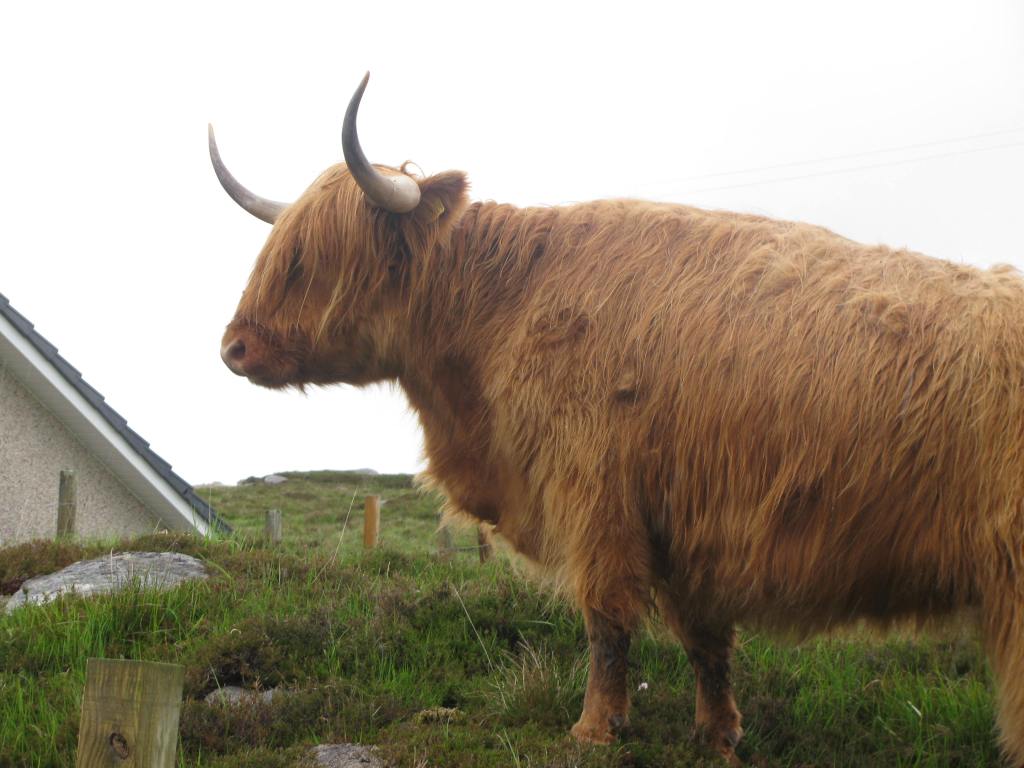
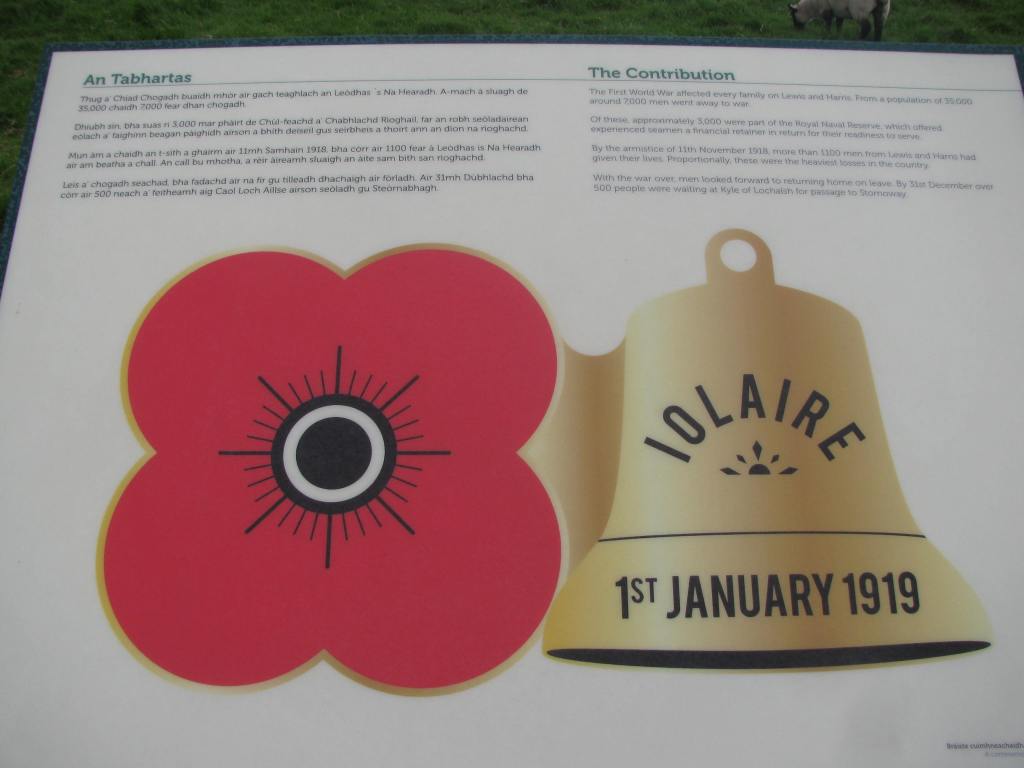
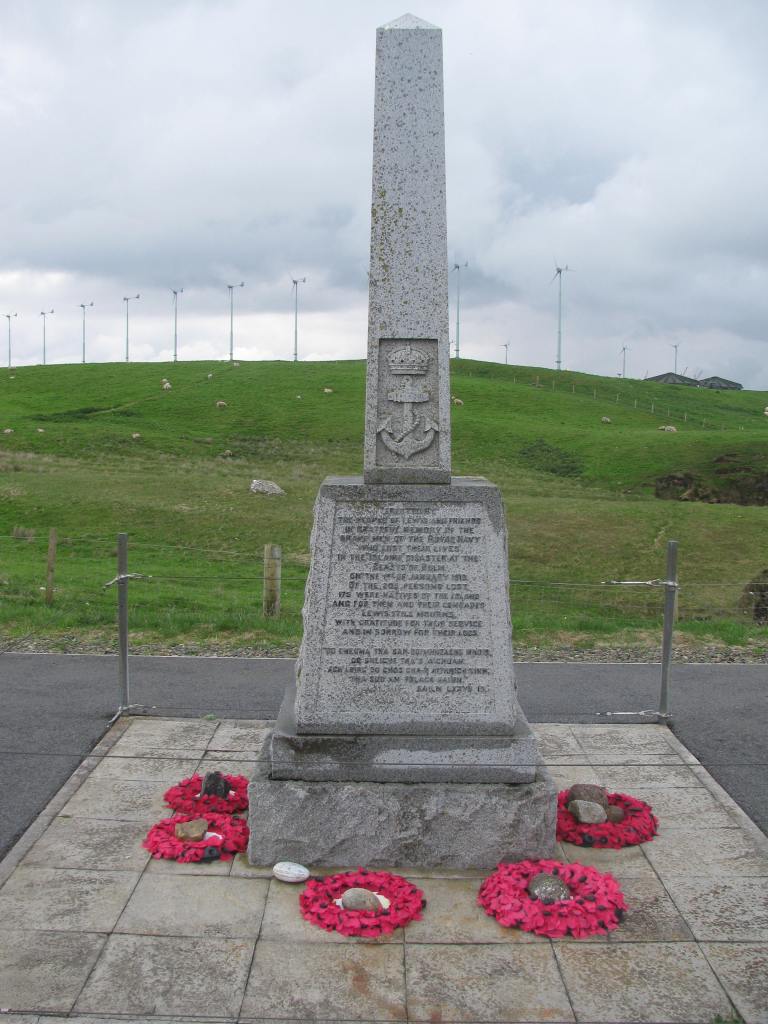
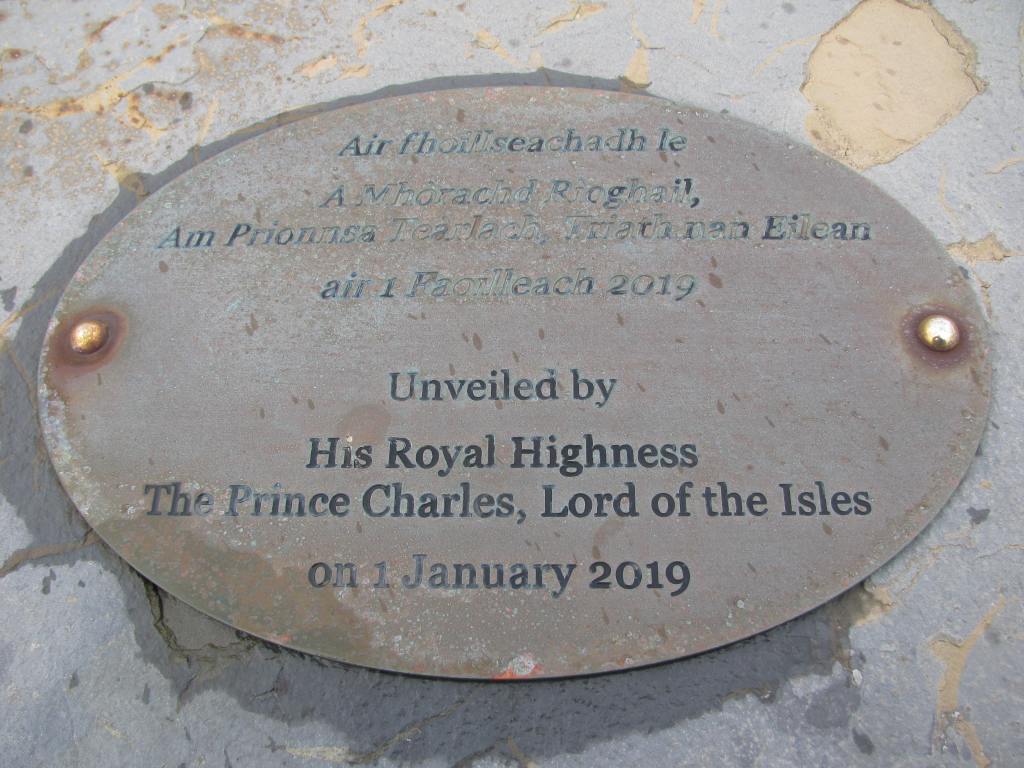
After greeting the next-door-neighbour’s Highland cattle, today we headed to the far north of Lewis, initially starting in Stornaway. On the outskirts of the town is a memorial to the ‘Iolaire’, a British military ship that was wrecked at the entrance of Stornaway Harbour on 1 January 1919, i.e. just after WWI ended. It was carrying 280 naval reserve men who were going home on leave. Only 79 survived the sinking.
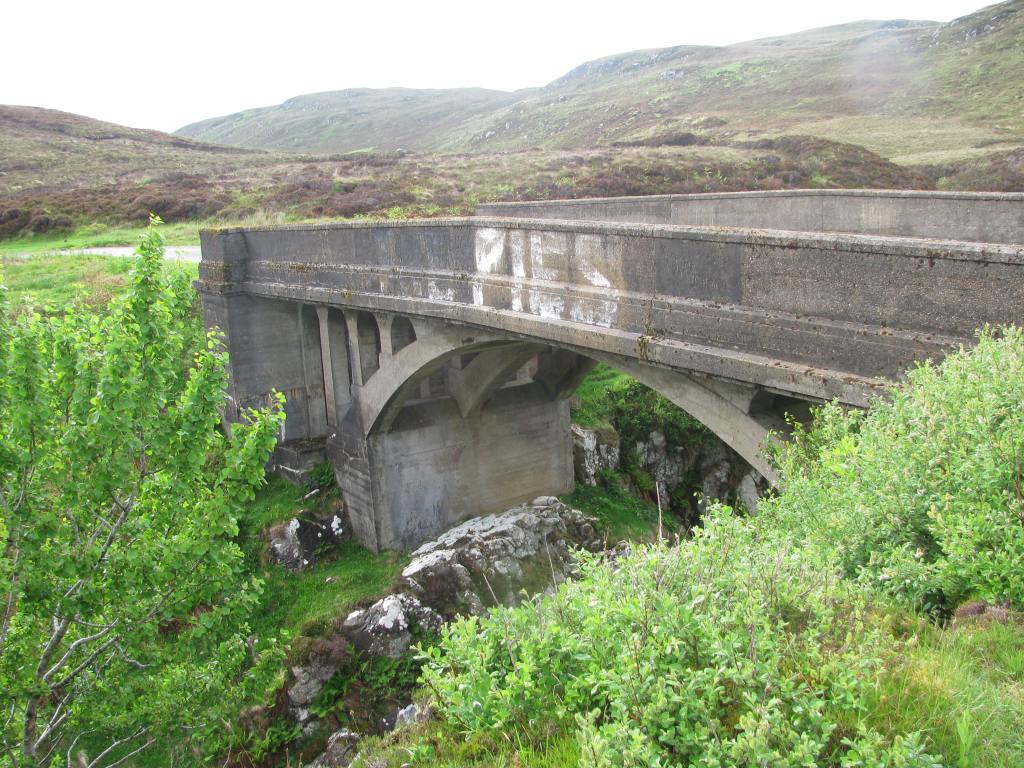
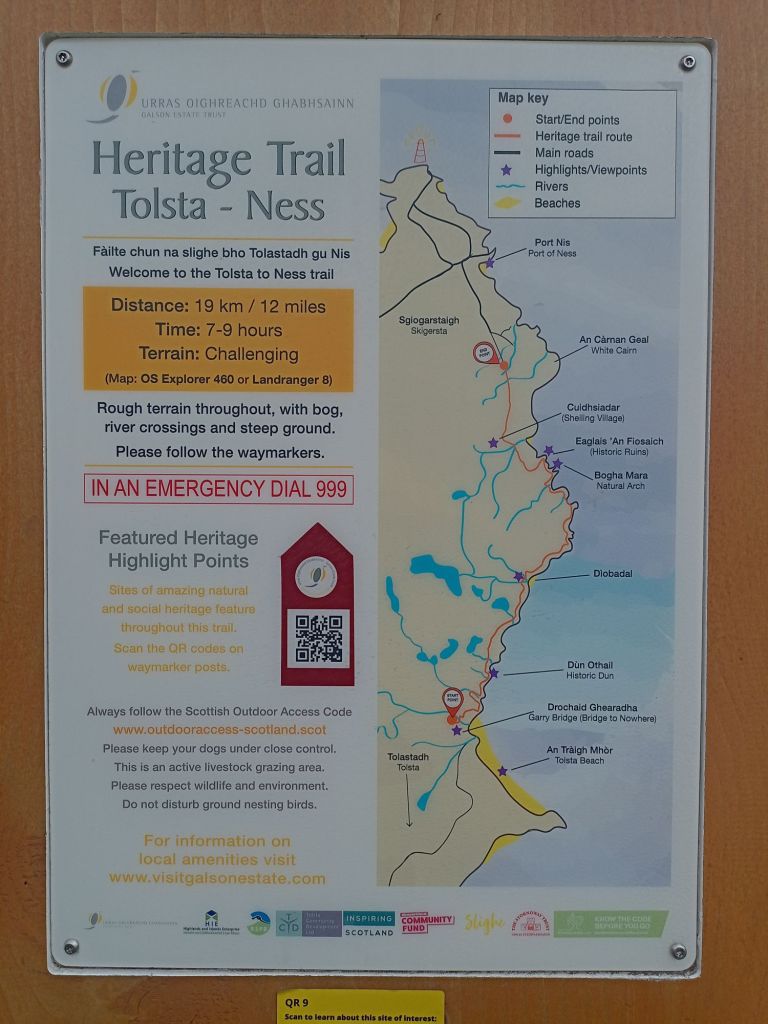
We continued up the east coast to Tolsta, stopping at Garry Bridge a.k.a. ‘the Bridge to Nowhere’. The road ends after the bridge, although a walking trail continues on to Ness. Lord Leverhulme, the owner of the island of Lewis after WWI, intended to build a road between Tolsta and Ness to support various economic developments he proposed. However, the plan was abandoned because returned servicemen wanted independent land and business ownership, rather than becoming wage earners as Lord Leverhulme wanted.
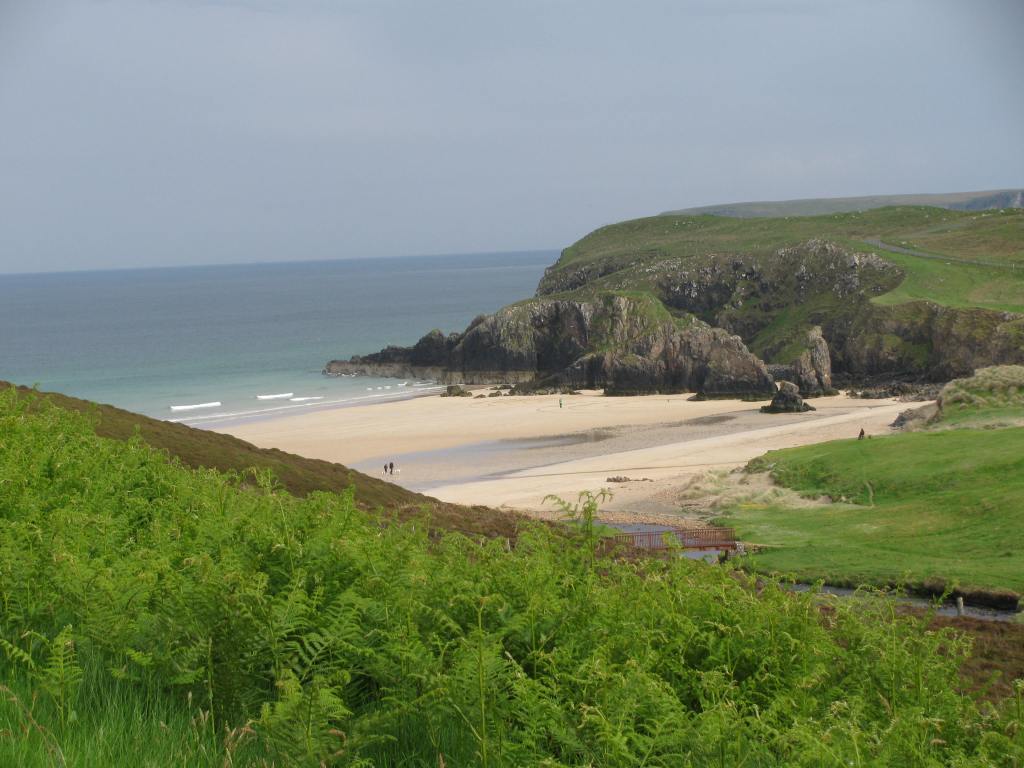
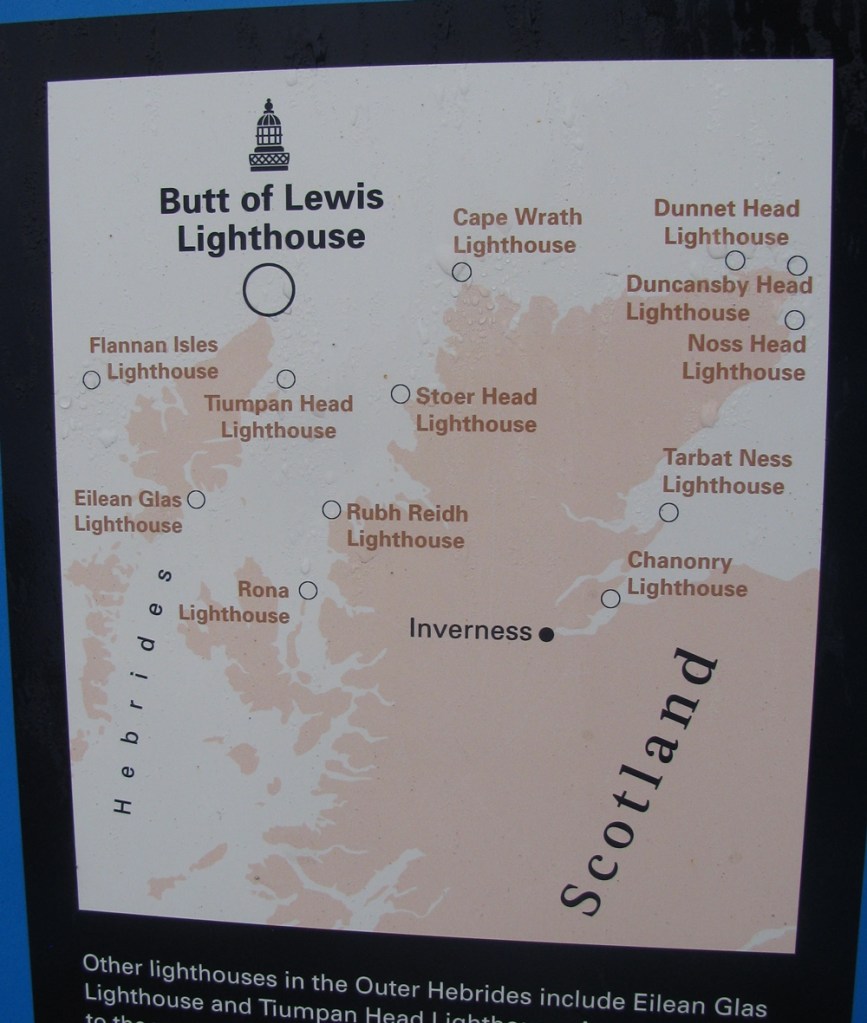
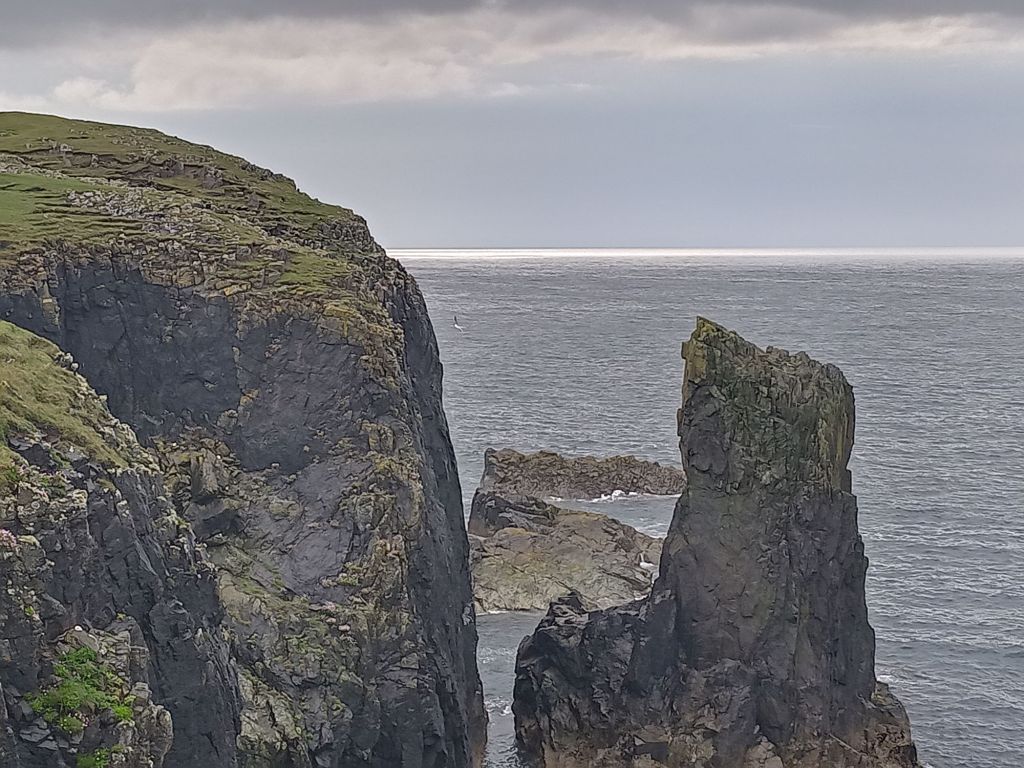
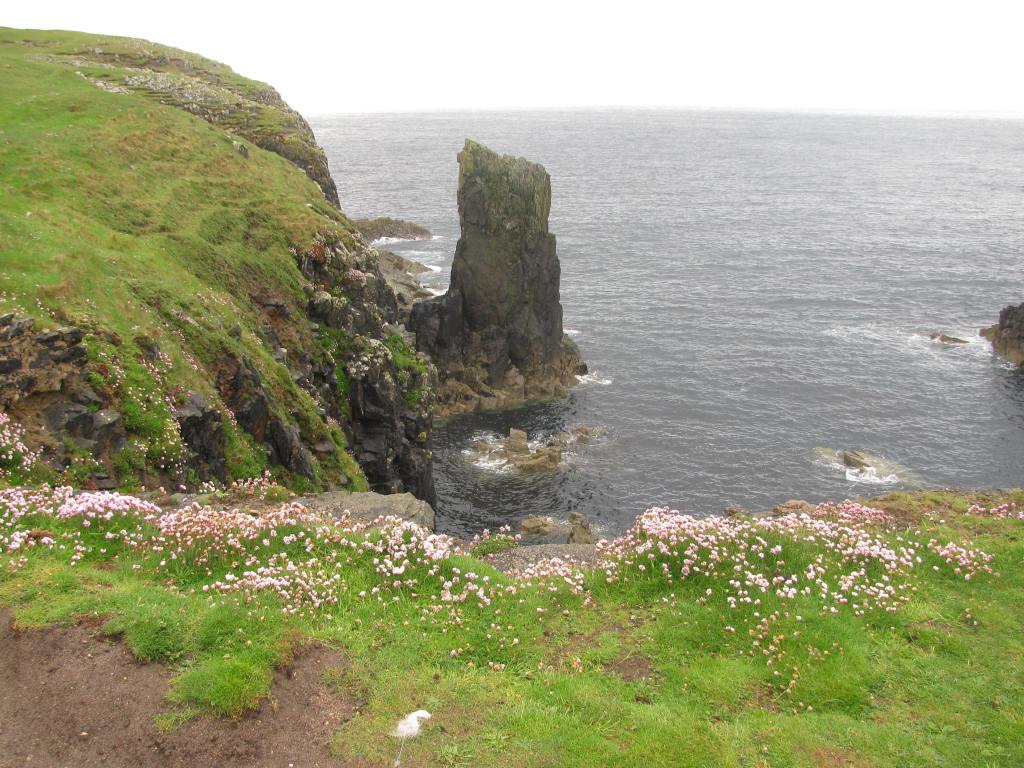
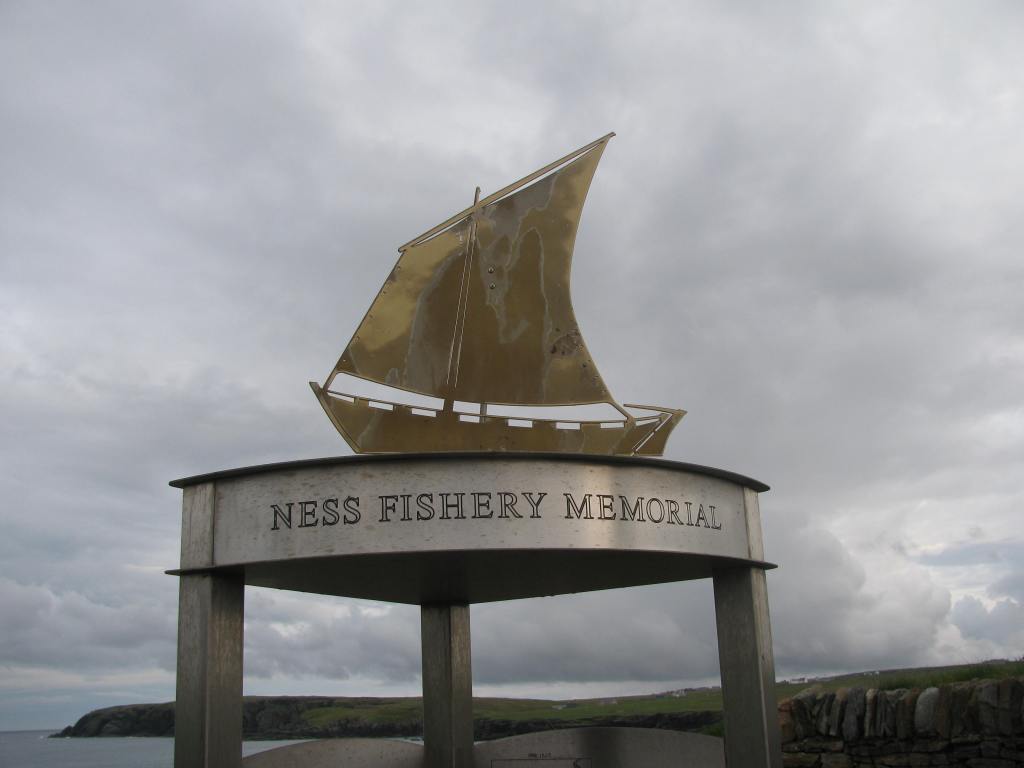
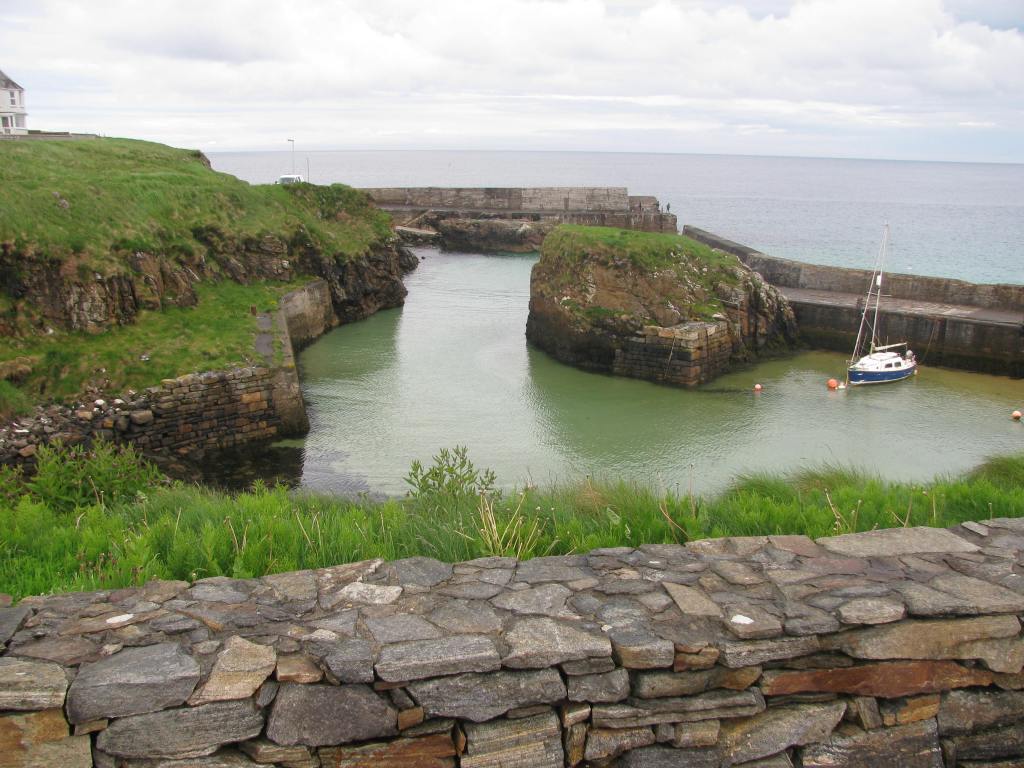
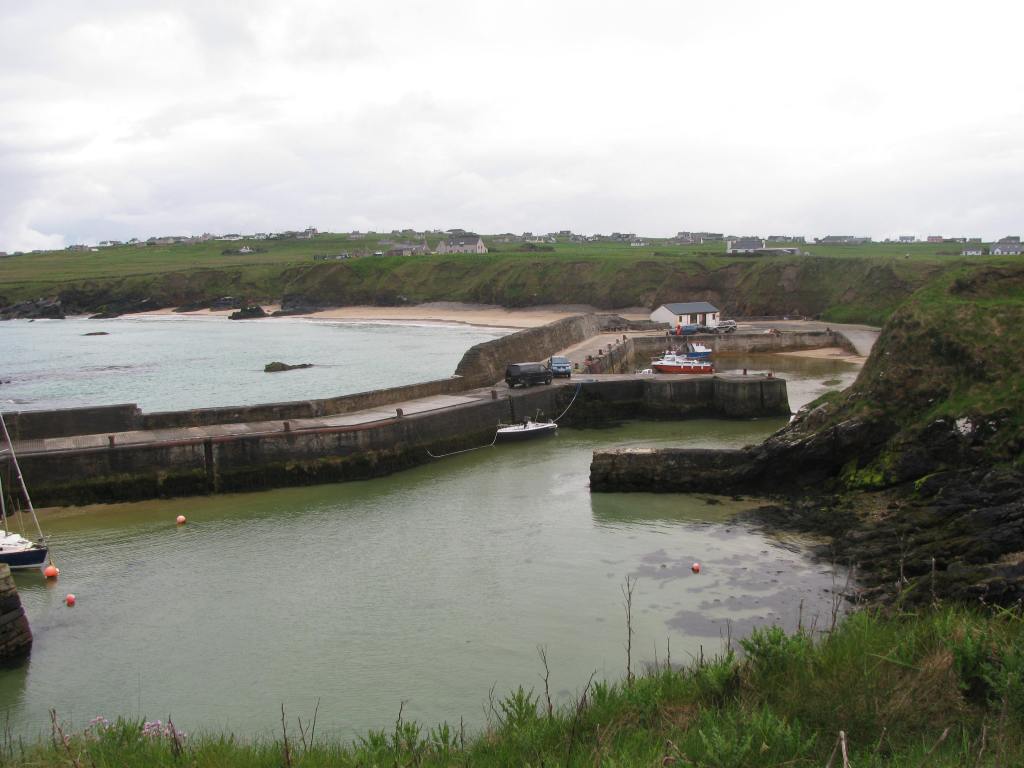
After seeing the bridge, we backtracked south and then drove along the west side of the island to its most northerly point – ‘the Butt of Lewis’ – which has a lighthouse on a wild and rocky part of the coast. We then spent time in the Port of Ness, which has an interesting old walled boat harbour.
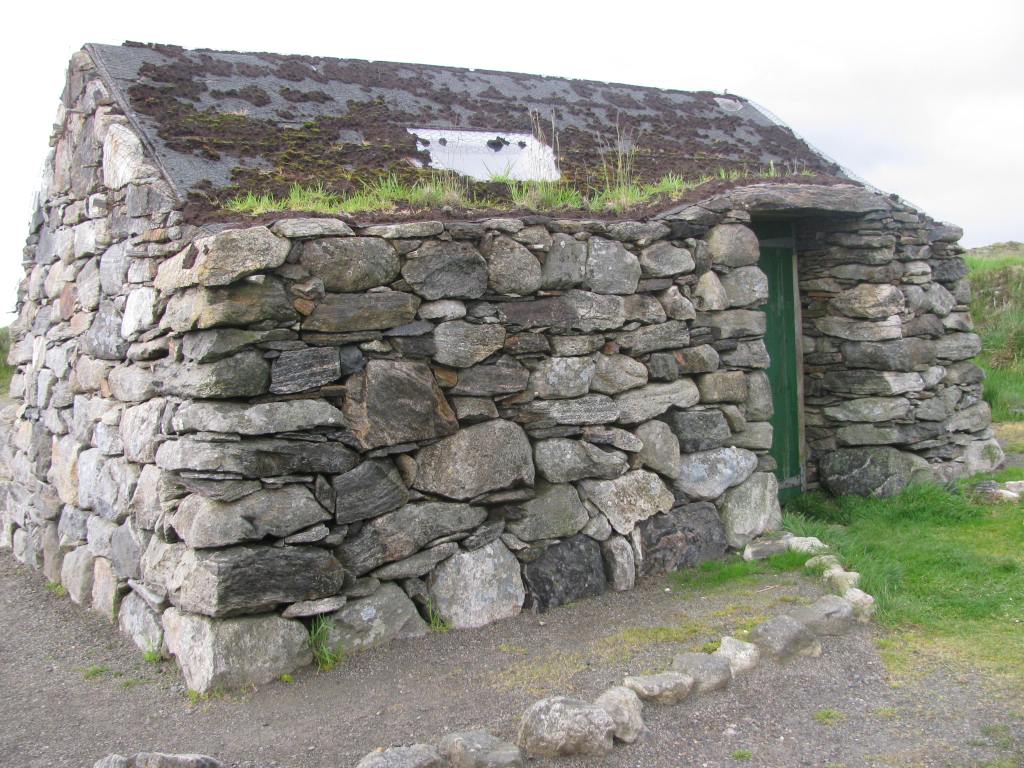
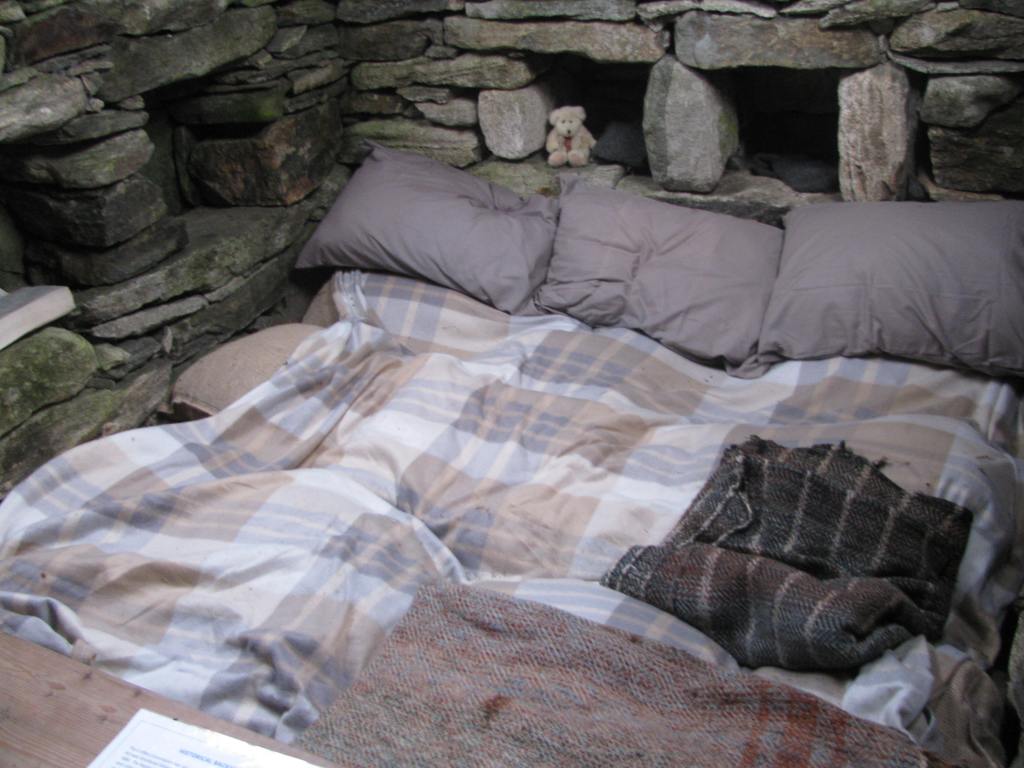
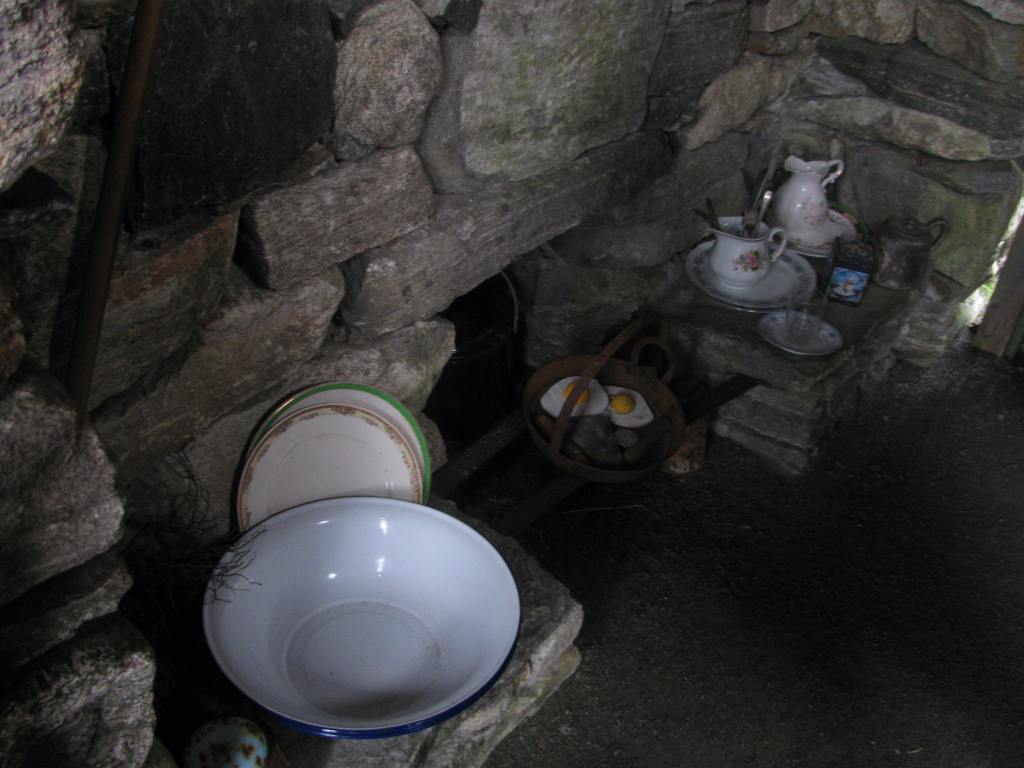
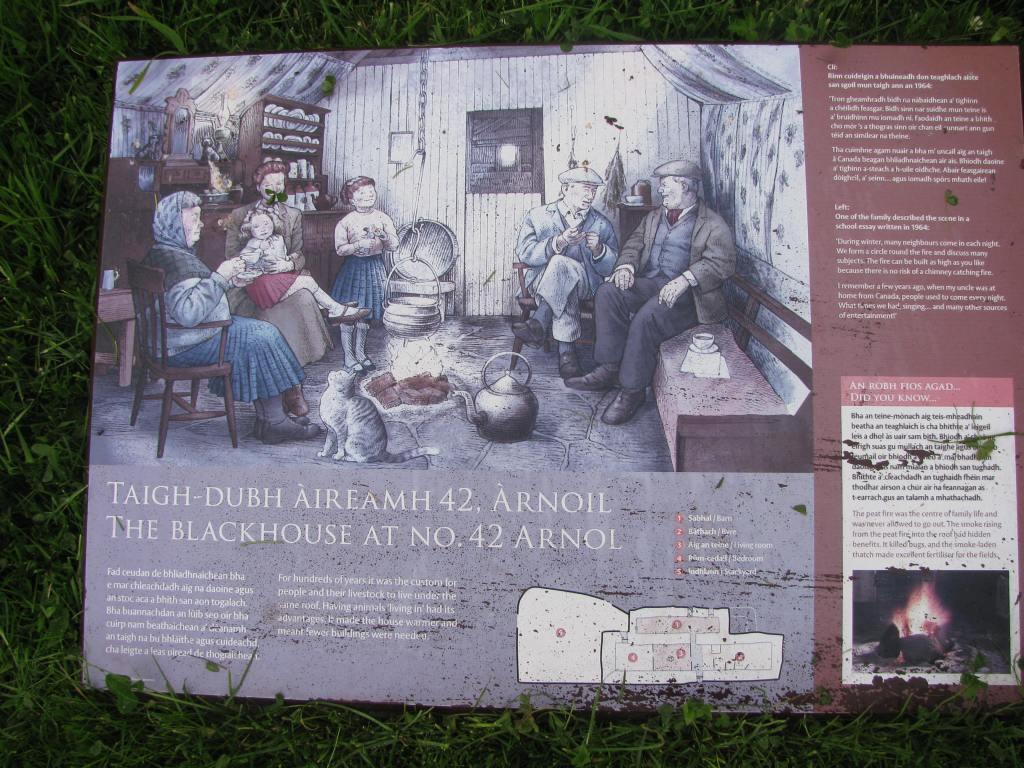
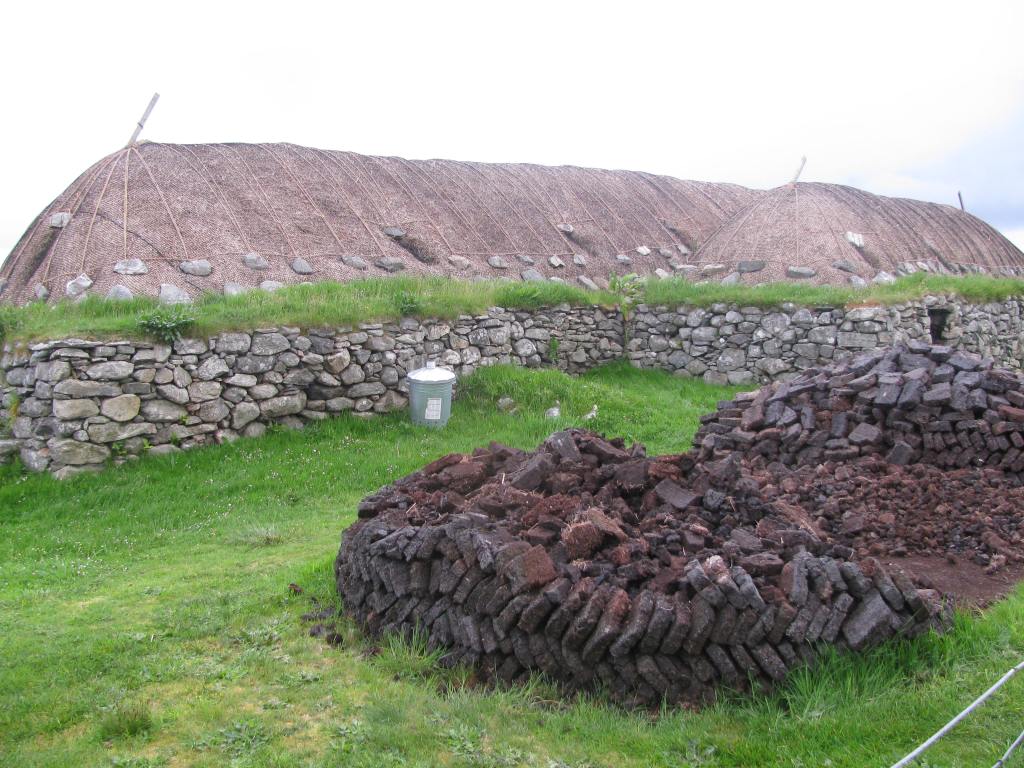
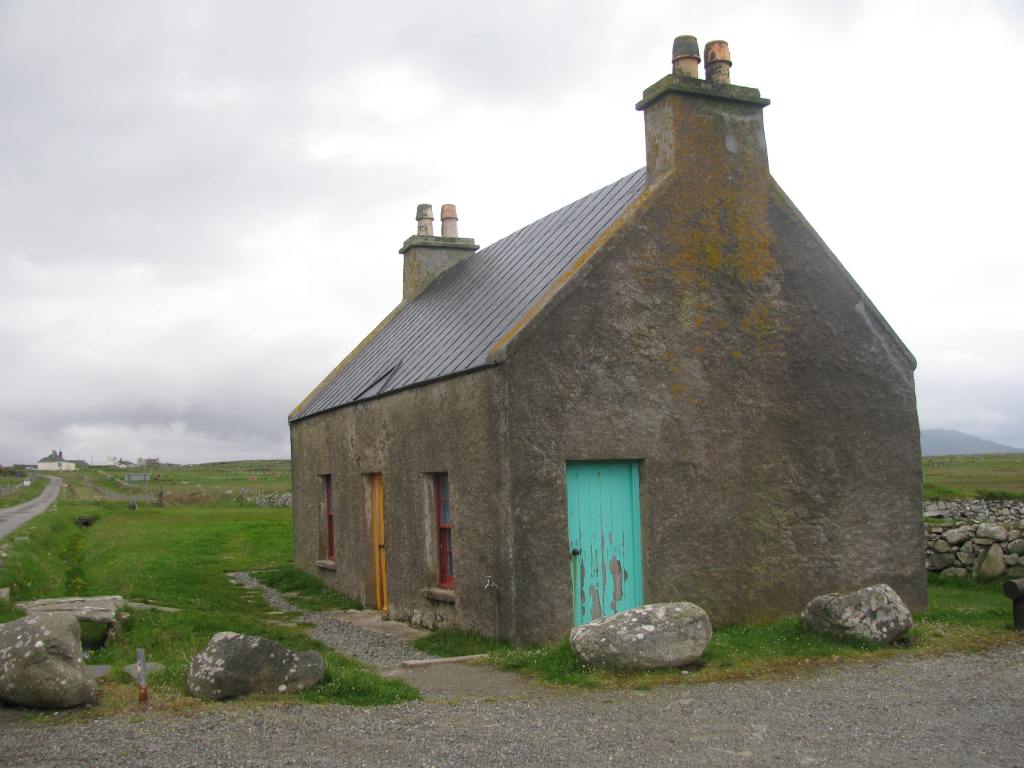
Finally we viewed a ‘shieling’, a ‘black house’ and a ‘white house’ – all variations of human-built shelters / homes built to keep out the harsh Hebridean weather…
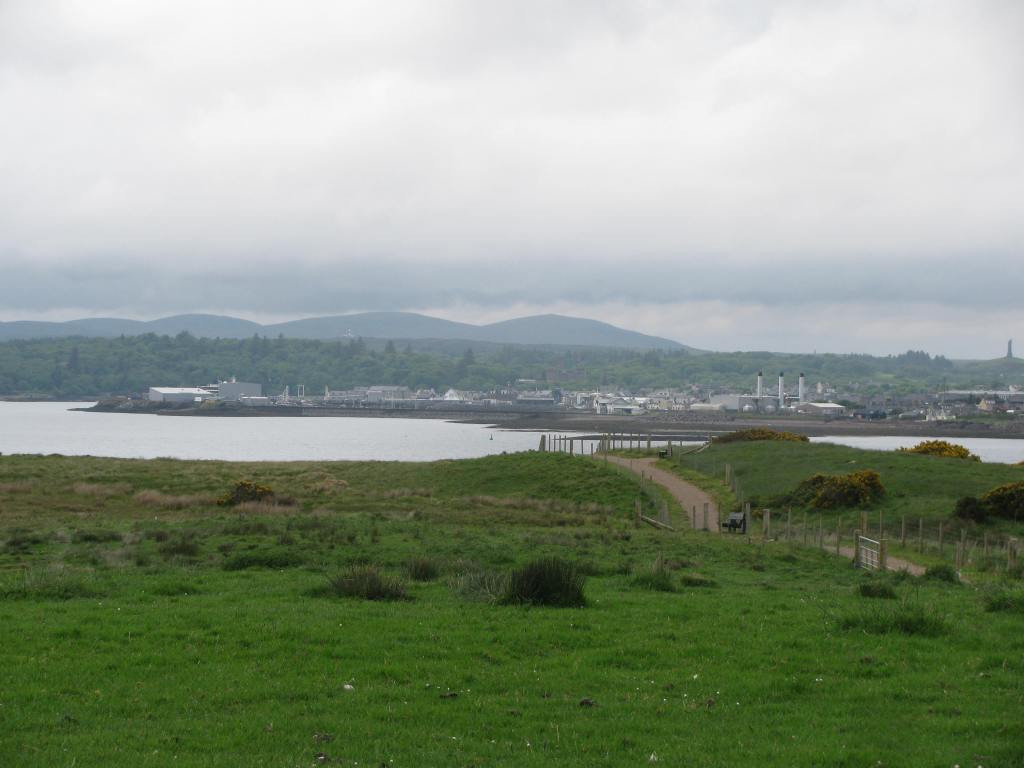
Stornaway and harbour from memorial carpark
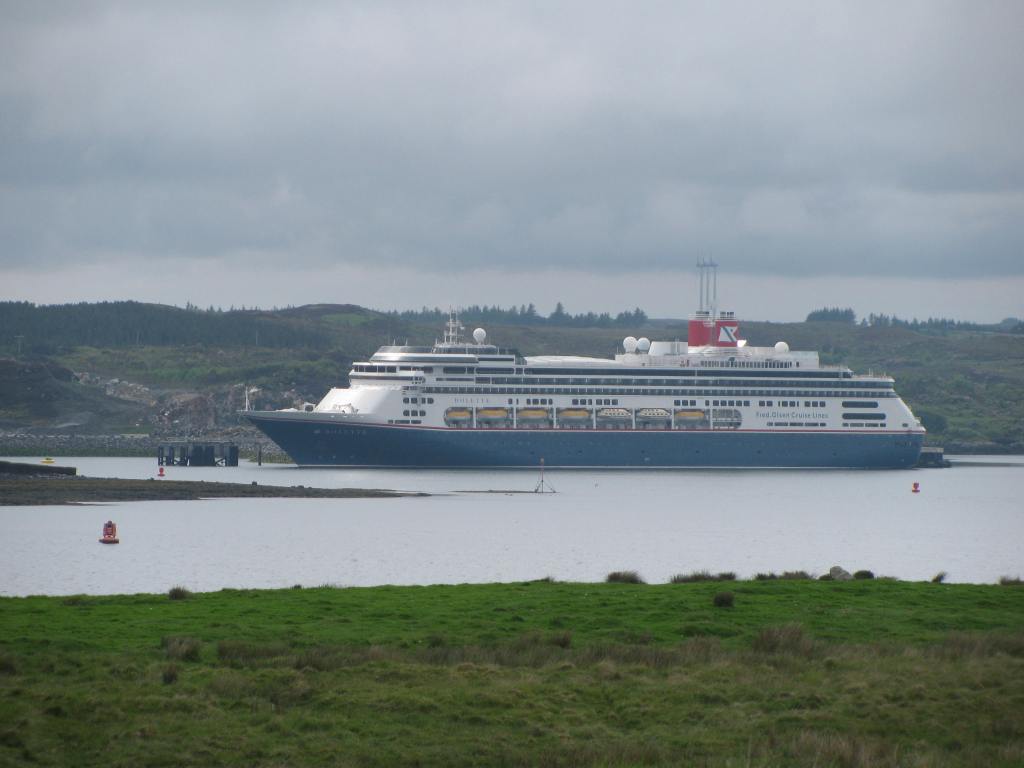
Cruise ship berthed near Stornaway
Garry Bridge…
A ‘shieling’ – a shelter used by crofters, built where their cattle were grazing more remotely in the summer months
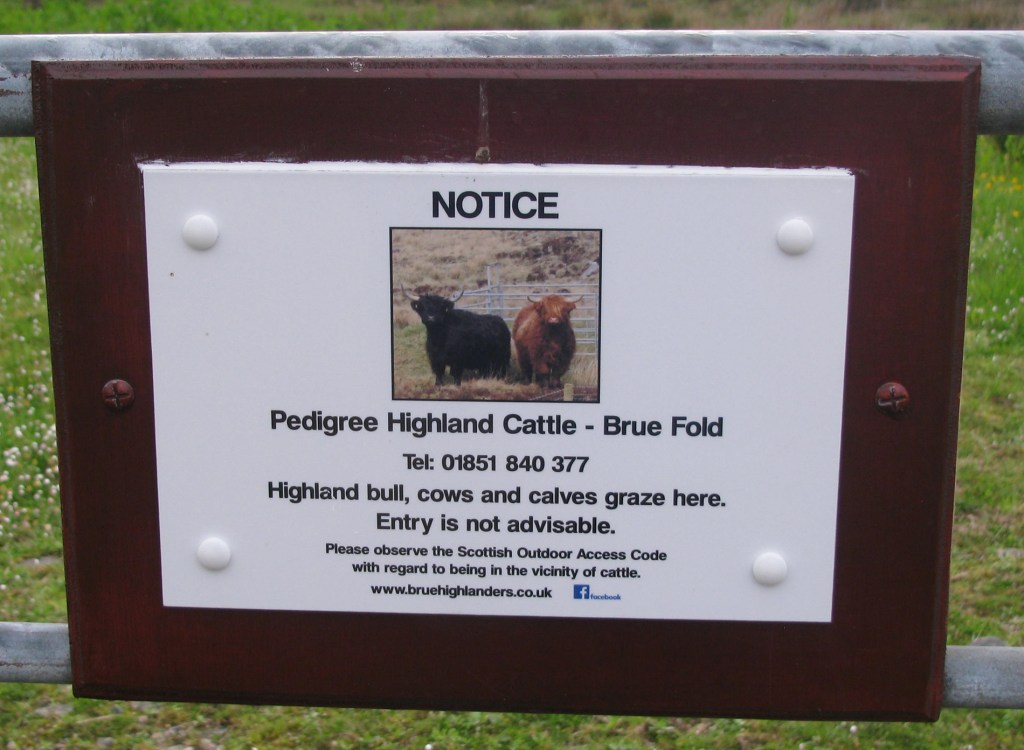
Notice near the shieling
Blackhouses were probably so-called partly because of their central hearths (with no chimneys) which burned peat, staining the inside walls with black smoke (peat blocks shown on photo, front right). Families and their cattle were housed at opposite ends of the house in winter. These types of thatched long houses were still in use 100-150 years ago.
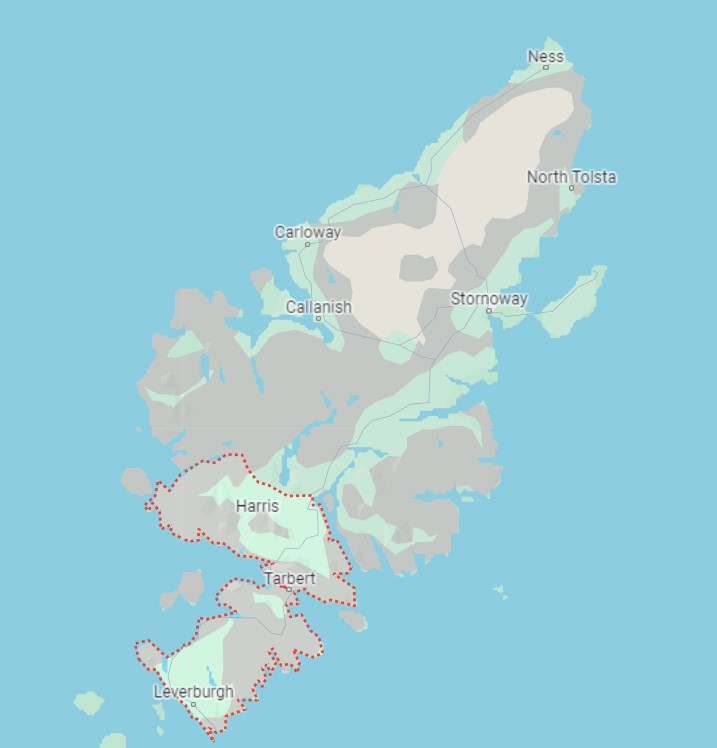
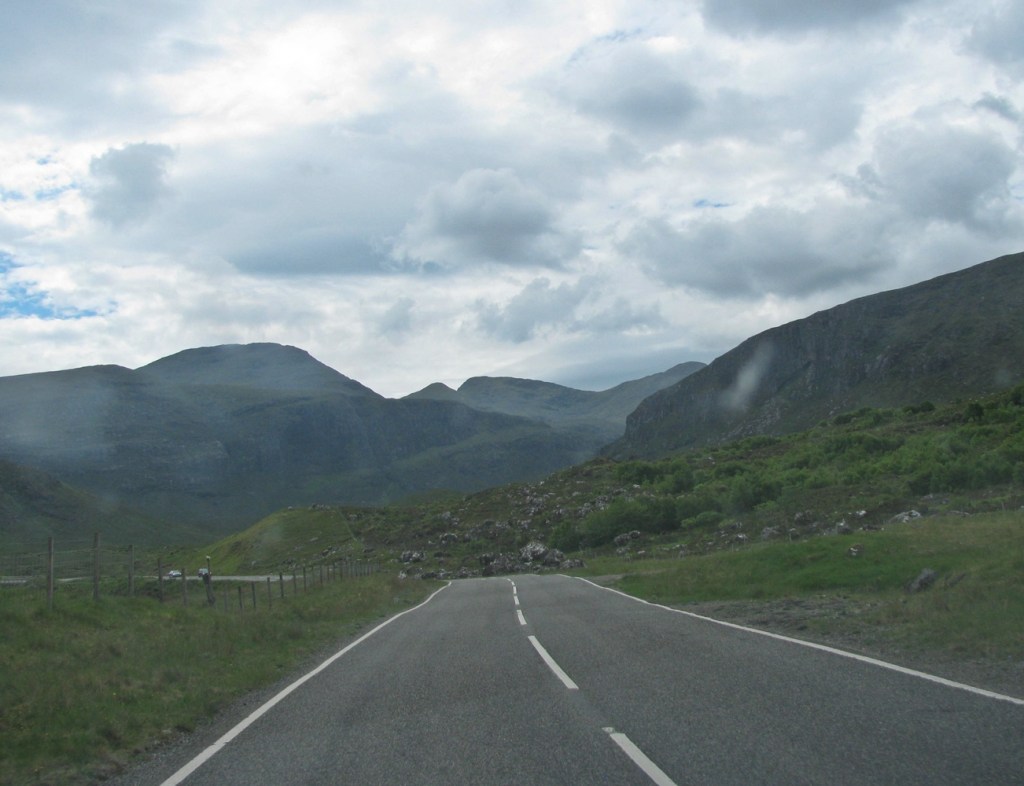
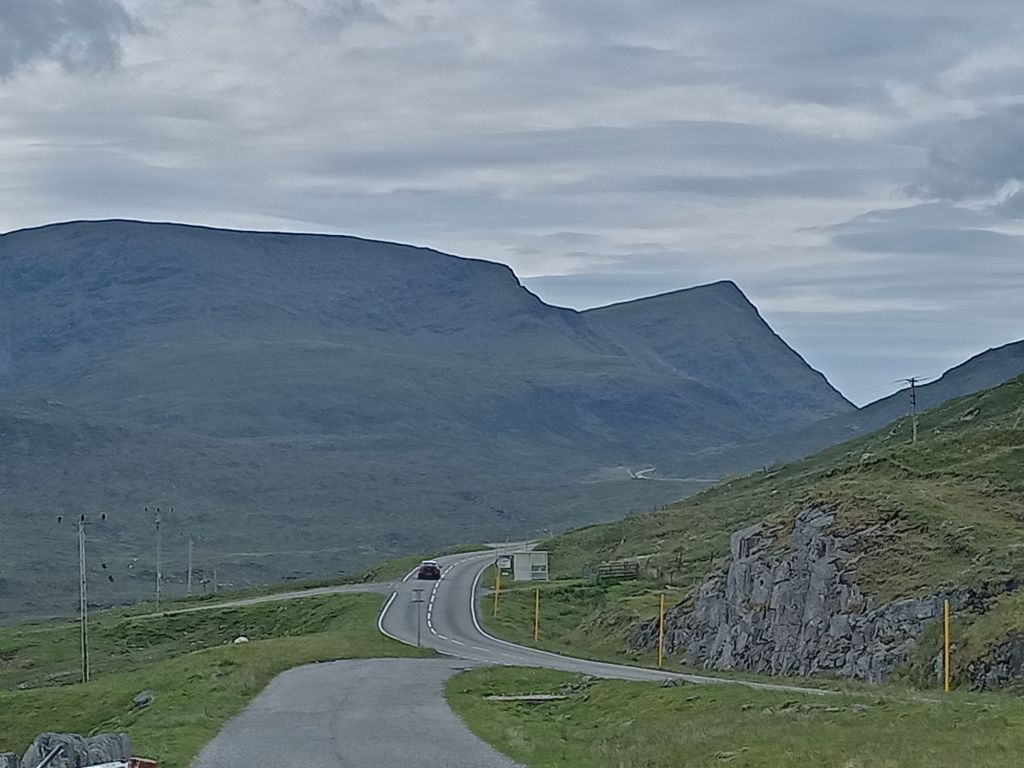
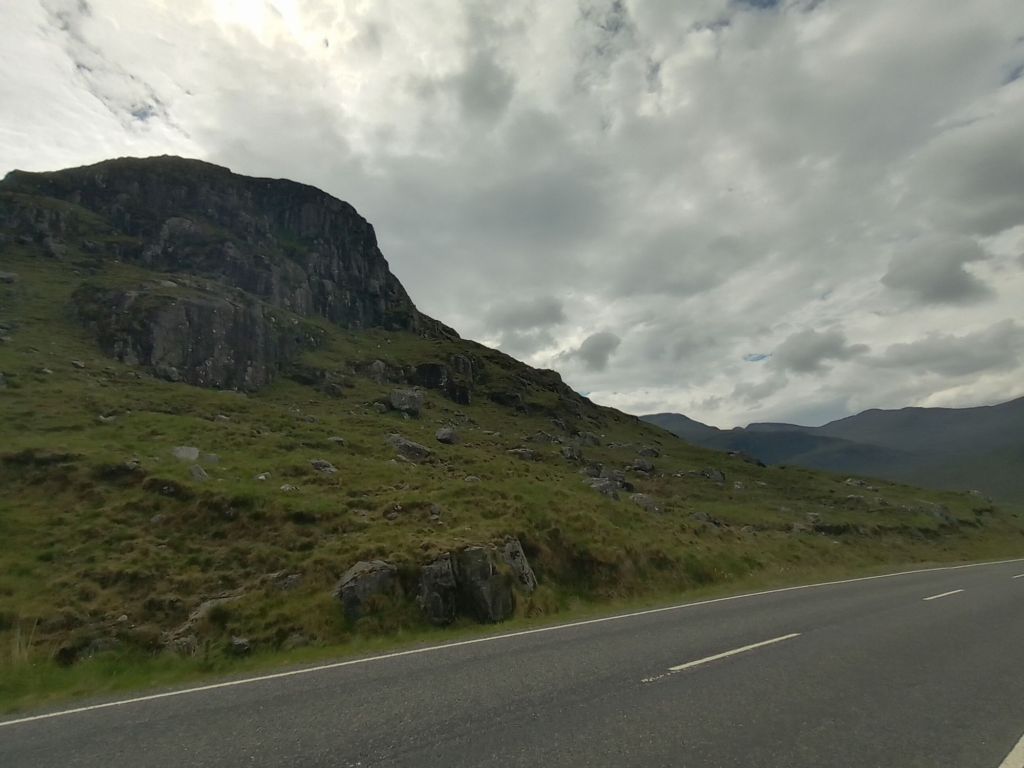
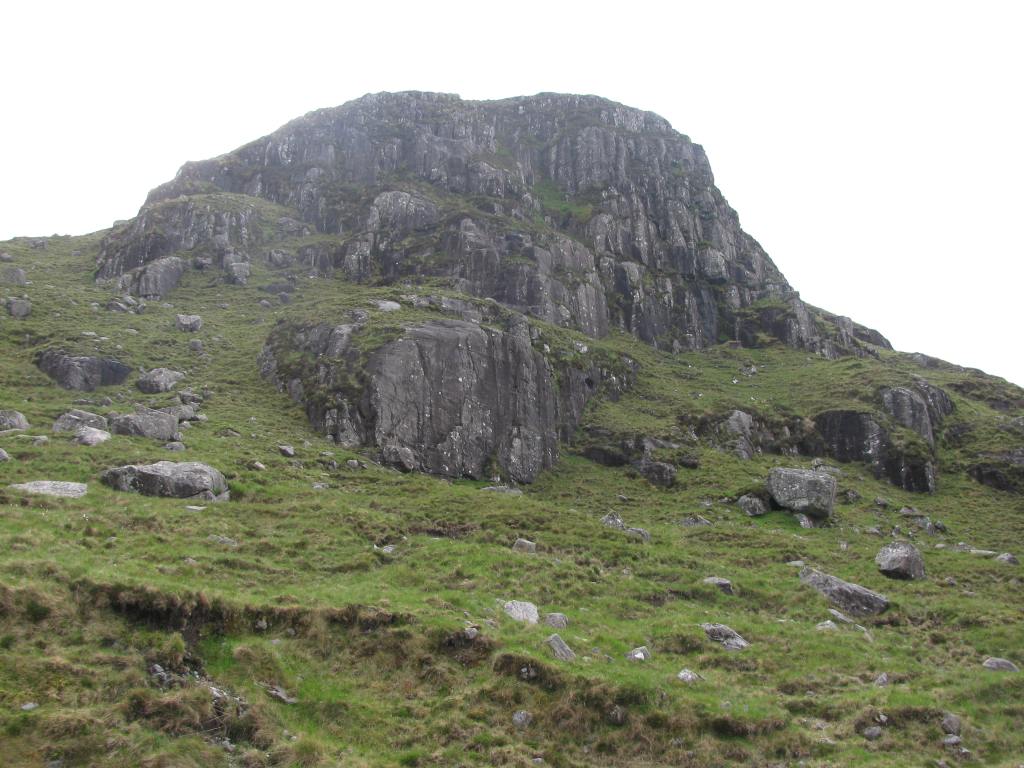
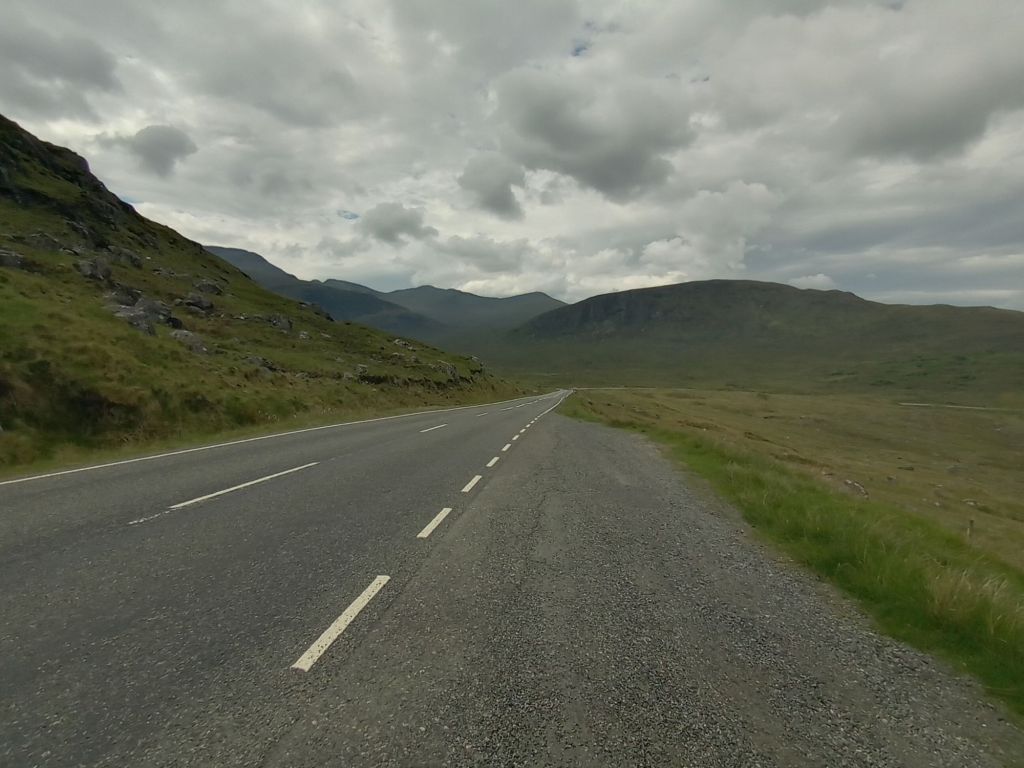
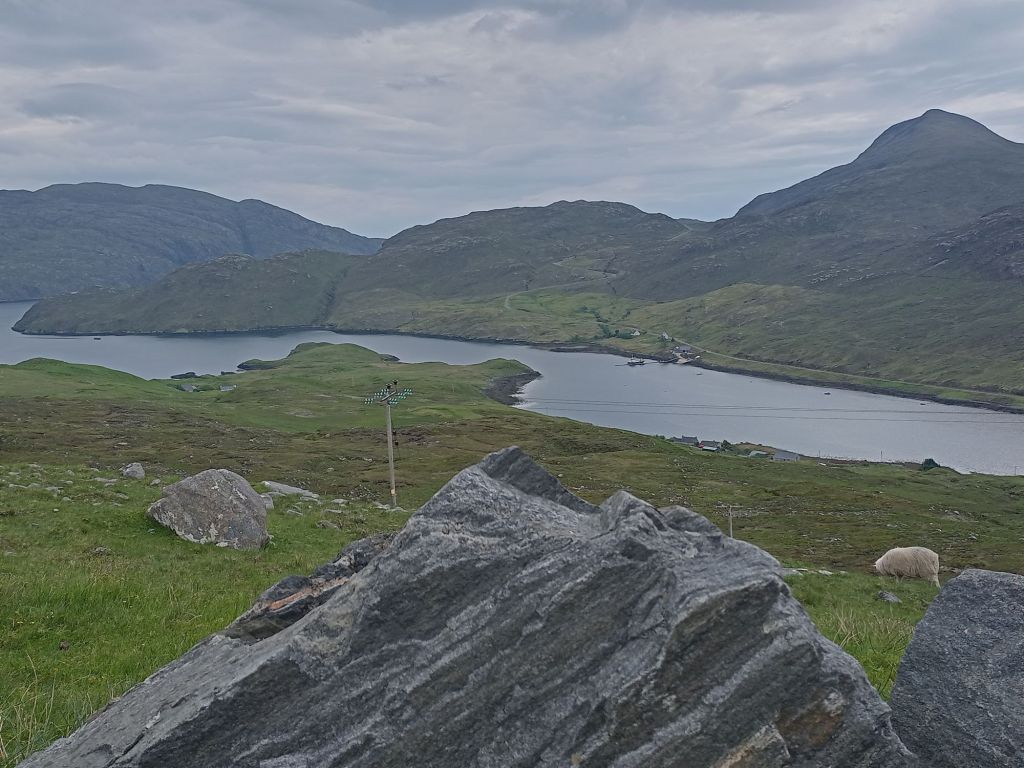
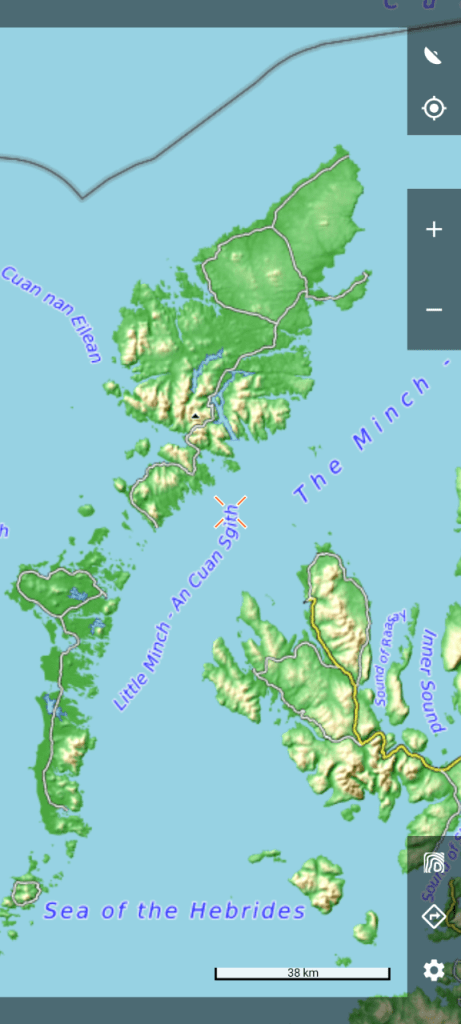
This was the main day we went to the Isle of Harris, which is the southern part of the Lewis / Harris island. Harris has a somewhat different landscape from Lewis – it’s generally more mountainous (the highest mountain, Clisham, is 799m) and rockier than Lewis; and it has some very remote and beautiful sandy beaches. Like Lewis, it has numerous lochs of all sizes nestled among the scenery.
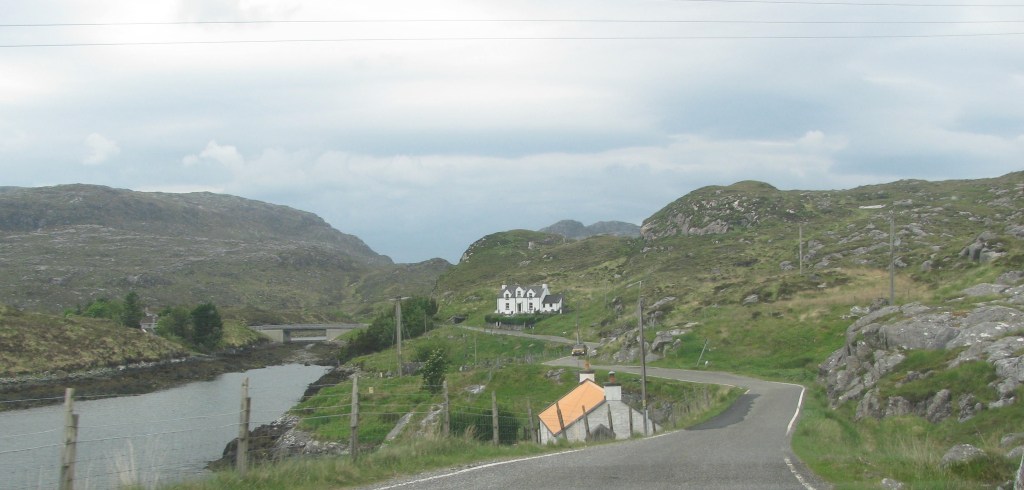
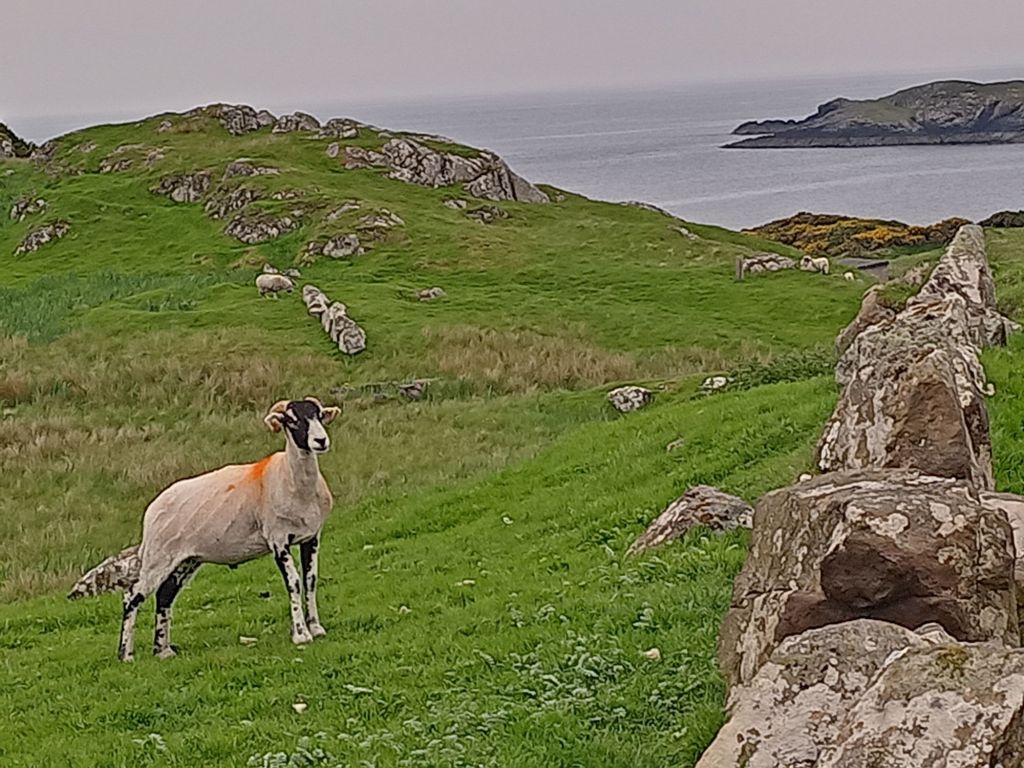
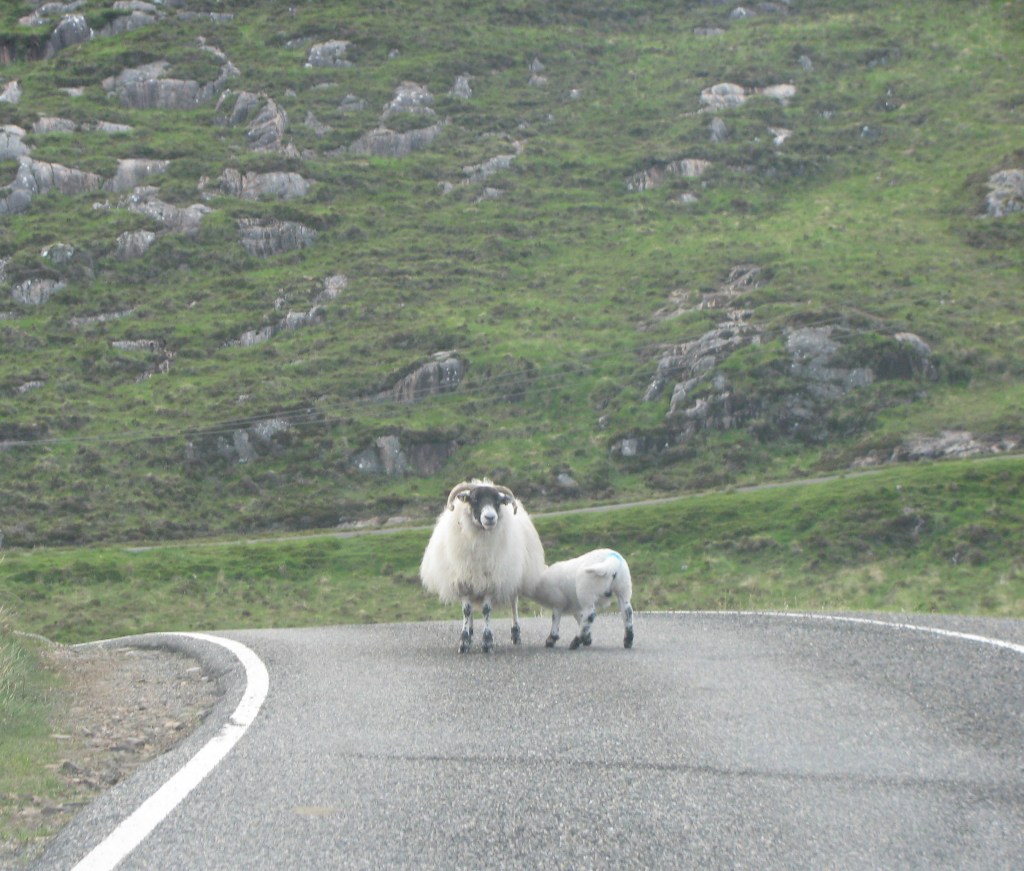
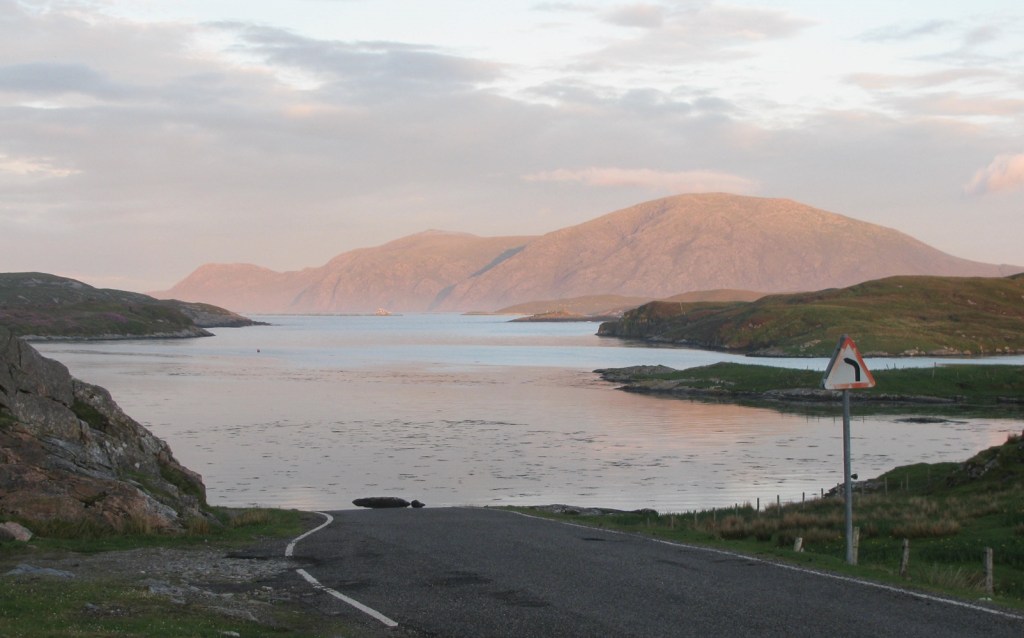
We drove south from our cottage near Callanish via Stornoway to Tarbert (Harris’s main port and biggest ‘town’ – population 550); then drove a clockwise circuit round the southern part of Harris. Like Lewis, many of the roads are single-track tarmac with passing bays, but Harris has even more cattle grids and sheep on the road.
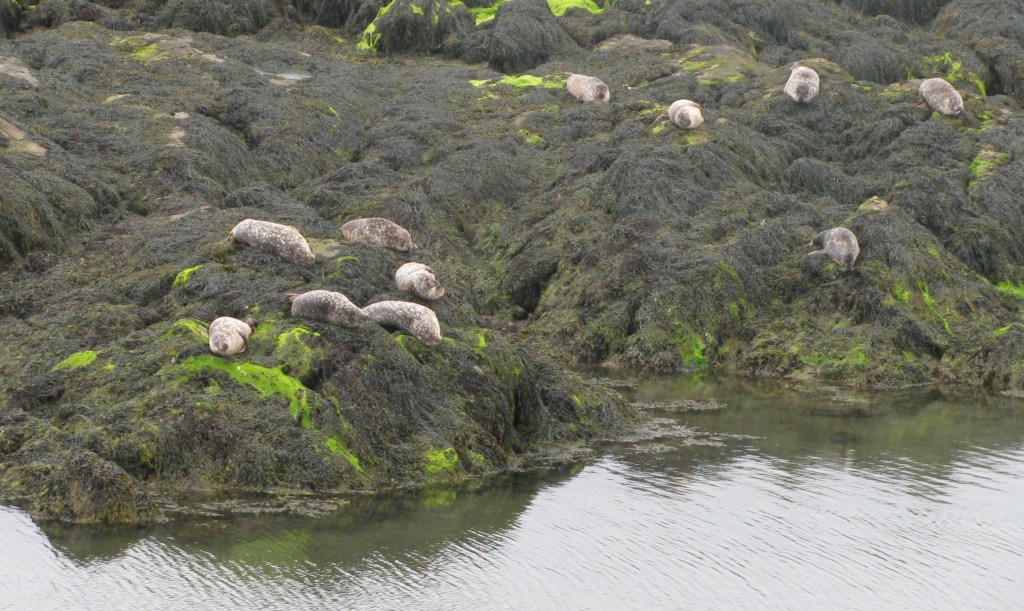
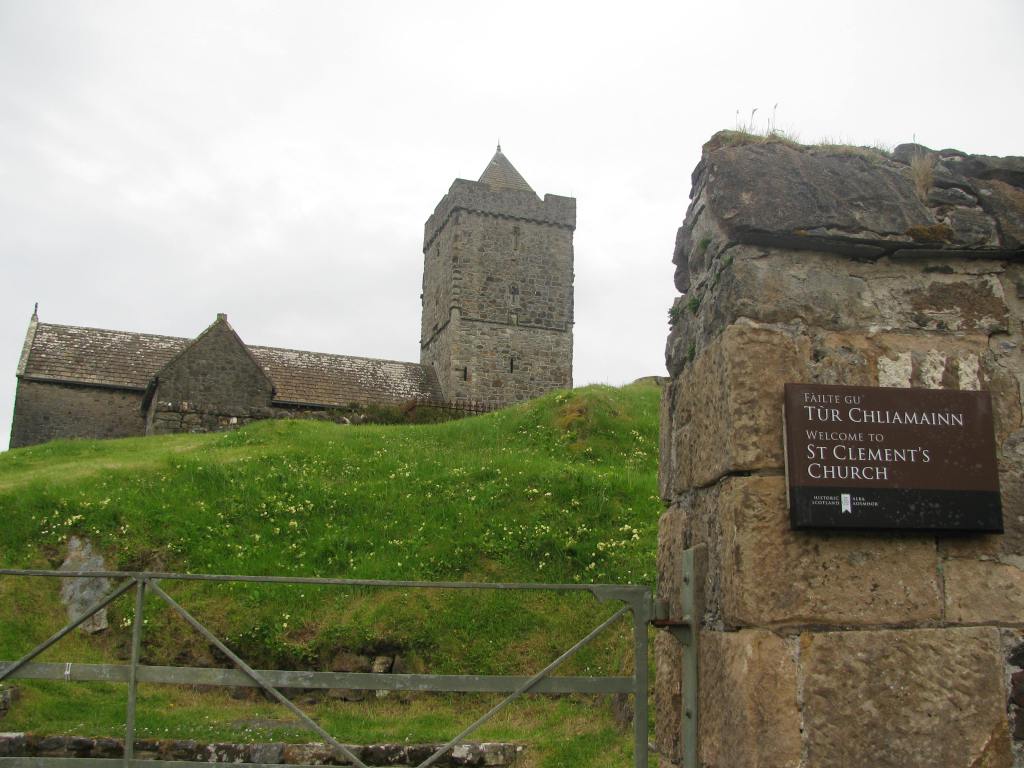
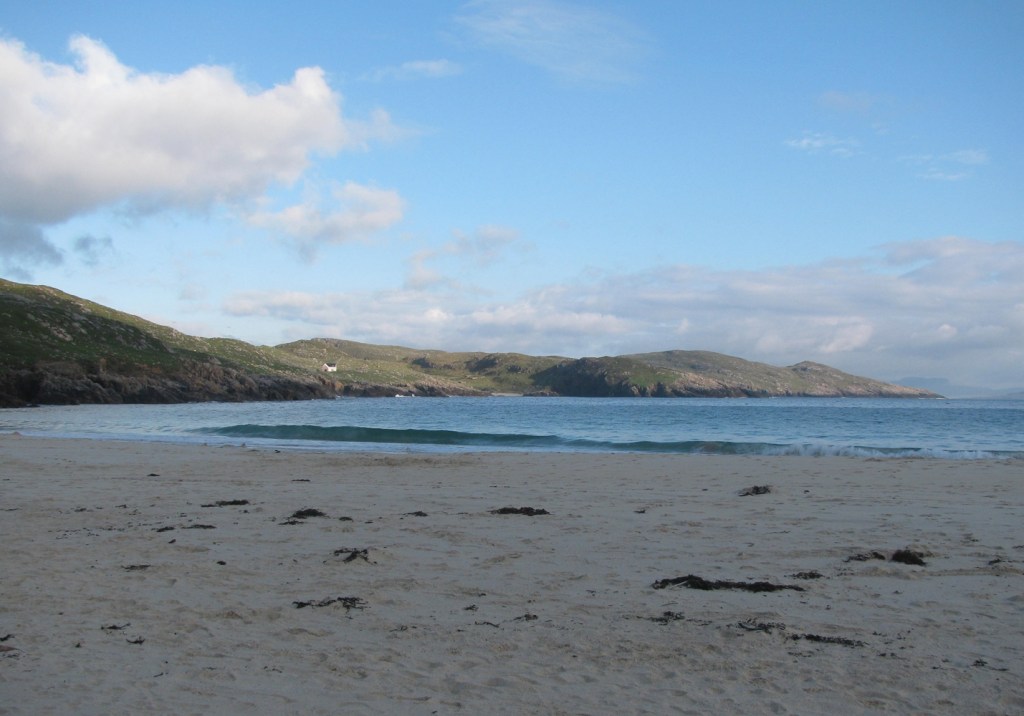
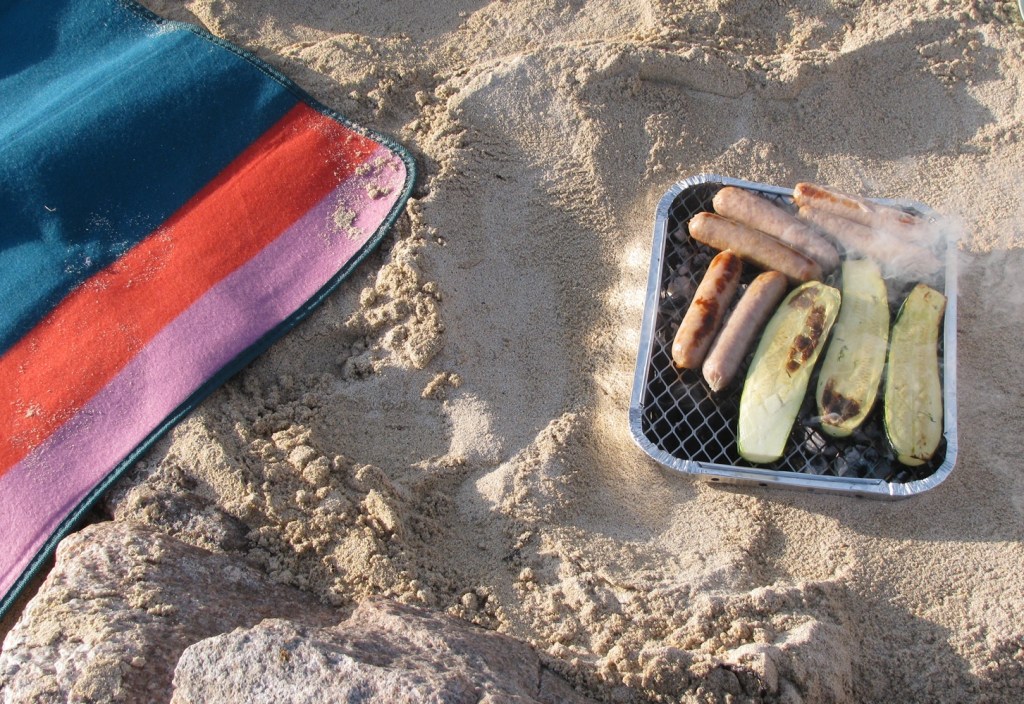
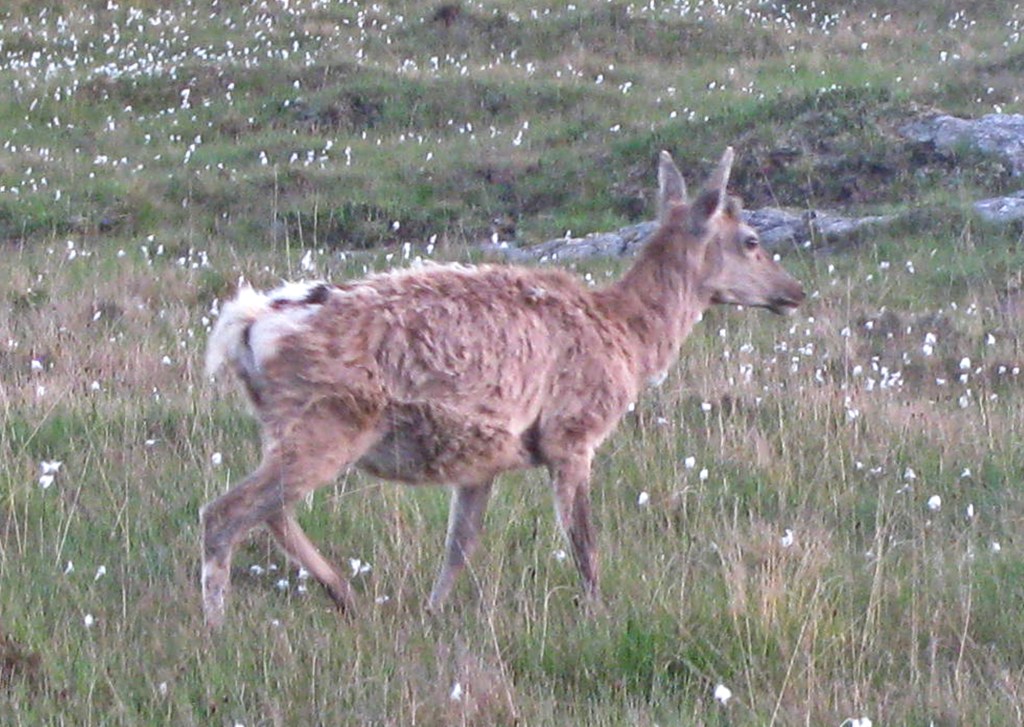
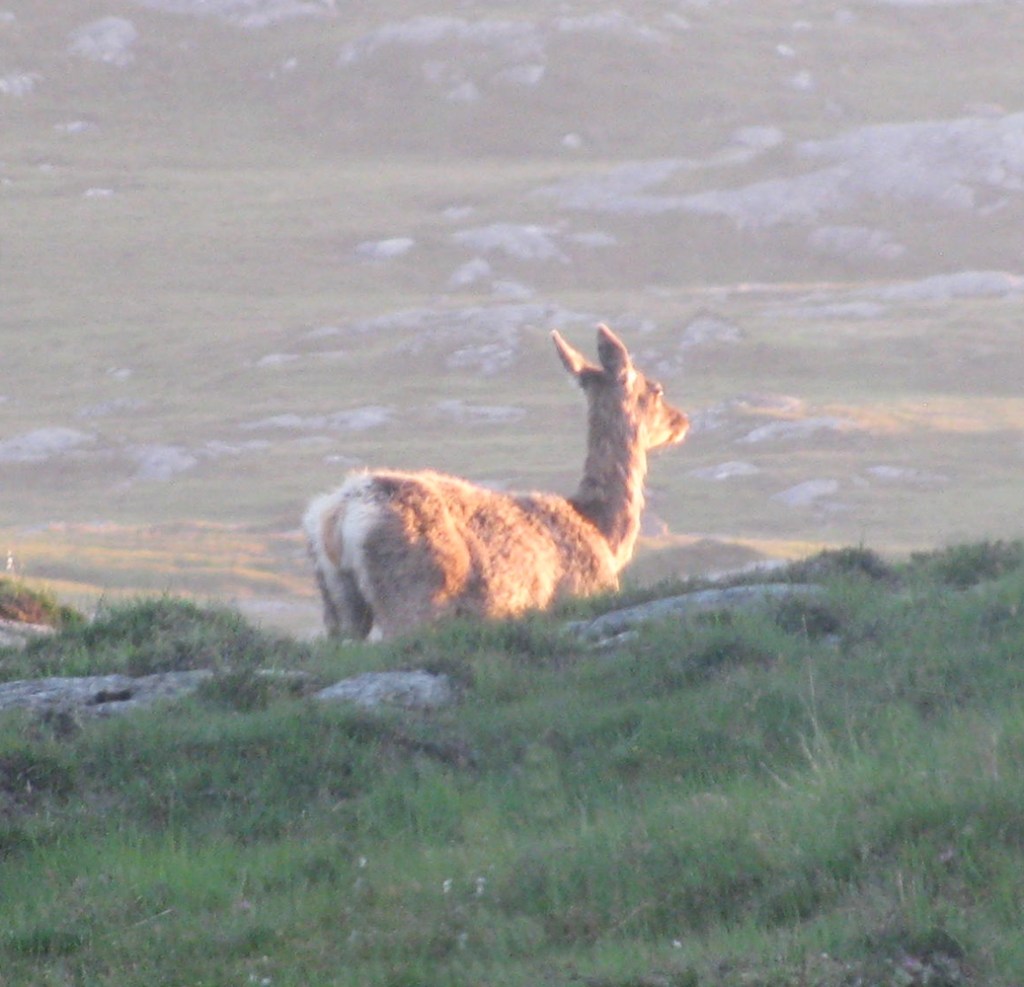
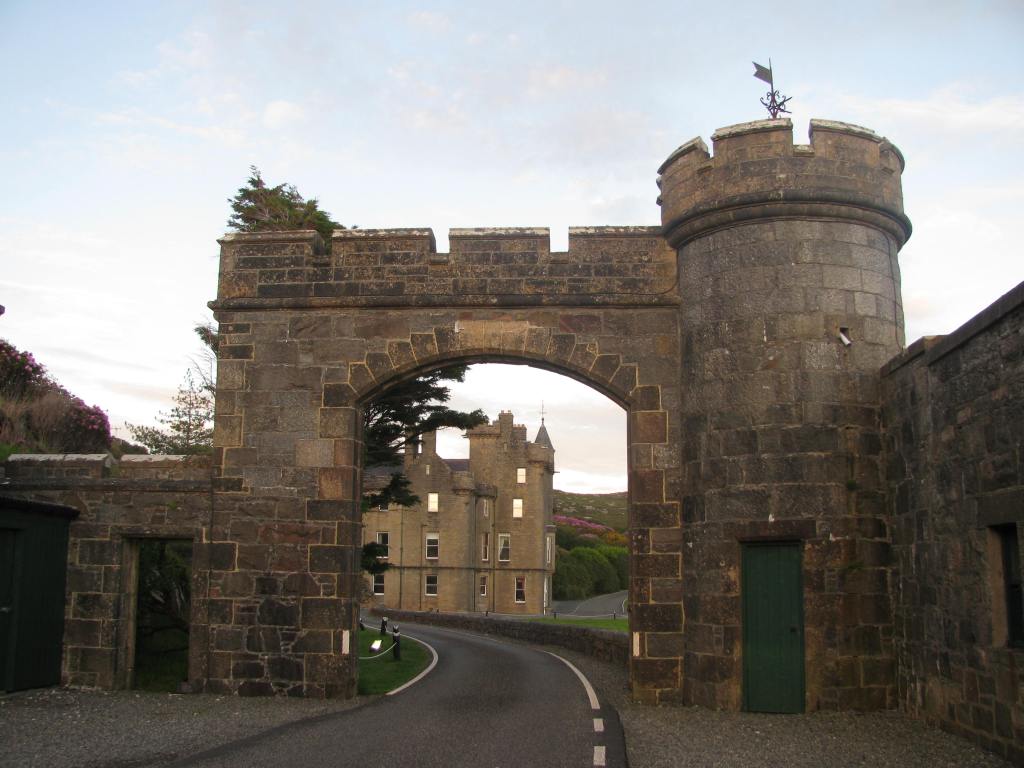
We passed seals, a few wild deer, Amhuinnsuidhe Castle and the mediaeval church of St. Clements at Rodel, and finished with a late barbeque on Hushinish Beach.
By the time we left Harris, is was sunset. – while we were staying on Lewis / Harris, the sun disappeared over the horizon about 10.30 pm. and rose again about 4.15 am.!
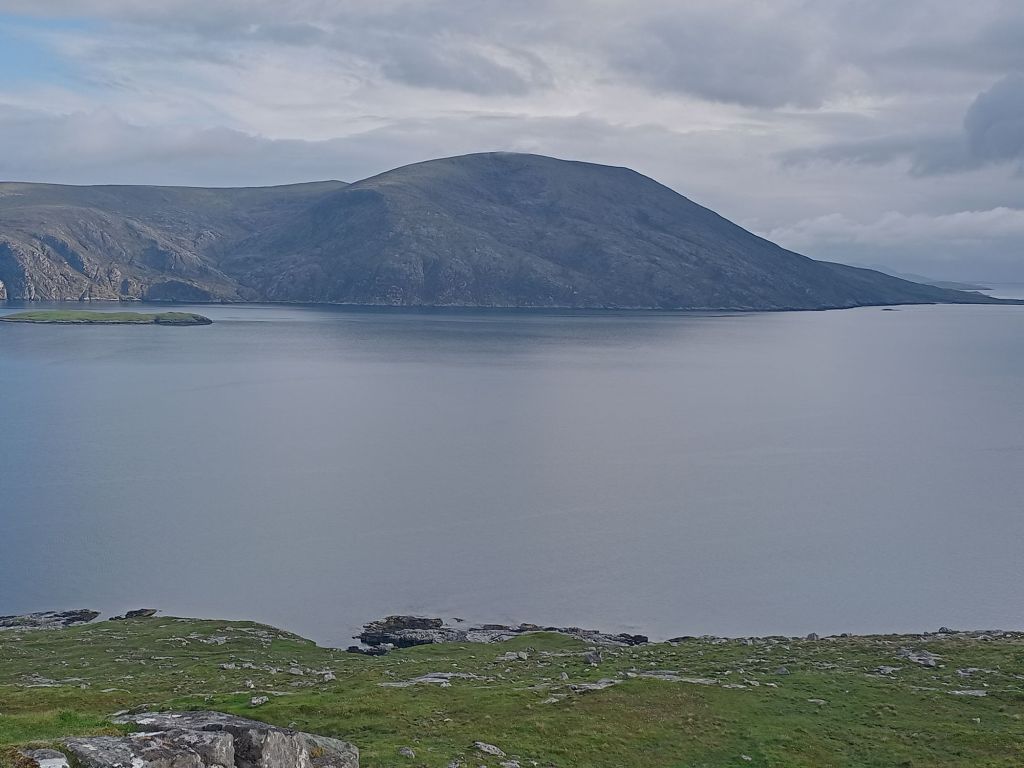
Note: These photos perhaps don’t quite do justice to Harris, as it was a cloudy day, and the landscapes wide and high, so it was hard to capture the very special place that Harris is…
Harris is shown by the red dotted line
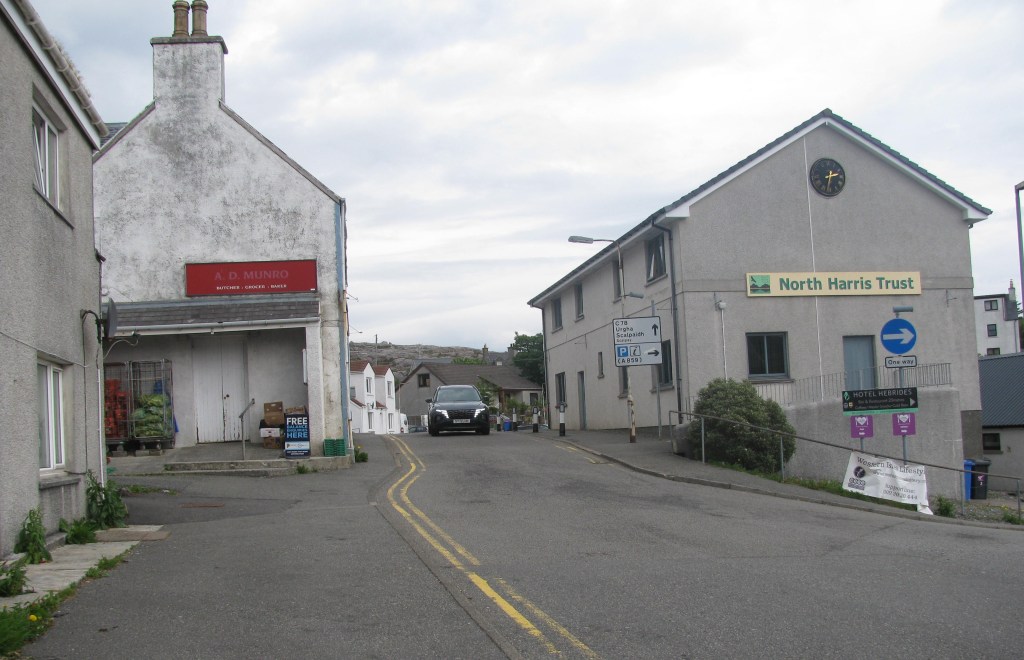
Tarbert…
South Harris…
Seals
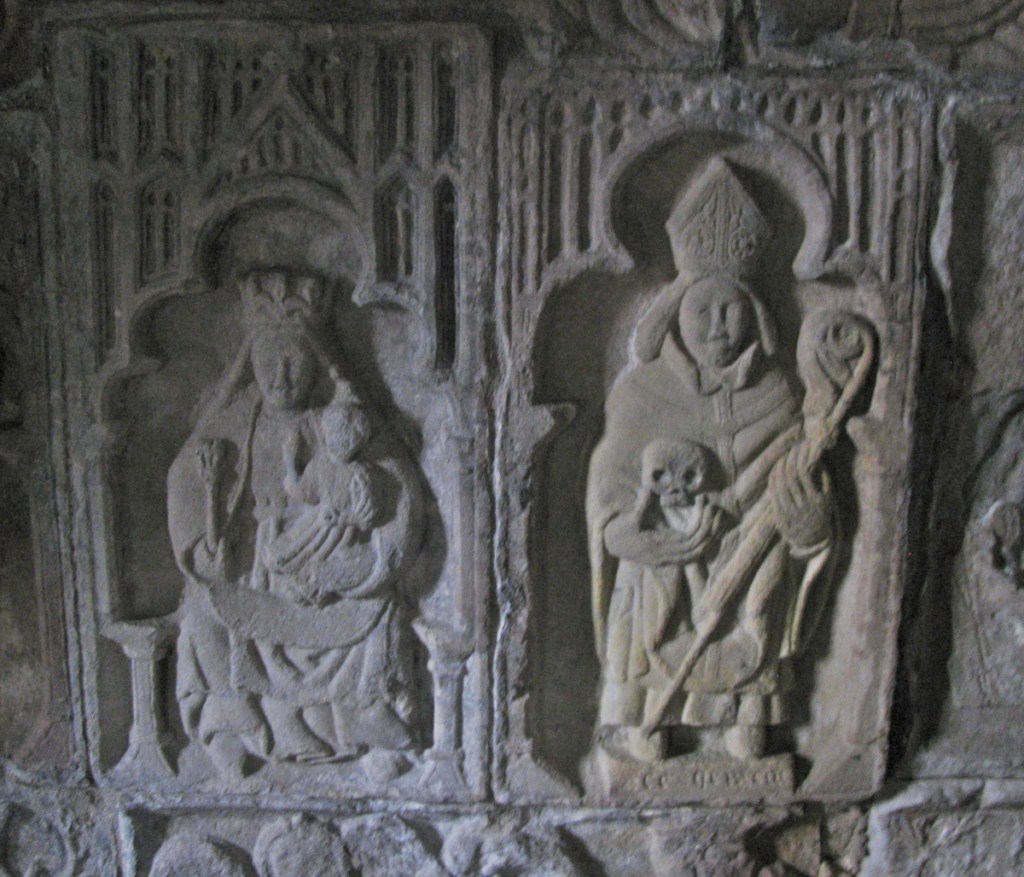
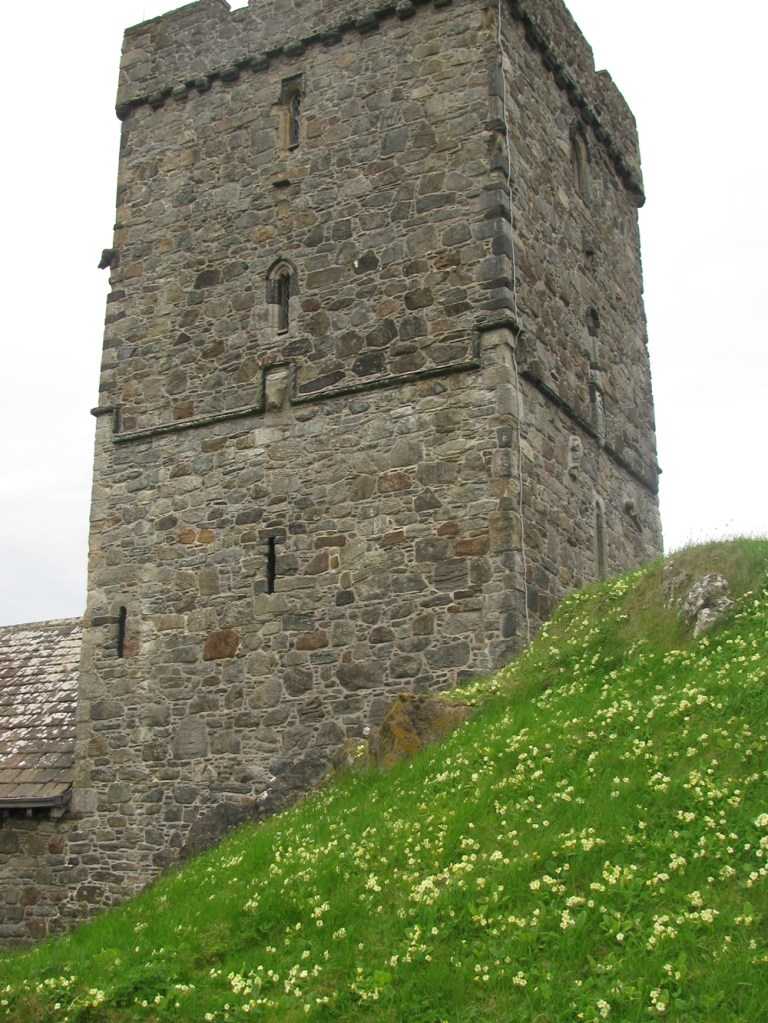
Saint Clement’s Church, Rodel
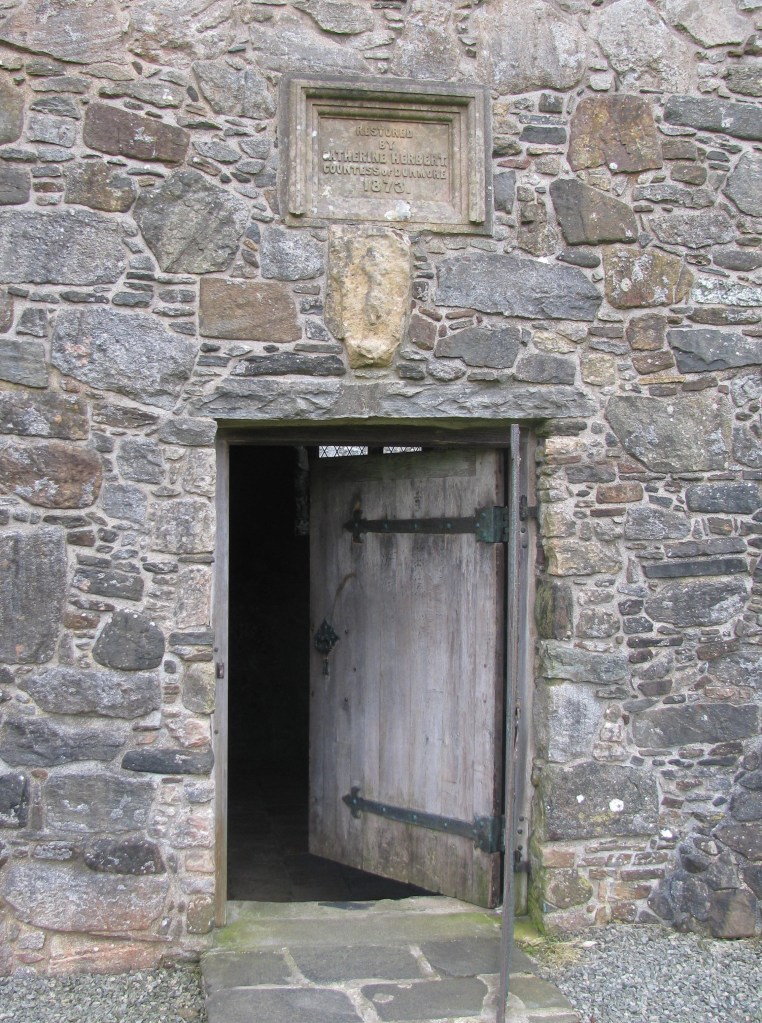
Details from Alasdair McCleod’s 1528 tomb alcove
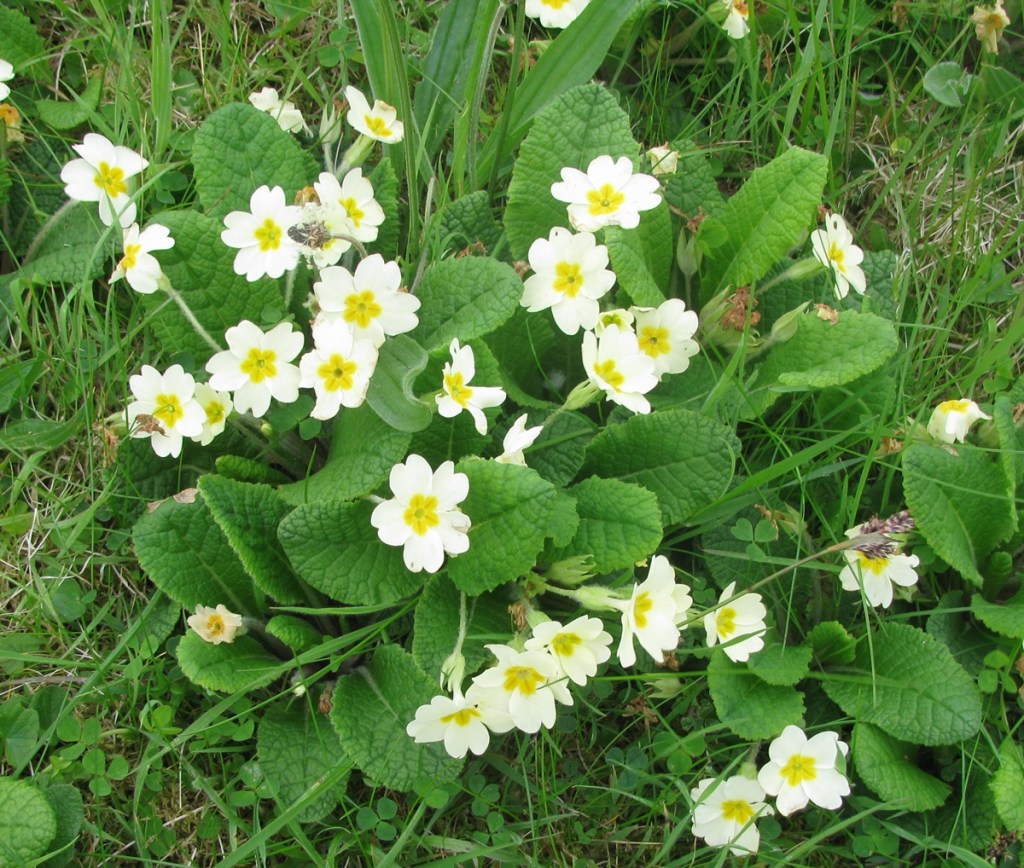
St Clements tower on a bank of primroses which were stil blooming at the end of May due the northerly latitude
After a couple of nights in Edinburgh for rest and reorganisation, we travelled via Inverness to Ullapool in north-west Scotland to catch a ferry to Stornoway (population about 7,000), the largest settlement on the Outer Hebrides. Also known as the Western Isles, the Outer Hebrides consist of the Isles of Lewis and Harris (two parts of one physical island), Uist, Barra and a whole lot of smaller islands.
The ferry was about an hour late due to bad weather. The crossing was quite rough and took about two hours. Once we arrived on the island we drove about 40 minutes west to the cottage we’re staying in at Tolastadh a’ Chaolais. Many of the rural roads on the island are single lane, with passing bays, and you have to watch out for sheep, deer and other animals that sometimes share the road.
Outer Hebrides: Day 2 – Lews Castle and Museum, Stornoway
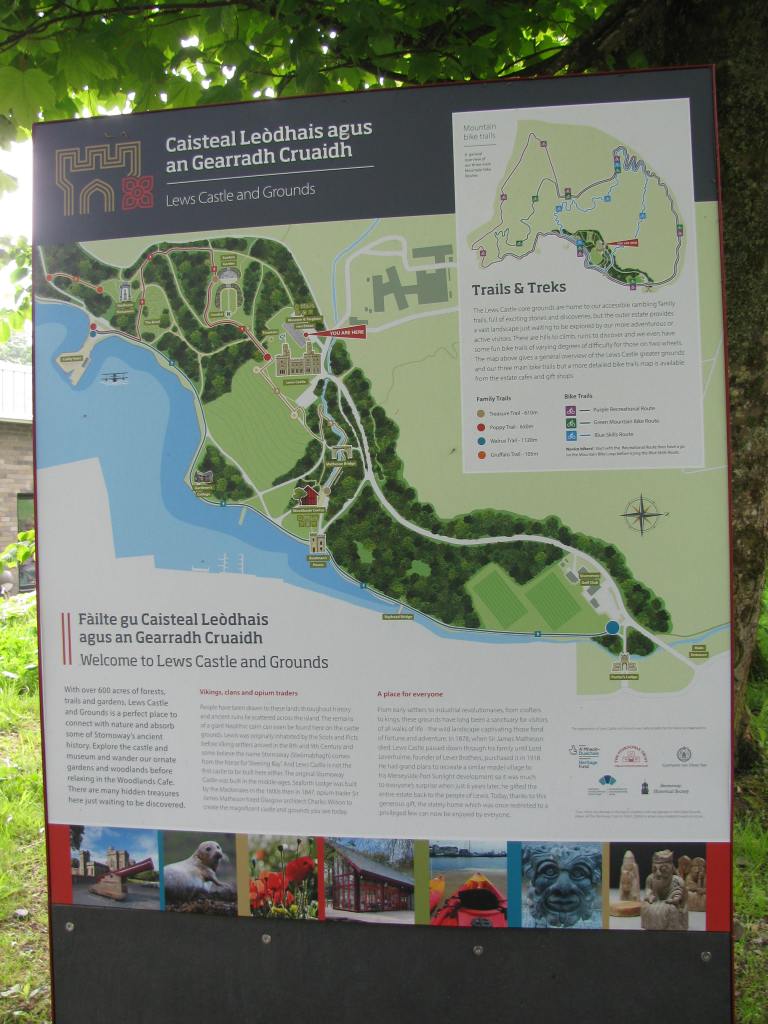
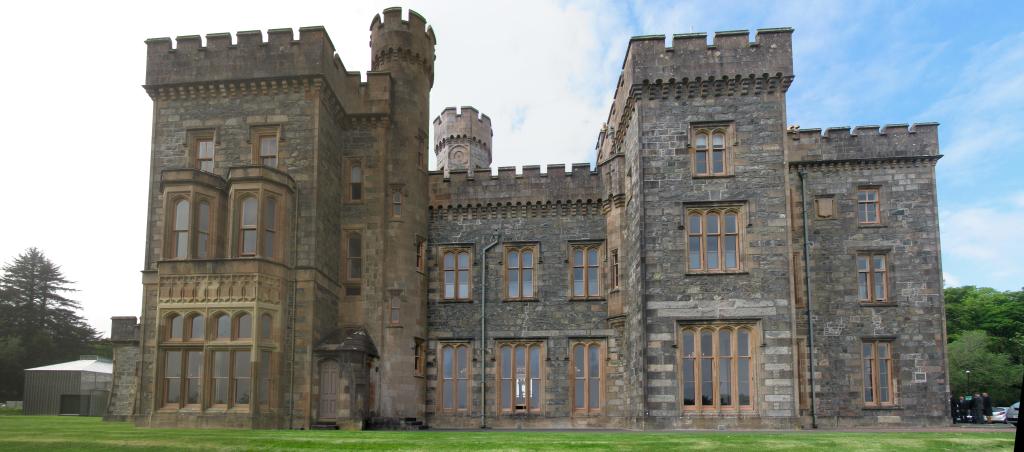
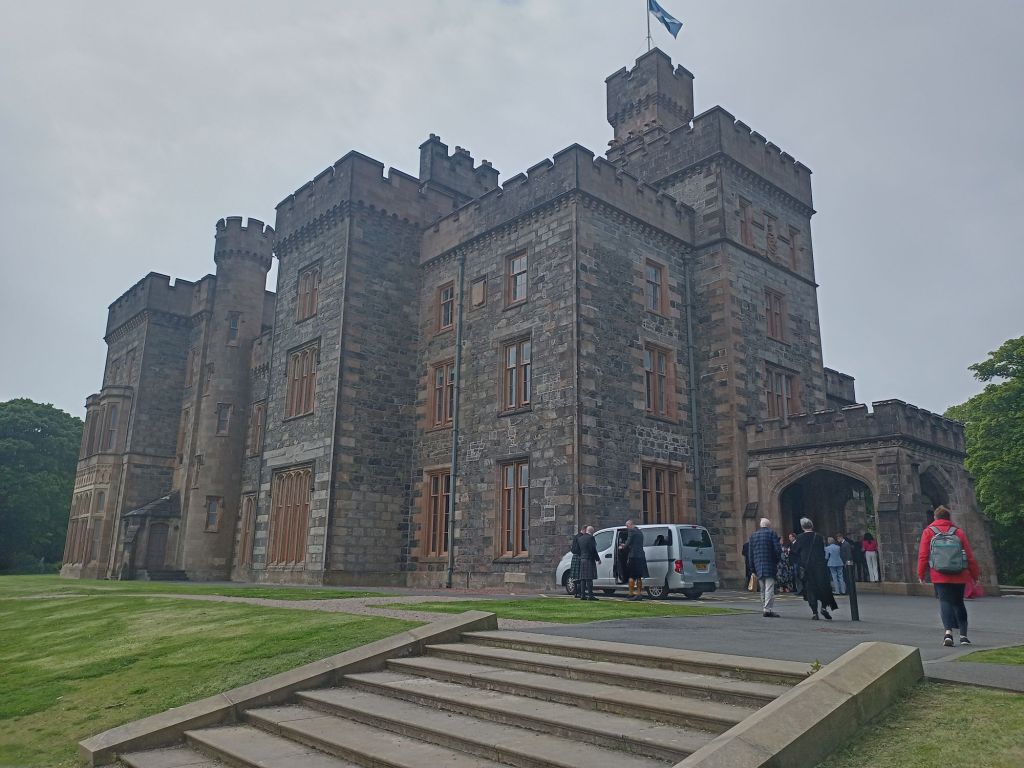
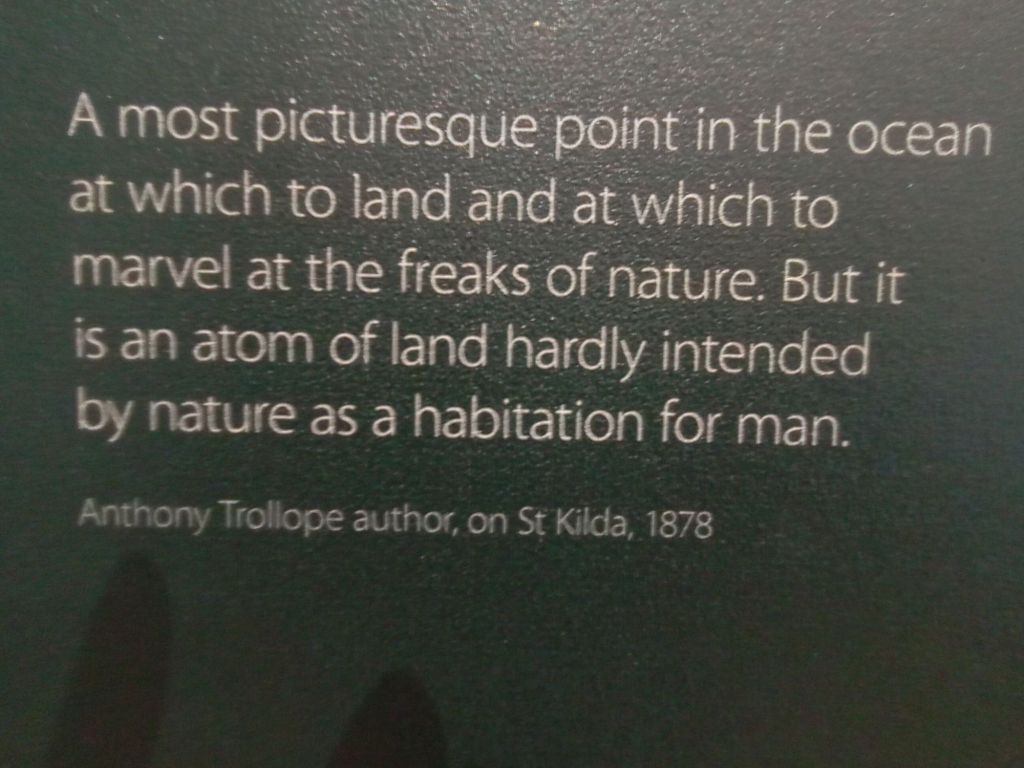
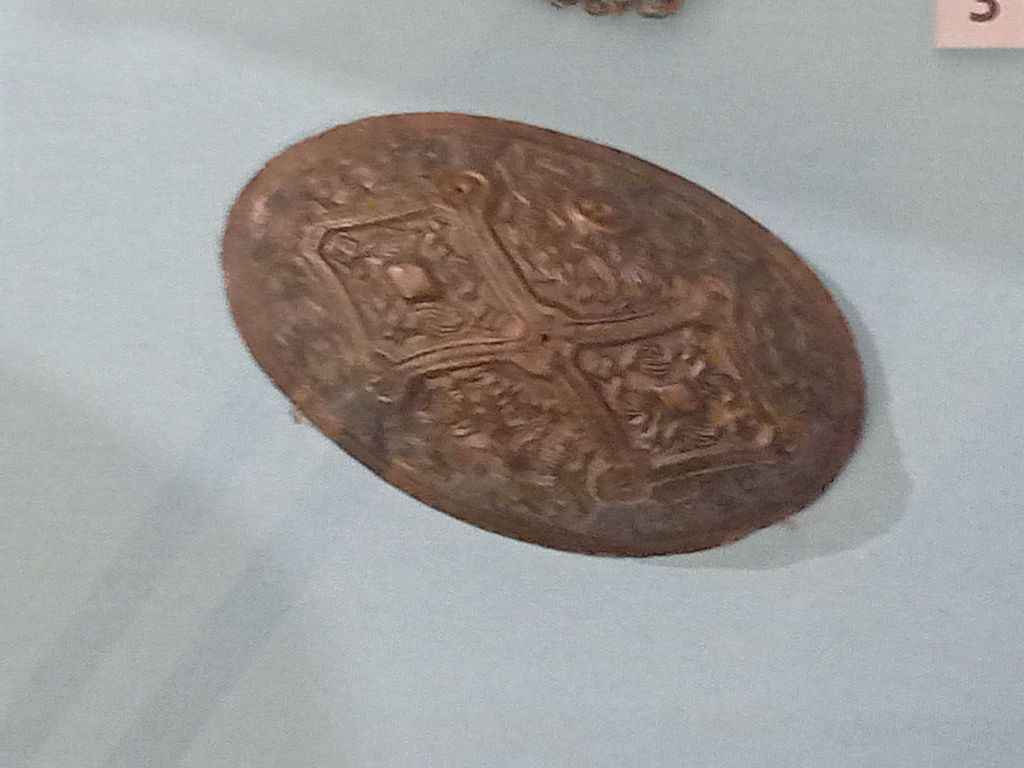
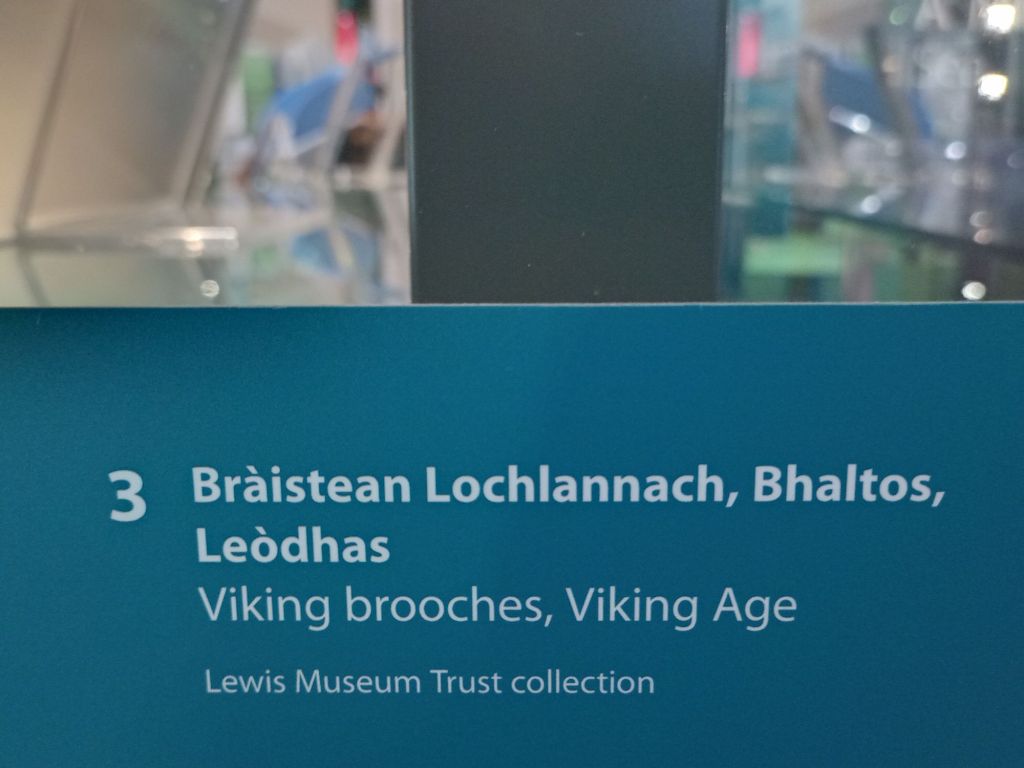
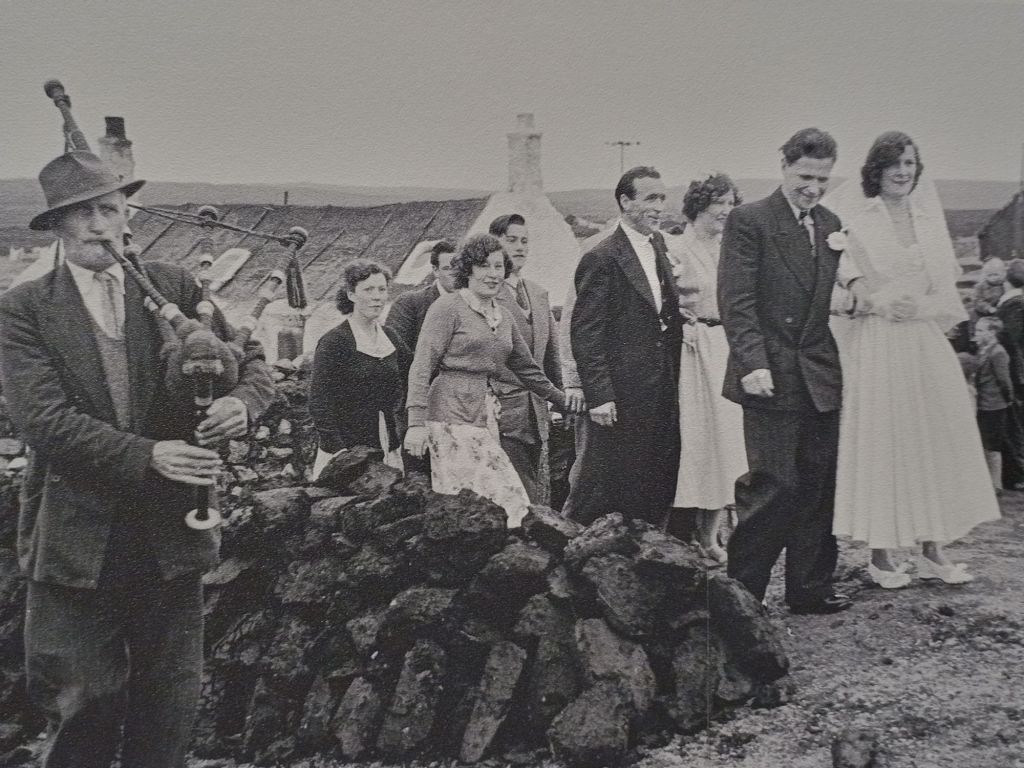
Next day, we returned to Stornoway for supermarket supplies. Afterwards Ian and Caroline visited the nearby museum at Lews Castle for an introduction to the history of the Western Isles. The castle was hosting a wedding, so we couldn’t go inside, but it was great to see the guests in their traditional Scottish finery – kilts and all!
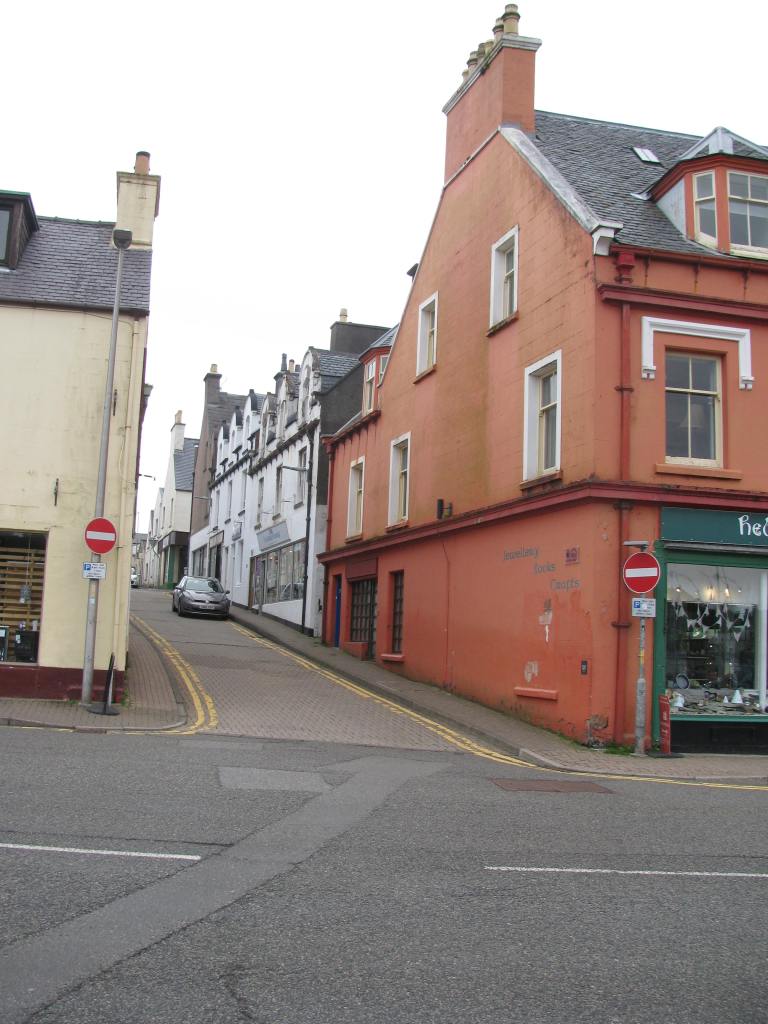
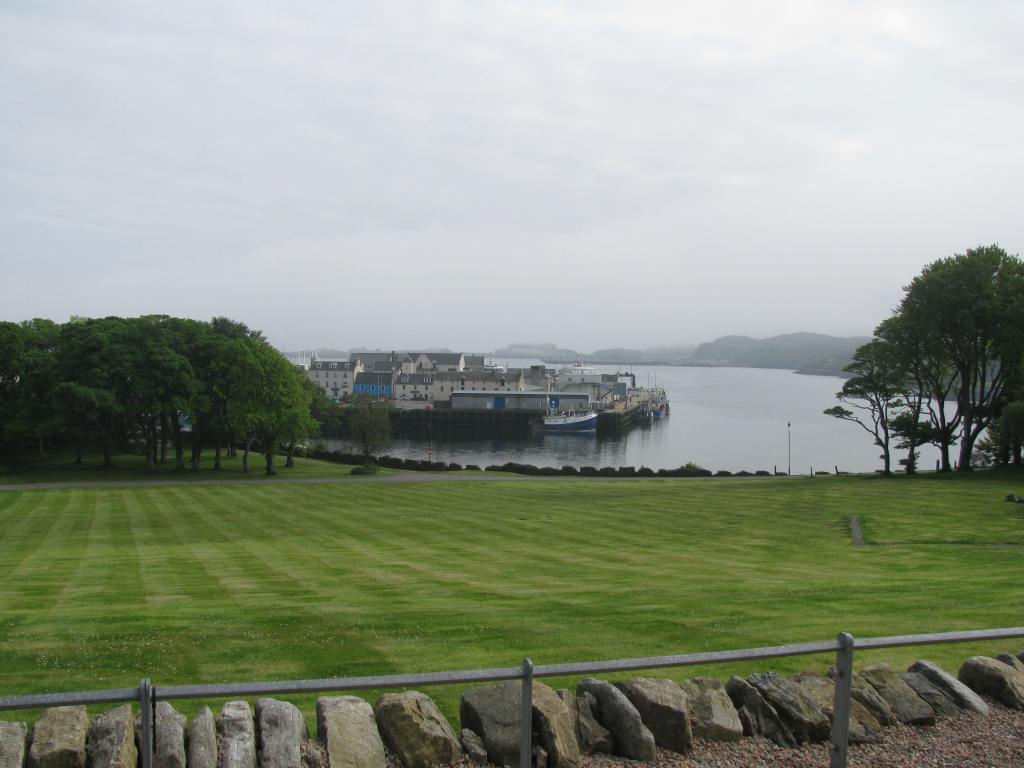
Stornoway
Lews Castle
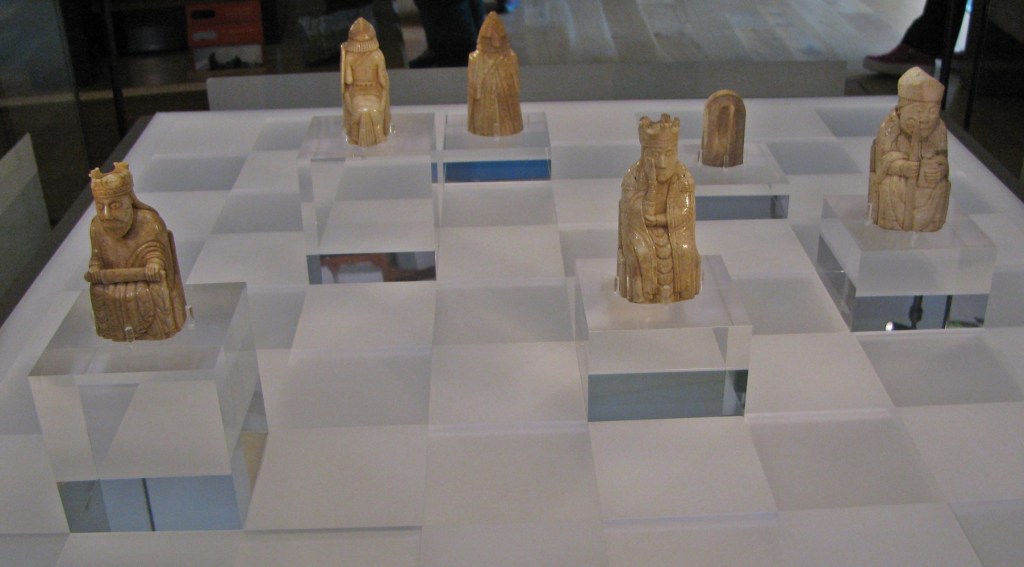
The famous Lewis chessmen in the museum. The original 12th century Norwegian chess pieces were found in 1831 in a sand dune on the west coast of Lewis near Uig,
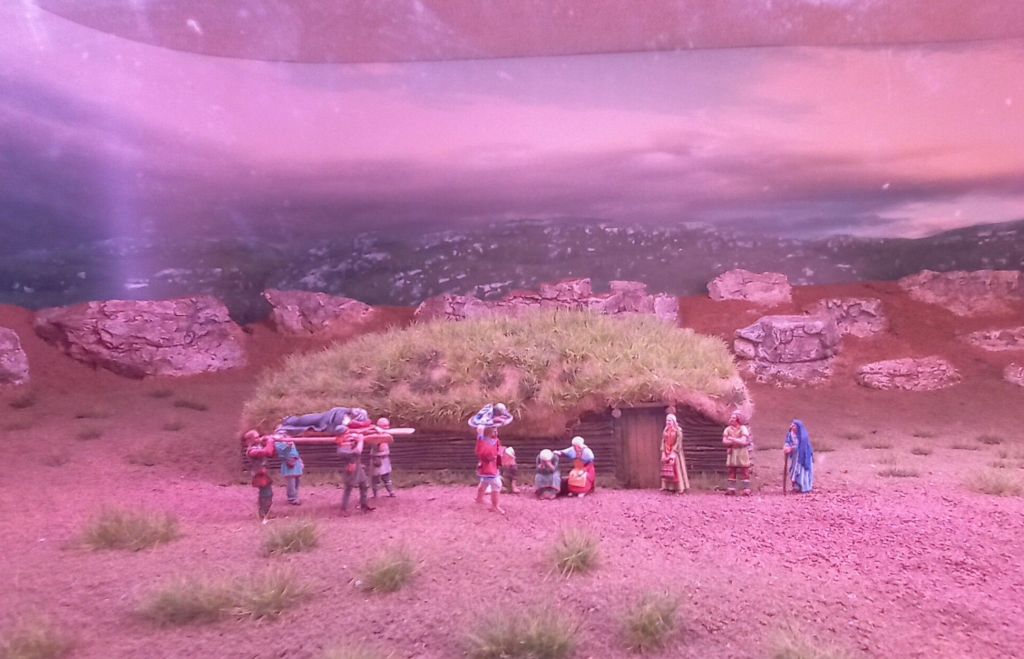
Replica of a Viking dwelling
Outer Hebrides: Day 3 – Calanais standing stones
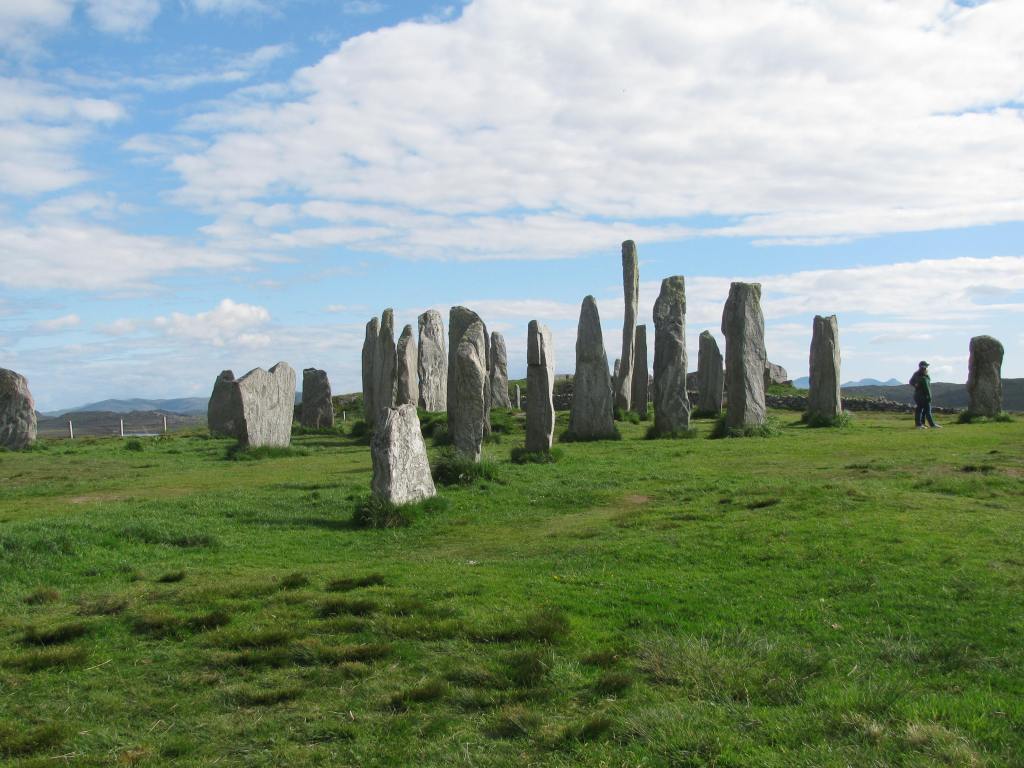
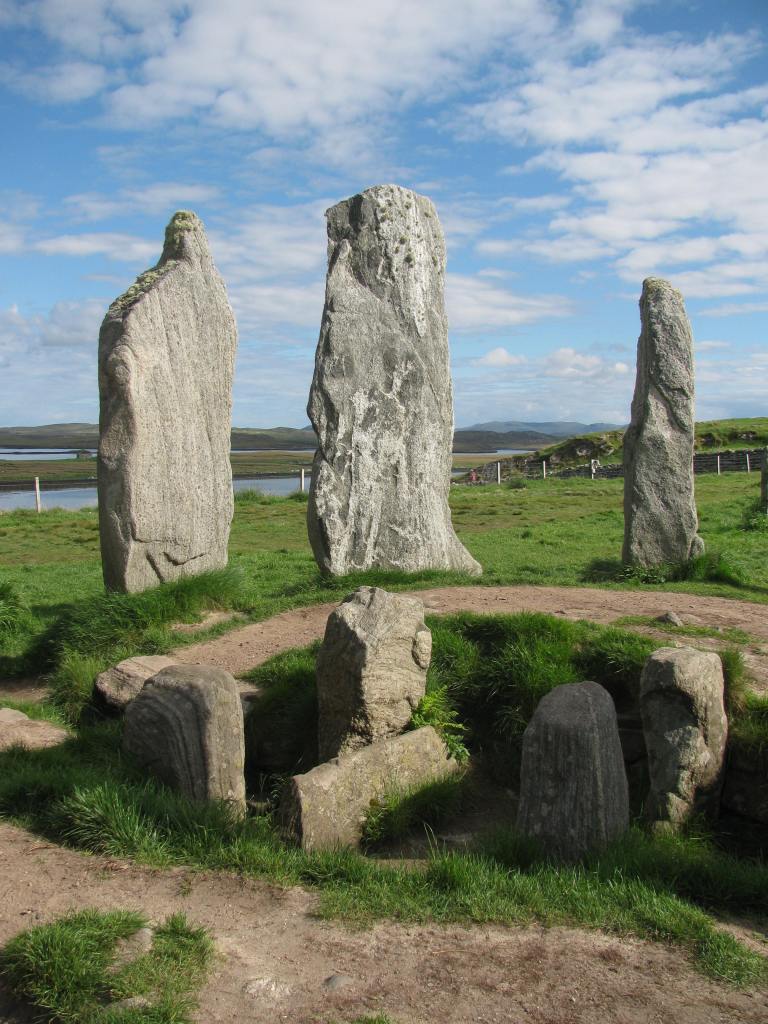
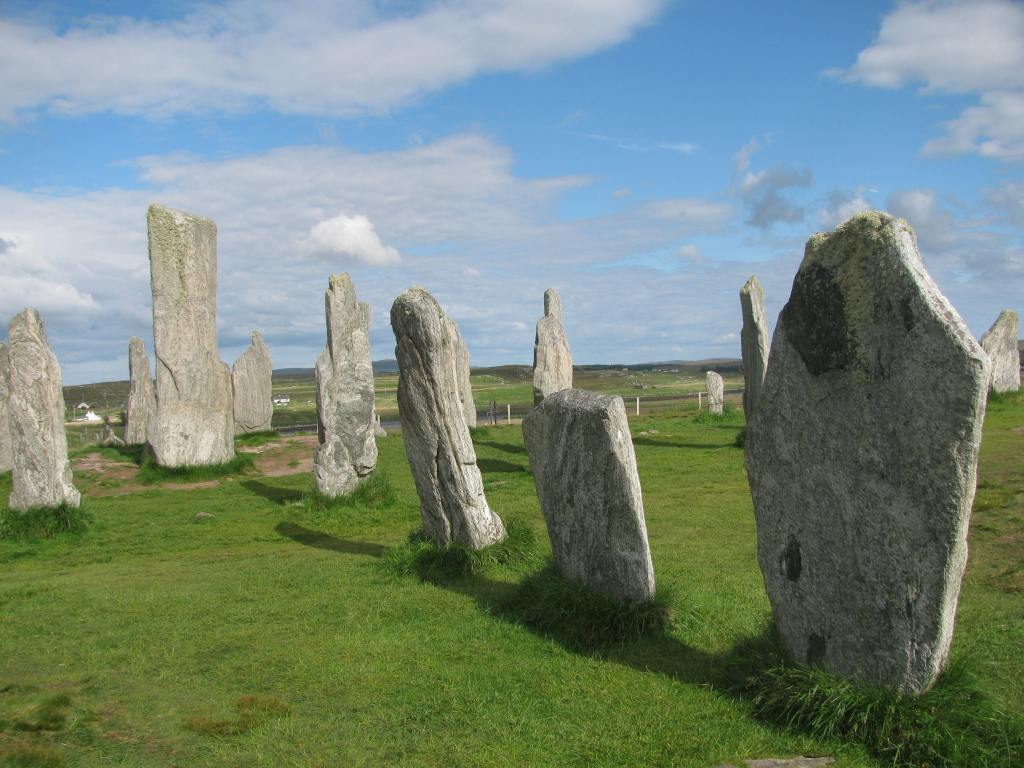
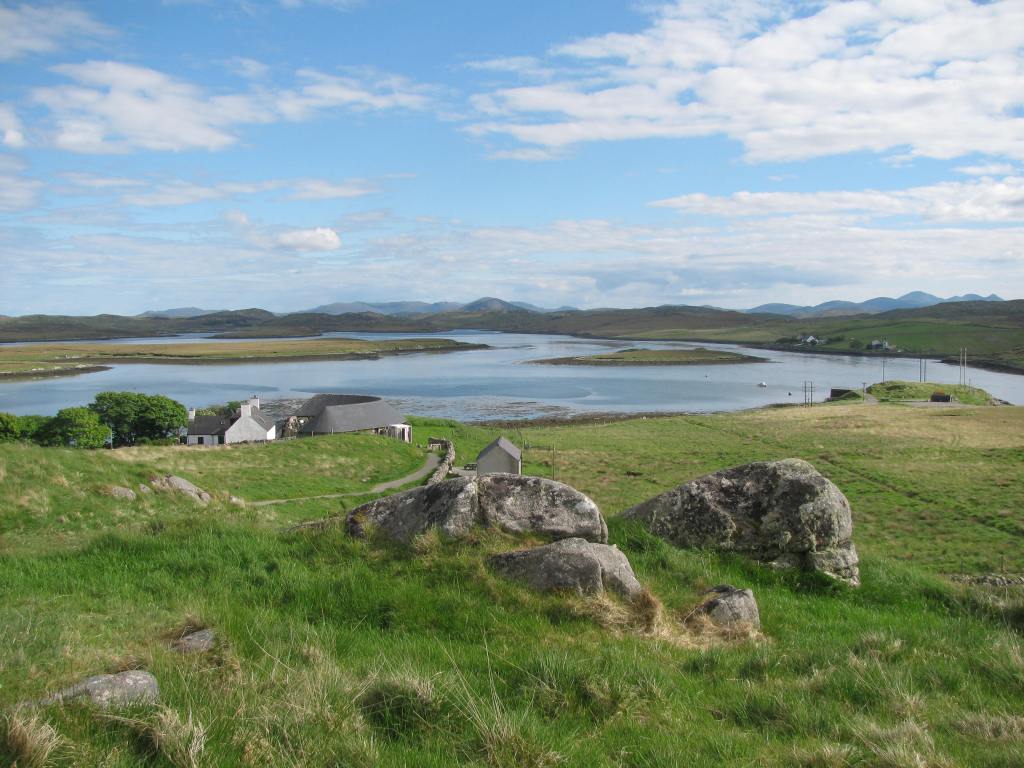
After a quiet morning, we visited the Calanais (Callanish) standing stones / stone circle, about 10 minutes drive from ‘our’ cottage. Constructed in the neolithic period (4000-2500 BC), the exact purposes of these circles are open to speculation. However, the information board says ‘Perhaps the building work gave people a sense of identity and stability, or perhaps they worshipped here. … Research at Calanais has shown that it has both astronomical and landscape alignments’.


















































































 New Zealand Family History Search